 Dog Gear, Sized Right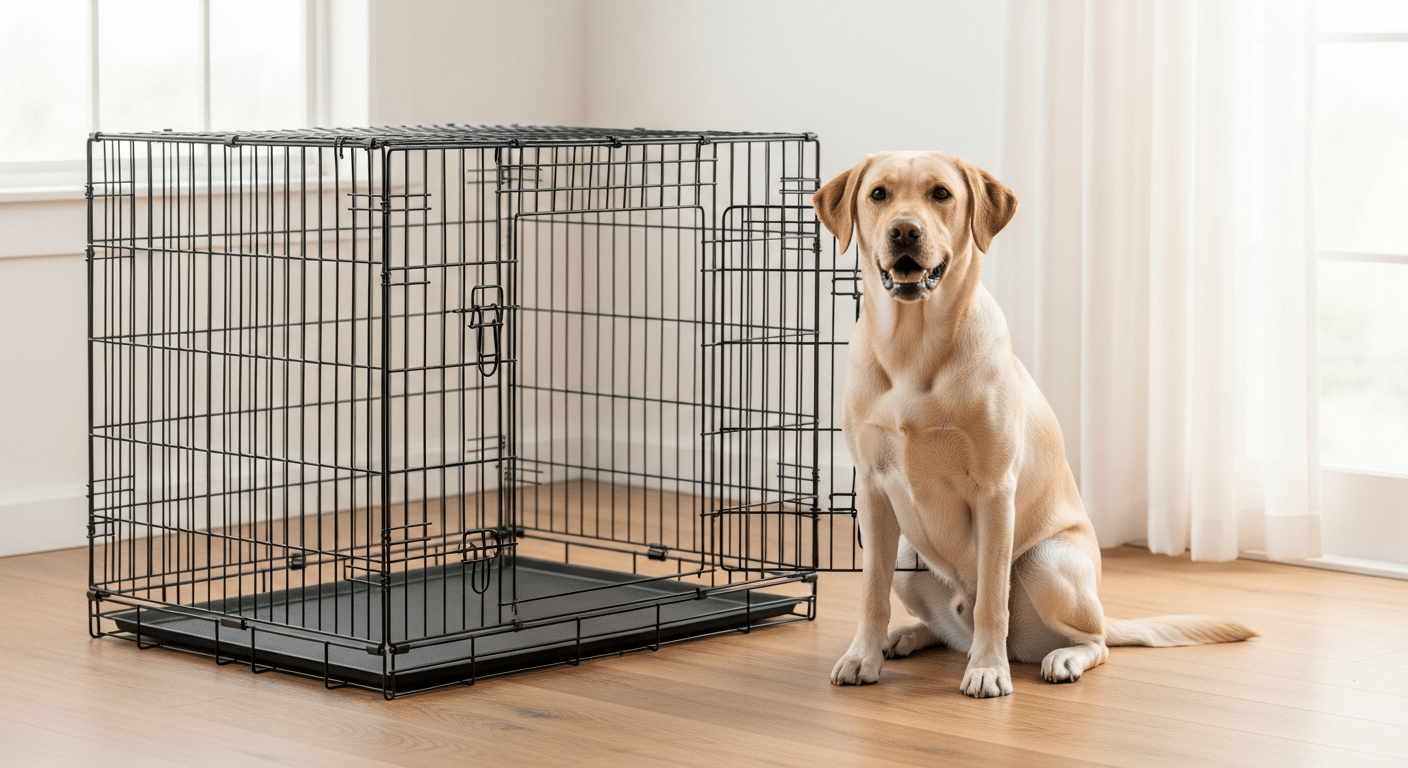
Labrador Gear Guide: Essential Supplies for America’s #1 Breed
Everything a Labrador Retriever owner actually needs, a durable crate, a no-pull harness, an orthopedic bed, tough fetch and chew toys, grooming gear for the shedding, bowls plus measured feeding, a leash and collar, water gear and joint support, with one hero pick per category and links to our full deep-dive guides. Gear chosen for a high-energy, water-loving, joint- and weight-watch retriever.
The Labrador Retriever has been America’s #1 dog breed for decades, and for good reason: it’s friendly, trainable, endlessly enthusiastic and brilliant with families. But a Lab is also a high-energy working retriever, and that shapes almost everything you buy. Labs are strong, mouthy and food-motivated, so gear has to be durable and a harness beats a collar for a puller. They’re prone to hip and elbow dysplasia and they gain weight easily, so an orthopedic bed, measured feeding and joint care matter more than for most breeds. They live for water and fetch, so floatable toys, quick-dry gear and a towel by the door are part of the kit. And they carry a short double coat that sheds steadily (and heavily twice a year), so a de-shedding tool and a capable vacuum earn their keep. Put together, a Lab’s supplies are genuinely breed-specific. This guide is the hub: an honest run-through of every essential a Labrador owner needs, crate, harness, bed, toys, grooming, feeding, leash and collar, water gear and joint support, with one hero pick we trust in each category and a link to the full deep-dive guide where the detailed sizing and rankings live. Whether you’re writing a Labrador puppy checklist or upgrading an adult’s kit, start here.
The Labrador essentials, at a glance
One hero pick in each core category, crate, harness, bed and toy, each chosen for a high-energy, water-loving, joint- and weight-watch retriever and verified in stock. Tap through for the live price, and read the category sections below for our full deep-dive guides.
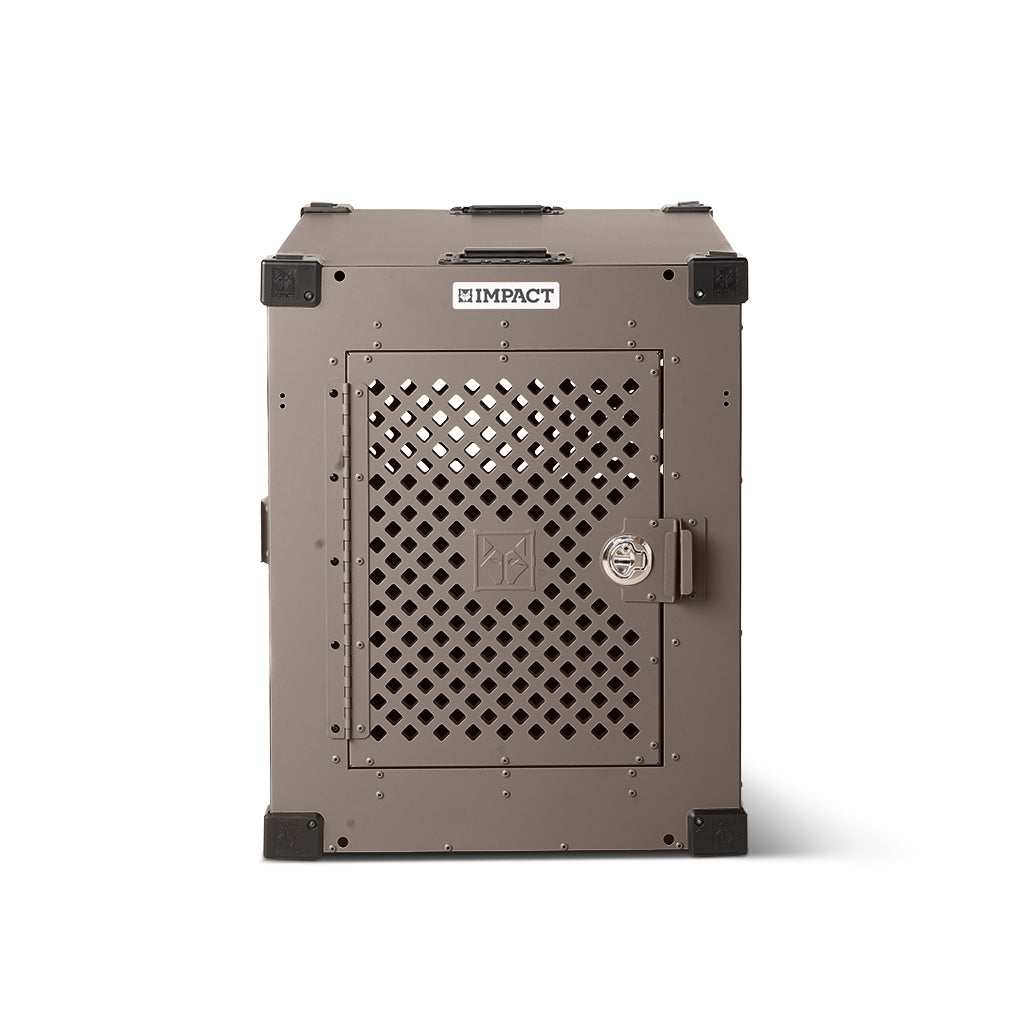
Impact Stationary Dog Crate
Labradors are powerful, food-motivated and famously mouthy, a bored or anxious Lab will test a flimsy wire crate, bend the bars, pop the latch and chew the door, and a teething Lab puppy chews everything. Impact’s aircraft-grade aluminum crate has no thin wire to bend, tooth-safe edges, a secure latch and real ventilation, built to contain a strong, determined dog for life rather than be replaced every year. It’s a genuine buy-once-cry-once purchase for an adult Lab. On a budget, or for a puppy who’ll grow, a heavy-gauge steel crate with a divider is the value route, size it down with the divider while they grow so house-training stays on track.
What we like
- Solid aluminum with no wire to bend, survives a strong, mouthy Lab that destroys folding crates
- Secure latch a clever, food-motivated dog can’t paw or nudge open
- Great ventilation for an active, sometimes-overheating retriever
- Backed by a long dog-damage warranty, a true once-in-a-lifetime crate
The catches
- Premium price, far more than a folding wire crate
- Heavy; you set it in place rather than fold and move it daily
- A teething puppy still needs a crate routine + chew toys, no crate replaces training
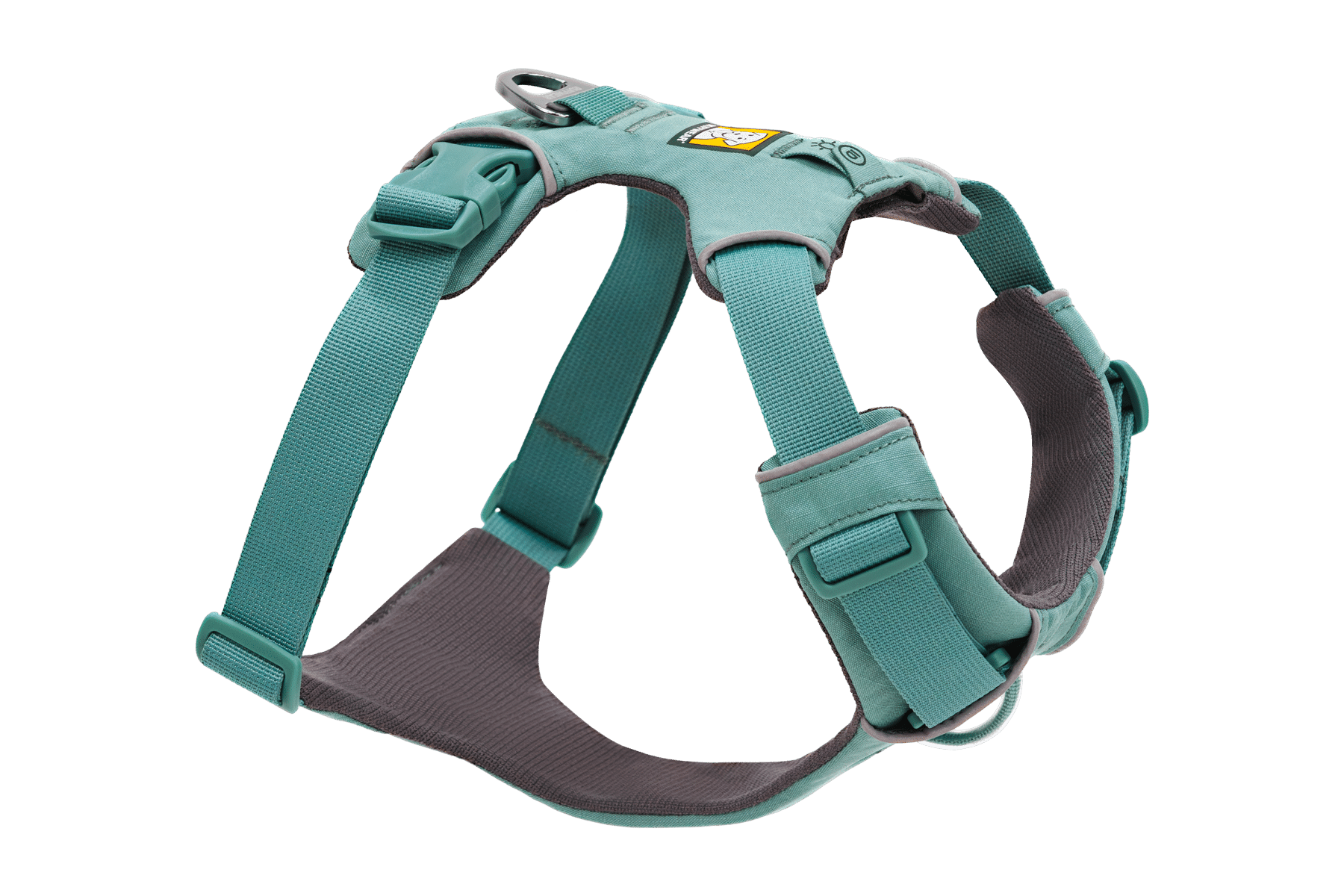
Ruffwear Front Range Harness
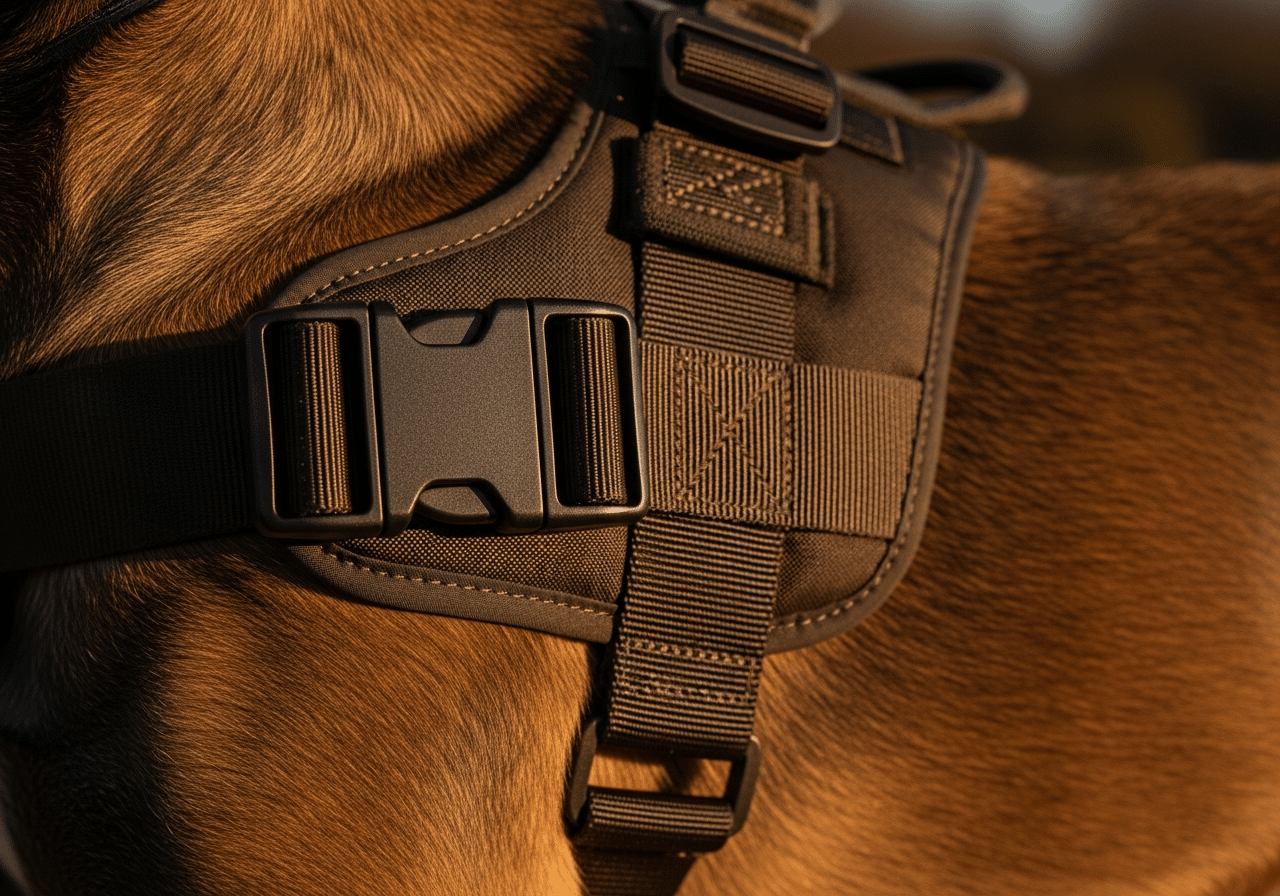
Labs are strong, enthusiastic and forever excited to go, and a thin collar on a lunging, 70-pound retriever just chokes the throat and gives you no control. A well-fitted harness moves the force onto the chest, and the Front Range adds a front no-pull clip that redirects a puller back toward you while you train loose-leash manners, plus a back clip for relaxed walks. It’s padded at the chest and belly for an active dog, tough enough for hikes and adventures, and the everyday no-pull harness most Lab owners actually need. For a hard-core puller or a dog you need to physically steady, step up to the Ruffwear Web Master with its top control handle. Measure the chest girth and go by the brand chart.
What we like
- Front clip curbs an enthusiastic puller’s force and takes it off the throat
- Padded, comfortable fit for an active dog on long walks and hikes
- Two attachment points, front for training, back for relaxed strolls
- Tough, weather-ready build that suits an outdoorsy, water-loving Lab
The catches
- Pricier than a basic strap harness
- Measure the chest girth, a fluffy coat and barrel chest fool the eye
- A very strong puller may want the Web Master’s top control handle instead

FunnyFuzzy Orthopedic Dog Bed
This is the category where the Labrador’s biggest health risks make the choice for you. Labs are prone to hip and elbow dysplasia and to arthritis as they age, and they’re a heavy, hard-running breed, so a thin pad that bottoms out on the floor does an aging Lab no favours. FunnyFuzzy’s bed pairs a supportive orthopedic foam base that cradles the joints with a tough, removable washable cover that copes with a Lab’s shedding and the inevitable wet-dog days. Size it so a big Lab can fully stretch out, and choose a chew-resistant build for a young dog. A genuinely supportive bed is one of the best long-term investments you can make in a Lab’s joints.
What we like
- Supportive orthopedic foam cradles the joints of a dysplasia-prone, heavy breed
- Removable, machine-washable cover copes with shedding and wet-dog days
- Sized for a big dog to fully stretch out. Labs sprawl
- A long-term joint investment that pays off as a Lab ages into arthritis risk
The catches
- Costs more than a thin pad, but the support is the whole point
- Get a size your full-grown Lab can stretch out on, not just curl into
- A young, chewy Lab may need a chew-resistant or elevated cot first

West Paw Zogoflex Hurley
The Labrador was built to retrieve from water, fetch is hardwired, and the right toy leans into it. West Paw’s Zogoflex Hurley is a bone-shaped fetch toy that’s one of the toughest made: pliable but near-impossible to destroy, it floats for water retrieves, bounces for land fetch, and is gentle on a soft mouth, exactly what a water-loving Lab wants. It’s dishwasher-safe and backed by a one-time replacement guarantee, because the brand trusts its rubber against strong jaws. Pair it with a stuffable chew (a KONG or West Paw Tux) for rainy-day enrichment, and you’ve covered both halves of a Lab’s play needs, fetch and chew. Skip rawhide and anything small enough to swallow whole.
What we like
- Floats, perfect for a Lab’s beloved water retrieves
- Pliable, near-indestructible Zogoflex survives a strong retriever’s jaws
- Bounces and flies for land fetch; gentle on a soft retrieving mouth
- Dishwasher-safe with a one-time tough-chew replacement guarantee
The catches
- No toy is fully indestructible, supervise and replace if it splits
- A heavy chewer needs a chew toy too, not just a fetch toy, pair with a KONG/Tux
- Pick the right size for your Lab’s mouth so it can’t be swallowed
Why Labrador gear is breed-specific (start here)
Before the shopping list, the why, because buying for “a Labrador” is different from buying for “a dog.” A Lab isn’t just a friendly family pet; it’s a purpose-built retriever with a handful of traits that should steer every purchase. Get these five things right and the rest of the list follows.
- High-energy & strong. Labs are athletic working dogs that need real exercise, and they pull when they’re excited. Gear has to be durable, and a well-fitted no-pull harness beats a collar for everyday control.
- Joint- & weight-prone, the Lab’s two biggest health risks are hip/elbow dysplasia and obesity, and the two feed each other. That makes an orthopedic bed, measured feeding and joint support genuine essentials, not extras.
- Mouthy & food-motivated. Labs explore with their mouths, chew hard (especially as puppies) and will eat almost anything. Buy tough toys and chews, crate and bed materials that survive a strong jaw, and bowls and feeders that slow a fast eater.
- Loves water & fetch, retrieving from water is hardwired. That points to floatable fetch toys, quick-dry gear, a towel by the door and easy-clean bedding for the wet-dog days.
- Sheds (short double coat), a Lab sheds year-round and “blows” its undercoat heavily twice a year. The real grooming job is a de-shedding tool and a vacuum that can cope, not a fancy clipper.
So the gear you choose should fit the breed, not just any big dog. Below we go category by category, one hero pick each, then a link to the full guide. Not sure on crate dimensions? Our dog crate size calculator turns your dog’s measurements into the right size in seconds.
Crate, a durable den a mouthy retriever can’t wreck
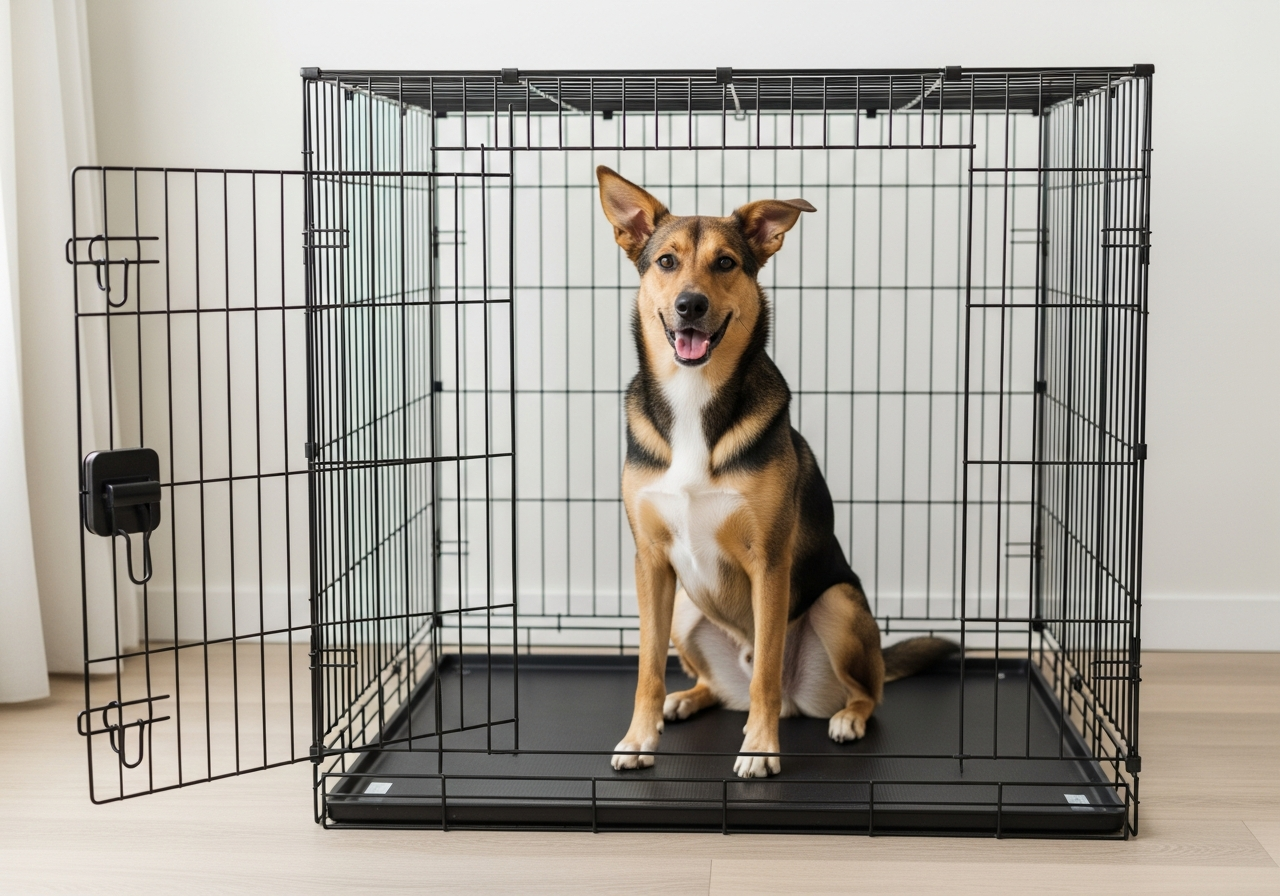
A crate is one of the first things to buy for a Lab, because it does double duty: it makes house-training dramatically easier and gives a busy dog a safe den to settle in. For a Labrador the priorities are strength and the right size. Labs are strong, mouthy and, when bored or anxious, hard on a flimsy crate, they bend wire, pop weak latches and chew doors. So look for solid construction, a secure latch, and tooth-safe edges, plus good ventilation for an active dog.
On size, a crate should be just big enough to stand fully, turn around and lie down stretched out, for a typical adult Labrador (~55–80 lbs) that’s usually a 42-inch crate. Too big lets a puppy soil one end, which is why a divider (or our size calculator) is so useful while they grow, buy the adult-size crate and shrink it with the divider. A heavy steel crate with a chew-proof latch is the value route; for a determined chewer, digger or escape artist, or a buy-once crate, an aircraft-aluminum model like our hero pick, the Impact Stationary above, is built to outlast the dog. Pair the crate with enough exercise and chew toys, no crate substitutes for a tired-out, mentally satisfied Lab.
For the exact dimensions, the puppy-to-adult divider trick and the full ranked lineup, see the deep-dive above, plus our best dog crates roundup, and run the numbers through the crate size calculator before you buy.
Harness, a no-pull harness for an enthusiastic puller
If you buy one piece of Labrador walking gear, make it a no-pull harness. Labs are strong and forever thrilled to be going somewhere, and a thin collar on a lunging retriever simply chokes the throat and gives you little control. A well-fitted harness moves the force onto the chest, protects the neck, and with a front clip gently redirects a puller back toward you while you train loose-leash manners.
For a Lab we look for: a front no-pull clip for everyday control, a comfortable padded fit for an active dog, sturdy hardware, and build quality tough enough for hikes, beaches and adventures with an outdoorsy breed. A top control handle (like the Ruffwear Web Master’s) is a real bonus if you’ve got a hard-core puller or a dog you need to physically steady. Because a Lab’s barrel chest and coat fool the eye, measure the chest girth and go by the tape. Our hero pick, the Ruffwear Front Range above, is the everyday no-pull harness most Lab owners actually need; step up to the Web Master for serious pullers.
For girth sizing charts, front-clip vs back-clip, no-pull vs everyday and our full ranked picks, see the deep-dive above, plus our best dog harnesses hub across all breeds and sizes.
Bed, orthopedic, because Labs are joint-prone
This is the category where the Labrador’s health profile makes the choice for you. The breed is prone to hip and elbow dysplasia, and a heavy, hard-running Lab is likely to develop arthritis with age, so a thin pad that bottoms out on the floor does a Lab’s joints no favours. The right bed for a Lab is an orthopedic one: a supportive foam base (look for real density, not just a thick-looking topper) that cushions the joints and helps an older or larger dog get up easily.
Two more things matter for this breed. First, a tough, removable, washable cover is non-negotiable, because Labs shed and a water-loving dog brings home plenty of wet-and-muddy. Second, size: buy a bed a full-grown Lab can fully stretch out on, not just curl into. Labs sprawl. Our hero pick, the FunnyFuzzy orthopedic bed above, pairs a supportive base with a washable cover and a big-dog footprint. For a young, chewy Lab, a chew-resistant bed or an elevated cot is a smart first bed until the chewing phase passes. A genuinely supportive bed is one of the best long-term investments you can make in a Lab’s joints.
See the full orthopedic, sizing and chew-resistance breakdown above, or browse every option in our best dog beds hub.
Toys, fetch, water & tough chews for a retriever
For a Labrador, toys aren’t a luxury, they’re how you channel a working retriever’s drive. Two needs to cover. First, fetch: retrieving is hardwired, so a Lab wants a tough throw-and-chase toy, ideally one that floats for water retrieves (a Lab’s idea of heaven). Our hero pick, the West Paw Zogoflex Hurley above, floats, bounces, survives strong jaws and is gentle on a soft retrieving mouth. Second, chewing: Labs are mouthy and chew hard, especially as teething puppies, so keep tough rubber chew toys (the KONG and West Paw families are built for strong jaws) and a couple of stuffable toys for enrichment in rotation.
Lean on enrichment too, stuff and freeze a KONG or a West Paw Tux to make a meal last, add a puzzle feeder or snuffle mat, and a smart, busy Lab settles instead of finding its own “projects.” Avoid rawhide (it swells and can block the gut), cooked bones, and anything small enough to swallow whole, a Lab will try. Rotate a fetch toy, a tough chew and a puzzle, and always supervise a strong chewer.
For our full ranked list of tough toys, fetch and water toys, chews and enrichment puzzles, and what to avoid, read the deep-dive guide above.
Grooming & shedding, the short double coat still sheds
People underestimate Labrador shedding because the coat is short, but a Lab carries a dense double coat and sheds year-round, then “blows” the undercoat heavily twice a year. There will be fur on everything. The good news: the grooming job is simple and cheap, and it’s about managing the shed, not fancy clipping:
- De-shedding tool / undercoat rake, the single most useful Lab grooming tool. A good de-shedding tool pulls the loose undercoat before it lands on your sofa, especially during a shed. See our best de-shedding tools for dogs guide for the models that actually work on a double coat.
- A vacuum that can cope, with a year-round shedder, the right vacuum is genuinely part of the kit. Our best vacuums for dog hair guide covers the models that handle Lab undercoat without clogging.
- Rubber grooming mitt / slicker, quick weekly passes lift loose fur and feel like a massage to a Lab; step up the frequency during a heavy shed.
- Occasional baths with a gentle shampoo, a Lab’s coat has water-repelling oils (and a faint “doggy” smell to match), so don’t over-bathe; rinse and dry well after swims. Plus the usual nails, ears and teeth.
Embrace it: a Lab will shed, and no tool stops it entirely, the goal is to capture the loose fur on your terms with a de-shedding tool, a quick weekly brush and a capable vacuum, rather than wearing it for the next month.
Bowls & feeding, measured meals, because Labs gain weight
Feeding gear is where a Lab owner has to be a little disciplined, because the breed is famously food-obsessed and prone to obesity, and excess weight directly worsens the joint problems Labs are already prone to. The gear is simple; the discipline is the point.
- Heavy stainless-steel bowls, hygienic, dishwasher-safe and heavy enough that a strong, eager dog can’t skate them across the kitchen (plastic can harbour bacteria and irritate skin).
- A measuring cup or kitchen scale, the most important “feeding tool” for a Lab. Measure every meal to the food’s guidance and your vet’s advice, and feed to a lean body condition, you should feel the ribs easily. Treats count toward the daily total.
- A slow-feeder bowl (highly recommended). Labs gulp their food. A maze-style slow feeder makes a fast eater work for it, slows the gulping, and adds a little enrichment. A stuffed, frozen toy does the same job.
- A sturdy water bowl, always full, an active, water-loving breed needs constant fresh water, doubly so after exercise or a swim.
For a large, deep-chested Lab some owners prefer a raised feeder for comfort, it’s a preference, not a must, and the evidence on bloat is mixed, so it’s a vet conversation. The real feeding rule for a Lab is short and strict: measure the food, count the treats and keep the dog lean, it’s the single biggest thing you can do for a Labrador’s long-term health and joints.
Joint support, get ahead of dysplasia and arthritis
Because the Labrador is one of the breeds most prone to hip and elbow dysplasia, and to arthritis as it ages, a little proactive joint care belongs on the essentials list, not the afterthought pile. None of this replaces a vet, but the everyday gear and habits make a real difference:
- An orthopedic bed (above), supportive foam that doesn’t bottom out is the most-used piece of joint gear a Lab owns; it cushions sore hips and elbows and helps an older dog rise.
- Keep the dog lean, the most powerful, free joint protection there is. Every extra pound loads the joints; measured feeding and a lean body condition do more for a Lab’s joints than any supplement.
- Joint supplements & omega-3 fish oil, many owners (with vet guidance) add a glucosamine / chondroitin / omega-3 supplement to support aging joints. Ask your vet about timing and dose for your dog.
- Ramps and traction, a car or sofa ramp spares the joints of jumping down from height, and rugs or runners on slick floors give an older Lab grip. Sensible, low-impact exercise (including swimming, a Lab’s favourite) keeps joints mobile without pounding them.
The theme runs through this whole guide: with a Labrador, protect the joints early, keep the dog lean, give it a supportive bed, ease the impact on its hips, and talk to your vet about supplements. It’s cheaper and kinder than treating advanced arthritis later.
Water gear, quick-dry kit for a breed that lives to swim
Few breeds love water like a Labrador, it’s a water-retriever to the core, with a water-repellent coat and even webbed feet. If your Lab gets near water, it’s going in. A little water gear keeps that joy from becoming a mess (or a hazard):
- A microfiber dog towel (or two) by the door and in the car, the most-used “water” item a Lab owner owns, for the inevitable wet, muddy returns.
- Floatable fetch toys, a buoyant retrieve toy (like the West Paw Hurley above) turns a swim into the best game of the day; bright colours help you spot it on the water.
- A dog life jacket, even strong swimmers benefit on boats, in open or cold water, or when an older or recovering dog tires; choose one with a sturdy grab handle.
- Easy-clean, quick-dry bedding and a car seat cover or liner, a wet Lab is a happy Lab; washable, fast-drying gear keeps your house and car sane.
After swims, rinse off salt, sand or pool chemicals, dry the ears well (Labs are prone to ear infections from trapped moisture) and towel the coat. Water play is fantastic, low-impact exercise for a joint-prone, high-energy breed, just gear up so the fun doesn’t follow you indoors.
Leash & collar, for ID and training, harness for walking
The Lab rule of thumb: walk on the harness, keep the collar for ID. A strong, enthusiastic dog shouldn’t take pulling force on the throat, and the collar’s main job is to carry tags and clip on quickly. Buy both for quality, the failure point is almost always the hardware:
- Collar: a well-fitting flat collar in strong nylon with a sturdy buckle (a quick-release / break-away buckle is great for safety) and a welded D-ring, snug enough that a Lab can’t back out of it. A reflective collar helps for low-light walks. Carry tags here.
- Leash: a 4–6 ft reinforced-nylon lead with a solid metal trigger snap for everyday control, plus a long line (20–30 ft) for safe recall practice and sniffing in open areas. Skip retractable leads, they teach an excited dog to pull and give little control. Clip the everyday lead to the harness for walks.
- ID + tech backup: a flat ID tag is non-negotiable, with a microchip as the backstop, a friendly Lab will happily wander off with anyone.
Day to day, clip the leash to the harness for walks and to the collar only for a quick “hold still.” For loose-leash manners with an enthusiastic puller, a front-clip harness plus calm, consistent, reward-based training (and a food-motivated Lab is very trainable) beats any “stronger” collar.
Labrador supplies checklist (puppy & adult)
Pulling it together, here’s the full Labrador must-haves list in one place, ideal as a Labrador puppy checklist. Start with the core gear before your dog comes home; add the rest in the first weeks. Remember the breed golden rules: build it durable, harness the puller, protect the joints, keep it lean, and gear up for water.
| Category | What to get | Why it matters for a Labrador |
|---|---|---|
| Crate | 42″ heavy steel or aluminum crate with a secure latch; divider for a puppy | Eases house-training and survives a strong, mouthy retriever |
| Harness | Front-clip no-pull harness with sturdy hardware (+ control handle for hard pullers) | An enthusiastic puller chokes on a collar; a harness gives real control |
| Bed | Orthopedic foam bed with a washable cover; chew-resistant or elevated cot for a puppy | A dysplasia- & arthritis-prone, heavy breed needs real joint support |
| Toys | Floatable fetch toy + tough rubber chew toys + stuffable puzzles + snuffle mat | Channels a retriever’s fetch & water drive and a mouthy chewer’s jaws |
| Grooming | De-shedding tool / undercoat rake, slicker or grooming mitt, gentle shampoo, a capable vacuum | A short double coat still sheds year-round and blows out twice a year |
| Bowls & feeding | Heavy non-tip stainless bowls, a measuring cup/scale, a slow-feeder bowl, full water bowl | Labs gulp and gain weight, measured meals protect the joints |
| Joint support | Orthopedic bed, lean body condition, vet-guided joint supplement/omega-3, ramps + floor traction | Get ahead of the breed’s #1 risks, dysplasia and arthritis |
| Water gear | Microfiber towels, floatable toys, a life jacket, quick-dry/washable bedding + car liner | A water-retriever lives to swim, gear up for the wet-dog days |
| Leash & collar | Snug flat/break-away collar + 4–6 ft leash and a 20–30 ft long line; ID tag | Collar for ID, harness for walking; a friendly Lab wanders |
| Puppy extras | Large-breed puppy food, pen/gate, training treats/clicker, potty pads, poop bags, enzymatic cleaner, first-aid kit + styptic powder, car harness/seatbelt | Safe confinement, training basics and an early start on enrichment |
Labrador supplies: common questions
What supplies does a Labrador need?
The essential Labrador supplies are: a durable crate (usually 42-inch, with a divider for a puppy. Labs are strong and mouthy), a front-clip no-pull harness (an enthusiastic puller chokes on a collar), an orthopedic bed with a washable cover (the breed is prone to hip/elbow dysplasia and arthritis), tough fetch and chew toys plus enrichment puzzles (a retriever needs to fetch and a mouthy dog needs to chew), grooming gear, a de-shedding tool and a capable vacuum (a short double coat still sheds), heavy stainless bowls, a measuring cup and a slow feeder (Labs gulp and gain weight easily), water gear, towels, floatable toys and a life jacket (Labs live to swim), and a snug collar plus a leash and a long line with an ID tag and microchip. Add large-breed food, a pen or gate, training treats, an enzymatic cleaner, poop bags, a first-aid kit and a car harness. The theme: build it durable, harness the puller, protect the joints, keep it lean and gear up for water.
What size crate does a Labrador need?
Most adult Labradors need a 42-inch crate, big enough to stand fully, turn around and lie down stretched out for a typical 55–80 lb Lab. Buy the adult size and, while a puppy grows, use a divider so the space stays right-sized and house-training stays on track (too much room lets a puppy soil one end). Because Labs are strong and mouthy, choose a heavy-gauge steel or aluminum crate with a secure latch and no flimsy wire to bend or chew. Measure your dog and run the numbers through our crate size calculator, and see our full Labrador crate size guide.
What size harness does a Labrador need, and is a harness better than a collar?
Yes, for a Labrador a harness beats a collar for walking, because Labs are strong, enthusiastic pullers and a collar just chokes the throat while giving you little control. A front-clip no-pull harness moves the force onto the chest and gently redirects a puller back toward you. On size, a Lab’s barrel chest and coat fool the eye, so don’t guess: measure the chest girth (the widest part, behind the front legs) and match it to the brand’s chart, most adult Labs land in a large or extra-large. Choose sturdy hardware and a secure fit, and for a hard-core puller pick one with a top control handle. See our best harness for a Labrador guide for full sizing.
What kind of bed is best for a Labrador?
An orthopedic bed. Labradors are prone to hip and elbow dysplasia and, as a heavy, hard-running breed, to arthritis with age, so a supportive foam base that doesn’t bottom out on the floor protects the joints and helps an older dog get up. Look for genuine foam density (not just a thick-looking topper), a tough removable, washable cover (Labs shed and bring home wet-and-muddy), and a size big enough for a full-grown Lab to fully stretch out on. For a young, chewy Lab, a chew-resistant bed or an elevated cot is a smart first bed. See our best dog bed for a Labrador guide.
Do Labradors shed a lot, and what helps?
Yes, people are often surprised, because the coat is short, but a Labrador carries a dense double coat that sheds year-round and “blows” its undercoat heavily twice a year. You can’t stop it, but you can capture the fur on your terms: brush regularly with a de-shedding tool / undercoat rake (more often during a shed), see our best de-shedding tools guide, use a slicker or rubber grooming mitt for weekly passes, and keep a capable vacuum on hand for what lands on the floor (our best vacuums for dog hair guide covers models that handle double-coat fur). Don’t over-bathe, the coat’s natural oils repel water, and dry the dog well after swims.
How do I keep my Labrador from getting overweight?
Labs are famously food-obsessed and gain weight easily, and excess weight directly worsens the hip and elbow problems the breed is already prone to, so weight control is one of the most important things you do for a Lab. The tools are simple: measure every meal with a cup or kitchen scale to the food’s guidance and your vet’s advice, count treats toward the daily total, and feed to a lean body condition (you should easily feel the ribs). A slow-feeder bowl stops gulping, and plenty of exercise, including swimming, which is low-impact and joint-friendly, burns energy. Resist the begging eyes: keeping a Lab lean is the single biggest free thing you can do for its long-term health and joints. Discuss any weight or diet plan with your vet.
What should be on a Labrador puppy checklist?
A Labrador puppy checklist should plan for a fast-growing, mouthy retriever: a crate with a divider (buy the 42-inch adult size and shrink it as the puppy grows), a front-clip no-pull harness and a snug break-away collar with an ID tag, an orthopedic, chew-resistant bed, tough fetch and chew toys plus puzzle feeders and a snuffle mat (and KONGs to stuff and freeze for teething), grooming gear (a de-shedding tool, slicker/mitt, start the routine young) and a capable vacuum, heavy stainless bowls plus a measuring cup and a slow feeder (start good weight habits early), water-day towels, a pen or gate, training treats and a clicker, potty pads and an enzymatic cleaner, poop bags, a first-aid kit with styptic powder, and a car harness. Feed a large-breed puppy food for controlled growth (good for the joints), buy adjustable gear so it grows with the puppy, and start exercise, training and enrichment from day one.