 Dog Gear, Sized Right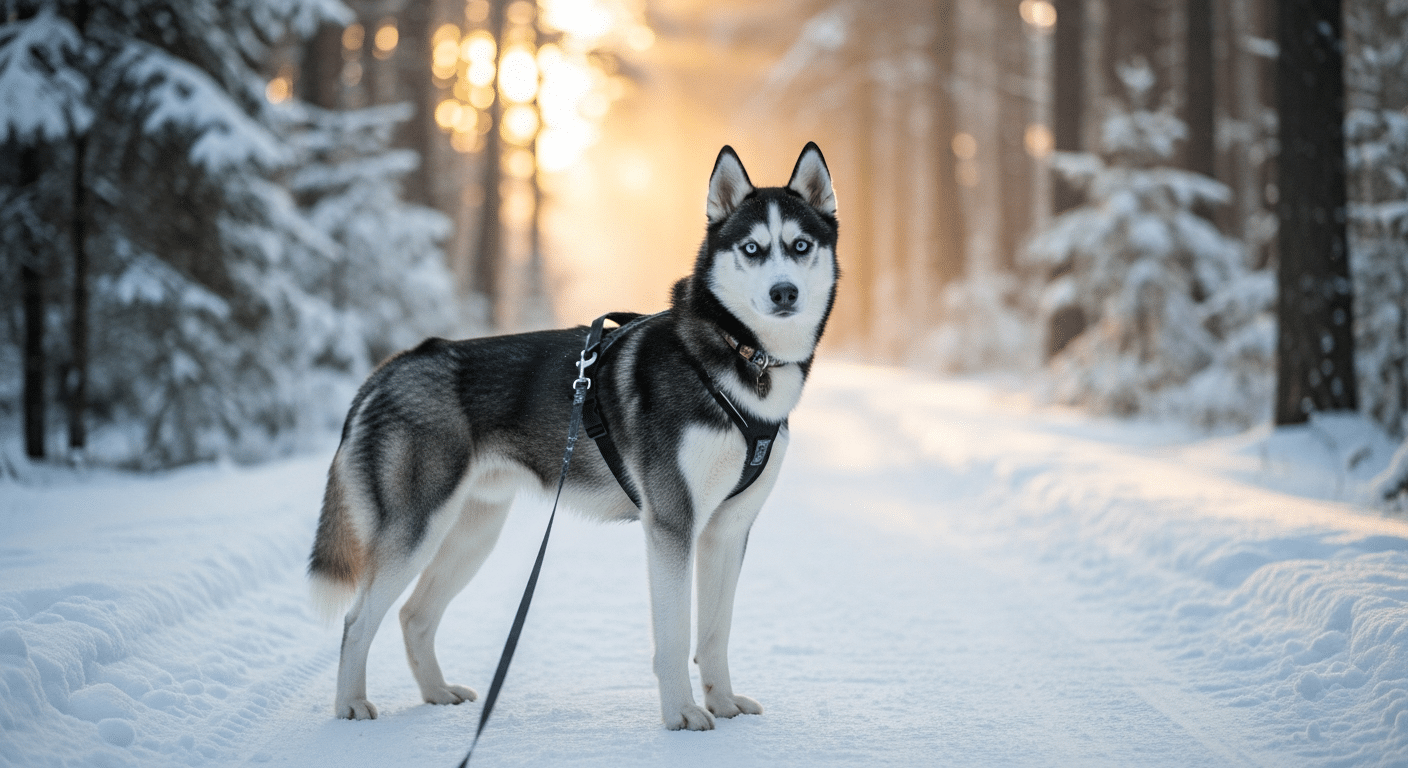
Best Harness for a Husky (No-Pull & Sledding Picks)
Huskies were bred to pull a sled, so the right harness depends entirely on the job. Here are the best no-pull harnesses for everyday walking control AND the best sledding/canicross harnesses for working, plus the chest-girth sizing chart every other guide leaves out.
The best harness for a Husky has to answer a question most ‘best of’ lists skip: what are you using it for? A Siberian Husky is a 35 to 60 lb athletic sled dog, bred over centuries to lean into a harness and pull, with a deep-but-narrow chest, a thick double coat, and a well-earned reputation as an escape artist. That changes everything. For everyday walking you want a no-pull harness with a front clip that redirects all that pulling drive and a snug fit a Husky can’t back out of. For sledding, canicross, skijoring or bikejoring you want the opposite, a proper X-back pulling harness that lets the dog pull safely. Use the wrong one and you either fight your dog on walks or risk hurting it on the trail. Below we rank the best harness for each job, an everyday no-pull pick, a true sled/canicross harness, and a best-value no-pull option, then give you the thing competing guides leave out: a real chest-girth sizing chart so you order the right size the first time.
The 3 best harnesses for a Husky
Ranked for an athletic 35 to 60 lb sled breed, one everyday no-pull harness, one true sledding/canicross harness, and a best-value no-pull pick. Each is verified in stock, tap through for the live price. Measure your dog’s chest girth against the chart below before you order.
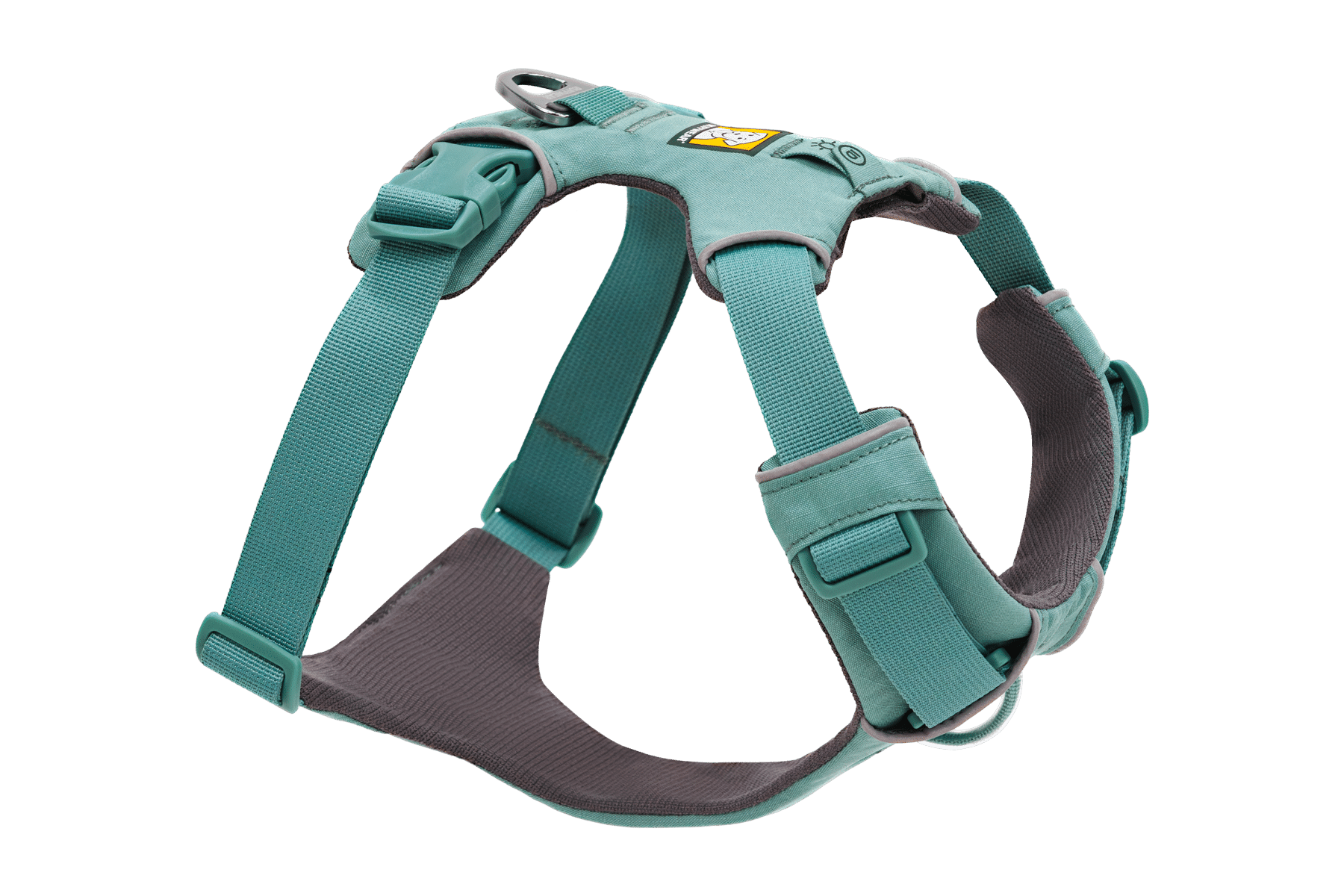
Ruffwear Front Range Dog Harness
For walking a Husky, which is what most of the day is, this is the harness we reach for first. It pairs a front no-pull clip on the chest (to redirect a dog that was literally bred to pull) with a back clip for relaxed walks, and the padded, Y-shaped front panel spreads a Husky’s surprising leash strength across the chest instead of the throat while cushioning a thick double coat. Four adjustment points dial in the snug fit a deep-but-narrow-chested Husky needs so it can’t simply back out, the classic Husky escape. Reflective trim, a light build that suits an athletic dog, and an over-the-head design make it the everyday harness a Sibe actually fits.
What we like
- Front clip genuinely curbs pulling, the everyday tool for a breed bred to pull on a leash
- Four adjustment points lock onto a deep-but-narrow Husky chest so it can’t back out and escape
- Padded Y-front spreads leash force off the trachea and cushions a thick double coat
- Skimlinks merchant: routes to ruffwear.com, the highest-paying source for this brand
The catches
- It’s a WALKING harness, not a sled harness, for canicross or pulling sports see the Neewa below
- Premium price versus a basic Amazon harness (you’re paying for fit, padding and durability)
- No grab handle on the standard Front Range; for a control handle, the rabbitgoo or a tactical vest adds one
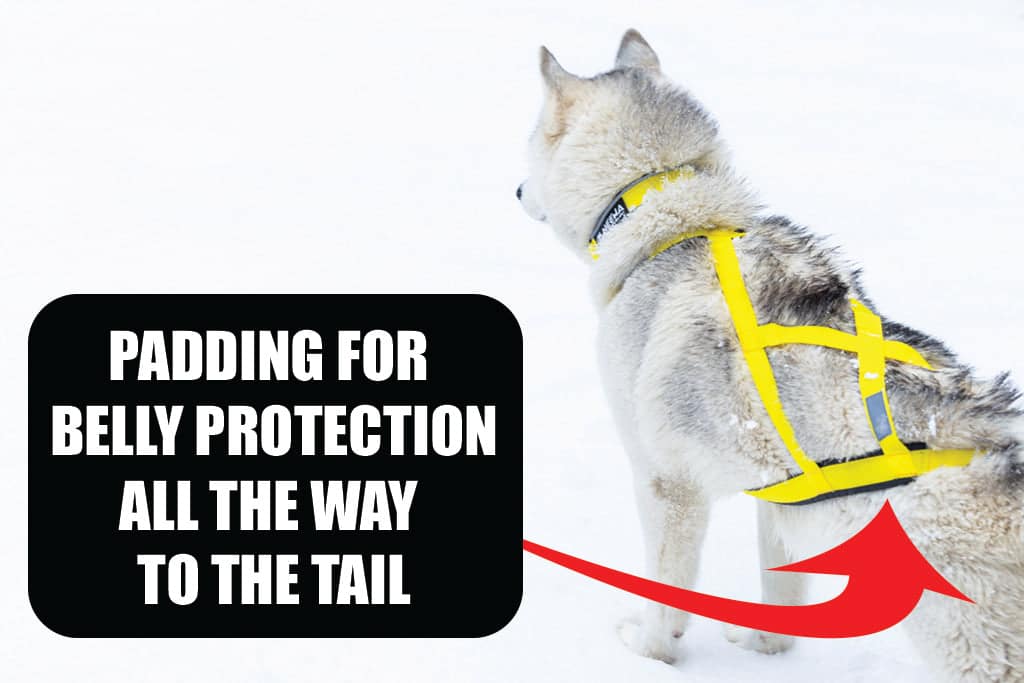
Neewa Pro Sled Dog Harness (X-Back)
If you want to actually let your Husky do the job it was bred for, sledding, canicross, skijoring, bikejoring, or scootering, this is the harness, and it’s the one a no-pull harness can’t replace. Its X-back design runs the load straight down the spine and distributes a pulling Husky’s force evenly across the whole body, so the dog can lean into the line safely and comfortably, with the pull point set well back at the base of the tail (never at the neck). It’s lightweight, padded at the chest and shoulders, and reflective. This is a working harness, use it for sport and pulling, and use the Front Range for ordinary walks.
What we like
- Real X-back design lets a Husky pull safely, the right tool for sledding, canicross and skijoring
- Distributes pulling force evenly down the body and away from the neck and trachea
- Lightweight, padded and reflective, built for an athletic working dog over distance
- Sized by chest girth across a full range so you can dial in an athletic Husky’s lean build
The catches
- It is NOT a no-pull or walking harness, it’s designed to let the dog pull, so don’t use it for loose-leash walks
- Routed via Amazon (Neewa isn’t a Skimlinks-direct brand); the Ruffwear Omnijore is the Skimlinks canicross alternative
- X-back sizing is its own thing, measure chest girth and back length and use Neewa’s chart before ordering
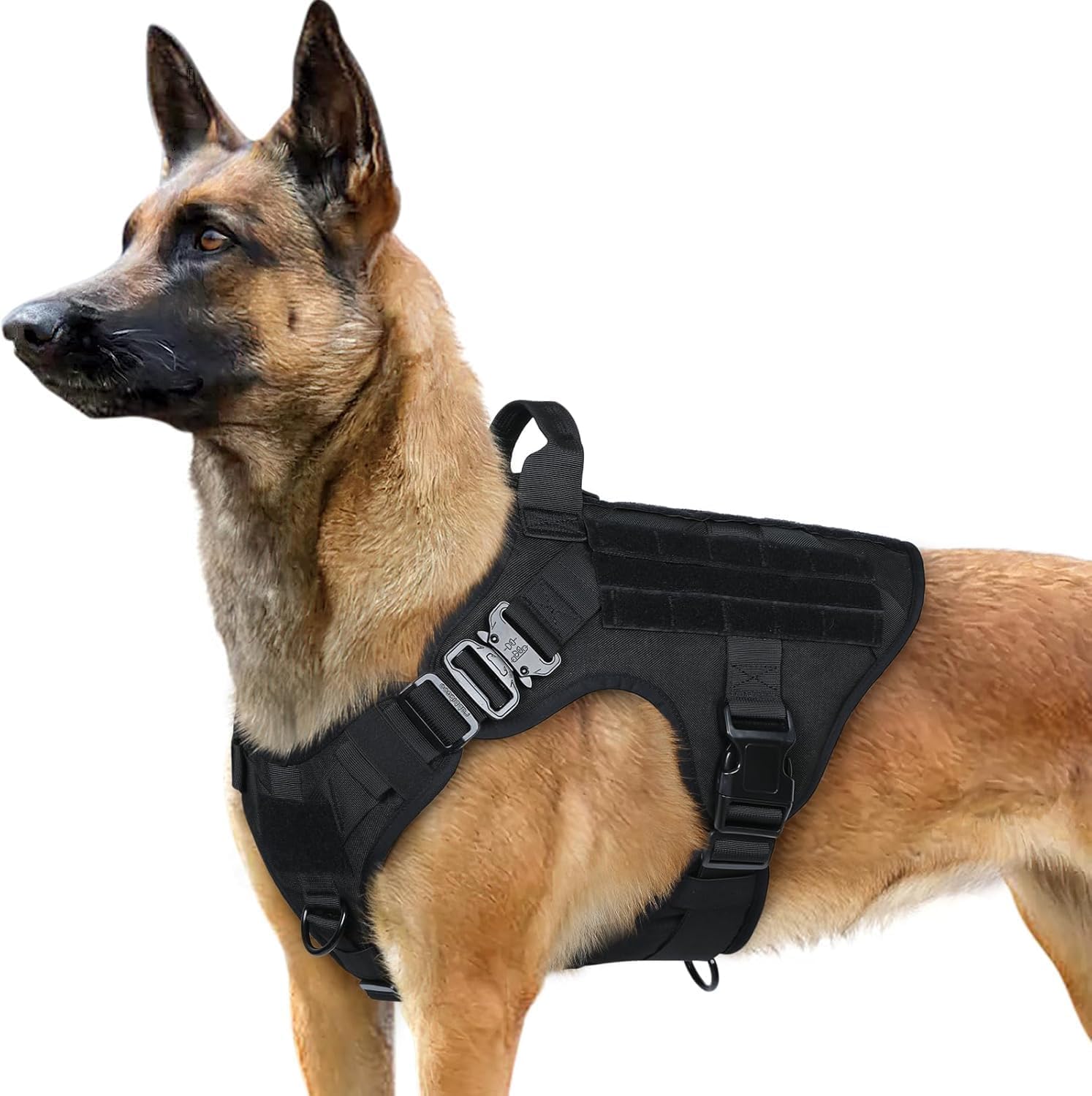
rabbitgoo No-Pull / Tactical Dog Harness (Large)
The best-value way to get a real no-pull setup on a Husky. It pairs a front chest clip for training with a back clip for everyday walks, two metal leash rings, not plastic, plus a padded vest body and a top handle for close control near roads or other dogs. Four adjustment points cinch the vest snug on a Husky’s deep-narrow chest so an escape-artist can’t twist or back out, and the wide panels keep a strong dog’s pull off the throat. For owners who want the same front-clip no-pull mechanism and a grab handle as the pricier picks, at a fraction of the cost, this is the smart everyday buy.
What we like
- Front clip curbs pulling at a budget price, effective for a driven, leash-keen Husky
- Two metal leash rings and a control handle for under thirty dollars
- Padded vest cinches snug on a deep-narrow chest, so an escape-artist Husky can’t back out
- Four adjustment points dial in an athletic Husky’s lean build for a secure fit
The catches
- Plastic quick-release buckles (fine for most Sibes; the rings themselves are metal)
- Heavier and warmer than the minimalist Front Range, a vest, not a hot-weather walking harness
- A working/sled harness it is not, for canicross or sledding use the Neewa X-back above
Why a Husky needs the right type of harness, not just any harness
This is the part most “best harness” lists gloss over, and for a Husky it’s the whole point. A Siberian Husky isn’t just an energetic dog, it’s a working sled dog, bred for centuries to pull. Pulling into a harness is hard-wired behaviour, not bad manners. That single fact splits a Husky’s harness needs into two completely different jobs:
- Everyday walking, here you want to reduce pulling, so you need a no-pull harness with a front (chest) clip that turns a lunging dog back toward you, plus a snug fit a Husky can’t escape.
- Sledding, canicross, skijoring or bikejoring, here you want to allow the dog to pull safely, so you need a sled (X-back) harness that spreads the load down the body and lets the dog lean into the line.
A no-pull harness used for canicross fights the dog’s natural motion and can rub or restrict the shoulders; an X-back sled harness used for an ordinary walk simply teaches your Husky that pulling is the plan. Most owners need the no-pull harness first, but if you do any pulling sports, you need both. On top of the walk-vs-sled split, two breed traits shape every Husky harness decision: a Husky is an escape artist with a deep-but-narrow chest that lets it back out of anything loose, and it’s an athletic 35 to 60 lb dog, lighter than the guardian breeds, so it usually sizes Medium to Large rather than Large to XL.
For background on the breed’s working heritage and temperament, the AKC Siberian Husky breed profile is a good primer, but the practical takeaway is simple: a Husky needs a harness chosen for the job, sized to a narrow chest, and fitted so it can’t escape.
Harness or collar for a Husky? (the airway issue)
Before the picks, the question every Husky owner asks: harness or collar? For walking a dog that pulls as instinctively as a Husky, the answer is a harness, and here’s the honest reasoning, not a blanket rule.
A Husky is bred to pull, and it will lean into a leash without a second thought. Clip that leash to a flat collar and every pull drives force straight into the trachea (windpipe) and throat. On a dog that pulls this readily, repeated neck pressure can mean coughing, gagging, or tracheal irritation over time, and choke, prong, or slip collars used carelessly on a determined puller carry a real risk of neck injury. A well-fitted harness moves all of that load onto the chest and shoulders, keeping the airway clear and giving you a steering point (the front clip) for everyday walks.
One honest caveat: a front-clip harness fitted too tightly across the shoulders can restrict a dog’s natural front-leg movement, which matters even more for an athletic breed. The fix isn’t to avoid front clips, they’re the most effective no-pull tool there is, it’s to fit the harness correctly (snug at the chest and girth, not binding across the shoulder) and to treat the front clip as a training tool you’ll wean off as your Husky learns loose-leash manners, not a permanent crutch. And remember: the front-clip rule is for walking. When you’re doing canicross or sledding, you switch to a rear-pull X-back harness designed for exactly the opposite job.
No-pull (walking) vs sledding (pulling): which harness does your Husky need?
This is the decision that matters most for a Husky, so let’s make it clearly. Pick by the job, and if you do both, own both harnesses:
| Your activity | Harness type | What it does | Our pick |
|---|---|---|---|
| Everyday walks, neighbourhood, on-leash control | No-pull (front-clip) | Redirects pulling toward you; keeps force off the neck | Ruffwear Front Range / rabbitgoo |
| Hiking, jogging beside you on a loose leash | No-pull or back-clip | Comfort + control without encouraging the pull | Ruffwear Front Range |
| Canicross, skijoring, bikejoring, scootering | X-back pulling harness | Lets the dog pull safely; load spread down the spine | Neewa Pro Sled (or Ruffwear Omnijore system) |
| Sledding / mushing / weight pull | X-back pulling harness | Built to take sustained pulling force over distance | Neewa Pro Sled |
Why you can’t use one harness for both: a no-pull harness is engineered to make pulling uncomfortable and to turn the dog, exactly what you don’t want when your Husky is meant to be towing you on skis. A sled (X-back) harness places the pull point at the base of the tail and frees the dog to lean into the line, which on an ordinary walk just trains your Husky that pulling works, and offers no front-clip steering. They are opposite tools for opposite jobs.
For most Husky owners, the everyday no-pull harness is the one you’ll use 95% of the time, start there. If you’ve caught the canicross or skijoring bug (many Husky owners do, it’s a fantastic outlet for the breed’s energy), add a dedicated X-back harness like the Neewa for those sessions. If you want a complete, premium canicross set-up, Ruffwear’s Omnijore joring system pairs a towline and hip belt with a pulling harness. To compare the full no-pull field across all breeds, start at the large-dog harness hub; for handle-equipped control builds, see the tactical dog harness guide.
What to look for in a Husky harness
Whichever job you’re buying for, four features separate a great Husky harness from one that fails this particular breed:
- An escape-proof, snug fit. This is the breed-defining feature. A Husky’s deep-but-narrow chest lets it shrug, twist, or back straight out of any harness that’s even slightly loose. Sibes are famous Houdinis. Look for four or more adjustment points and a body (vest or multi-strap) that genuinely wraps the chest, then fit it snug. A harness the dog can escape is worthless on a Husky.
- The right clip for the job. For walking, a front (no-pull) clip on the chest to redirect a born puller. For pulling sports, a rear pull point on an X-back harness. Dual-clip walking harnesses give you a front ring for training and a back ring for relaxed walks.
- Padding and a coat-friendly build. Padding spreads a strong dog’s pull off the throat and, just as important for a Husky, cushions a thick double coat so straps don’t matt or chafe the fur. Wide, smooth panels beat thin straps.
- A light, athletic build with reflectivity. Huskies are lean, fast and high-energy, so a heavy tactical vest is overkill for most walks, a lighter harness suits the breed better. Reflective trim earns its place for early-morning and evening runs.
What size harness for a Husky? (chest-girth chart)
This is the step every other Husky harness guide skips, and the one that drives the most returns and the most escapes. Harness size is set by chest girth, not weight. Measure the widest part of the ribcage, just behind the front legs, with a soft tape pulled snug; also measure the neck at the base. Because a Husky is athletic rather than heavy, most adult Sibes land between 24″ and 34″ of chest girth, males larger, females leaner, with a neck of roughly 14 to 22″. That puts most Huskies in a Medium or Large, not the Large to XL that bigger guardian breeds need. Here’s how that maps to the walking picks above:
| Chest girth | Typical Husky | Size to order |
|---|---|---|
| 22 to 27″ | Female / leaner or younger Husky | Medium (Ruffwear Front Range M, rabbitgoo M) |
| 26 to 32″ | Most adult Huskies | Medium to Large (Ruffwear Front Range M/L, rabbitgoo L) |
| 31 to 36″ | Big males / broad-chested Sibes | Large (Ruffwear Front Range L, rabbitgoo L) |
For the Neewa X-back sled harness, sizing is its own thing: you measure chest girth and back length (neck to tail base), then match the brand’s sled-specific chart, an X-back has to fit the dog’s whole topline, not just the chest, so always size it from Neewa’s chart rather than guessing from the walking size.
Getting the rest of your Husky’s gear sized right matters just as much, if you’re kitting out a new dog, our what size crate for a Husky guide uses the same measure-first approach, and the best dog bed for a Husky guide covers sizing a bed to an active, thick-coated dog. The full Husky gear guide ties the whole kit together.
How to stop a Husky escaping its harness
If you own a Husky, you already know the problem: turn around for a moment and the dog has reversed out of its harness and is doing victory laps. The escape isn’t a defect in the harness, it’s a deep-but-narrow chest plus a clever, determined dog. Here’s how to beat it:
- Fit snug, then test under load. Tighten every adjustment point until you pass the two-finger test, then have the dog wear it and tug back on the leash. If the harness shifts forward toward the head or the chest piece rides up the neck, it’s too loose, cinch it down. A Husky escapes by backing up and twisting, so the chest and neck straps are the critical ones.
- Choose a harness with enough adjustment points. Two-point harnesses leave gaps a narrow-chested dog can exploit. Four or more points (like the Front Range and rabbitgoo) let you close those gaps. For a confirmed Houdini, an escape-resistant style with a belly strap or a tighter wrap is worth it.
- Re-check the fit as the coat changes. Huskies blow their coat twice a year; a harness fitted over a full winter coat will be loose once the undercoat sheds out. Re-adjust seasonally.
Because Huskies combine escape skills with a strong prey drive and a tendency to bolt, never rely on the harness alone for security near roads, keep the leash short, the fit snug, and ID tags on the collar. For more on safely containing a breed this clever, our Husky gear guide covers the full set-up.
How we chose these Husky harnesses
A harness being popular doesn’t make it right for a Husky. We ranked on the things that actually matter for an athletic, escape-prone, born-to-pull sled breed:
- Right harness for the job. We deliberately picked across both jobs a Husky owner faces, a front-clip no-pull harness for everyday walking, and a true X-back harness for pulling sports, because no single harness does both well.
- Escape-proof fit. Enough adjustment points and a body that wraps a deep-narrow chest so a Houdini Husky can’t back out. The breed’s #1 harness problem, and our first filter for the walking picks.
- Coat and comfort. Padded, smooth panels that won’t matt or chafe a thick double coat over long, active outings.
- Athletic, appropriate build. Light enough for a lean, fast dog; reflective for low-light runs. We didn’t default to the heaviest tactical vest the way breed-agnostic lists do.
- Value across the range. A sub-$30 no-pull value pick, a premium everyday no-pull harness, and a dedicated sled harness, because the right harness depends on what you and your Husky actually do.
How to fit and introduce a harness to a Husky
Even the best harness fails if it’s fitted loose or rushed onto a wary dog. Two things make the difference on a Husky:
- Fit it snug, then re-check under load, every time. Tighten every point until you pass the two-finger test, then walk the dog and watch for the harness shifting, twisting, or the chest piece riding toward the throat, all signs it’s too loose or the wrong size. Because a Husky can back out of a loose harness in seconds, err on the snug side at the chest and neck, and confirm it doesn’t bind across the shoulders so an athletic dog can move freely.
- Introduce it with food and patience. Huskies are smart and a little dramatic about new gear going over the head. Let the dog sniff the harness, feed treats through the head opening, and build up over a few short sessions before a real walk. A Husky that associates the harness with good things, and especially with a run, will practically dress itself.
Once the harness is dialled in, the rest of the leash setup matters too. For walks, clip a standard leash to the front ring for training and the back ring once your Husky walks politely; for canicross or skijoring, use the X-back harness with a bungee towline and a hip belt so the pull is cushioned for both of you. And because Huskies are high-energy chewers when bored, give that drive a legal outlet, see our best chew toys for a Husky guide.
Our verdict: the best harness for a Husky
Match the harness to the job. For everyday walking, what most Husky owners need most of the time, the Ruffwear Front Range is the pick: a padded, well-built no-pull harness with a front clip to redirect a born puller, four adjustment points to lock onto a narrow chest so your Husky can’t escape, and a coat-friendly build. If you do canicross, skijoring, bikejoring or sledding, add the Neewa Pro Sled Dog Harness, a true X-back harness that lets your Husky pull safely, which a no-pull harness simply can’t do. And if you want a no-pull setup on a budget, the rabbitgoo gives you a front clip, a back clip, two metal D-rings and a control handle for under thirty dollars.
Whichever you choose, measure the chest girth first and fit it snug, with a Husky, the fit is the difference between a great walk and a loose dog. For the rest of the lineup, browse the large-dog harness hub and the full Husky gear guide.
More Husky & active-dog gear
Husky harnesses: common questions
What size harness for a Husky?
Size a Husky harness by chest girth, not weight. Measure the widest part of the ribcage just behind the front legs; most adult Huskies run 24 to 34″ of girth (males larger, females leaner) with a 14 to 22″ neck. Because Huskies are athletic rather than heavy, that puts most in a Medium or Large, not the Large to XL bigger breeds need. Leaner females and younger dogs take a Medium, most adults a Medium to Large, and big broad-chested males a Large. For an X-back sled harness you also measure back length and use the brand’s sled chart. Fit it snug at the chest and neck so an escape-artist Husky can’t back out.
What is the best no-pull harness for a Husky?
The best no-pull harness for a Husky is one with a front leash clip on the chest, which turns a born puller back toward you instead of letting it lean into the pull. Our overall pick is the padded Ruffwear Front Range, a front-and-back-clip harness with a Y-shaped front that frees the shoulders and four adjustment points to fit a narrow chest snugly. For value, the rabbitgoo gives you the same front-clip no-pull design plus two metal D-rings and a control handle for under thirty dollars. Pair either with consistent loose-leash training and wean off the front clip as your Husky learns, a no-pull harness is a tool, not a magic off-switch for a breed bred to pull.
Sledding vs walking harness, which does my Husky need?
It depends entirely on the activity, and many Husky owners need both. For everyday walking, use a no-pull harness with a front clip that redirects pulling and keeps force off the neck. For sledding, canicross, skijoring or bikejoring, use a sled (X-back) harness that places the pull point at the base of the tail and lets the dog pull safely with the load spread down its body. They’re opposite tools: a no-pull harness fights the pull, a sled harness allows it. Don’t sled or do canicross in a no-pull harness, and don’t expect good leash manners walking in a sled harness. Most owners start with a no-pull harness for daily walks and add an X-back harness if they take up pulling sports.
Why do Huskies pull so much on the leash?
Because they were bred to. Siberian Huskies are sled dogs developed over centuries to pull a load over long distances, so leaning into a harness and pulling forward is hard-wired, instinctive behaviour, not disobedience. That’s also why pulling can be hard to train out completely and why a no-pull harness (which works with the dog’s body to redirect the pull) is more effective than punishment. For everyday walks, use a front-clip no-pull harness plus loose-leash training; and channel the pulling drive into a positive outlet by trying canicross or skijoring with a proper X-back harness, where pulling is exactly what you want.
Are no-pull harnesses bad for sledding or canicross?
Yes, a no-pull harness is the wrong tool for any pulling sport. No-pull harnesses are designed to make pulling uncomfortable and to turn the dog toward you, which is the opposite of what you want when your Husky is meant to be towing you in canicross, skijoring, bikejoring or sledding. Using a front-clip walking harness for those sports can fight the dog’s natural motion and rub or restrict the shoulders. For pulling sports, use a proper X-back sled harness (like the Neewa) or a dedicated joring system that places the pull point at the base of the tail and spreads the load along the dog’s body, so it can lean into the line safely and comfortably.
How do I stop my Husky escaping its harness?
Huskies escape by backing out, because their deep-but-narrow chest lets them reverse and twist free of anything loose. The fix is fit, not heavier hardware. Choose a harness with four or more adjustment points and a body that wraps the chest, then tighten it until you can slide just two fingers flat under any strap. Test it by tugging the leash backward, if the harness shifts toward the head or the chest piece rides up, cinch it tighter. Re-check the fit seasonally, because a harness fitted over a full winter coat goes loose once your Husky blows its coat. For a confirmed Houdini, an escape-resistant style with a belly strap adds security, and you should always keep ID tags on the collar.
Is a harness better than a collar for a Husky?
For walking, yes. A Husky is bred to pull and will lean into a leash readily, and a flat collar drives every pull straight into the trachea and throat, which can cause coughing, gagging or tracheal irritation, and choke, prong or slip collars carry a real risk of neck injury on a determined puller. A well-fitted harness spreads that force across the chest and shoulders, keeps the airway clear, and gives you a front-clip steering point for walks. Keep a flat collar with ID tags and a microchip on your Husky, escape-prone Sibes need identification, but clip the leash to a harness.