 Dog Gear, Sized Right
Husky Gear Guide: Essential Supplies for a High-Energy Northern Breed
Everything a Siberian Husky owner actually needs, an escape-proof crate, a pulling harness, a cooling bed, tough enrichment toys, GPS containment, serious grooming gear, bowls and a leash, with one hero pick per category and links to our full deep-dive guides. Gear chosen for a heavy-shedding, hot-running, escape-artist, high-energy northern breed.
The Siberian Husky is one of the most striking, and most misunderstood, dogs you can own: a high-energy, intelligent, independent northern breed built to run for miles in the snow. That heritage shapes almost everything you buy, often in ways that surprise new owners. A Husky is a notorious escape artist, they dig, climb, chew and bolt, so containment (a secure crate and serious GPS tracking) is a genuine essential, not a nice-to-have. They were bred to pull, so a no-pull harness beats a collar every time. They carry a thick double coat that blows out twice a year, so grooming and a good vacuum are part of the deal. And the counter-intuitive one: an Arctic dog runs hot indoors, so it wants a cooling bed, not a warm one. Add a busy, easily bored brain that needs enrichment, and you’ve got a breed whose Husky supplies really are breed-specific. This guide is the hub: an honest run-through of every essential a Husky owner needs, crate, harness, bed, toys, grooming, containment, bowls, leash and collar, with one hero pick we trust in each category and a link to the full deep-dive guide where the detailed sizing and rankings live. Whether you’re writing a Husky puppy checklist or upgrading an adult’s kit, start here.
The Husky essentials, at a glance
One hero pick in each core category, crate, harness, bed and toy, each chosen for a heavy-shedding, hot-running, escape-artist, high-energy breed and verified in stock. Tap through for the live price, and read the category sections below for our full deep-dive guides.
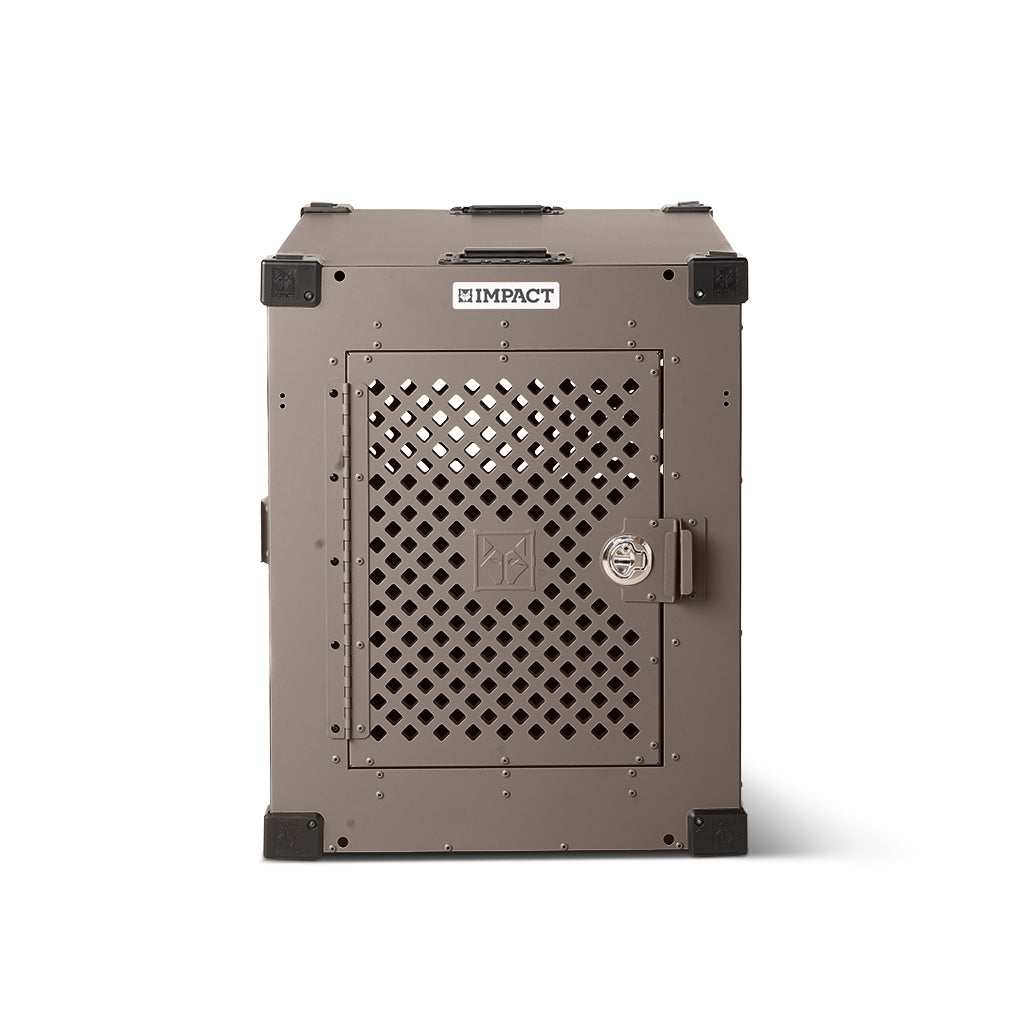
Impact Stationary Dog Crate
The Siberian Husky is the dog world’s most committed escape artist, they dig, climb, chew and pop weak latches, and a bored Husky in a flimsy crate is a Husky loose in the neighbourhood. Impact’s aircraft-grade aluminum crate has no wire panels to bend or bars to chew through, a genuinely secure latch a clever Husky can’t work open, tooth-safe edges and real ventilation for a dog that runs warm. It’s the rare crate actually built to contain a strong, smart, determined dog rather than just hold a calm one, a true buy-once purchase. On a budget? A heavy-gauge steel crate with a chew-proof latch and a divider is the value route while a puppy grows.
What we like
- Solid aluminum with no wire to bend, actually contains the breed’s #1 escape artist
- Secure, dog-proof latch a clever Husky can’t paw, nudge or chew open
- Excellent ventilation matters for a thick-coated breed that runs hot
- Backed by a long dog-damage warranty, genuinely a once-in-a-lifetime crate
The catches
- Premium price, far more than a folding wire crate
- Heavy; you set it in place rather than fold and move it daily
- A determined chewer still needs a crate routine + exercise, no crate replaces a tired-out Husky
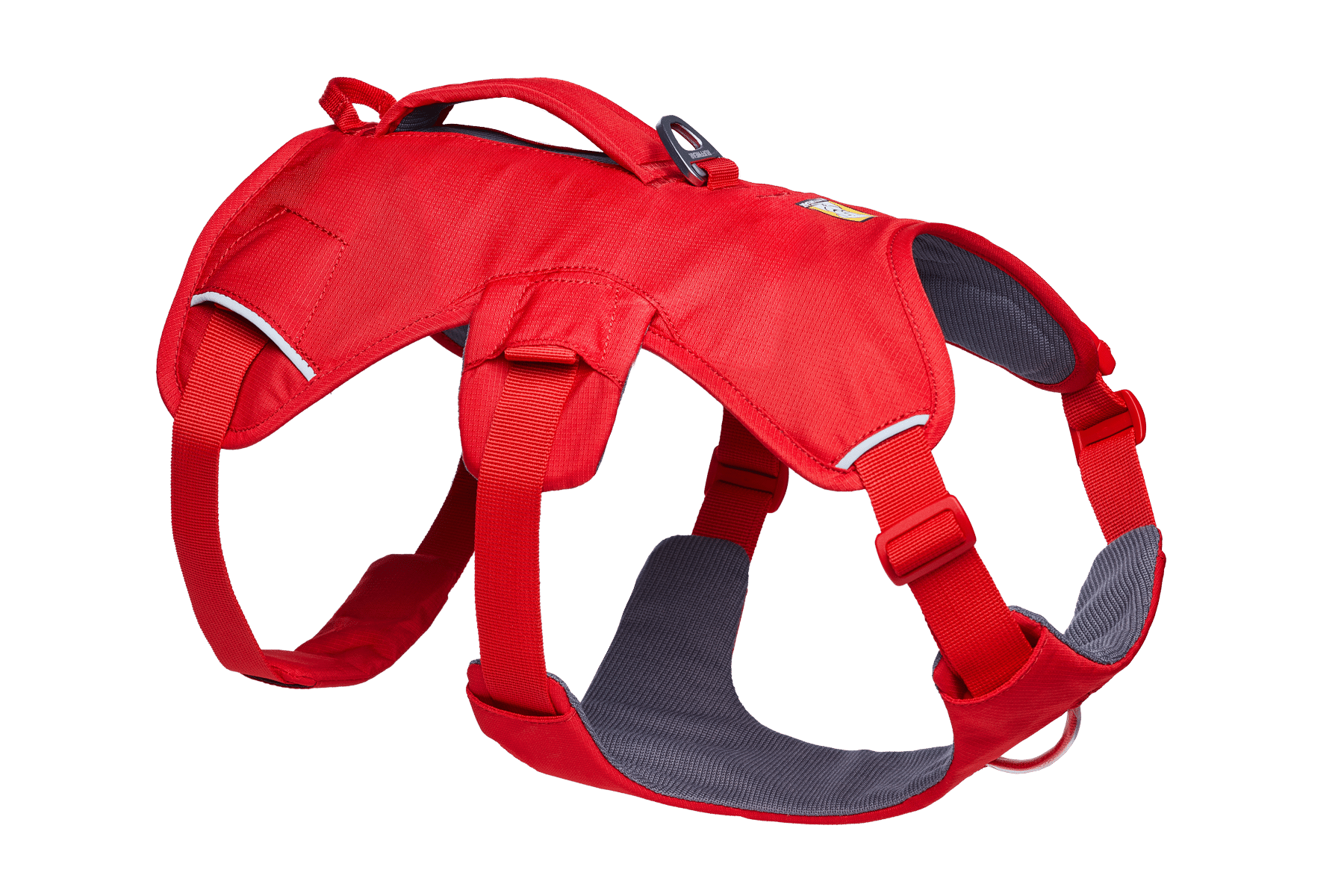
Ruffwear Web Master Harness
Huskies were bred to pull a sled for hours, pulling isn’t a bad habit, it’s the job in their DNA, so a thin collar on a Husky just chokes the throat and gives you no control. A well-fitted harness puts the load on the chest, and the Web Master adds a sturdy top control handle to steady or redirect a strong, driven dog, locking down at three points so a wriggly, leggy Husky can’t back out. It’s tough enough for canicross, bikejor and hiking with a high-energy breed, yet has a front clip to take the edge off everyday pulling while you train. The single most useful piece of Husky walking gear.
What we like
- Takes a born puller’s force off the throat and onto the chest, better control, safer neck
- Top handle steadies, lifts or redirects a strong, driven dog at the trailhead or vet
- Three secure points stop a leggy, wriggly Husky from backing out and bolting
- Tough enough for canicross, bikejor and long hikes with a high-energy breed
The catches
- Pricier than a basic strap harness
- Measure the chest girth. Husky coats hide a leaner frame, so go by the tape, not the eye
- For sled-style pulling sports you’ll also want a dedicated pulling/X-back harness

FunnyFuzzy Cooling Orthopedic Dog Bed
Here’s the counter-intuitive bit that trips up new owners: a Husky is an Arctic breed, but it carries its own parka, that thick double coat means it runs hot indoors and seeks out cool tile and shade, not a warm, fluffy nest. So the right bed for a Husky is a cooling one. FunnyFuzzy’s bed pairs a supportive orthopedic foam base (great for an athletic, hard-running breed’s joints) with a breathable, heat-wicking cooling top and a tough, removable washable cover that copes with relentless double-coat shedding. A bed that breathes, supports and washes, exactly backwards from the warm bed most people buy by mistake.
What we like
- Cooling, breathable surface suits a thick-coated breed that overheats on a warm bed
- Orthopedic foam supports the joints of an athletic, hard-running dog
- Removable, machine-washable cover handles heavy double-coat shedding
- A sane middle ground, supportive without being a hot, insulating nest
The catches
- A cooling bed is the opposite of what most ‘best dog bed’ lists suggest, right for a Husky, though
- Get a size your Husky can fully stretch out on, they sprawl to dump heat
- A young, chewy Husky may need a chew-resistant or elevated cot first

West Paw Tux Treat Toy
A Husky is intelligent, high-energy and easily bored, and a bored Husky redecorates your house and digs up the yard. The fix is half exercise, half mental work, and a tough, stuffable toy does both. West Paw’s Zogoflex Tux is one of the most durable stuff-and-chew toys made: pliable but near-impossible to destroy, dishwasher-safe, and stuffable so you can turn a meal into a long, calming puzzle that tires out a busy brain. Pair it with puzzle feeders and a snuffle mat and you’ve got a Husky that naps instead of plotting its next escape. Backed by a one-time replacement guarantee, the brand trusts its rubber against big jaws.
What we like
- Pliable, near-indestructible Zogoflex built to survive a strong, busy chewer
- Stuff and freeze it to turn a meal into a long mental workout for a smart breed
- Mental enrichment burns Husky energy, a tired Husky digs and bolts far less
- Floats, bounces, goes in the dishwasher, and has a one-time tough-chew guarantee
The catches
- No toy is fully indestructible, supervise and replace if it splits
- One toy isn’t enough, a Husky needs a rotation plus daily exercise
- Best as a stuffable chew, not the only fetch toy in the box
Why Husky gear is breed-specific (and why the obvious choice is often wrong)
Before the shopping list, the why, because with a Husky, the obvious choice is often the wrong one. A Husky isn’t just an energetic dog; it’s a purpose-built sled dog with a set of traits that flip normal gear advice on its head. Get these five things right and the rest of the list follows.
- Escape artist. Huskies are the breed most likely to dig under, climb over, chew through or simply bolt. That makes real containment a top priority: a crate with a latch they can’t work open, a secure yard, and, because a loose Husky covers miles fast, GPS tracking. This is the trait most gear lists underplay.
- Born to pull, pulling is in the DNA, not a training failure, so a thin collar just chokes the neck. A well-fitted no-pull or pulling harness is the default walking tool, and for an athletic dog it opens the door to canicross and bikejor.
- Heavy double-coat shedder, a Husky sheds all year and “blows” its undercoat in clumps twice a year. The real grooming job is an undercoat rake / de-shedding tool and a vacuum that can cope, not a fancy clipper. (And never shave the coat.)
- Runs hot, not cold, yes, it’s an Arctic breed, but it’s wearing the parka. Indoors and in summer a Husky overheats, sprawls on cool tile and pants. So it wants a cooling bed, shade, water and care in the heat, the opposite of the warm, fluffy bed most people buy.
- Smart, independent & easily bored, a clever working brain with no off-switch. Without enrichment and serious exercise, that energy goes into digging, escaping and redecorating. Toys and puzzles are essentials, not extras.
So the gear you choose should fit the breed, not just any medium dog. Below we go category by category, one hero pick each, then a link to the full guide. Not sure on crate dimensions? Our dog crate size calculator turns your dog’s measurements into the right size in seconds.
Crate, an escape-proof den for the breed’s #1 Houdini
We’re putting the crate first because for a Husky it does a job it doesn’t for most breeds: it has to actually contain an escape artist. A Husky will test every latch, chew wire, and worm out of a gap, and a bored or anxious one treats a flimsy crate as a puzzle to solve. So the priorities are secure hardware and real strength first, then size. Look for a dog-proof latch a clever paw and muzzle can’t work open, solid construction with no thin wire to bend, and good ventilation (a Husky runs warm).
On size, a crate should be just big enough to stand fully, turn around and lie down stretched out, for a typical adult Husky (~35 to 60 lbs) that’s usually a 36-inch crate, sometimes a 42-inch for a big male. Too large lets a puppy soil one end, which is why a divider (or our size calculator) is so useful while they grow. A heavy steel crate with a chew-proof latch is the value route; for a determined chewer, digger or escape artist, or a buy-once crate, an aircraft-aluminum model like our hero pick, the Impact Stationary above, is built to hold a Husky that others can’t. Pair the crate with enough exercise, no crate substitutes for a tired-out Husky.
For the full ranked lineup, exact dimensions and the escape-proofing checklist, see the deep-dive above, plus our best dog crates roundup, and run the numbers through the crate size calculator before you buy.
Harness, built for a born puller (and canicross)
If you buy one piece of Husky walking gear, make it a harness. Huskies were bred to lean into a load and pull a sled for hours, pulling isn’t misbehaviour, it’s the job written into the breed, so a collar on a Husky simply chokes the throat and gives you almost no control. A well-fitted harness moves the force onto the chest, protects the neck, and with the right design lets you steer a strong, driven dog.
For a Husky we look for: a secure, escape-resistant fit a leggy, wriggly dog can’t back out of and bolt; a front clip to take the edge off everyday pulling while you train loose-leash manners; sturdy metal hardware; and, for an athletic breed, build quality tough enough for canicross, bikejor and long hikes. A top control handle is a real bonus at the trailhead, the vet or a busy street. Because that thick coat hides a leaner frame, measure the chest girth and go by the tape, not the eye. Our hero pick, the Ruffwear Web Master above, nails the secure fit, padding, hardware and grab handle. (For sled-style pulling sports you’ll also want a dedicated X-back pulling harness.)
For girth sizing charts, no-pull vs pulling vs everyday, and our full ranked picks, see the deep-dive above, plus our best dog harnesses hub across all breeds and sizes.
Bed, a COOLING bed, because a Husky runs hot
This is the category where the obvious choice is most often wrong. Because a Husky is an Arctic breed, people instinctively buy a warm, fluffy, nest-style bed, and the dog refuses to use it, choosing the cool tile floor instead. The reason: a Husky carries its insulation in its thick double coat, so indoors and in summer it runs hot and actively seeks cool surfaces. The right bed for a Husky is therefore a cooling, breathable one, the opposite of what most “best dog bed” lists recommend.
Two more things matter. First, support: a Husky is an athletic, hard-running dog, so an orthopedic foam base protects the joints, look for a bed that’s cooling and supportive, like our hero pick the FunnyFuzzy cooling orthopedic bed above. Second, a tough, removable, washable cover is non-negotiable, because a double coat sheds onto everything and you’ll be washing it constantly. Size it so your Husky can fully stretch out and sprawl to dump heat. In genuinely cold climates a Husky is perfectly happy on a normal bed, but indoors, in centrally heated homes and in summer, cool and breathable wins. A raised elevated cot (airflow underneath) is another great hot-weather option, and a smart first bed for a chewy puppy.
See the full cooling-vs-warm, sizing and orthopedic breakdown above, or browse every option in our best dog beds hub.
Chew toys & enrichment, the antidote to a bored Husky
For a Husky, toys aren’t a luxury, they’re damage control. This is a smart, high-energy working breed with no off-switch, and a bored Husky digs craters, shreds furniture and engineers escapes. The job is half exercise, half mental work, and the right toys deliver the second half. Prioritise tough, non-toxic rubber (the West Paw Zogoflex and KONG families are built for strong jaws) plus tough natural chews. Avoid rawhide (it swells and can block the gut), cooked bones, and anything small enough to swallow or that splinters.
Then lean hard into enrichment: stuffable toys (stuff and freeze a KONG or our hero pick, the West Paw Tux above, to make a meal last an hour), puzzle feeders, snuffle mats and short training games. A Husky that gets a real physical and mental workout is a Husky that naps instead of plotting its next breakout. Rotate a couple of tough toys plus a puzzle, refresh the rotation to keep a clever dog interested, and always supervise.
For our full ranked list of tough toys, chews and enrichment puzzles, and what to avoid, read the deep-dive guide above.
Grooming & shedding, the double coat is the real job
If a Husky has one truly demanding care need, it’s the coat. A Husky carries a dense double coat, a soft insulating undercoat under a weather-proof topcoat, that sheds all year and, twice a year, “blows”: the entire undercoat lets go in clumps over a couple of intense weeks. There will be fur on everything. So the grooming budget for a Husky goes on managing that coat, not on fancy clippers:
- De-shedding tool / undercoat rake, the single most important grooming tool for a Husky. A good undercoat rake or de-shedding tool pulls the loose undercoat before it lands on your sofa, especially during a coat blow. See our best de-shedding tools for dogs guide for the models that actually work on a double coat.
- Slicker & pin brush, for the topcoat and to finish; a weekly brush most of the year, daily during a blow.
- A vacuum that can cope, with a double-coat shedder, the right vacuum is genuinely part of the kit. Our best vacuums for dog hair guide covers the models that handle Husky undercoat without clogging.
- Never shave a Husky, the double coat insulates against heat as well as cold and protects the skin; shaving it can wreck the coat and the dog’s temperature control. Brush it out, don’t cut it down.
- Bathe only occasionally with a gentle shampoo (a bath + blow-dry helps clear a coat blow), plus the usual nails, ears and teeth.
Embrace it: a Husky will shed, and no tool stops it entirely, the goal is to capture the loose fur on your terms with a de-shedding tool, a brushing routine and a capable vacuum, rather than finding it on your clothes for the next month.
Containment & GPS tracking, because Huskies bolt
This is the section most Husky gear lists skip entirely, and it’s arguably the most important. The Siberian Husky is the classic escape artist: an independent, high-prey-drive, high-stamina dog that will dig under a fence, scale it, slip a gate, or simply run the moment a door opens, and once loose, a Husky can cover miles before it even thinks about stopping. Recall is notoriously unreliable in this breed. So containment isn’t optional; it’s a core safety essential.
- A genuinely secure yard, a tall fence (Huskies climb), dug-in or buried at the base (they dig), with gates that latch securely. Many owners never let a Husky off-lead in unfenced areas at all.
- A GPS tracker / GPS containment collar, for a breed that bolts, a GPS collar is the single biggest peace-of-mind upgrade. Modern GPS dog fences create a virtual boundary and alert you the instant your Husky crosses it, and a GPS tracker lets you locate a runaway in real time. See our best GPS dog fences guide, and our head-to-head SpotOn vs Halo comparison for the two leading collars, this is gear we’d put near the top of any Husky checklist, not an afterthought.
- A secure crate & harness, the escape-proof crate above for indoors, and a harness a Husky can’t back out of for walks (a Husky that slips its collar is a Husky gone).
- ID tag + microchip, the low-tech backstop. A flat, securely attached tag plus a registered microchip dramatically improves the odds of getting a bolted Husky home.
The mindset that keeps a Husky safe: assume it will try to escape, and build redundant layers, a secure yard, a GPS collar, a harness it can’t slip, and a microchip, so that when (not if) it tests the perimeter, you’re covered.
Bowls & feeding, heavy, non-tip and the right size
Feeding gear for a Husky is refreshingly simple, with a couple of breed notes. Get heavy stainless-steel bowls: stainless is hygienic and dishwasher-safe, and the weight stops a strong, busy dog from skating a light dish across the kitchen (plastic can also harbour bacteria and irritate skin). Size up to roughly a 4 to 8 cup bowl for an adult, and start a puppy with a smaller one.
- Slow-feeder bowl (optional). Huskies are typically not big eaters and many are famously “picky,” but if yours gulps its food, a maze-style slow feeder helps; a stuffed, frozen toy does the same job and adds enrichment.
- A sturdy water bowl, always full, a hot-running, athletic breed needs constant access to fresh water, doubly so in summer and after exercise.
- Quality food for an active dog, feed a complete diet suited to a working/active breed; Huskies are efficient metabolisers and many do well on relatively modest portions, so watch the body condition rather than the bag’s chart. (Diet specifics are a vet conversation.)
That’s really it, no elevated-feeder fuss is needed for a medium dog like a Husky. Heavy, non-tip stainless bowls, clean water on tap, and a good diet cover the feeding essentials.
Leash & collar, for ID and training, not for restraint
The Husky rule of thumb: walk on the harness, keep the collar for ID. A born puller shouldn’t take force on the throat, a Husky can slip a loose collar and bolt, and the collar’s main job is to carry tags and clip on quickly. Buy both for quality, the failure point is almost always the hardware:
- Collar: a well-fitting flat collar in strong nylon with a sturdy buckle and a welded D-ring, snug enough that a Husky can’t back out of it (a too-loose collar is how Huskies get loose). Many owners prefer a martingale for its slip-resistant, no-choke fit. Carry tags here.
- Leash: a 4 to 6 ft reinforced-nylon lead with a solid metal trigger snap for everyday control, plus a long line (20 to 30 ft) for safe sniffing and recall practice in open areas. Skip retractable leads, they teach a born puller to pull and give little control. Clip the everyday lead to the harness for walks.
- ID + tech backup: a flat ID tag is non-negotiable, with a microchip and ideally a GPS collar (above) as the backup for a breed that bolts. Reflective gear helps for low-light walks with a fast dog.
Day to day, clip the leash to the harness for walks and to the collar only for a quick “hold still.” For loose-leash manners with a born puller, a front-clip harness plus calm, consistent, reward-based training beats any “stronger” collar, and never trust off-lead freedom to a Husky’s recall.
Husky supplies checklist (puppy & adult)
Pulling it together, here’s the full Husky must-haves list in one place, ideal as a Husky puppy checklist. Start with the core gear before your dog comes home; add the rest in the first weeks. Remember the breed golden rules: contain the escape artist, harness the puller, cool the hot-runner, and bust the boredom.
| Category | What to get | Why it matters for a Husky |
|---|---|---|
| Crate | 36″ (or 42″ for a big male) heavy steel or aluminum crate with an escape-proof latch; divider for a puppy | Has to contain the breed’s #1 escape artist, not just hold a calm dog |
| Harness | Secure no-pull / pulling harness with metal hardware (+ control handle) | A born puller chokes on a collar; a slip-proof harness keeps a bolter on lead |
| Bed | Cooling, breathable orthopedic bed with a washable cover; elevated cot for summer | A double-coated Arctic dog runs HOT indoors, wants cool, not warm |
| Toys & enrichment | Tough rubber toys + natural chews + stuffable puzzles + snuffle mat | Beats boredom in a smart, busy breed, the antidote to digging and escaping |
| Grooming | De-shedding tool / undercoat rake, slicker + pin brush, gentle shampoo, a capable vacuum | A double coat that blows out twice a year is the real care job, never shave |
| Containment & GPS | Secure (dig- & climb-proof) fence, GPS tracker / GPS fence collar, microchip | Huskies bolt and cover miles fast, containment is a core safety essential |
| Bowls & feeding | Heavy non-tip stainless bowls (4 to 8 cup), full water bowl, good active-dog food | Stops a busy dog skating the dish; constant water for a hot-running breed |
| Leash & collar | Snug flat or martingale collar + 4 to 6 ft leash and a 20 to 30 ft long line; ID tag | Collar for ID, harness for walking; a slip-proof fit stops escapes |
| Puppy extras | Quality puppy food, pen/gate, training treats/clicker, potty pads, poop bags, enzymatic cleaner, first-aid kit, car harness/seatbelt | Safe confinement, training basics and an early start on enrichment |
Husky supplies: common questions
What supplies does a Husky need?
The essential Husky supplies are: an escape-proof crate (usually 36-inch, with a secure latch. Huskies are escape artists), a secure no-pull harness (a Husky is a born puller and chokes on a collar), a cooling, breathable bed with a washable cover (an Arctic breed runs hot indoors, so skip the warm fluffy bed), tough rubber toys plus enrichment puzzles and chews (a bored Husky is destructive), serious grooming gear, a de-shedding tool / undercoat rake and a capable vacuum (the double coat blows out twice a year), containment: a secure fence, a GPS tracker and a microchip (Huskies bolt and cover miles), heavy stainless bowls with constant fresh water, and a snug collar plus a leash and a long line. Add quality food, a pen or gate, training treats, an enzymatic cleaner, poop bags, a first-aid kit and a car harness. The theme: contain the escape artist, harness the puller, cool the hot-runner and bust the boredom.
What size crate does a Husky need?
Most adult Siberian Huskies need a 36-inch crate, big enough to stand fully, turn around and lie down stretched out, and a big male may want a 42-inch. Far more important than size for this breed is security: a Husky is a determined escape artist, so choose a heavy-gauge steel or aluminum crate with a latch a clever Husky can’t work open and no flimsy wire to bend or chew. While a puppy grows, use a divider so the space stays right-sized and house-training stays on track. Measure your dog and run the numbers through our crate size calculator, and see our full Husky crate size guide.
What size harness does a Husky need, and is a harness better than a collar?
Yes, for a Husky a harness beats a collar for walking, because Huskies were bred to pull and a collar just chokes the throat while giving you little control. On size, the thick double coat hides a leaner frame, so don’t guess: measure the chest girth (the widest part, behind the front legs) and match it to the brand’s chart, most adult Huskies land in a medium or large. Choose a secure, escape-resistant fit a wriggly dog can’t back out of, sturdy metal hardware, and ideally a front clip for everyday no-pull control plus a top handle. For canicross or bikejor, add a dedicated pulling harness. See our best harness for a Husky guide for full sizing.
Do Huskies need a warm bed or a cooling bed?
Counter-intuitively, most Huskies do best on a cooling bed, not a warm one. Although the Husky is an Arctic breed, it carries its insulation in a thick double coat, so indoors, in centrally heated homes and in summer it runs hot, pants and seeks out cool tile rather than a warm, fluffy nest. A breathable, cooling bed (ideally with an orthopedic foam base for an athletic dog’s joints and a washable cover for the shedding) suits the breed far better; an elevated cot with airflow underneath is another great hot-weather choice. In a genuinely cold climate a Husky is happy on a normal bed too, but if your dog ignores its bed for the floor, heat is usually why. See our best dog bed for a Husky guide.
How do I stop my Husky from escaping?
Assume a Husky will try to escape and build redundant layers, because this is the breed most likely to dig under, climb over or bolt through a gate, and a loose Husky covers miles fast with unreliable recall. Use: a tall, secure fence (dug-in or buried at the base against digging, high enough to beat a climber, with self-latching gates); a GPS tracker or GPS fence collar that alerts you the instant your Husky crosses a boundary and lets you locate a runaway in real time (see our best GPS dog fences and SpotOn vs Halo comparison); an escape-proof crate indoors and a slip-proof harness on walks; and a microchip plus ID tag as the backstop. Just as important: give a Husky enough exercise and enrichment that it isn’t bored enough to want to leave, and never trust its recall off-lead in an unfenced area.
Why does my Husky shed so much, and what helps?
Huskies shed heavily because they carry a dense double coat, a soft insulating undercoat under a weather-proof topcoat, that sheds year-round and, twice a year, ‘blows’, releasing the whole undercoat in clumps over a couple of intense weeks. You can’t stop it, but you can capture the fur on your terms: brush regularly with an undercoat rake / de-shedding tool (daily during a coat blow), see our best de-shedding tools guide, finish with a slicker and pin brush, and keep a capable vacuum on hand for what lands on the floor (our best vacuums for dog hair guide covers models that handle double-coat fur). A warm bath and blow-dry helps clear a blow. Never shave a Husky, the coat insulates against heat as well as cold and protects the skin.
What should be on a Husky puppy checklist?
A Husky puppy checklist should plan for a fast-growing escape artist: an escape-proof crate with a divider (so one 36-inch crate scales from puppy to adult), a secure no-pull harness and a snug collar with an ID tag, a cooling, washable bed, tough toys plus puzzle feeders and a snuffle mat for a busy brain, grooming gear (an undercoat rake / de-shedding tool, slicker and pin brush, start the routine young) and a capable vacuum, heavy stainless bowls, a pen or gate, training treats and a clicker, potty pads and an enzymatic cleaner, poop bags, a first-aid kit and a car harness. Crucially, start planning containment early, a secure fence, a microchip and (for a breed that bolts) a GPS collar. Buy adjustable, slip-proof gear so it grows with the puppy, and pour energy into exercise and enrichment from day one.