 Dog Gear, Sized Right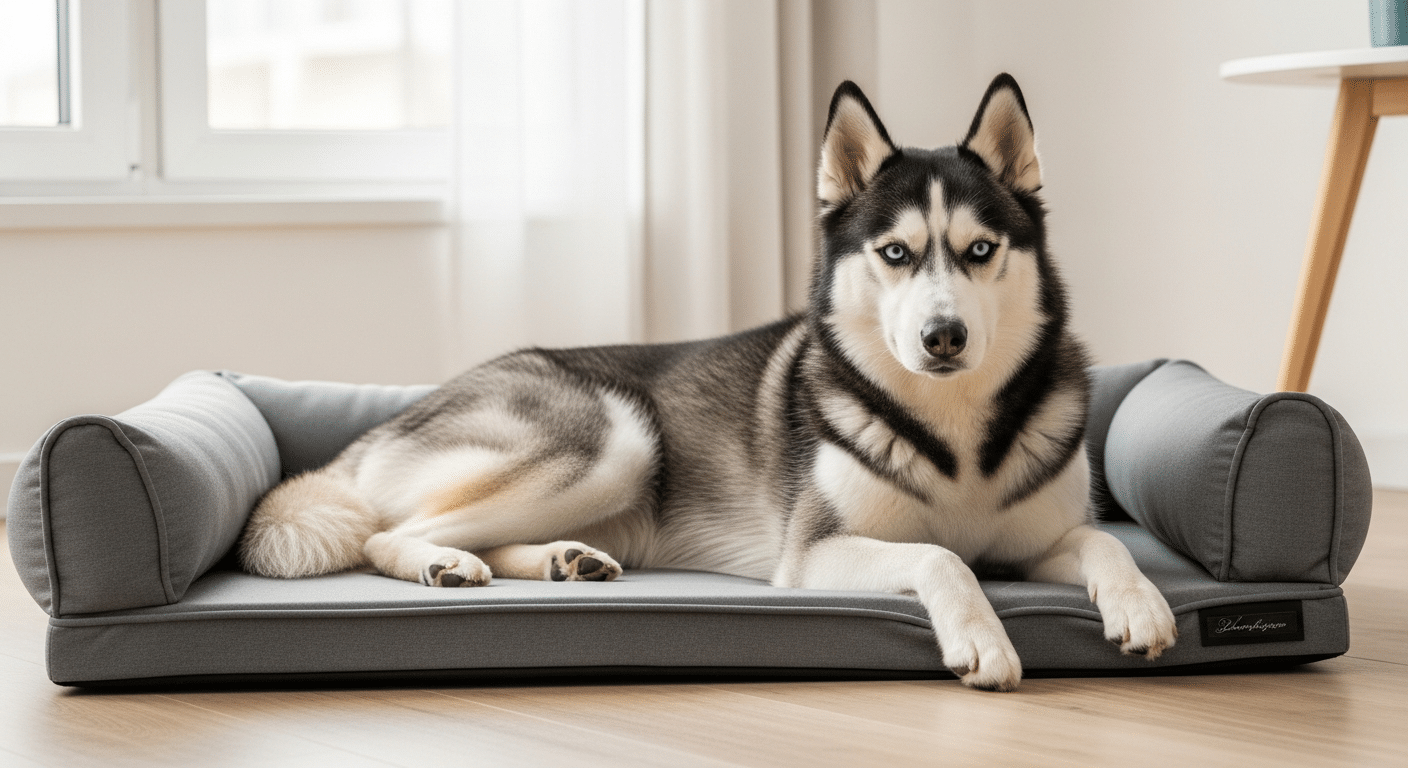
Best Dog Bed for a Husky
Here’s the thing most bed guides get backwards for this breed: a Siberian Husky’s thick double coat means it runs hot, not cold, so the best dog bed for a Husky is usually a cool, breathable one, not a warm plush nest. These are the cooling, orthopedic, washable beds that actually suit a 35 to 60 lb Husky, ranked, in stock, and sized right.
Looking for the best dog bed for a Husky? Start with the one fact that flips the usual advice on its head: a Siberian Husky has a thick, double-layered arctic coat that makes it run hot, so the breed is far more at risk of overheating than of getting cold. That means a cooling, breathable bed almost always beats a warm plush one, the opposite of what you’d buy for a short-coated breed. On top of that, a Husky is a medium, athletic 35 to 60 lb working dog (males 45 to 60 lb, females 35 to 50 lb) that sheds enormously, can chew and dig at bedding when bored, and benefits from real orthopedic support for active joints. So the bed you want is a cool-sleeping, supportive, washable, hard-wearing Large bed, a cooling-gel orthopedic, a breathable elevated cot, or a durable washable mattress, not a heat-trapping donut. Below we explain exactly why cooling matters so much for a double-coated breed, how to size a bed for a 35 to 60 lb Husky, how to keep a heavy-shedding bed clean, how to bed-proof a chewer and digger, and then the three beds we’d actually buy. For everything else your dog needs, see our Husky gear guide.
The best dog beds for a Husky, ranked
Every pick is a cooling-or-breathable, Husky-appropriate bed we’d put under a 35 to 60 lb dog, verified in stock. Tap through for the live price.

FunnyFuzzy Cooling Orthopedic Washable Large Dog Sofa Bed
Our top pick for most Huskies, because it solves the breed’s three big bed problems at once. It has a cooling top layer that suits a thick double coat that runs warm, a supportive orthopedic foam base for an athletic dog’s joints, and, crucially for a heavy shedder, a fully removable, machine-washable cover. The raised bolster sides give a place to rest a head without burying the dog in heat-trapping padding, and the breathable cover helps a Husky dump warmth instead of stewing in it. At this price it badly undercuts the boutique cooling beds while still giving real support. Pick the Large for a typical 45 to 60 lb Husky.
What we like
- Cooling layer suits a double-coated breed that overheats easily
- Orthopedic foam supports an athletic Husky’s joints
- Entire cover removes and machine-washes, built for a heavy shedder
- Far cheaper than boutique cooling beds without skimping on support
The catches
- Pick the Large, smaller sizes are too snug for a 50 to 60 lb Husky
- Cooler than plush but still foam, not as airy as a raised cot in a hot room
- Not a chew-proof bed, fine for a settled adult, not a determined digger
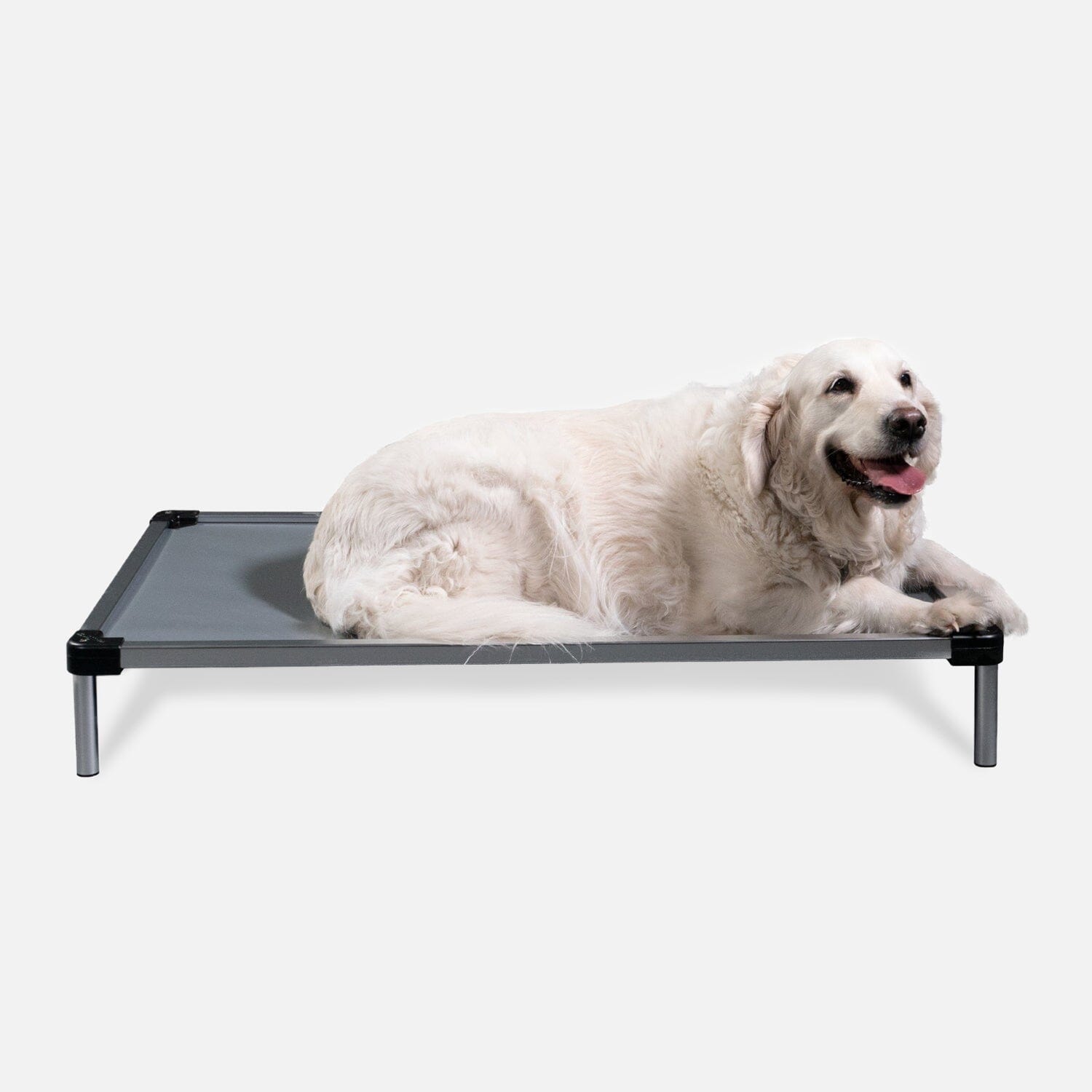
K9 Ballistics Chew Proof Armored Elevated Dog Bed
If your Husky runs really hot, or is a chewer and digger, this is the answer, and it’s the bed style the Husky-bed experts most often rank first. An elevated cot lifts the dog off the floor so air flows underneath, which is the single most effective way to keep a thick-coated breed cool while it sleeps. This one wraps that breathable raised design in K9 Ballistics’ armored, chew-proof vinyl, so it shrugs off the chewing and digging a bored Husky inflicts on a soft bed. There’s no plush foam to trap heat, it wipes or hoses clean in seconds (a gift for a heavy shedder), and it’s built to live indoors or out. It’s the smart pick for a hot climate, a crate, a chewer, or a Husky that keeps abandoning a warm bed for cold tile.
What we like
- Raised design lets air flow underneath, the coolest way for a double coat to sleep
- Armored chew-proof vinyl survives a Husky that chews and digs at bedding
- Wipes or hoses clean, no fabric to trap the heavy double-coat shedding
- Works indoors, in a crate, or outside in a shaded yard
The catches
- No orthopedic foam, add a thin pad in winter or for a senior dog
- Firmer than a cushioned bed; some dogs take a night to adjust
- Pricier than a basic mesh cot, but far tougher and longer-lasting
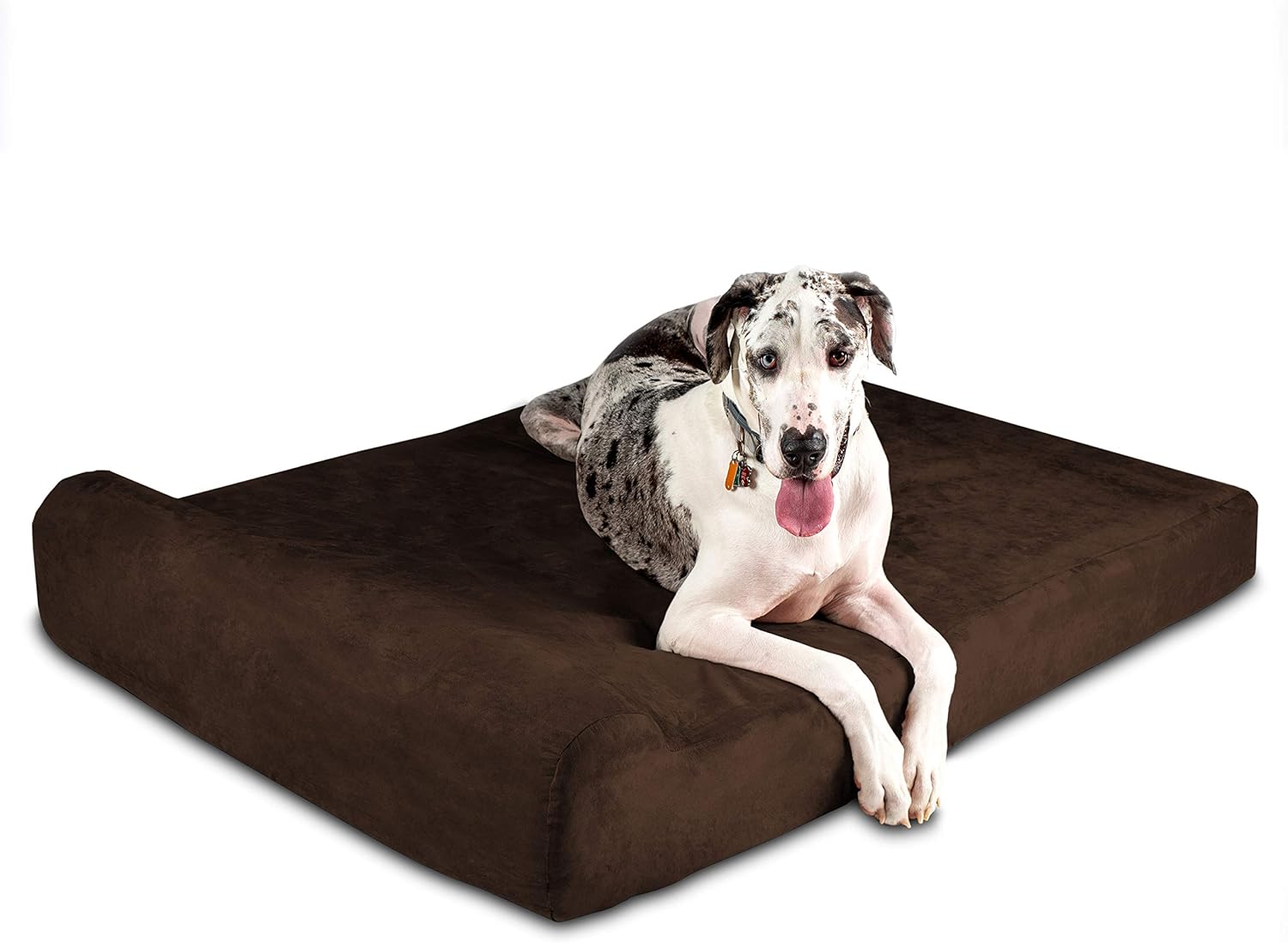
Big Barker 7″ Orthopedic Dog Bed (Large)
Huskies are tireless, athletic dogs, and a lifetime of running and jumping is hard on joints, the breed sees its share of hip dysplasia. If yours is older, recovering, or you simply want the most supportive bed money can buy, this is it. Big Barker is the large-breed orthopedic flagship: a full 7 inches of American-made therapeutic foam in a 3-layer system that stops a dog from bottoming out onto the floor. It’s the only dog bed backed by a University of Pennsylvania School of Veterinary Medicine study, which found large dogs had measurably reduced joint pain and improved mobility after sleeping on one. The Large size (48″ × 30″) gives a Husky room to stretch, and the washable cover plus a 10-year don’t-go-flat warranty make it a buy-it-once bed. Pair it with a cooling mat in summer, since this is a supportive bed rather than a cooling one.
What we like
- 7″ of clinical-grade foam keeps an active Husky off the floor, no bottoming out
- The only dog bed with a peer-reviewed UPenn vet-school study behind it
- Large 48×30 size gives a stretchy Husky plenty of room
- 10-year guarantee it won’t go flat, genuinely buy-it-once
The catches
- A supportive bed, not a cooling one, add a cooling mat in hot weather
- The most expensive pick here, an investment, not an impulse buy
- Cover is washable but not marketed as chew-proof
Why a Husky needs a different kind of bed
A Siberian Husky is a medium, athletic working dog, males stand 21 to 24 inches and weigh about 45 to 60 lb, females 20 to 22 inches and 35 to 50 lb, bred to pull sleds across the arctic for hours on end. That heritage shapes everything about the right bed, and it points in the opposite direction to most breeds. The single most important fact when buying a Husky a bed is that the breed has a dense, double-layered coat built to survive sub-zero cold, which means indoors and in warm weather a Husky overheats far more easily than it gets cold. Four things separate a good Husky bed from one that makes the dog miserable.
- It has to keep the dog cool, not warm. This is the big one. A Husky’s double coat is an arctic insulation system, so a warm plush bed traps heat against a dog that’s already too hot, which is why so many Huskies abandon a cozy bed and flop on cold tile or bare floor. A cooling or breathable bed works with the coat instead of against it.
- It has to survive a heavy shedder. Huskies “blow” their double coat in huge volumes twice a year and shed steadily in between. A bed becomes a hair magnet fast, so the cover must be removable and machine-washable (or a wipe-clean surface), not “spot clean only.”
- It has to stand up to a chewer and a digger. Huskies are intelligent, high-energy, and famously prone to boredom, and a bored Husky chews and digs at bedding on instinct. A flimsy plush bed can last a week. The cover may need to be genuinely chew- and dig-resistant.
- It should support an athletic dog’s joints. A Husky spends its life running and jumping, and the breed isn’t immune to hip dysplasia. Real orthopedic support still matters, it just has to come in a cool, breathable form rather than a hot one.
Get those four right, cooling first, then washable, durable and supportive, and you’ve got a bed a Husky will actually use instead of the floor. Miss the cooling part especially, and you’ll buy a beautiful plush bed your Husky simply refuses to lie on. The rest of this guide walks through each. If you’re outfitting your Husky from scratch, the bed is one piece; our Husky gear guide covers the crate, harness, toys and the rest.
Why a cooling bed beats a warm one for a Husky
This is the differentiator that matters most, and it’s where generic “best dog bed” advice gets a Husky exactly wrong. A Husky’s coat has two layers: a coarse outer guard coat and a thick, soft insulating undercoat. Together they’re a remarkably effective cold-weather system, a Husky is genuinely comfortable in temperatures that would have a short-coated dog shivering. The flip side is that the same insulation traps heat, so a Husky living in a warm house, or anywhere with a real summer, is far more likely to be too hot than too cold. Owners notice their Husky seeking out cold surfaces, bathroom tile, kitchen floor, the draughty hallway, and walking away from the soft bed they bought. That’s not the dog being difficult; it’s the dog telling you the plush bed is cooking it.
So for this breed you flip the usual priority and put cooling and breathability first. What actually helps a double-coated dog stay cool while it rests:
- An elevated cot raises the dog off the floor so air circulates underneath, the most effective cooling design, which is why it’s our durable top pick and the experts’ frequent #1 for Huskies.
- A cooling-gel layer in an orthopedic bed draws heat away from the dog’s body rather than reflecting it back, the basis of our best-overall pick.
- A breathable, low-loft cover (mesh or a thin, tight weave) lets heat escape instead of wrapping the dog in warm padding.
- A pressure-activated cooling mat laid on top of a regular bed is a cheap, no-power way to give a hot Husky a cool spot in summer.
What to avoid for a Husky: a deep, fluffy, heat-trapping donut or cave bed, thick heated or self-warming beds, and anything placed near a radiator, heat vent or in direct sun. Those are great for a short-haired, cold-sensitive breed, and the wrong call for an arctic dog.
What size dog bed for a Husky?
Dog-bed “sizing” is wildly inconsistent between brands, one company’s “Large” is another’s “Medium”, so ignore the label and size by your actual dog. A Husky is a medium dog of about 35 to 60 lb, which lands almost every adult in a Large bed (not the XL you’d buy a giant breed, and not the Medium its mid-range weight might suggest).
The rule: your Husky should be able to lie fully stretched out on its side, legs extended, without any part hanging off the edge. To find the right number, measure your dog from nose to base of tail while it’s standing or lying stretched, then add about 8 to 12 inches to get the minimum bed length. For a full-grown Husky that almost always lands you in a Large bed, roughly 36 to 42 inches long (size to the larger end for a big 55 to 60 lb male or a dog that sprawls).
| Husky | Typical weight | Recommended bed size | Approx. bed length |
|---|---|---|---|
| Female adult | 35 to 50 lb | Large | ~36 to 40″ |
| Male adult | 45 to 60 lb | Large | ~40 to 42″ |
| Big male / sprawler | 55 to 60+ lb | Large (size up) | 42″+ |
| Husky puppy (still growing) | varies | Buy for the adult size | size to grown dog |
Two more sizing notes specific to this breed:
- Match it to the crate. Huskies are notorious escape artists and many are crate-trained, so a bed often needs to fit inside the crate footprint, see our what size crate for a Husky guide for the dimensions to size against.
- If your Husky sprawls, size up. Many Huskies sleep flat out on their side, legs fully extended, precisely to shed heat. If yours does, go to the larger end of Large so the whole dog stays on the cool surface.
Orthopedic support for an active breed
Even though cooling comes first for a Husky, support still matters. Huskies are athletic, high-mileage dogs that run, leap and work hard, and a lifetime of that loads the joints. The breed isn’t as dysplasia-prone as a German Shepherd, but hip dysplasia does occur in Huskies, and any active or ageing dog benefits from a surface that cushions the joints rather than letting it lie on a hard floor.
The trick for this breed is to get orthopedic support in a cool form, a cooling-gel memory-foam bed, not a hot plush one. What to look for:
- Thickness: aim for at least 3 to 4 inches of supportive foam for an adult Husky, and more for a senior or recovering dog, so the bed doesn’t bottom out to the floor under the dog’s weight.
- Density: look for high-density support foam (a solid or layered core) rather than loose shredded fill, which packs down flat and holds heat.
- Cooling-gel memory foam: the best of both worlds for a Husky, contouring joint support plus a layer engineered to pull heat away from the body.
- CertiPUR-certified foam: a third-party standard confirming the foam is made without certain harmful chemicals, worth having for a dog spending hours a day on it.
- Low front entry & non-slip base: a low or open front lets a senior or stiff Husky step in easily, and a non-slip base stops the bed sliding on a hard floor.
This is where a bed like the Big Barker earns its place, a 7-inch, 3-layer therapeutic-foam system, and the only dog bed backed by a peer-reviewed University of Pennsylvania veterinary study that found large dogs sleeping on one showed reduced joint pain and improved mobility. For an older Husky, a dog recovering from injury, or anyone who simply wants the most supportive bed available, it’s the pick, just pair it with a cooling mat in summer, since support, not cooling, is its job. If your Husky shows signs of hip pain, stiffness or limping, that’s a conversation for your vet; for trustworthy background, the American Kennel Club’s overview of hip dysplasia is a good starting point.
The double coat, heavy shedding, and keeping the bed clean
If you own a Husky, you already know: the shedding is relentless. The breed’s dense double coat sheds steadily year-round and then “blows” the entire undercoat in dramatic clumps twice a year. A Husky’s bed becomes a hair magnet faster than almost any other breed’s, so easy cleaning isn’t a nice-to-have, it’s survival.
What that means for the bed you buy:
- A removable, machine-washable cover is non-negotiable on a fabric bed. “Spot clean only” is a dealbreaker for a Husky. You want a cover you can unzip and throw in the wash regularly to stay on top of hair and dander.
- Or a wipe-clean surface. An elevated vinyl cot like our durable pick has no fabric to bury hair in at all, you wipe or hose it and the loose coat sheds straight off. For a serial shedder, that’s a genuinely underrated advantage.
- A water-resistant inner liner protects foam from drool, accidents and a damp post-walk dog, so the bed doesn’t hold odor.
- A tighter-weave or short-pile cover releases hair more easily than deep shag, a lint roller or quick vacuum lifts loose coat off rather than burying it.
The bed is only half the battle, though. The real fix is getting the loose undercoat off the dog before it lands on the bed (and the sofa, and your clothes). Regular de-shedding with the right tool dramatically cuts how much hair ends up everywhere, see our guide to the best de-shedding tool for dogs, which is close to essential kit for a Husky owner. Brush several times a week (daily during a coat blow), wash the bed cover or wipe the cot on a regular schedule, and the heavy-shedder problem becomes manageable.
Chewing, digging and durability: bed-proofing a bored Husky
Huskies are clever, energetic and easily bored, and a bored Husky is hard on its things. Two instincts in particular threaten a bed:
- Digging. Huskies dig, it’s deep in the breed (sled dogs dig dens in snow to stay warm). Many Huskies “dig” at a bed before settling, and a soft plush bed gets shredded fast by those claws.
- Chewing. An under-exercised Husky redirects energy into chewing, and bedding is an easy target. A flimsy bed can be confetti within days.
How hard your dog is on bedding decides the bed you need:
- Settled adult, doesn’t destroy things: a cooling washable orthopedic bed (our FunnyFuzzy top pick) is perfect.
- Chews or digs at bedding: step up to a genuinely tough cover, ripstop ballistic fabric, or better still an elevated armored cot like the K9 Ballistics, which has no soft fabric to dig through and a vinyl surface built to take abuse.
- Truly destructive: the elevated chew-proof cot is the end of the road, aircraft-grade frames and armored vinyl are about as close to indestructible as a dog bed gets, and as a bonus it’s the coolest, most airflow-friendly style for the coat.
One more durability detail: a non-slip base or stable frame. An athletic Husky launching onto a bed will skate a lightweight one across the floor. And remember that most bed-destruction is really under-stimulation, a Husky is a working breed that needs a lot of exercise and mental work. A tired Husky chews far less, so pair the bed with proper exercise and good chew toys for a Husky. A bed alone won’t fix a bored dog.
Bed styles compared: cooling-gel ortho vs. elevated cot vs. cooling mat vs. plush
“Best bed” depends on how your Husky sleeps and how hot it runs. Here’s how the main styles stack up for the breed, and note how the ranking inverts what you’d choose for a short-coated dog:
| Style | Best for a Husky | Watch out for |
|---|---|---|
| Cooling-gel orthopedic bed | Most Huskies, cooling, joint support and a washable cover in one; our best-overall style | Still foam, so airflow is less than a raised cot in a very hot room |
| Elevated cot (mesh/vinyl) | Hot climates, chewers/diggers, crates, easy-clean shedding; the coolest, toughest option | No orthopedic foam, add a thin pad in winter or for a senior |
| Cooling mat | A cheap summer add-on laid on a normal bed; pressure-activated, no power needed | Thin, a top-up for hot weather, not a primary bed |
| Plush / bolster / donut | A cold room in deep winter, or a Husky that genuinely seeks warmth | Traps heat, most Huskies overheat on these and abandon them for the floor |
For most Huskies we’d start with a cooling-gel orthopedic bed, it covers cooling, support and washability together. Reach for the elevated cot if your dog runs especially hot, chews and digs, or lives somewhere warm. Keep a cooling mat on hand as a cheap summer top-up. And treat a plush or donut bed as a winter-only or cold-room option rather than the main bed, for an arctic breed it’s usually too warm to be the everyday choice.
Cooling, warmth and the seasons
Because a Husky is built for cold, the seasonal logic runs backwards compared with most breeds. Summer is the hard season, not winter.
Warm weather. This is when bed choice matters most. Keep the bed out of direct sun and away from heat sources, favour an elevated cot or a cooling-gel bed, add a cooling mat, and make sure the dog can always reach cool flooring and shade. Never leave a Husky on a hot, heat-trapping bed in a warm room.
Cold weather. Here’s the reassuring part: a Husky genuinely doesn’t need a warm winter bed the way a short-coated breed does, the coat handles cold beautifully. A draft-free spot off cold concrete is plenty; you don’t need a heated bed for a healthy adult Husky, and many will still prefer a cool surface even in winter. The exception is a senior, sick, very young, or recently clipped dog, which has less insulation and may appreciate a warmer, more cushioned bed in the cold.
Health notes every Husky owner should know
A few breed realities make the right bed more than a comfort purchase:
- Overheating & heat stress. The double coat that makes a Husky cold-hardy also makes it heat-sensitive. A cool, breathable bed is part of keeping a Husky comfortable in warm weather (alongside shade, water and avoiding midday exercise).
- Hip dysplasia. Less common than in some large breeds, but it does occur. A supportive surface cushions an active or ageing dog’s joints and helps a stiff dog rise more easily.
- Joint wear from an athletic life. Huskies run and jump hard for years; good rest on a supportive bed is when muscle and joints recover between bursts of activity.
- Skin & coat. A clean, dry, washable bed reduces the dander, hair and moisture build-up that can irritate skin on a heavy-coated dog.
- Anxiety & boredom. A comfortable, cool “own spot” gives a high-energy Husky somewhere to settle, and a well-exercised dog with its own bed is far less likely to destroy it.
How we picked these beds
We started from the breed, not the bed. A Husky’s heat-trapping double coat, medium athletic 35 to 60 lb frame, heavy shedding, and clever, boredom-driven chewing and digging set hard requirements, cooling or breathable first, then washable, durable and supportive, and we only considered beds that meet them and are actually in stock right now. Then we ranked for the three most common Husky situations:
- Best overall for a typical Husky: the FunnyFuzzy Cooling Orthopedic Washable Large Dog Sofa Bed, cooling, supportive and fully washable, the three things a Husky bed has to nail, at a price that doesn’t punish you for owning an active dog.
- Coolest & toughest / for hot homes, chewers and diggers: the K9 Ballistics Chew Proof Armored Elevated Dog Bed, a raised cot for maximum airflow, in armored chew-proof vinyl that survives a determined Husky and wipes clean.
- Best orthopedic / for active, senior or recovering dogs: the Big Barker 7″ (Large), the clinical-grade, UPenn-studied flagship for joint support, paired with a cooling mat in summer.
All three are correctly sized for a Husky, all three are easy to keep clean, and every buy button goes to a live listing we verified before publishing. For more dog beds beyond the Husky-specific picks, see our full dog bed buyer’s guide.
Best dog bed for a Husky: common questions
Do Huskies need a cooling bed?
For most Huskies, yes, a cooling or breathable bed is the better default. A Siberian Husky’s thick double coat is built for arctic cold, so the breed overheats far more easily than it gets cold, and a warm plush bed traps heat against a dog that’s already too hot. That’s why so many Huskies abandon a cozy bed for cold tile or bare floor, it’s the dog telling you the bed is cooking it. A cooling-gel orthopedic bed, a breathable elevated cot that lets air flow underneath, or a cooling mat all work with the coat instead of against it. The main exception is a senior, sick, very young, or recently clipped Husky in genuinely cold conditions, which may appreciate a warmer, more cushioned bed.
What size bed for a Husky?
A Large bed, usually about 36 to 42 inches long. Ignore brand size labels and size to your dog: measure from nose to base of tail and add about 8 to 12 inches to get the minimum bed length. A Siberian Husky is a medium dog of roughly 35 to 60 lb (males 45 to 60 lb, females 35 to 50 lb), which lands almost every adult in a Large bed, not the XL you’d buy a giant breed, and not the Medium its mid-range weight might suggest. Size to the larger end of Large for a big 55 to 60 lb male or a Husky that sprawls flat out to shed heat. If your Husky is crate-trained, match the bed to the crate footprint. For a puppy, buy for the adult size now rather than re-buying as it grows.
What is the best washable bed for a shedding dog like a Husky?
For a heavy shedder, the cover matters as much as the foam. The best option is a bed with a fully removable, machine-washable cover (never “spot clean only”) plus a water-resistant inner liner, our FunnyFuzzy cooling orthopedic pick fits this exactly. Even better for the worst shedders is an elevated vinyl cot like the K9 Ballistics, which has no fabric to bury hair in at all: you simply wipe or hose it and the loose coat sheds straight off. Choose a tighter-weave or short-pile cover over deep shag so a lint roller or vacuum can lift hair off easily. Then tackle the dog too, regular de-shedding with a proper undercoat tool removes loose coat before it ever reaches the bed; see our best de-shedding tool for dogs.
Do Huskies need an orthopedic bed?
It helps, but it isn’t the breed’s first priority the way cooling is. Huskies are athletic, high-mileage dogs, and although they aren’t as dysplasia-prone as a German Shepherd, hip dysplasia does occur and a lifetime of running and jumping wears the joints. A supportive orthopedic surface cushions an active or ageing Husky’s joints and helps a stiff dog rise more easily, so it’s worth having, especially for a senior or recovering dog. The key for this breed is to get that support in a cool form: a cooling-gel memory-foam bed, or a supportive bed like the Big Barker paired with a cooling mat in summer. Don’t buy a hot plush “orthopedic” bed a Husky will refuse to lie on.
Why does my Husky sleep on the floor instead of its bed?
Nine times out of ten, the bed is too warm. A Husky’s double coat traps heat, so a soft, padded bed quickly feels hot, and the dog seeks out the coolest surface it can find, usually cold tile, the bathroom floor, or bare boards. It’s not stubbornness; it’s thermoregulation. Switch to a cooler setup, an elevated cot that lets air flow underneath, a cooling-gel bed, or at minimum a cooling mat, and most Huskies start using the bed again. Other causes worth ruling out: the bed is too small for a dog that likes to stretch out, it’s placed somewhere too warm or too busy, or the dog simply prefers a den-like spot. But heat is by far the most common reason a Husky snubs its bed.
Are Huskies hard on their beds, and how do I stop one being destroyed?
Yes. Huskies dig and chew, especially when bored. Digging is deep in the breed (arctic sled dogs dig dens in snow), so many Huskies paw and dig at a bed before settling, and a bored, under-exercised Husky will chew bedding too. A flimsy plush bed can be shredded within days. If your Husky is hard on its things, choose a genuinely tough cover, ripstop ballistic fabric, or better still an elevated armored cot like the K9 Ballistics, which has no soft fabric to dig through and a chew-proof vinyl surface. For a truly destructive dog, that elevated chew-proof cot is the most durable option there is, and it doubles as the coolest. Most importantly, remember that bed destruction is usually under-stimulation: a Husky is a working breed that needs lots of exercise and mental work, so pair the bed with real exercise and good chew toys for a Husky.
Do Huskies need a warm bed in winter?
Usually not, a healthy adult Husky is built for cold. The breed’s dense double coat handles low temperatures beautifully, so a draft-free spot off cold concrete is generally plenty, and many Huskies will still prefer a cool surface even in winter. You don’t need a heated bed for a healthy adult Husky. The exceptions are a senior, sick, very young, or recently clipped dog, which has less insulation and may genuinely appreciate a warmer, more cushioned bed when it’s cold. For the average Husky, though, the everyday risk is overheating in summer far more than getting cold in winter, which is why we default to cool, breathable beds for the breed year-round.
How much should I spend on a bed for a Husky?
A Husky doesn’t need a giant-breed price tag, but it’s worth spending a little more to get the cooling and durability the breed needs. A solid cooling washable orthopedic bed sized for a Husky runs roughly $75-$130 (our FunnyFuzzy pick sits here), a tough elevated armored cot around $100-$130, and a premium clinical-grade orthopedic bed like the Big Barker Large around $220+. It’s worth spending up for a chewer or digger (a cheap plush bed gets destroyed and re-bought repeatedly) and for a senior or recovering dog that needs real joint support. The thing to avoid is a cheap, hot, heat-trapping plush bed that your Husky simply won’t use, the cheapest bed is the one the dog actually sleeps on.