 Dog Gear, Sized Right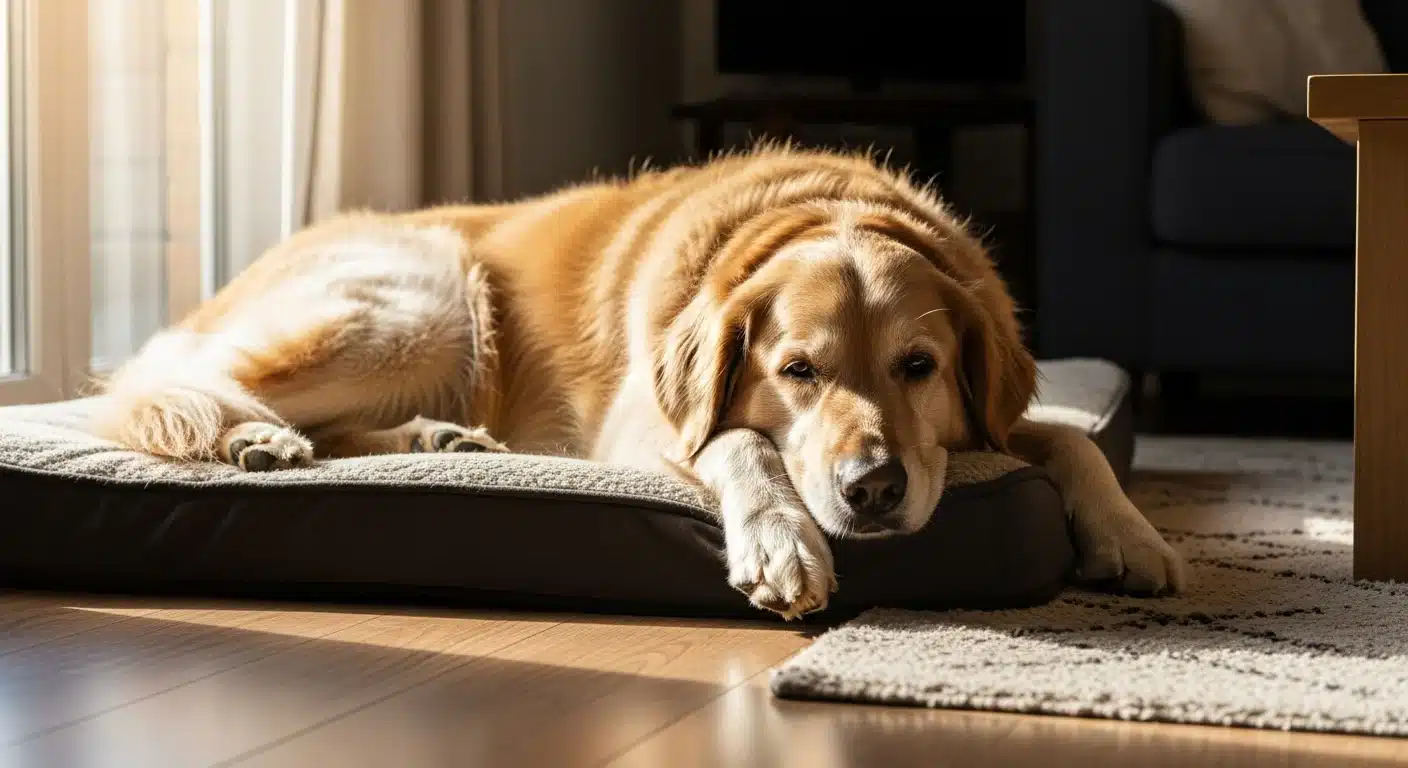
Why Won’t My Dog Sleep in Their Bed? (And How to Fix It)
Every reason dogs skip their beds, wrong size, too hot, bad location, the smell, anxiety, or never taught, plus the fixes that actually work.
Why won’t your dog sleep in their bed? The short answer: the bed is wrong in some way, wrong size, wrong material for the season, placed somewhere your dog doesn’t want to be, or it smells like a factory instead of a family member. Sometimes the dog was simply never shown that the bed is theirs. None of these problems are hard to fix once you know which one you’re dealing with. This guide walks through every real reason, in order of how commonly we see them, then gives you a direct fix for each. By the end you’ll know exactly why your dog is choosing the floor, the couch, or your pillow over that perfectly good bed in the corner, and what to do about it.
Our pick for dogs who refuse every bed
If your dog keeps choosing the floor, the problem is usually the bed, not the dog. This is the option we recommend for reluctant users: supportive, easy-entry, easy to scent-break, and verified in stock. Tap through for the live price.
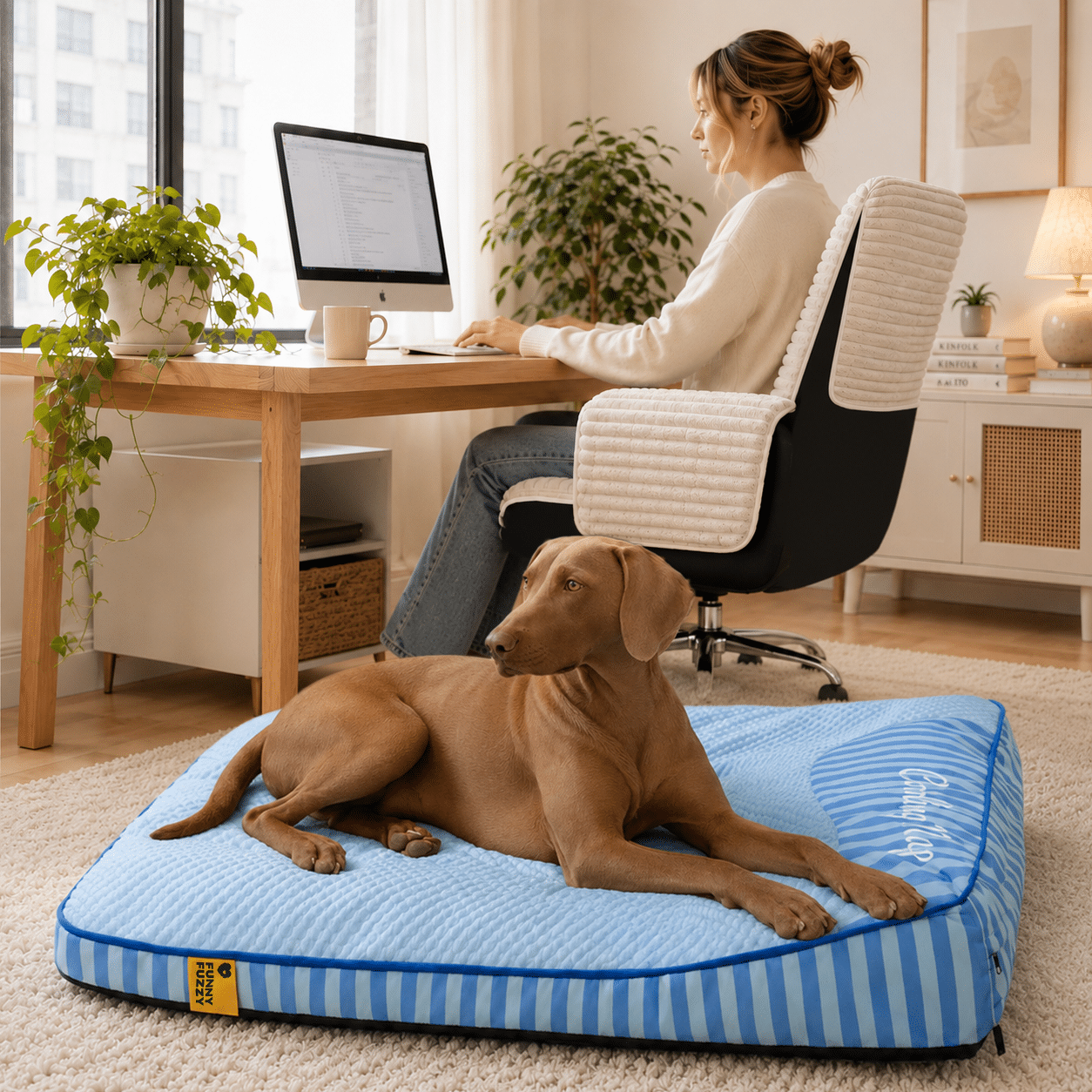
FunnyFuzzy Orthopedic Dog Bed
A bed that earns its keep with reluctant dogs. The deep orthopedic foam base is supportive enough for sore or senior joints without being so marshmallow-soft that a hot dog avoids it, and the low-profile entry means no awkward clambering for stiff bodies. The washable cover means you can throw your scent on it on day one, removing the “weird new smell” barrier that keeps many dogs off their beds.
What we like
- High-density orthopedic foam provides genuine joint support, real benefit for senior or sore dogs who avoid beds that don’t hold them up
- Bolster surround gives anxious or nervous dogs something to lean into, which many dogs find calming
- Removable, machine-washable cover makes it easy to add a worn item for scent comfort on day one
- Waterproof base protects floors and keeps the bed from shifting on hard surfaces
The catches
- Bolster style may not appeal to dogs who like to sprawl flat or sleep on their back
- Higher price point than basic foam options, harder to justify if your dog still refuses after training
- Thicker profile means dogs with very limited mobility may need a ramp or a lower step to get on comfortably
Reason 1: The bed is the wrong size
This is the most common and most overlooked reason. A bed that’s too small physically prevents your dog from getting comfortable, they can’t stretch out, their legs hang off the edge, or they can’t circle before lying down, which is a deeply ingrained instinct. A dog that tries the bed once and finds it cramped will simply stop trying.
A bed that’s too big is less obviously wrong, but it matters for anxious dogs: a sprawling open surface without edges or walls gives them no sense of enclosure or security. Many dogs, especially those who like to curl up, feel safer in a bed with raised sides (a bolster or donut shape) that fits them snugly rather than a flat mat three times their size.
| Dog weight | Minimum bed size | Best shape for stretchers | Best shape for curlers |
|---|---|---|---|
| Under 25 lb | 24 to 30 in | Flat pillow mat | Small donut / nest |
| 25 to 50 lb | 30 to 36 in | Large flat mat | Medium bolster bed |
| 50 to 90 lb | 36 to 42 in | XL flat or rectangle pad | Large bolster bed |
| 90 lb + | 42 to 48 in + | XXL flat / floor mattress | Large bolster with firm sides |
The fix: Measure your dog from nose to tail-base when they’re lying stretched flat. Add 6 to 8 inches. That’s your minimum bed length. If your dog curls, observe how tight they prefer to curl, most curlers want about 1.5× their curled diameter.
Reason 2: The bed is the wrong type for the season or body
Dogs regulate temperature differently from humans. A thick memory-foam bed that sounds luxurious is effectively a heat-trapping block for a double-coated breed in July, and that dog will abandon it for the cool tile floor every single time. This isn’t stubbornness; it’s basic thermoregulation, and you can’t train it away.
On the other side: a dog with arthritis, hip dysplasia, or general aging-joint stiffness needs more support than a flat cushion provides. If lying down is uncomfortable, the dog will avoid whatever surface makes getting up harder. An orthopedic foam bed, meaning one with true high-density foam, not just a relabeled pillow, is the fix here. Look for beds that don’t bottom out under the dog’s weight. (Our best orthopedic dog beds for large dogs guide tests which ones hold up.)
The rule of thumb:
- Dog seeks cool surfaces (tile, hardwood, bathroom floor): the current bed is too warm. Try a raised/elevated cooling bed or a gel-top mat in warm months, standard foam in cool months.
- Dog lies on the bed briefly then moves to a firmer spot: the bed is too soft and doesn’t support the body. High-density orthopedic foam is the answer.
- Senior dog (7+ years for large breeds) avoids the bed after previously using it: joint pain is the likely culprit. Switch to orthopedic foam and check with your vet.
- Puppy ignores the bed entirely: puppies are curious and often prefer flat surfaces they can pace on; a simple washable mat or blanket works better than a structured bed at this stage.
Reason 3: The location is wrong
Dogs are social animals, and most of them want to sleep near their people, not exiled to a corner of a spare room. If you’ve put the bed in the “right” place according to your floor plan but your dog keeps sleeping in the doorway to your bedroom, the dog is telling you the bed is in the wrong spot.
Common location problems:
- Too isolated: put the bed where your dog already chooses to rest, even if that’s wedged against the sofa. Once they’re using it consistently, you can inch it toward your preferred location, no more than a foot or two at a time.
- Too noisy or busy: dogs are light sleepers. A bed near a high-traffic hallway, under a vent, or next to a TV gets avoided because the dog can’t relax there. Try a quieter wall, a corner with sightlines to the room, somewhere the dog can see without being in the middle of everything.
- Drafty or cold: a bed on bare floor near an exterior door or under an air-conditioning vent will feel colder than the carpet or a sunlit spot. Move it away from air sources or add a blanket underneath.
- Too far from their person at night: most dogs simply want proximity. If the bed is in another room and the dog is sleeping outside your bedroom door, move the bed to just inside the bedroom door. Simple.
The fix: watch where your dog naturally gravitates to rest. That’s the location. Put the bed there first, get them using it, then move it gradually if needed.
Reason 4: The bed smells wrong (or like nothing)
Dogs experience the world primarily through scent. A brand-new bed smells like a factory, a shipping warehouse, and plastic packaging, not like your dog, not like you, not like home. To your dog’s nose, a new bed is a foreign object in their space, and many dogs won’t relax on something that hasn’t been claimed by familiar scent yet.
This is especially pronounced with beds that have a strong manufacturing smell (foam off-gassing, synthetic fabric treatments). If you can smell the bed when you unwrap it, your dog’s nose, which is estimated to be 10,000 to 100,000 times more sensitive than a human nose, is being hit much harder.
The fix:
- Wash the cover before first use to knock down factory smells.
- Place a worn t-shirt or a pillowcase you’ve slept on across the bed for 24 to 48 hours before expecting the dog to use it. Your scent signals safety.
- If you have an older dog bed the dog already uses, place that on top of the new bed for a week so the familiar smell transfers.
- Let the bed air out in a lived-in room (not a garage or closet) for a few days before introducing the dog to it.
Once your dog has slept on the bed once and left their own scent on it, the scent problem usually resolves itself. The hurdle is just getting that first voluntary use.
Reason 5: They prefer to be near you (including on your furniture)
A dog that ignores their bed and climbs on the couch or your bed the moment you sit down isn’t confused about what a dog bed is, they’re telling you exactly what they want: proximity to you. This is normal, social, and not a training failure. The question is whether you’re okay with it or not.
If you’d prefer the dog on their own bed:
- Place the dog’s bed next to or near the furniture the dog currently chooses. A bed beside the couch instead of across the room gives the dog closeness without the couch-claiming.
- Make the dog bed more appealing than the alternative: for a short period, block the couch (flip cushions, use a physical barrier) so the dog can’t choose it. This redirects without punishment.
- Reward bed use heavily in the first few weeks: high-value treats, calm praise, a special chew they only get on the bed.
- Never punish the dog for choosing furniture. Punishment creates anxiety around rest, which makes the whole situation worse.
If you don’t mind the dog on the furniture, that’s a completely valid choice, and you don’t need to force a dog bed at all. The goal is a dog who rests comfortably and safely, wherever that ends up being.
Reason 6: Anxiety, fear, or a bad experience with the bed
Some dogs avoid their beds not because of fit or location but because something made the bed feel unsafe. Common culprits:
- The dog was scolded near or on the bed. If a dog ever got a sharp correction while on or near their bed, they may have associated the bed itself with the bad moment. The bed stops being a safe space.
- Separation anxiety. Dogs with moderate-to-severe separation anxiety often can’t settle on a bed alone, they need to move, pace, or be near an exit. The bed refusal is a symptom, not the cause; the anxiety is what needs addressing.
- General anxiety or a new environment. A recently adopted dog, a dog that’s moved house, or a dog going through a life change (new pet, new baby, loss of a companion) may avoid resting spots altogether until they feel secure.
- A scary event near the bed. A loud noise, a fall getting onto the bed, or a slip on a nearby floor can make the whole area feel risky.
The fix: approach this one with patience rather than instruction. Place high-value treats on and around the bed passively, don’t ask the dog to go to the bed, just let them discover the treats and build a positive association over days. Never force a dog onto a bed they’re anxious about. If separation anxiety is suspected, a veterinary behaviorist or certified applied animal behaviorist can help more than any bed change will.
Reason 7: The dog was never taught the bed is theirs
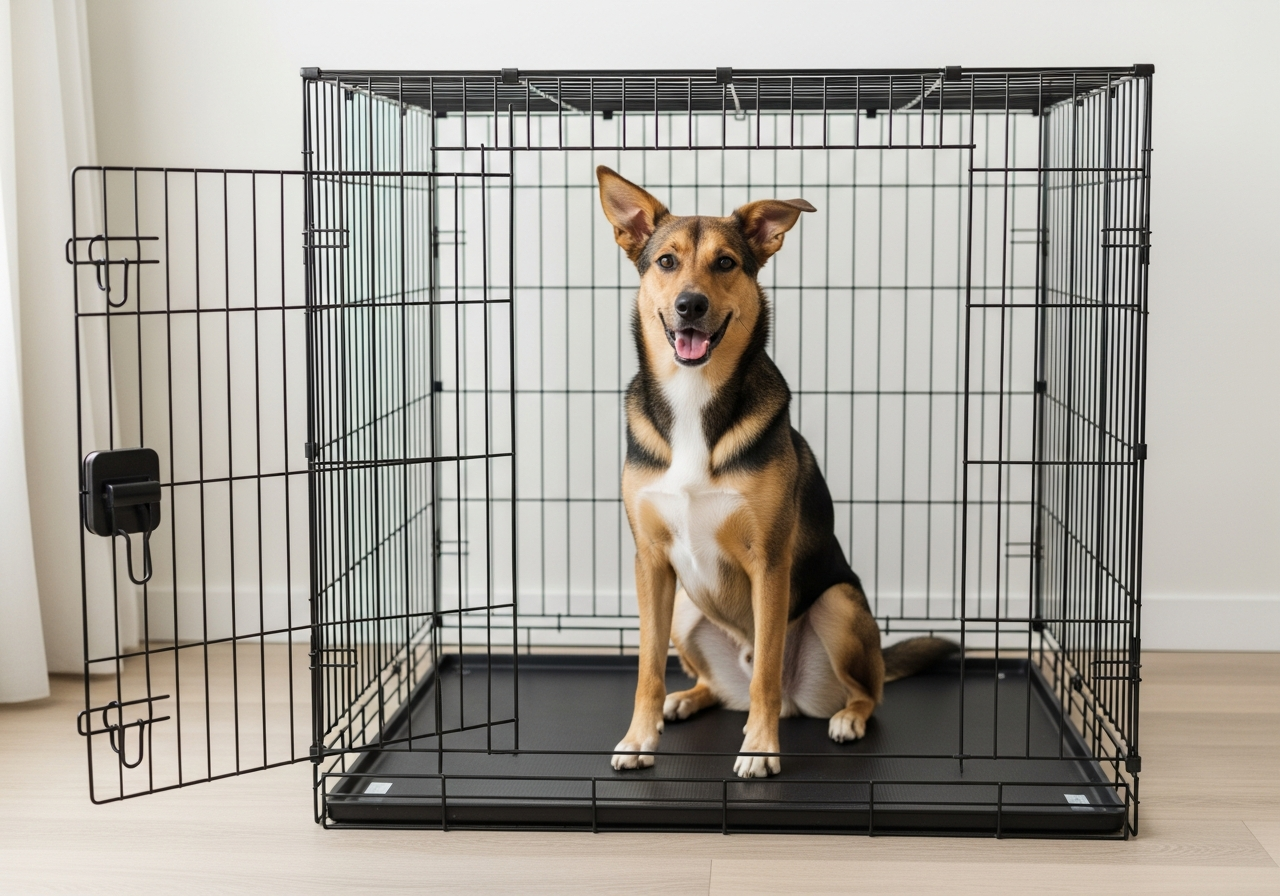
Dogs don’t automatically understand what a dog bed is for. Unlike a crate, which has an enclosed, den-like quality most dogs respond to instinctively, a flat mat on the floor looks, to a dog’s eye, like a slightly softer version of the floor. Without positive association and a little direction, many dogs simply treat it as an obstacle rather than a destination.
This is particularly common with:
- Puppies, who are discovering every object in their environment for the first time.
- Dogs adopted as adults who were never given a designated rest spot.
- Dogs whose bed was placed in the room and then ignored by the humans, no reinforcement, no training, no fuss.
How to teach “go to bed” in 4 steps:
- Step 1: Drop a treat on the bed whenever the dog is nearby. Don’t ask for anything yet, just let them find treats on it and learn the bed is a good place to be.
- Step 2: When the dog steps onto the bed voluntarily (even one paw), mark it (say “good” or click) and toss another treat onto the bed so they stay there to eat it.
- Step 3: Once they’re regularly going to the bed for treats, add the cue: as they move toward the bed, say “bed” in a calm, even tone. Reward when they reach it and lie down.
- Step 4: Gradually reward only lying fully down, not just stepping on. Build the duration by rewarding them for staying on it longer before releasing them.
Most dogs get a reliable “bed” cue in 1 to 2 weeks of consistent 5-minute sessions. Never drag, lift, or force a dog onto the bed, that teaches them the bed is something that happens to them, not something good. Also see Battersea’s breakdown of teaching this command for a step-by-step from certified trainers.
Special cases: senior dogs and puppies
Age matters, and the approach for an eight-year-old Labrador is different from a twelve-week-old puppy.
Senior dogs (7+ years for large breeds, 10+ for small breeds):
- Joint pain and muscle weakness are very common and often under-recognized. An orthopedic dog bed with genuine high-density foam (not marketing foam) makes a real difference for dogs with arthritis or hip dysplasia, an estimated 80% of dogs over 8 experience some degree of joint disease.
- Look for low entry points, a bed the dog steps onto rather than climbs into. High bolster walls that require lifting a leg are harder for stiff joints.
- Place the bed somewhere warm, senior dogs feel cold more easily and a drafty spot will push them to the couch or carpet.
- If a previously bed-loving dog suddenly stops using their bed, a vet check is warranted before assuming it’s behavioral. Pain is a common and underreported cause of rest-spot changes in older dogs.
Puppies:
- Most puppies under 6 months are too busy exploring, chewing, and wrestling to reliably settle on a bed. A simple washable blanket or flat mat is usually more appropriate than a structured orthopedic bed at this stage.
- Introduce the bed during rest periods, not play periods. After exercise, when a puppy naturally wants to sleep, is the moment to guide them to the bed and reward them for lying down there.
- Expect the bed to get chewed. Budget accordingly, and hold off on the expensive orthopedic foam until the destructive phase is past (usually around 12 to 18 months for most breeds).
Quick troubleshooting checklist
If your dog is skipping their bed, run through this list, most cases are solved by one or two of these:
| Symptom | Most likely cause | First fix |
|---|---|---|
| Dog sleeps on cool tile or hardwood instead | Bed too warm | Switch to an elevated/cooling bed in summer; check for double coat |
| Dog uses bed briefly then moves | Bed too soft / not supportive | Try high-density orthopedic foam; check dog is not bottoming out |
| Dog ignores bed entirely, sleeps on floor | Never trained, wrong location, or new smell | Move bed where dog rests naturally; add worn-scent item; reward any contact |
| Dog prefers couch/your bed | Proximity to you is the draw | Move dog bed right next to furniture; reward bed use; block furniture temporarily |
| Dog anxious near the bed | Bad association (scolding, scare, slip) | Scatter treats passively near the bed; never force; rebuild over days/weeks |
| Older dog stops using a bed they used to like | Pain/joint stiffness | Vet check + switch to orthopedic foam with low entry |
| New bed being rejected but old one used | Smell / unfamiliarity | Wash cover; add worn item; air out bed; place old bed on top briefly |
| Puppy ignores structured bed | Too restless/curious for structured beds | Use simple washable blanket until 12 to 18 months old |
For more on choosing the right bed shape, size, and foam quality for a large dog, our dog bed buying guide for large dogs covers every variable in detail.
Dog bed questions: quick answers
Why won’t my dog sleep in their bed?
The most common reasons are: the bed is the wrong size (too small to stretch out, or too large and open for an anxious curler), the wrong type for the season (too warm for a hot dog who prefers cool tile), in the wrong location (too isolated from the family or in a drafty spot), it smells unfamiliar (factory smell vs. a worn, familiar scent), the dog hasn’t been taught the bed is theirs, or there’s an underlying health issue, especially in older dogs where joint pain makes hard, flat floors easier to get up from. Diagnose which factor applies, then apply the matching fix.
Why does my dog prefer the floor over their bed?
Usually one of two things: the bed is too warm (the cool floor is more comfortable, especially for double-coated breeds or in summer), or the bed doesn’t support the dog’s body properly (too soft, and the floor is actually firmer and more comfortable for a dog with joint issues). An elevated cooling bed fixes the first problem; a high-density orthopedic foam bed fixes the second. If the dog is older and this is a new behavior, a vet check for arthritis or hip dysplasia is worth doing first.
How do I get my dog to use their dog bed?
The most effective approach: put the bed where the dog already chooses to rest (not where you think it should go), add a worn t-shirt or pillowcase for familiar scent, and reward any voluntary contact with the bed, even a paw, with a calm “good” and a treat tossed onto the bed. Build up to rewarding fully lying down, then gradually add a “bed” cue as the dog moves toward it. Never force or drag the dog onto the bed. Most dogs develop a reliable habit within 1 to 2 weeks of consistent short sessions.
Why won’t my senior dog use their bed anymore?
The most likely reason is joint pain. Arthritis and hip dysplasia affect an estimated 80% of dogs over age 8, and a soft or high-sided bed can actually make lying down and getting up more difficult rather than easier. The fix is switching to an orthopedic foam bed (high-density, not just labeled orthopedic) with a low entry profile the dog can step onto rather than climb into. If the change is sudden, a vet check is the right first step, new pain is often the cause of sudden behavior changes in older dogs.
My dog keeps sleeping on the couch instead of their bed. What should I do?
The dog is choosing the couch because it’s closer to you, softer, or at a preferred temperature, it’s a rational choice from the dog’s point of view. The most effective fix is to place the dog bed right next to the couch rather than across the room, so proximity to you is preserved. Then heavily reward bed use with high-value treats for a few weeks. If you want to discourage couch access entirely, blocking it physically (turned cushions, a physical barrier) temporarily redirects the dog without requiring punishment. Never scold the dog for being on the couch, that builds anxiety without teaching what you want instead.
Should I force my dog to sleep in their bed?
No. Forcing or physically placing a dog on their bed tends to create a negative association with the bed rather than a positive one, and anxious or reluctant dogs will resist harder afterward. The effective approach is passive positive association: scatter treats near and on the bed, reward any voluntary contact, and let the dog choose at their own pace. Patience and consistency work far better than force, and most dogs come around within 1 to 2 weeks when the underlying cause (wrong size, wrong location, unfamiliar smell) has been addressed.