 Dog Gear, Sized Right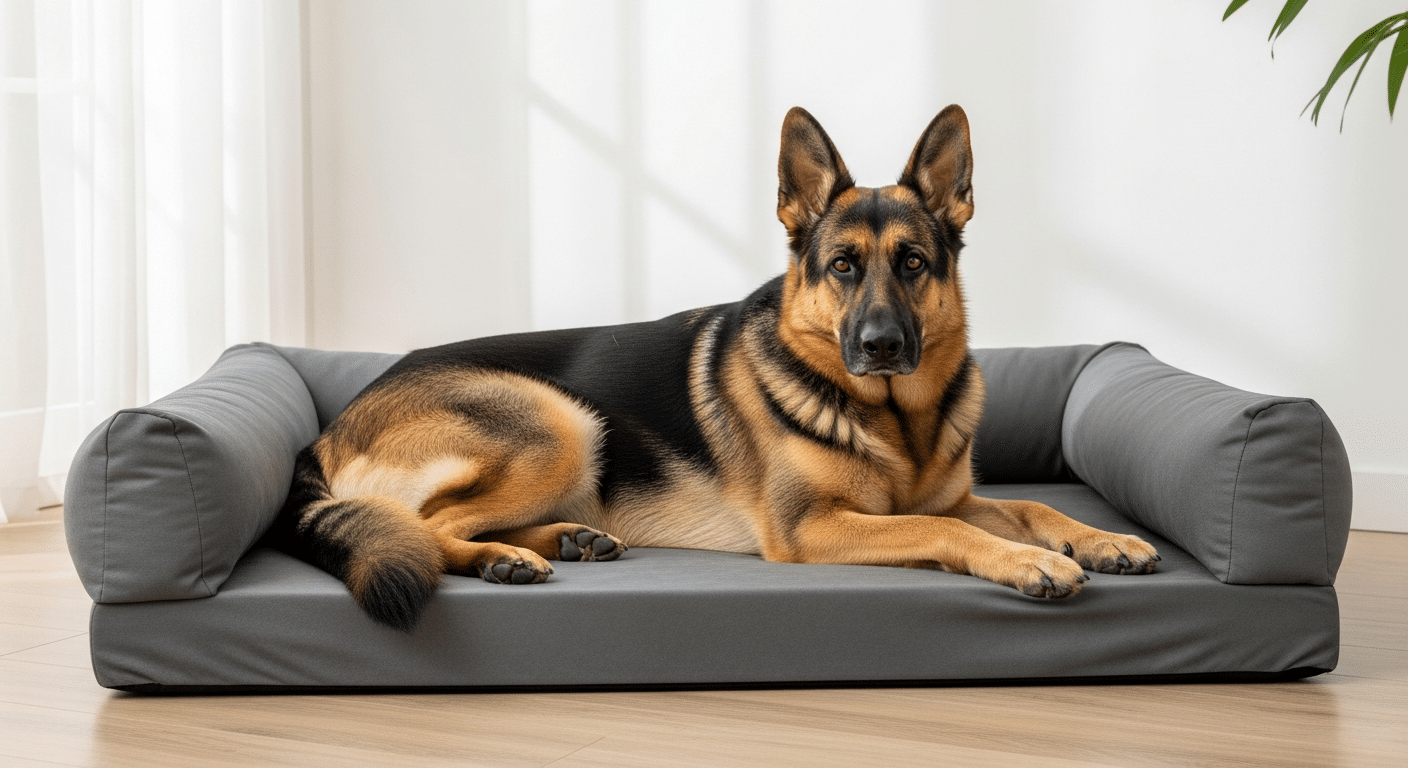
Best Dog Bed for a German Shepherd
A German Shepherd is a large, athletic 50 to 90 lb dog, and the breed most defined by hip and elbow dysplasia. That makes a genuinely supportive, correctly-sized orthopedic bed less of a luxury and more of a health investment. Here are the orthopedic, large-to-XL, washable beds that suit the breed, ranked, in stock, and sized right.
Looking for the best dog bed for a German Shepherd? Start here: a German Shepherd is a large, athletic dog of about 50 to 90 lb (males 65 to 90 lb, females 50 to 70 lb), and the single most important fact about the breed when you’re buying a bed is that the German Shepherd is one of the most hip- and elbow-dysplasia-prone breeds there is. Those joints are already under strain over a long, hard-working life, so the surface your Shepherd sleeps on for twelve-plus hours a day genuinely matters, a thin pad that bottoms out under a 75 lb dog loads the exact joints this breed struggles with. On top of that, a German Shepherd has a thick double coat and sheds heavily, so an easy-clean, machine-washable cover isn’t optional, and the dog is athletic and high-drive, so the bed has to survive a busy dog. What you actually want is a large-to-XL orthopedic bed with thick, high-density (or memory) foam, a removable washable cover, and a footprint big enough for a long-bodied 75 lb dog to stretch right out. Below we explain exactly how to size a bed for this breed, why orthopedic support matters so much for the German Shepherd’s hips and elbows, how to keep a heavy-shedding bed clean, and then the three beds we’d actually buy, one best-overall, one clinical-grade orthopedic, and one built for chewers. For everything else your dog needs, see our German Shepherd gear guide.
The best dog beds for a German Shepherd, ranked
Every pick is an orthopedic, German-Shepherd-appropriate bed we’d put under a 60 to 90 lb dog, verified in stock. Tap through for the live price.

FunnyFuzzy Cooling Orthopedic Washable Large Dog Sofa Bed
Our top pick for most German Shepherds. It pairs a supportive orthopedic foam base with raised bolster sides, a Shepherd loves resting that long head and forelegs on a raised edge, and a cooling top layer that suits a thick double coat that runs warm. Crucially for this breed, the whole cover is removable and machine-washable, which is the single most useful feature when you own a heavy shedder. The foam is thick enough to keep a 60 to 90 lb dog off the hard floor, which is exactly what takes pressure off the hips and elbows German Shepherds are prone to. At this price it badly undercuts the boutique beds while still giving real joint support. Pick the Large for a typical Shepherd; size up to XL for a big male or a sprawler.
What we like
- Orthopedic foam + bolster sides give joint support and a headrest in one bed
- Cooling cover suits a thick double coat that runs warm in summer
- Entire cover is removable and machine-washable, built for a heavy-shedding breed
- Far cheaper than the boutique orthopedic beds without skimping on support
The catches
- Pick the Large (or size up for a sprawler), the smaller sizes are too snug for a 75 to 90 lb Shepherd
- Foam is supportive but not the 7-inch slab a senior with dysplasia may want
- Not a chew-proof bed, fine for a settled adult, not a determined destroyer
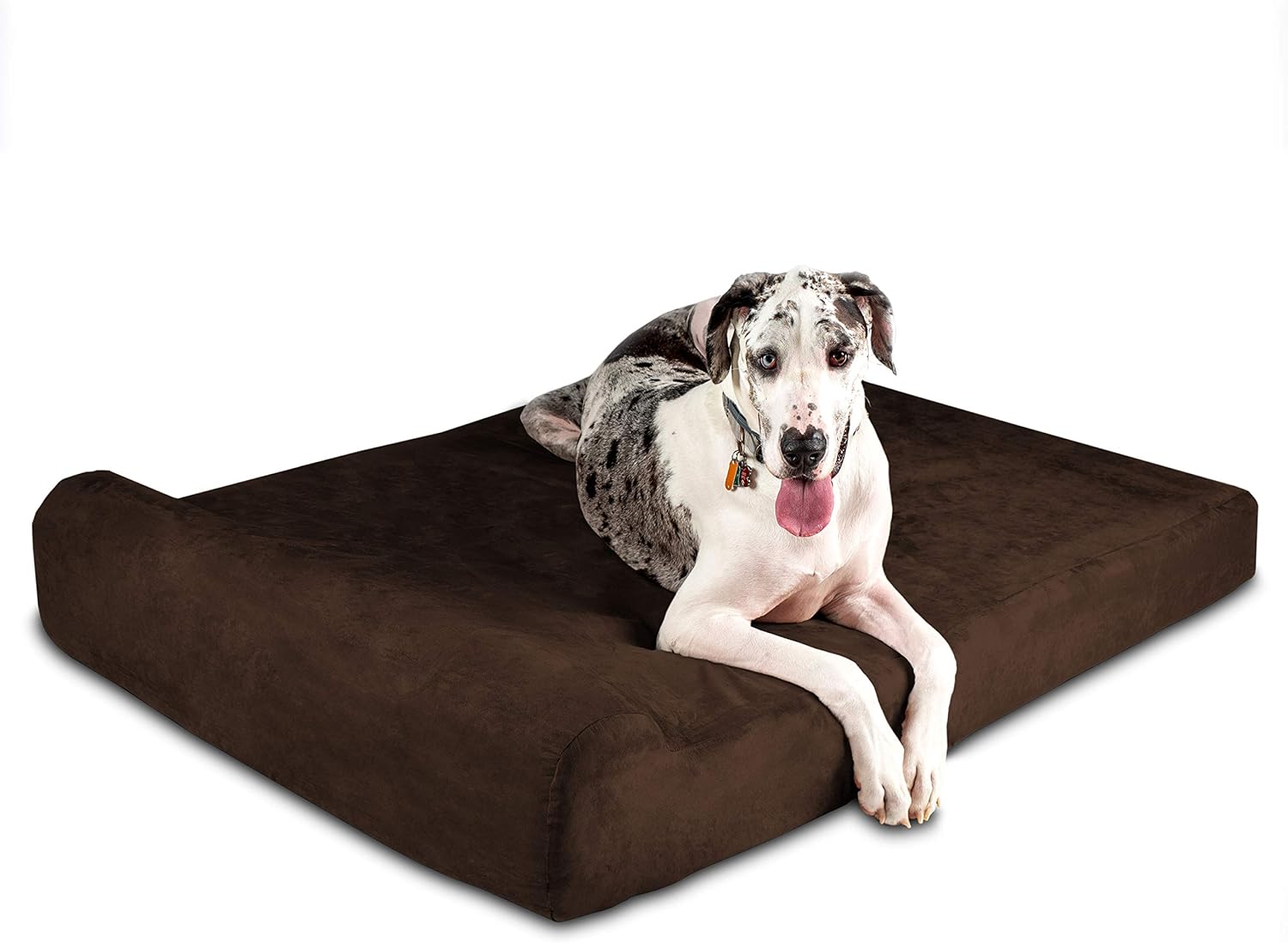
Big Barker 7″ Orthopedic Dog Bed (Large)
If your German Shepherd is older, heavier, or already showing stiffness or signs of hip dysplasia, this is the bed. Big Barker is the large-breed orthopedic flagship: a full 7 inches of American-made therapeutic foam in a 3-layer system that stops a heavy dog from bottoming out onto the floor. It’s the only dog bed backed by a University of Pennsylvania School of Veterinary Medicine study, which found large dogs had measurably reduced joint pain and improved mobility after sleeping on one, which is about as on-the-nose as it gets for the most dysplasia-prone breed. The Large size (48″ × 30″) fits most German Shepherds with room to stretch and a headrest bolster, and the washable microsuede cover plus a 10-year don’t-go-flat warranty make it a genuine buy-it-once bed for a breed that needs joint support for life.
What we like
- 7″ of clinical-grade foam keeps a heavy Shepherd off the floor, no bottoming out
- The only dog bed with a peer-reviewed UPenn vet-school study behind it
- Large 48×30 size suits most German Shepherds, with a headrest the breed loves
- 10-year guarantee it won’t go flat, genuinely a buy-it-once bed
The catches
- The most expensive pick here, it’s an investment, not an impulse buy
- Cover is washable but not marketed as chew-proof
- Roll-packed; it needs a day or two to fully expand out of the box
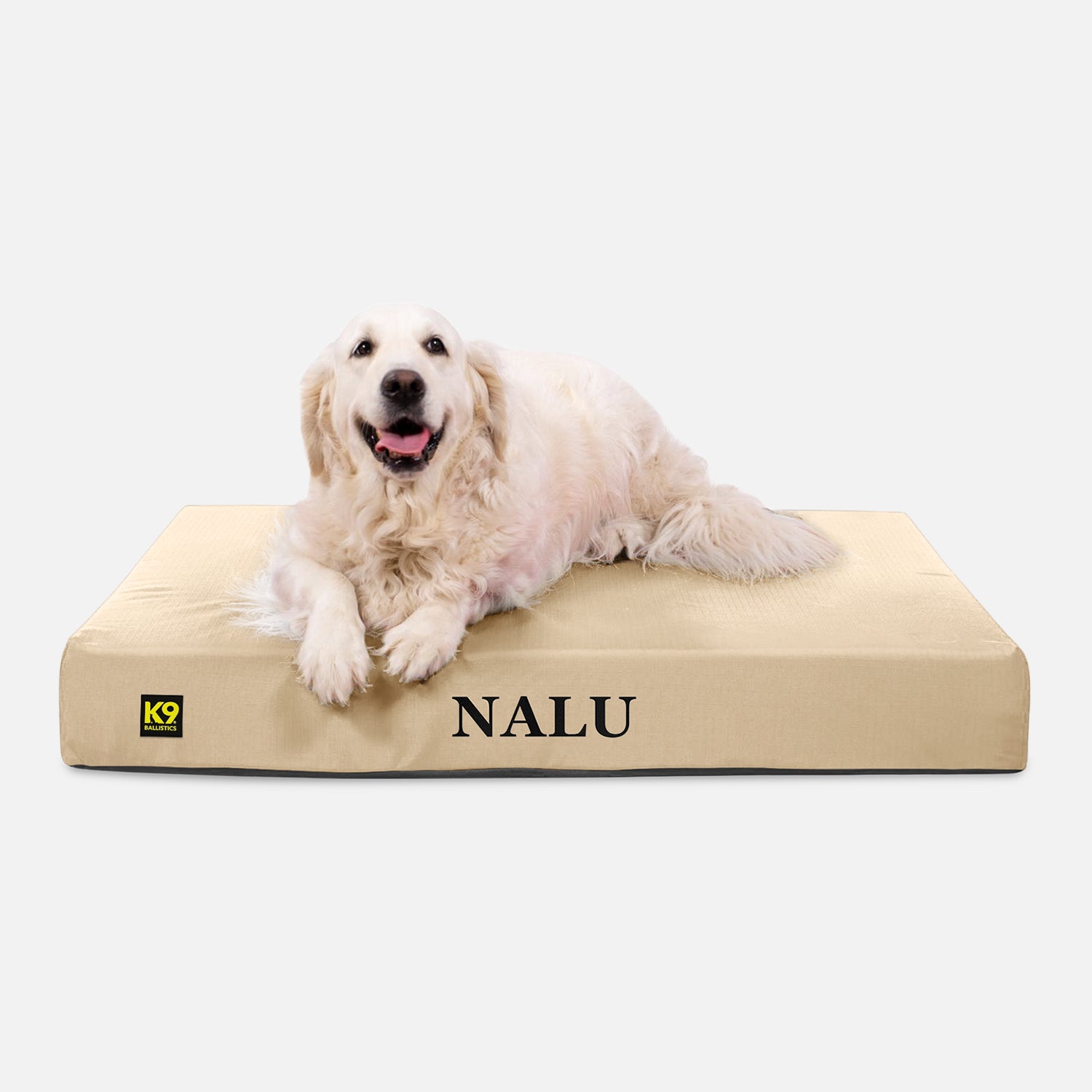
K9 Ballistics Tough Ripstop Rectangle Orthopedic Bed
German Shepherds are high-drive, athletic working dogs, and a soft plush bed can last about a week with a bored chewer. This is the answer: a genuinely chew-resistant and dig-resistant orthopedic bed wrapped in ballistic ripstop fabric over a solid orthopedic foam core. You still get real joint support for the hips and elbows, but in a cover built to survive a powerful working dog. The cover is removable, machine-washable and water-resistant, a real plus for a heavy shedder, and it comes in L and XL sizes that fit a Shepherd with room to spare. It’s the smart middle ground between a cushy bed and an indestructible aluminum cot.
What we like
- Ballistic ripstop cover survives chewers and diggers that destroy plush beds
- Solid orthopedic foam core still supports a German Shepherd’s hips and elbows
- Removable, machine-washable, water-resistant cover handles shedding, drool and mud
- L and XL sizes give a long, athletic Shepherd room to flop and stretch
The catches
- Tough fabric is less plush-soft than a microsuede bed on day one
- No bolster headrest in the flat rectangle version
- A truly determined destroyer can still defeat any fabric, then go elevated/aluminum
Why a German Shepherd needs a special kind of bed
A German Shepherd is a large, powerful, intensely athletic working dog: males stand 24 to 26 inches and weigh about 65 to 90 lb, females 22 to 24 inches and 50 to 70 lb. They’re long-bodied, hard-driving dogs bred to work all day, and that working build comes with a well-known cost. The German Shepherd is one of the breeds most prone to hip and elbow dysplasia, plus degenerative myelopathy of the spine in older dogs. That single fact should drive your bed choice more than anything else. A Shepherd’s anatomy and lifestyle put three specific demands on a bed.
Three things separate a good German Shepherd bed from one that fails the dog within months:
- It has to support dysplasia-prone joints. German Shepherds are predisposed to hip and elbow dysplasia and to arthritis as they age. A proper orthopedic surface distributes the dog’s weight and takes pressure off the hips, elbows and spine, that’s preventive care for a young Shepherd and genuine pain relief for an older one. This is the whole reason “orthopedic” isn’t marketing fluff for this breed.
- It has to keep a heavy dog off the hard floor. A thin pad, or one that compresses flat under a 75 to 90 lb Shepherd, leaves the dog effectively lying on the floor, which loads exactly the joints this breed struggles with and creates pressure points on the elbows. A bed that bottoms out never really worked.
- It has to survive a heavy shedder and a busy dog. A German Shepherd’s thick double coat sheds enormously, and an active dog tracks in mud, so the cover must be removable, machine-washable and ideally water-resistant. And because Shepherds are high-drive and can chew when bored, that cover may also need to be genuinely durable.
Get those three things right, true orthopedic support, correct large-to-XL sizing, and a washable, durable cover, and you’ve got a bed that protects a German Shepherd’s hips for years. Miss any one and you’ll be re-buying by next season, or worse, watching a dysplasia-prone dog sleep on a surface that makes its joints worse. The rest of this guide walks through each. If you’re outfitting your Shepherd from scratch, the bed is one piece; our German Shepherd gear guide covers the crate, harness, toys and the rest.
What size dog bed for a German Shepherd?
This is the question that trips up most owners, because dog-bed “sizing” is wildly inconsistent between brands, one company’s “Large” is another’s “Medium.” So ignore the label and size by your actual dog.
The rule: your German Shepherd should be able to lie fully stretched out on its side, legs extended, without any part hanging off the edge. Shepherds are long, athletic dogs and many sleep flat-out, so this matters. To find the right number, measure your dog from nose to base of tail while it’s standing or lying stretched, then add about 12 inches to get the minimum bed length. For a full-grown German Shepherd that almost always lands you in Large-to-XL territory, roughly a 42 to 48 inch bed (a big 85 lb-plus male or a sprawler wants 48″+ or a true XL).
| German Shepherd | Typical weight | Recommended bed size | Approx. bed length |
|---|---|---|---|
| Female adult | 50 to 70 lb | Large | ~42 to 46″ |
| Male adult | 65 to 90 lb | Large to XL | ~46 to 48″ |
| Big male / sprawler | 85 to 90+ lb | XL | 48″+ |
| German Shepherd puppy (still growing) | varies | Buy for the adult size | size to grown dog |
Two more sizing notes specific to this breed:
- Check the foam, not just the dimensions. A bed can be the right length and still be too thin, under a 75 to 90 lb German Shepherd, a 2 to 3 inch pad compresses to nothing. Look for at least 4 inches of high-density foam (more on this below), and 7 inches for a heavy 80 to 90 lb or senior dog, so the joints are genuinely supported.
- If your Shepherd sprawls, size up. Many German Shepherds sleep flat-out on their side with the legs fully extended rather than curled. If yours does, go to the larger end of Large, or an XL, so the whole dog, including those long legs, stays on the orthopedic surface.
Orthopedic and memory foam: why it matters for a dysplasia-prone breed
For a German Shepherd, “orthopedic” isn’t a marketing upsell, it solves the breed’s defining health problem. German Shepherds are among the most hip- and elbow-dysplasia-prone breeds of all, and they spend a working lifetime loading those joints. The surface a Shepherd lies on for half its day either protects those joints or quietly punishes them. On a thin pad that compresses flat, a 75 lb Shepherd is effectively lying on the floor, putting hard, concentrated pressure on the exact hips and elbows the breed struggles with.
A real orthopedic bed solves this with thick, high-density foam that holds its shape under the dog’s weight, distributing the load so no single joint or bony point bears it. What to look for:
- Thickness: aim for at least 4 inches of foam for an adult German Shepherd, and 7 inches for a heavy 80 to 90 lb, senior, or dysplastic dog. Thin “orthopedic” pads of 2 to 3 inches will bottom out under a Shepherd’s weight.
- Density: look for high-density (around 5 lb/cu ft) foam, ideally a single solid core or layered support foam rather than loose shredded fill, which packs down and goes flat fast.
- CertiPUR-certified foam: a third-party standard confirming the foam is made without certain harmful chemicals, worth having for a dog spending hours a day on it.
- Memory foam vs. support foam: memory foam contours to the body and relieves pressure points (which is exactly what protects dysplastic hips and elbows); firmer support foam resists bottoming out. The best beds layer both, a supportive base topped with a contouring comfort layer.
- Low front entry & non-slip base: a low or open front lets a stiff, dysplastic or senior Shepherd step in without climbing, and a non-slip base stops the bed sliding when the dog flops onto it.
This is the area where the premium beds earn their price. The Big Barker, for example, uses a 7-inch, 3-layer foam system and is the only dog bed backed by a peer-reviewed University of Pennsylvania veterinary study, which found that large dogs sleeping on one showed measurably reduced joint pain and improved mobility. For a young German Shepherd that’s preventive joint care; for an older one with dysplasia or arthritis it can be the difference between getting up stiffly and getting up comfortably. It’s also why we’d never recommend a flat blanket or a cheap bagel bed as a German Shepherd’s main bed, however cozy it looks.
Hip and elbow dysplasia: the German Shepherd’s signature issue
This is the part that matters most for a German Shepherd specifically, and the reason the bed choice is genuinely a health decision. Dysplasia, a malformation of the hip or elbow joint that leads to looseness, abnormal wear and eventually arthritis, is strongly associated with the breed. It’s the thing every German Shepherd owner should plan around.
How a bed helps. A bed can’t cure or prevent dysplasia, which is largely genetic and developmental. But the right bed does two real things for a dysplastic or at-risk Shepherd. First, a thick, supportive orthopedic surface distributes the dog’s weight so the loose, painful joint isn’t bearing hard, concentrated pressure all night, which is why an orthopedic bed so often visibly helps a stiff dog rise more easily in the morning. Second, a warm, supportive bed keeps a sore dog off cold, hard floors that stiffen arthritic joints. For a young Shepherd with healthy hips, the same support is preventive: keeping the joints comfortable and unloaded across years of sleep is exactly what you want for a breed at high risk.
A note on degenerative myelopathy. German Shepherds are also predisposed to degenerative myelopathy (DM), a progressive spinal-cord condition seen in older dogs. A bed obviously can’t treat it, but for a dog with mobility loss a firm, flat, easy-to-enter orthopedic surface (rather than a deep, sinking one the dog can’t get out of) is the kinder choice. As always, this is about comfort and support, not a medical claim. If your German Shepherd shows signs of hip pain, stiffness, limping, or hind-end weakness, that’s a conversation for your vet; the bed is one supportive piece of a bigger care picture. For trustworthy background, the American Kennel Club’s overview of hip dysplasia is a good starting point.
The double coat, heavy shedding, and keeping the bed clean
Right alongside the joints, this is the day-to-day reality of owning a German Shepherd: the shedding. The breed has a dense double coat, a coarse outer coat over a soft insulating undercoat, and it sheds steadily year-round, then “blows” the undercoat heavily twice a year. A Shepherd’s bed becomes a hair magnet faster than almost any other breed’s, so easy cleaning isn’t a nice-to-have; it’s a daily-life requirement.
What that means for the bed you buy:
- A removable, machine-washable cover is non-negotiable. “Spot clean only” is a dealbreaker for a German Shepherd. You want a cover you can unzip and throw in the wash regularly to keep on top of hair, dander and the doggy smell that builds up.
- A water-resistant inner liner protects the foam from accidents, drool and the damp of a post-walk dog, so the bed doesn’t hold odor.
- A tighter-weave or short-pile cover sheds hair more easily than deep shag, a lint roller or a quick vacuum lifts the loose coat off rather than burying it.
The bed is only half the shedding battle, though. The real fix is getting the loose undercoat off the dog before it lands on the bed (and the sofa, and your clothes). Regular de-shedding with the right tool dramatically cuts how much hair ends up on the bed in the first place, see our guide to the best de-shedding tool for dogs, which is close to essential kit for a German Shepherd owner. Brush a few times a week (daily during a coat blow), wash the bed cover on a regular schedule, and the heavy-shedder bed problem becomes very manageable.
Cooling, warmth and the double coat
A German Shepherd’s thick double coat is built for insulation, which means the breed tends to run warm and is more at risk of overheating than of getting cold, the opposite problem to a short-coated breed. That shapes the bed too.
In warm homes and summer. A bed with a cooling-gel layer or a breathable, low-loft cover helps a double-coated dog dump heat rather than trapping it, which is why our top pick is a cooling orthopedic bed. Keep the bed out of direct sun and off heat sources, and in hot climates an elevated cot that lets air flow underneath can be a comfortable warm-weather option (though it sacrifices orthopedic foam, so it’s a summer extra, not a dysplastic dog’s main bed).
Don’t over-chill, either. A German Shepherd isn’t a cold-sensitive breed, but a senior or arthritic dog still appreciates being kept off cold tile, which stiffens sore joints. The sweet spot for most Shepherds is a supportive orthopedic bed with a breathable cover, kept off cold floors, cool enough for a thick coat, supportive enough for the joints.
Durability, chewing and cleaning: building for a German Shepherd
A German Shepherd is a high-drive, intelligent working dog, and the bed has to respect that. How hard your dog is on bedding decides the cover you need:
- Settled adult, doesn’t chew: a standard soft washable orthopedic bed (like our FunnyFuzzy top pick) is perfect, orthopedic support and easy cleaning for the shedding.
- Chews or digs at bedding: step up to a genuinely chew-resistant, dig-resistant cover, ripstop ballistic fabric like the K9 Ballistics Tough line, which keeps orthopedic foam inside a cover built to take abuse.
- Truly destructive: go to an elevated aluminum-frame cot (brands like Kuranda and K9 Ballistics’ elevated line). Aircraft-grade frames are effectively chew-proof, though you trade away soft orthopedic foam, so they suit yards, crates and warm climates more than a dysplastic Shepherd’s main indoor bed.
One more durability detail: reinforced seams and a non-slip base. An athletic German Shepherd flopping onto a bed stresses the seams, and a bed sliding across a hard floor is annoying and a slip hazard for a dog with iffy hips. The best beds reinforce both. If your Shepherd is also a crate dog, match the bed to the crate footprint, our what size crate for a German Shepherd guide has the dimensions to size against. And because a lot of bed-chewing is really under-stimulation, a tired Shepherd chews less: pair the bed with proper exercise and good chew toys for a German Shepherd.
Bed styles compared: orthopedic mattress vs. bolster vs. elevated vs. donut
“Best bed” also depends on how your German Shepherd sleeps. Here’s how the main styles stack up for the breed:
| Style | Best for | Watch out for |
|---|---|---|
| Bolster / sofa (orthopedic base + raised sides) | Shepherds that rest their head on an edge; security and a headrest, our top-pick style | Make sure the base is truly orthopedic, not just stuffed sides; choose a low front entry for stiff hips |
| Flat orthopedic mattress | Sprawlers; seniors; dysplastic/DM dogs needing maximum, easy-entry joint support; easy to size up to XL | No headrest; less cozy than a bolster |
| Elevated aluminum cot | Chewers, hot climates, outdoor/yard use, airflow under a hot double coat, easy hose-off cleaning | No soft orthopedic foam, a poor primary bed for a dysplastic Shepherd |
| Donut / cuddler | Curl-up sleepers; anxious dogs that like to feel enclosed | Most are too small and under-supported for a long-bodied 75 lb Shepherd, size very carefully |
For most German Shepherds we’d start with a bolster orthopedic bed, joint support plus a headrest the breed likes. A flat orthopedic mattress is the better pick for a true sprawler, or for a senior or dysplastic dog that needs an easy, low step-in. Reserve the elevated cot for chewers or hot weather, and treat a donut bed as a secondary “extra cozy” option rather than the main support bed, most are too small and too soft to properly support a Shepherd’s joints.
Health notes every German Shepherd owner should know
A few breed-specific health realities make the right bed more than a comfort purchase:
- Hip & elbow dysplasia. The breed’s signature orthopedic issue. A supportive orthopedic surface won’t cure it, but it reduces joint loading and the painful pressure points that make a sore dog stiff first thing in the morning.
- Arthritis. An ageing, hard-working Shepherd commonly develops arthritis, often on top of dysplasia. Thick, contouring orthopedic foam and an easy low entry keep an arthritic dog comfortable.
- Degenerative myelopathy (DM). German Shepherds are predisposed to this progressive spinal condition in later life. A firm, flat, easy-to-enter surface (not a deep, sinking one) is kinder for a dog with reduced mobility.
- Pressure points & calluses. A heavy dog on a hard or flattened surface develops elbow calluses and pressure sores. Thick, supportive foam the dog can’t compress flat prevents them.
- High energy & recovery. Shepherds are athletes who work and play hard, and quality rest is when muscle and joints recover. A comfortable, supportive bed encourages a dog to settle and rest deeply between bursts of activity.
How we picked these beds
We started from the breed, not the bed. A German Shepherd’s large athletic frame, pronounced hip- and elbow-dysplasia risk, thick heavy-shedding double coat, and high drive set hard requirements, large-to-XL sizing, thick supportive orthopedic foam, and a washable, durable cover, and we only considered beds that meet them and are actually in stock right now. Then we ranked for the three most common German Shepherd situations:
- Best overall for a typical adult German Shepherd: the FunnyFuzzy Cooling Orthopedic Washable Large Dog Sofa Bed, orthopedic support, a bolster headrest, a cooling cover for the thick coat, and a fully washable cover for the shedding, at a price that doesn’t punish you for owning a big dog.
- Best orthopedic / for dysplasia, seniors and heavier dogs: the Big Barker 7″ (Large), the clinical-grade, UPenn-studied flagship, correctly sized for a Shepherd, and the bed we’d choose for an older, arthritic, or dysplastic dog.
- Most durable / for chewers: the K9 Ballistics Tough Ripstop, real orthopedic foam inside a chew- and dig-resistant ballistic cover.
All three are correctly sized for a German Shepherd, all three have washable covers, and every buy button goes to a live listing we verified in stock before publishing. For more dog beds beyond the German-Shepherd-specific picks, see our full dog bed buyer’s guide.
Best dog bed for a German Shepherd: common questions
What size bed for a German Shepherd?
A Large bed, usually about 42 to 48 inches long, and a big male should go XL. Ignore brand size labels and size to your dog: measure from nose to base of tail and add about 12 inches to get the minimum bed length. German Shepherds are long, athletic dogs (males 65 to 90 lb, females 50 to 70 lb) and many sleep stretched flat out, so a full-grown Shepherd almost always needs a Large rather than the Medium its weight might suggest, and an 85 to 90 lb male or a sprawler should go to an XL. Also check the foam, not just the dimensions: aim for at least 4 inches of high-density foam (7 inches for a heavy or senior dog) so a 75 lb Shepherd is genuinely lifted off the floor. For a puppy, buy for the adult size now rather than re-buying as it grows.
What is the best orthopedic bed for a German Shepherd with hip dysplasia?
For a German Shepherd with hip dysplasia, the standout orthopedic bed is the Big Barker 7″ in the Large (48″ × 30″) size. It uses 7 inches of American-made therapeutic foam in a 3-layer system that keeps a heavy dog from bottoming out onto the floor, so the loose, painful joint isn’t bearing concentrated pressure all night, and it’s the only dog bed backed by a peer-reviewed University of Pennsylvania School of Veterinary Medicine study, which found large dogs had measurably reduced joint pain and improved mobility after sleeping on one. A low front entry and 10-year no-flatten warranty make it ideal for a dysplastic or arthritic Shepherd that needs joint support for life. If you want orthopedic support at a lower price, the FunnyFuzzy orthopedic sofa bed is our best-overall pick. A bed supports the joint but doesn’t treat dysplasia, see your vet for a hip-pain plan.
Do German Shepherds need an orthopedic bed?
Yes, more than almost any other breed. German Shepherds are among the most hip- and elbow-dysplasia-prone breeds there is, and they spend a working lifetime loading those joints, so the surface they sleep on for half the day genuinely matters. A thin or flattened bed leaves a 75 to 90 lb Shepherd effectively on the hard floor, putting concentrated pressure on the exact joints the breed struggles with. A thick (4 to 7 inch), high-density orthopedic bed distributes the dog’s weight, cushions the hips, elbows and spine, and lets a stiff dog rise more easily. For a young Shepherd it’s preventive joint care; for a senior with dysplasia or arthritis it’s real pain relief. It’s one of the few comfort purchases that genuinely doubles as preventive health care.
What kind of bed is best for a German Shepherd that sheds so much?
For a heavy-shedding breed like the German Shepherd, the cover matters as much as the foam. Choose a bed with a removable, fully machine-washable cover (never “spot clean only”) and ideally a water-resistant inner liner so accidents and a damp post-walk dog don’t soak into the foam. A tighter-weave or short-pile cover releases hair more easily than deep shag, so a lint roller or vacuum lifts it off. Then tackle the dog, not just the bed: regular de-shedding with a proper undercoat tool removes the loose coat before it ever reaches the bed, see our best de-shedding tool for dogs. A washable cover plus a few minutes of de-shedding a week keeps the bed (and your house) manageable.
How thick should a German Shepherd’s bed be?
Aim for at least 4 inches of high-density foam for an adult German Shepherd, and 7 inches for a heavy 80 to 90 lb, senior, or dysplastic dog. Thin “orthopedic” pads of 2 to 3 inches compress flat under a Shepherd’s weight, the dog bottoms out onto the floor and you lose all the support, which defeats the point for a dysplasia-prone breed. Look for high-density (around 5 lb/cu ft) foam in a solid or layered core rather than loose shredded fill, which packs down fast. The best beds layer a firm support base under a contouring comfort top, and a low front entry helps a stiff or senior Shepherd get on and off easily.
Are German Shepherds chewers, and will they destroy a soft bed?
Some are, especially puppies and bored, under-exercised or anxious dogs. German Shepherds are powerful, high-drive working dogs, and the ones that chew or dig at bedding can shred a soft plush bed quickly. If your Shepherd is hard on its things, skip the plush bed and choose a chew-resistant, dig-resistant cover made from ripstop ballistic fabric (like the K9 Ballistics Tough line) over orthopedic foam. For a truly destructive dog, an elevated aluminum-frame cot is effectively chew-proof, though it sacrifices the orthopedic foam a dysplasia-prone Shepherd benefits from, so keep it for warm climates or yards. A settled adult that doesn’t destroy bedding can use a standard soft washable orthopedic bed. Remember that a lot of bed-chewing is really under-stimulation, a well-exercised Shepherd with good chew toys is far less likely to demolish its bed.
How much should I spend on a bed for a German Shepherd?
Plan for more than a small-dog bed, because of the size and the foam involved, but a German Shepherd doesn’t need a giant-breed price tag. A solid washable orthopedic bed sized for a Shepherd runs roughly $75-$130 (our FunnyFuzzy and K9 Ballistics picks sit here), while a premium clinical-grade bed like the Big Barker Large runs around $220+. It’s worth spending up for a dysplasia-prone, heavy, or senior dog: a thick, high-density orthopedic bed lasts years and protects the joints, whereas a cheap pad bottoms out, holds hair and odor, and gets re-bought every few months, costing more over time. The thing to avoid is a flimsy, too-small, under-padded bed for a large dysplasia-prone Shepherd at any price.