 Dog Gear, Sized Right
Memory Foam vs Orthopedic Dog Bed: What’s the Difference?
The terms overlap, the marketing is murky, and most cheap ‘orthopedic’ beds are neither. Here’s what each word actually means, and what to look for instead.
Memory foam vs orthopedic dog bed, the confusion is almost built in by the industry. Search either term and you’ll find them used interchangeably, stacked on top of each other, and slapped on $25 bags of shredded fill that will flatten in a month. Here is the straight answer: memory foam is a material (a type of viscoelastic polyurethane foam that contours to body heat and pressure). Orthopedic is a function claim, not a regulated standard, not a certification, just a word a manufacturer can put on any product. A bed earns the orthopedic label honestly when it uses a solid, high-density foam core thick enough that a heavy dog never bottoms out to the floor. Memory foam is often part of that orthopedic design, but the two terms describe different things, and understanding the difference is the only way to buy a bed that actually helps a large or aging dog’s joints.
Our top pick for a true orthopedic build
This is an explainer, not a roundup, we cover one bed that honestly fits the ‘orthopedic’ brief (solid foam, won’t bottom out, washable). Verified in stock; tap through for the live price.
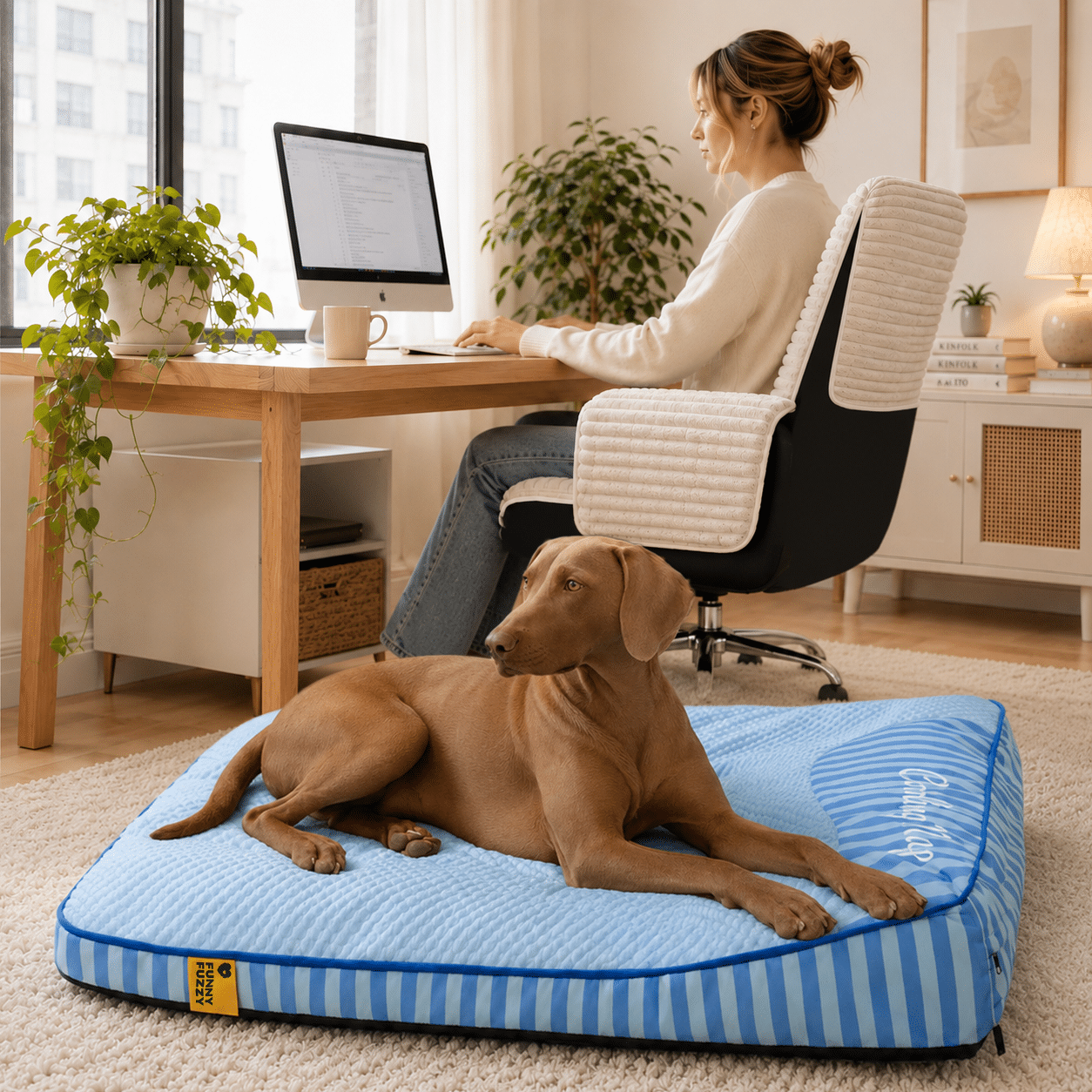
FunnyFuzzy Orthopedic Dog Bed
FunnyFuzzy uses a solid foam core rather than shredded fill, so it holds its shape under a heavy dog’s weight and won’t bottom out to the floor over time. The surround-support bolster adds side cradling for dogs that like to rest their heads or curl in, and the waterproof base plus washable cover make it genuinely practical for daily use. If you’re shopping specifically because you want an honest orthopedic build and not just a bag of marketing claims, this is the bed that fits the brief.
What we like
- Solid foam core, won’t flatten, clump, or bottom out under a large dog’s weight
- Bolster surround adds head and neck support for curlers and leaners
- Waterproof base protects floors; cover zips off and goes in the washing machine
- Competitively priced for a genuine supportive-foam build
The catches
- Not gel-infused, standard foam retains some heat, which can matter in summer for heavy-coated breeds
- Bolster style doesn’t suit flat-sprawl sleepers who prefer an open-platform bed
- Sizing runs medium-large; very giant breeds (Great Dane, Mastiff) may need a custom or extra-large specialist
What “memory foam” actually means
Memory foam is a specific material: viscoelastic polyurethane foam developed by NASA in the 1960s and later commercialised for mattresses and pillows. The defining property is that it responds to both heat and pressure, when a warm, heavy dog lies on it, the foam softens and moulds to the exact shape of that body, distributing weight evenly across the surface. When the dog gets up, the foam slowly recovers its original shape (the classic “slow spring-back” you see in mattress adverts).
For dogs, this pressure-distribution property is genuinely useful: it reduces the concentrated load on bony points (hips, shoulders, elbows) that are often the first places arthritis shows up. What memory foam does not automatically provide is structural lift. Solid memory foam slabs are rated by density (pounds per cubic foot): low-density foam (1.0 to 1.5 lb/ft³) will feel plush initially but compress under a heavy dog within a few months until it bottoms out. High-density memory foam (3.5 lb/ft³ and above) is what actually holds up under large-breed weight long-term. Density is the number most manufacturers don’t advertise, and the one that matters most.
What “orthopedic” actually means (and what it doesn’t)
Here is the uncomfortable truth: “orthopedic” is not a regulated term in the pet-products industry. There is no certification body, no foam-density standard, no third-party test a dog-bed company must pass to use the word. Any manufacturer can print “Orthopedic Dog Bed” on a bag of shredded polyester fill and sell it on Amazon. Many do.
Used honestly, orthopedic describes a bed designed to support a dog’s musculoskeletal system, joints, spine, muscles, by keeping them properly aligned during rest. That requires two things a cheap bag of fill cannot provide:
- A solid foam core (not shredded, not loose fill): only a continuous slab of foam creates the consistent, even support surface that keeps a dog’s weight distributed without sinking to one side or clumping under pressure.
- Sufficient thickness and density for the dog’s weight: a 4 to 7-inch solid foam core rated at 3.5+ lb/ft³ is the benchmark cited by foam engineers and veterinary rehabilitation professionals for large-breed support. Below that threshold, a 70 to 90 lb dog will compress the foam to the floor, defeating the whole point.
So “memory foam” and “orthopedic” are not competing options. Memory foam is a material; orthopedic is a performance standard (one the industry enforces only through honesty, not regulation). A bed can be both, either, or neither.
Solid foam vs shredded fill: the most important distinction
If there is one thing to take from this article, it is this: the solid vs shredded divide matters more than any label on the packaging.
| Fill type | Support quality | Bottoming out? | Best for | Typical price |
|---|---|---|---|---|
| Solid memory foam slab | Excellent, even, consistent, pressure-distributing | No (with 3.5+ lb/ft³ density) | Large breeds, seniors, arthritic dogs | $80-$250+ |
| Shredded fill (memory foam or poly) | Poor, shifts, clumps, uneven | Yes, within weeks to months | Small dogs, casual use | $25-$70 |
| True orthopedic (solid base + comfort layer) | Best, support base + pressure relief | No (when built to spec) | Senior, arthritic, post-surgical dogs | $100-$350+ |
Shredded memory foam is particularly misleading. It is marketed as having the benefits of memory foam, but shredded foam cannot replicate the pressure-distributing property of a solid slab, the pieces shift and clump under load, leaving hollow spots under a heavy dog’s hips or shoulders. It also retains heat even more than solid foam because it lacks the open-cell structure that allows airflow. The only dogs well-served by shredded fill are small breeds that don’t generate enough weight to compress it significantly.
Big Barker, one of the benchmark brands for large-dog beds, is explicit about using solid American-made foam certified to hold its loft for 10 years, and their sizing system is built entirely around preventing large breeds from sinking to the floor. That design philosophy is the correct one; it just isn’t universal.
How thick does a dog bed need to be? (Foam depth for big dogs)
Foam thickness is where a lot of otherwise reasonable beds fail large breeds. A dog weighing 60 lb or more will compress even decent foam significantly under their heaviest pressure points, hips, shoulders, the point of the elbow. The useful guide from foam engineers and canine rehab vets:
- Under 40 lb: 3 to 4 inches of solid foam is adequate.
- 40 to 80 lb: 4 to 5 inches, minimum 3 lb/ft³ density.
- 80 to 120 lb: 5 to 7 inches, 3.5+ lb/ft³, the standard for breeds like Labs, Goldens, German Shepherds, and Boxers.
- 120 lb+: 6 to 7+ inches, highest available density. Great Danes, Mastiffs, and Saint Bernards genuinely need a bed engineered for their weight class, not a standard large resized.
A quick test: press your fist firmly into the centre of the bed. If you can feel the floor (or the base board beneath the foam) through the foam, the bed is too thin or too low-density for your dog. This is the “bottoming-out test”, a reputable brand will mention it; a cheap bed will fail it on day one with a large dog. See our best orthopedic dog beds for large dogs guide for models we’ve verified hold up at the 80+ lb range.
Who actually needs a true orthopedic bed?
Not every dog does, and being honest about that matters. A healthy 2-year-old Beagle with no joint issues sleeps fine on a plush polyfill cushion. But several situations make a genuinely supportive solid-foam bed a real quality-of-life difference:
- Large and giant breeds: Their body weight alone creates concentrated pressure on joints during sleep. A 90 lb Labrador sleeping 12 to 16 hours a day needs a surface that distributes that weight rather than letting the hip sink to the floor.
- Senior dogs (7+ years for large breeds, 5+ for giants): Cartilage thins, muscles lose mass, and joints that were fine at 3 start hurting at 8. A firm, even sleep surface reduces the stiffness they show when getting up.
- Dogs with diagnosed arthritis or hip dysplasia: Veterinary rehabilitation specialists routinely cite quality sleep surface as part of a comprehensive pain-management plan alongside NSAIDs and weight control.
- Post-surgical or recovering dogs: After orthopaedic surgery (cruciate repair, hip replacement), controlled, even weight distribution during rest reduces stress on the repair site.
- Heavily muscled or deep-chested breeds: Breeds like Pit Bulls and Rottweilers carry significant weight in their chest and shoulders, pressure points that cheap fill beds don’t handle well.
For a detailed guide on what to actually look for when buying for a large dog, our buying a dog bed for large dogs guide covers size, foam grade, and washability in detail.
Memory foam and heat: what to know
One honest downside of memory foam that most reviews gloss over: it retains heat. The viscoelastic material responds to warmth (that’s how it softens and contours), but that same property means it holds your dog’s body heat rather than dissipating it. For dogs that run warm, sleep in warm rooms, or have thick double coats. Huskies, Malamutes, Samoyeds, Bernese Mountain Dogs, a standard memory foam bed can make them uncomfortably hot, especially in summer.
The industry’s solution is gel-infused memory foam: cooling gel beads (or a gel layer) are incorporated into the foam to absorb and dissipate heat rather than trapping it. Gel-infused beds run cooler than standard memory foam, though they are not as dramatically cooling as an elevated mesh or water-cooled bed. Open-cell memory foam is another variant that allows more airflow through the foam structure than traditional closed-cell foam, it’s less heat-retentive but also slightly less pressure-distributing.
Heat retention is also why shredded memory foam is worse than solid foam in this respect: the loose pieces trap air between them, creating a thick insulating layer. If you have a warm-running breed and you’re buying an orthopedic-style bed, prioritise gel-infused or open-cell solid foam over shredded fill on both counts, support and cooling.
How to spot a fake “orthopedic” bed (red flags to check)
Because the word is unregulated, spotting a genuine orthopedic build requires looking past the label. Here is what separates a real supportive-foam bed from a marketing claim:
- No foam density listed: A genuine orthopedic bed will tell you the foam density in lb/ft³. If the listing says “orthopedic foam” but gives no density number, that’s a red flag, the density is probably too low to matter.
- “Shredded memory foam” fill: As covered above, shredded fill cannot provide consistent orthopedic support for large dogs. Any listing that leads with “shredded memory foam” is not an orthopedic bed in the meaningful sense.
- Thickness under 4 inches for dogs over 40 lb: A 2 to 3 inch foam layer will bottom out under a medium or large dog. Legitimate orthopedic beds for large breeds specify 4 to 7 inch foam cores.
- No mention of a base support layer: The best orthopedic builds use a two-layer system: a firm high-density support base plus a softer comfort layer on top. If the listing describes a single generic “memory foam” layer with no base, the support foundation is probably minimal.
- Extreme cheapness: Quality foam costs money. A bed for a 70+ lb dog marketed as orthopedic for under $30 is almost certainly shredded fill, very low-density foam, or a thin slab that won’t last six months. Expect to pay $80-$150+ for an honest orthopedic build for a large dog, and $150-$350 for a specialist brand like Big Barker.
- No washable cover: Dogs with joint issues are often senior dogs who also have bladder control changes. An orthopedic bed without a removable, washable cover is a hygiene problem waiting to happen. Check for both a washable cover and a waterproof liner protecting the foam.
Our full breakdown of what makes a bed genuinely supportive is in our what is an orthopedic dog bed explainer, including the questions to ask before buying.
Memory foam vs orthopedic: the summary
To bring it all together in plain terms:
- Memory foam = a material, viscoelastic foam that contours to body heat and pressure, distributes weight, and relieves pressure points. Can be part of an orthopedic build or stand alone. Quality depends heavily on density (aim for 3.5+ lb/ft³ for large dogs). Runs warm; cooling-gel versions mitigate this.
- Orthopedic = a performance claim, unregulated, meaning any brand can use it. Deserved only when the bed uses a solid, high-density foam core thick enough to prevent bottoming out under the dog’s weight. Often includes memory foam as the comfort layer.
- Shredded foam/fill = neither, for large dogs. Shifts, clumps, bottoms out, retains more heat, and degrades faster than any solid-foam option.
- What to buy: a solid foam bed, solid memory foam or high-density support foam, 4 to 7 inches thick for large breeds, from a brand that publishes foam density. That bed will often be labelled “orthopedic.” The label is fine; just verify what’s inside before you rely on it.
For our tested recommendations across all large-breed sizes, visit the dog beds hub or go straight to the best orthopedic dog beds for large dogs if you already know your dog needs the extra support.
Memory foam vs orthopedic dog beds: common questions
Is memory foam the same as orthopedic?
No, they describe different things. Memory foam is a material: viscoelastic polyurethane foam that contours to body heat and pressure. Orthopedic is a function claim (and an unregulated one) describing a bed designed to support joints and the spine. A bed can be both (a solid memory foam slab thick enough to prevent bottoming out), either one without the other, or neither (a bag of shredded fill labelled orthopedic, which is just marketing).
Is memory foam good for dogs?
Yes, with caveats. Solid memory foam with sufficient density (3.5+ lb/ft³) distributes a dog’s weight evenly, relieves pressure on joints and bony prominences, and is especially beneficial for large, senior, or arthritic dogs. Low-density memory foam or shredded memory foam bottoms out under a heavy dog and provides little real benefit. One genuine downside: memory foam retains heat, which can be uncomfortable for warm-running breeds. Gel-infused foam mitigates this.
What is the difference between orthopedic and regular dog beds?
A genuine orthopedic dog bed uses a solid, high-density foam core (4 to 7 inches thick for large breeds) designed to prevent a heavy dog from sinking to the floor during sleep. A regular or standard dog bed typically uses polyfill, shredded foam, or thin foam padding that compresses under weight over time. The honest caveat: “orthopedic” is not regulated, so many cheap beds use the label on products that are effectively just regular padded cushions. Look for a solid foam core and a published foam-density number to tell them apart.
Is shredded memory foam orthopedic?
No, not for large dogs. Shredded memory foam cannot replicate the even, pressure-distributing surface of a solid foam slab. The pieces shift and clump under a heavy dog’s weight, creating hollow spots beneath joints rather than supporting them. Shredded fill also retains more heat than solid foam. For small dogs that don’t generate enough weight to compress the fill significantly, it may be fine as a comfort material, but it does not constitute an orthopedic support system.
How thick should a dog bed be for a large dog?
As a guide: 4 to 5 inches of solid foam (3.0+ lb/ft³) for dogs 40 to 80 lb; 5 to 7 inches at 3.5+ lb/ft³ for dogs 80 to 120 lb; 6 to 7+ inches at the highest available density for dogs over 120 lb. The quick test: press your fist firmly into the centre of the bed, if you can feel the floor or base board through the foam, the bed is too thin or too low-density for your dog’s weight. Thickness without adequate density will still compress to the floor.
Does memory foam make dogs hot?
It can. Memory foam responds to and retains body heat, which is part of how it softens and contours, but that same property means it traps warmth rather than dissipating it. For warm-running breeds, dogs in hot climates, or heavy-coated dogs, standard memory foam can be uncomfortably warm. Gel-infused memory foam incorporates cooling gel beads that absorb and dissipate heat, running noticeably cooler. Open-cell foam variants also allow more airflow. For dogs that genuinely overheat, an elevated mesh bed will outperform any foam option for cooling.