 Dog Gear, Sized Right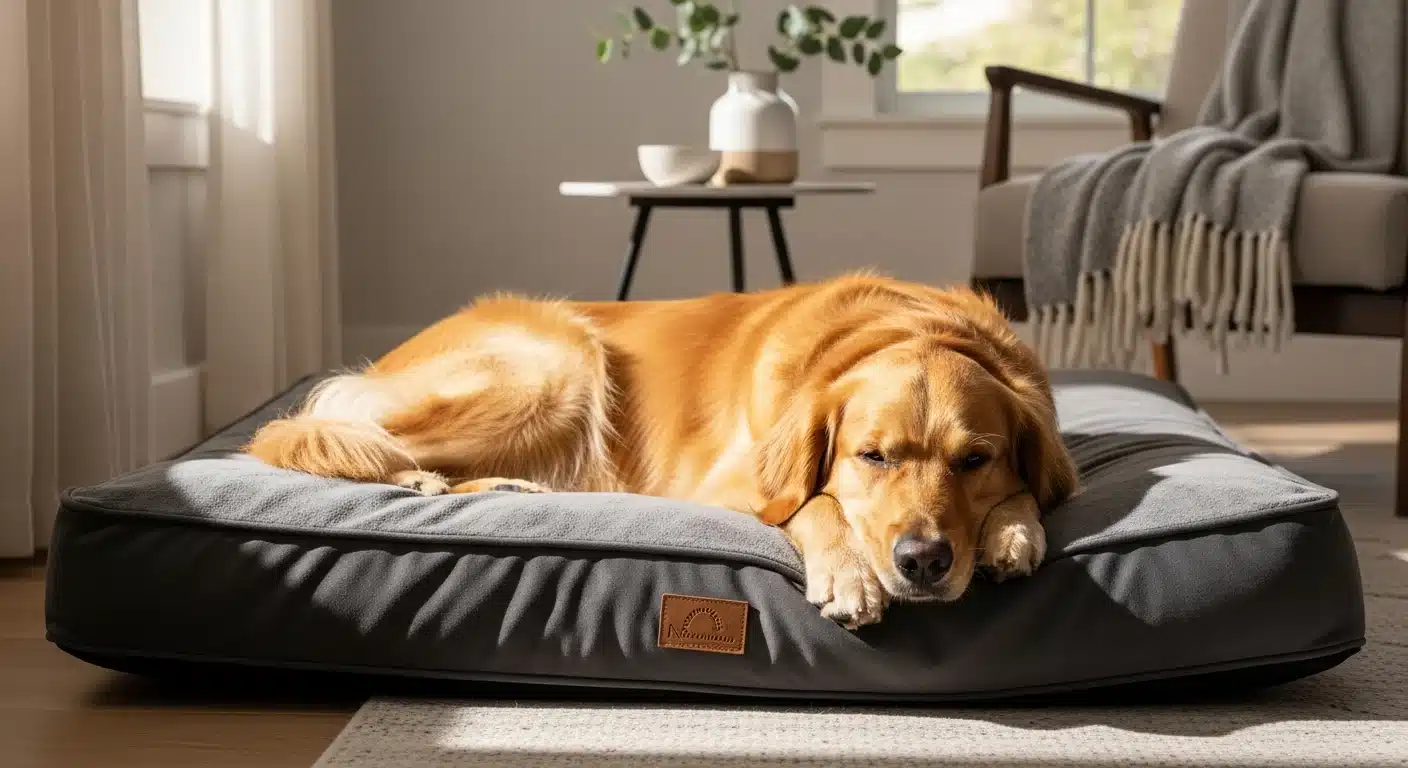
What Size Dog Bed Do I Need? (Size Guide + Chart)
A real sizing table, the exact measurement method, and every edge case, curlers vs. sprawlers, bolster vs. flat, growing puppies, and two dogs sharing.
What size dog bed do you need? The short answer most sites give you is “measure your dog and add 6 to 12 inches”, which is true, but not very useful without the actual numbers. This guide gives you the full picture: the exact measurement method (nose to tail-base, not tail-tip), a size chart mapping dog measurements and weight to bed dimensions in inches with example breeds, how sleeping style changes everything, the bolster-vs-flat trap that trips up even experienced dog owners, how to size for a puppy who’s still growing, what to do when two dogs share one bed, and why both too-small and too-large are genuinely problems, not just marketing fluff.
Our top-rated bed for getting the size right
One pick here, because sizing is the subject, not a roundup. This bed comes in a genuine size run with honest dimensions. Verified in stock; tap through for the live price.
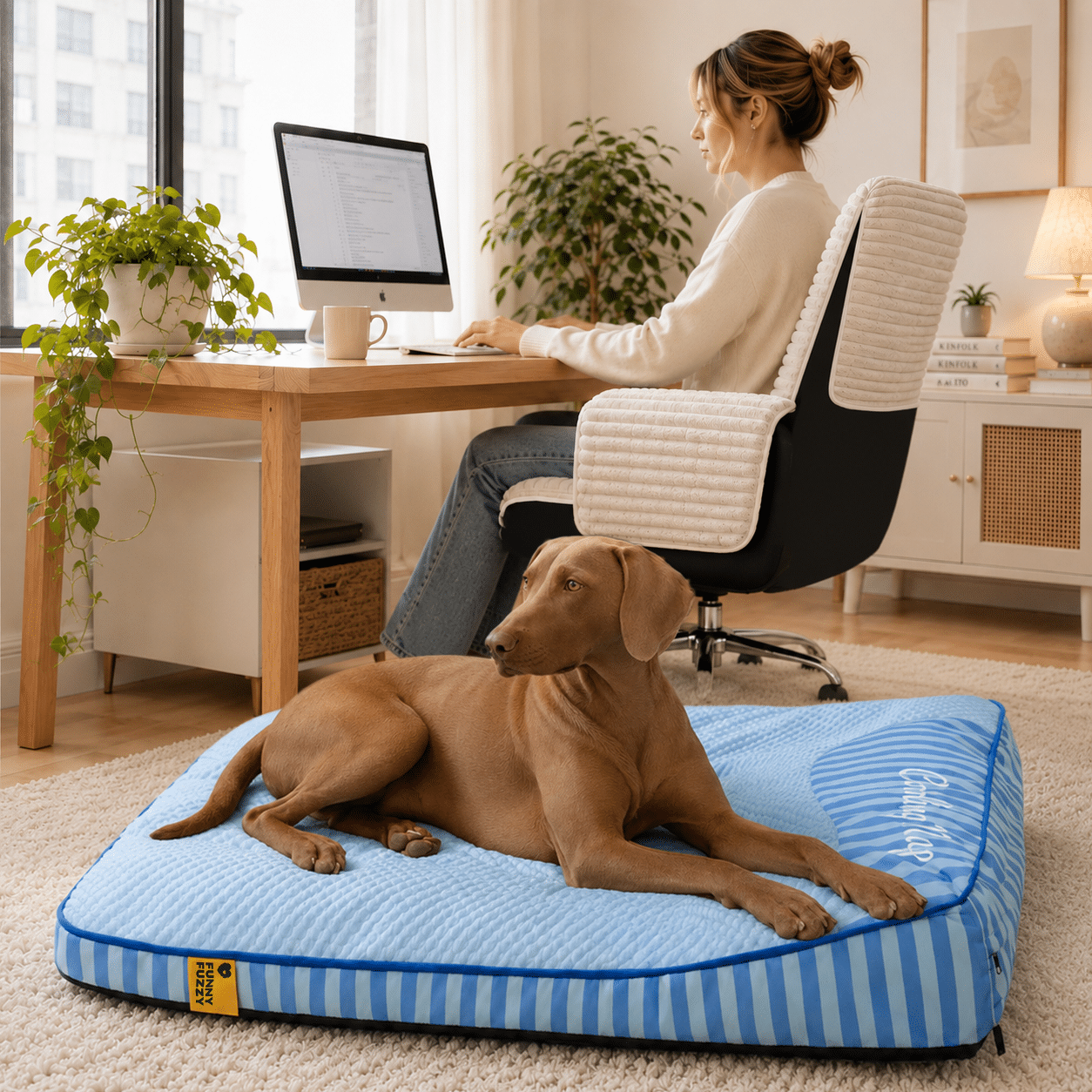
FunnyFuzzy Orthopedic Dog Bed
FunnyFuzzy’s fully orthopedic surround-support bed comes in a genuine size run, from small all the way up to a 50″×40″ giant option that actually fits a Great Dane stretched out. The bolster walls give a curler something to lean on, while the flat interior sleeping area is large enough that even a sprawler has room. Memory-foam base means joints stay supported, not just cushioned.
What we like
- Genuine size run means you’re not forced to size up an entire category to fit a large dog
- Removable, machine-washable cover, practical for long-term daily use
- Waterproof base protects floors and keeps moisture from wicking into the foam
- Bolster walls provide head and chin support without eating into the flat sleeping area
The catches
- Bolster style: measure the interior flat area, not the overall outer dimension, before ordering
- Foam takes 24 to 48 hours to fully expand after unboxing, plan accordingly
- Higher price than basic flat mats, though the orthopedic foam justifies it for older dogs
How to measure your dog for a bed (the right way)
Most guides tell you to measure nose-to-tail. Most dogs make that harder than it sounds. Here’s the method that actually works:
- Wait until they’re relaxed and lying down. A standing dog is shorter than a dog that’s truly sprawled out, you want the sleeping measurement, not the standing one.
- Measure from the tip of the nose to the base of the tail (where the tail meets the body, not the tail tip). Use a soft tape measure or a piece of string you measure afterward.
- Add 6 to 12 inches to that number. This is your minimum bed length. Use 6″ for a curler who stays tucked, 10 to 12″ for a sprawler who flings their legs out fully.
- Also measure the widest point of the shoulders and add 4 to 6″ for width. Width matters more than most guides admit, especially for barrel-chested breeds like Bulldogs and Pitbulls.
The result gives you the minimum sleeping surface your dog needs. A bolster bed’s outer dimension is always larger than its interior sleeping area, see the bolster sizing section below for how that works.
Dog bed size chart (measurements, weight, and dimensions)
This table maps your dog’s measured body length and typical weight range to standard bed sizes, with the actual bed dimensions you should be shopping for and example breeds. Use your measured length + add-on (from the section above) as the primary guide, weight is a secondary check.
| Size | Dog body length (nose to tail-base) | Typical weight | Bed dimensions (L × W inches) | Example breeds |
|---|---|---|---|---|
| Small (S) | Up to 18″ | Under 25 lbs | 24″ × 18″, 28″ × 20″ | Chihuahua, Shih Tzu, Toy Poodle, Maltese |
| Medium (M) | 18″, 26″ | 25 to 50 lbs | 30″ × 24″, 36″ × 28″ | Beagle, Cocker Spaniel, Bulldog, Border Collie |
| Large (L) | 26″, 34″ | 50 to 75 lbs | 38″ × 30″, 44″ × 34″ | Labrador, Golden Retriever, Boxer, Husky |
| XL / Extra-Large | 34″, 42″ | 75 to 110 lbs | 46″ × 36″, 50″ × 40″ | German Shepherd, Rottweiler, Pitbull, Weimaraner |
| Giant / XXL | 42″+ | 110+ lbs | 52″ × 42″, 60″ × 48″ | Great Dane, Saint Bernard, Mastiff, Irish Wolfhound, Newfoundland |
How to use the table: Measure your dog (nose to tail-base), add your add-on inches based on sleeping style, then match that number to the “Bed dimensions” column. The bed you buy should be at or above your calculated number, never below. Weight is a useful cross-check, but body length wins when they conflict (a long-legged 60 lb dog often needs an XL, not a Large).
One caveat worth stating plainly: not all brands use the same sizing labels. A “Large” from one maker might be 36″×28″ while another’s is 44″×34″. Always check the actual inch dimensions, not the label.
Sprawler vs. curler: why sleeping style changes the math
Two dogs can be exactly the same length and need very different bed sizes depending on how they sleep. This is the single most-overlooked variable in dog bed sizing.
- Curlers tuck their nose toward their tail and sleep in a tight circle. Their effective footprint is much smaller than their stretched length, a 30″ dog curled tightly might only need an 18″ circle of space. These dogs do well in round donut beds or bolster beds where the raised walls mimic a “den” feeling. You can size to the lower end of the add-on range.
- Sprawlers sleep with legs fully extended, often on their sides or with all four legs pointing in different directions. Their footprint equals their full stretched length plus leg extension. Measure the dog lying fully out, not just nose-to-tail-base. These dogs need the full 10 to 12″ add-on, and a flat rectangular bed with no raised edges, a bolster wastes usable space they need.
- Switchers, dogs who sometimes curl and sometimes sprawl, need enough flat area for a sprawl and a bed with at least one open side or low bolster so they’re not forced to stay curled. Rectangular beds with a U-shaped or three-sided bolster work well here.
If you watch your dog sleep for a week, you’ll know which type they are. When in doubt, size for the sprawl. A curler in a larger-than-needed bed just finds their preferred corner; a sprawler in a too-small bed hangs limbs off the edge every single night.
Bolster beds vs. flat beds: the sizing trap most owners fall into
Bolster beds (also called sofa beds, couch beds, or surround beds) have raised sides, and those sides eat into the sleeping surface. A bed marketed as 36″ may have only 28″-30″ of actual flat interior sleeping area once the bolsters are accounted for. This is the most common sizing mistake we see: owners size their dog to the outer dimensions and end up with a bed that’s actually too small.
The rule for bolster beds: size up one level from what you’d choose for a flat mat. If your dog’s measurements land at a Large flat mat (38″×30″), shop for an XL bolster bed and check the interior sleeping area in the product specs. Brands that publish interior dimensions are more trustworthy than brands that only list outer dimensions.
That said, bolster beds genuinely suit dogs who:
- Like to rest their chin on something elevated (recreating the couch-arm experience)
- Sleep against a wall or corner, the bolster replicates that enclosed feeling
- Have anxiety and feel more secure in a defined, walled space
- Prefer the “den” shape over open space
Flat mats or flat orthopedic beds suit dogs who:
- Sprawl out with legs extended in all directions
- Run hot and want to spread out to dissipate heat
- Are large to giant breeds whose limbs would hang over any raised side
- Have hip or joint issues where getting over a bolster lip is difficult
For large and giant dogs specifically, our best orthopedic dog beds for large dogs guide goes through the flat vs. bolster trade-offs in detail with specific product dimensions.
Sizing a bed for a puppy (and planning for growth)
Puppies present a specific challenge: you want to buy a bed that fits now and doesn’t need replacing in two months. For most breeds, buying for the adult size and filling extra space with blankets is the pragmatic answer, but there are nuances:
- Small to medium breeds (adult under 40 lbs): A medium bed usually bridges the puppy and adult stages fine. The dog will fit it properly within 3 to 4 months and it won’t be comically oversized.
- Large breeds (adult 50 to 75 lbs): Buy the adult Large now. Fill a corner with a rolled blanket so the puppy has a “wall” to sleep against. This costs nothing and saves buying a second bed in four months.
- Giant breeds (adult 100+ lbs): Giants grow so fast they outgrow anything smaller than XL within months anyway. Buy the XL or Giant bed early and use blanket-folding to create a snug sub-space. Giant breeds also tend to settle into one specific sleep position as adults, which gives you a better guide for inner dimensions.
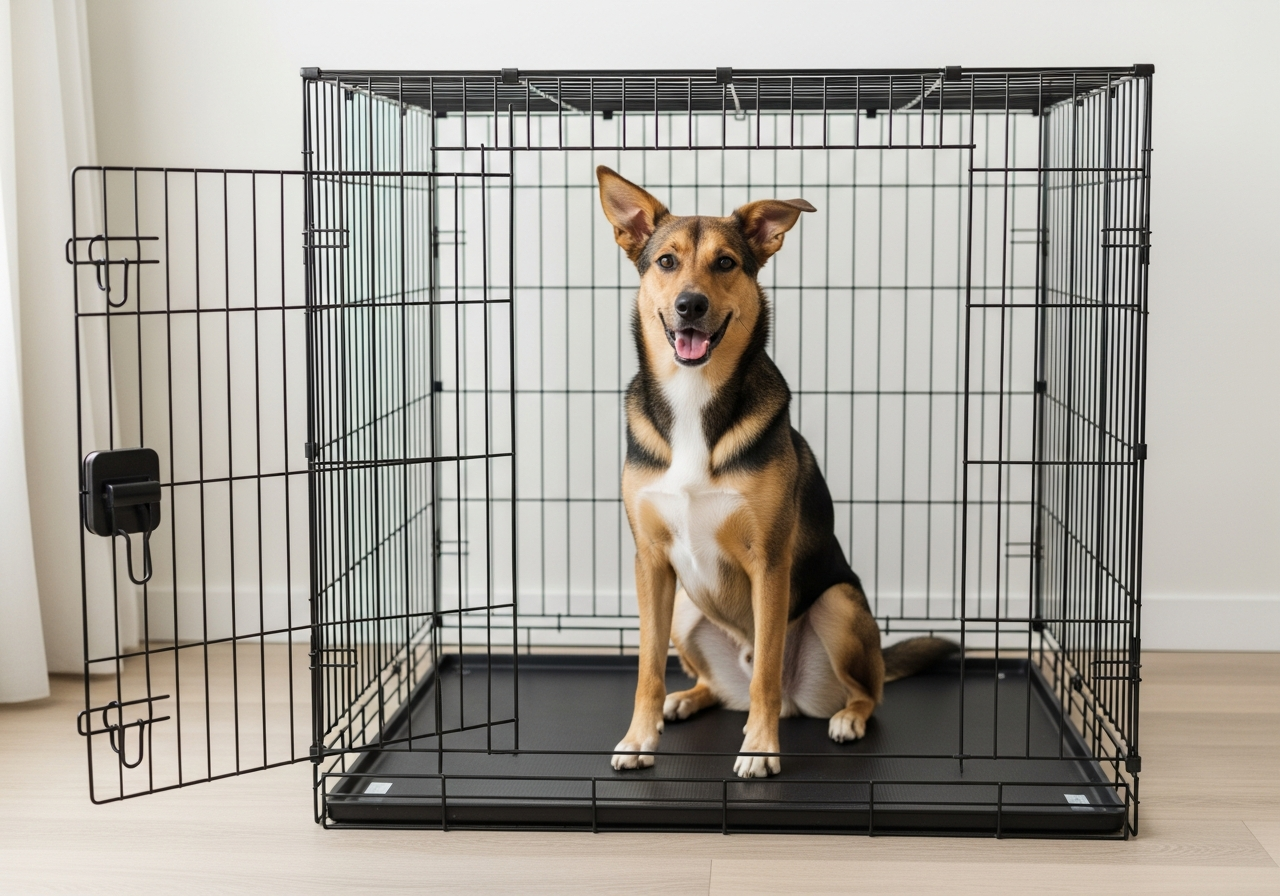
One exception: if you’re crate-training alongside bed training, the bed needs to fit in the crate with room for the dog. In that case, size to the crate’s inner dimensions, not the dog’s projected adult size, and plan to upgrade the bed when you phase out the crate.
Sizing when two dogs share a bed
Two dogs sharing one bed is extremely common, and frequently under-sized. The math here is not simply “add the two dogs together.” How they actually sleep together changes what you need:
- Cuddlers who sleep pressed together: Measure both dogs’ combined width when lying against each other, add 8 to 10″, and use that for the bed width. Length should still be based on the larger dog’s length plus 10″.
- Dogs who touch but keep personal space: Add 30 to 40% to what you’d size for the larger dog alone. Two 60 lb Labs who like to sprawl separately need something in the 54″×44″ range, which is Giant territory, not an XL.
- One big, one small: Size to the larger dog, add 25 to 30%. The small dog will find their corner; the large dog needs the full footprint.
If there’s any resource guarding, tension, or one dog regularly displacing the other, two separate beds is the right answer, not a bigger shared one. A dog that has to defend its sleeping space doesn’t actually rest well, which defeats the whole point.
Also consider: large flat orthopedic beds or cooling beds are easier to share than bolster designs with defined walls, because there’s no “edge” one dog monopolizes. Our best cooling dog beds for large dogs guide covers shared-use options for multi-dog homes.
Why both too-small and too-big actually matter
The instinct is to assume bigger is always safer. It’s not quite that simple.
The problem with too-small
A bed that’s too small forces your dog to either curl when it wants to sprawl, or to sleep with limbs hanging off the edge. The second one is the real problem: joints that hang off the foam and touch the floor or ground get no support. For older dogs, large breeds, or dogs with hip dysplasia or arthritis, this isn’t a comfort issue, it’s a health issue. A hip that spends eight hours a night hanging unsupported while the rest of the body is on foam is going to be stiffer and more painful the next morning. If you see limbs regularly dangling off the edge, the bed is too small, full stop.
The problem with too-big
A bed that’s significantly too large can undermine the “den” feeling that makes many dogs feel secure and settled. Dogs, especially anxious dogs, small breeds, and puppies, often sleep better in a space that fits them snugly than in a vast open platform that gives them no walls to lean against. A too-big bed can also mean the dog migrates off it entirely and sleeps on the floor in a corner instead, because the floor-against-wall gives them the security the open bed doesn’t. If your dog consistently ignores their bed and sleeps elsewhere, check whether the bed is simply too large and open.
The sweet spot: the dog can stretch fully without any limbs hanging off the edge, and still has the option to curl in one corner if it wants to. For most dogs, that means following the measurement method above and landing in the middle of the recommended range, not at the absolute minimum, and not two sizes above.
For a broader look at what else to consider when buying a dog bed for a large or giant breed, our buying guide for large dog beds covers construction, foam density, and durability alongside sizing.
Quick sizing checklist before you buy
Run through this before clicking “add to cart”, it takes about two minutes and eliminates the most common sizing mistakes:
- Measure your dog: nose to tail-base (lying down, relaxed). Write the number down.
- Add your add-on: +6″ for a curler, +10 to 12″ for a sprawler, +8″ if you’re not sure.
- Check the actual bed dimensions (not just the size label), does the length meet or beat your calculated number?
- For a bolster bed: find the interior sleeping area dimension in the specs. If the brand doesn’t publish it, assume the outer dimension minus 4 to 6″ per bolstered side.
- For a puppy: are you buying for adult size or current size? If adult, do you have blankets to fill the space?
- For two dogs: did you add 25 to 40% to the larger dog’s size? Are they cuddlers or side-by-side sleepers?
- Gut check: can your dog fully stretch out without any paw or limb hanging off the edge?
If you’ve ticked all those boxes, you’ve done the sizing correctly. The rest comes down to material, support level, and washability, which we cover in detail in our dog beds hub and the orthopedic dog bed explainer.
Dog bed sizing: common questions
What size dog bed do I need?
Measure your dog from the tip of their nose to the base of their tail while they’re lying down relaxed. Add 6 to 12 inches (6″ for a curler, 10 to 12″ for a sprawler who fully extends their legs). The resulting number is the minimum bed length you need. Always check the actual inch dimensions of a bed, not just the size label, since sizing varies by brand. When in doubt, size up rather than down.
How do I measure my dog for a bed?
Wait until your dog is relaxed and lying flat. Use a soft tape measure to go from the very tip of their nose to the base of their tail, not the tail tip, just where the tail meets the body. Also measure the widest part of the shoulders for width. Add 6 to 12″ to the length measurement based on whether your dog curls up or sprawls out. That gives you the minimum sleeping surface you need.
Is it better to get a dog bed that’s too big or too small?
Too-small is worse. A bed that’s too small forces your dog to sleep with joints hanging off the foam, which provides no support and can worsen hip and joint issues, especially in large breeds or senior dogs. A bed that’s slightly too large just means the dog chooses its preferred corner. That said, a bed that’s dramatically oversized can undermine the snug ‘den’ feeling many dogs need to sleep soundly, so aim for the right size rather than going as large as possible.
Do dog bed size labels mean the same thing across brands?
No, size labels vary significantly between brands. A “Large” from one maker might be 36″×28″ while another brand’s “Large” is 44″×34″. Always check the actual inch dimensions listed in the product specs and compare them to your dog’s measured length plus add-on. Never buy based on size label alone.
How do I size a dog bed for a bolster or sofa-style bed?
Bolster beds have raised sides that reduce the actual interior sleeping surface. A 36″ bolster bed might only have 28 to 30″ of flat sleeping area once the bolsters are accounted for. The rule: size up one level from what you’d choose for a flat mat, and look for brands that publish interior sleeping area dimensions, not just outer dimensions. If interior dimensions aren’t listed, subtract 4 to 6″ per bolstered side from the outer measurement.
What size bed do I need for two dogs?
If your dogs sleep pressed together, measure their combined width when curled up together and add 8 to 10″. If they sleep side by side but with personal space, add 30 to 40% to what you’d buy for the larger dog alone. If one is much bigger than the other, size to the larger dog and add 25 to 30%. When in doubt, two separate beds, sized individually, is the better answer for comfort and to avoid resource guarding.