 Dog Gear, Sized Right
How Often Should You Wash a Dog Bed? (And When to Replace It)
How often, how to do it safely, and the exact signs that tell you it’s time to start over.
How often should you wash a dog bed? The short answer: wash the cover every one to two weeks, spot-clean between washes, and do a full deep-clean of the insert roughly once a month. But how often your dog needs it depends on five things, how much they shed, whether they go outside, their age, their health, and whether anyone in your house has allergies. This guide lays out the honest frequency for every situation, walks through how to wash a dog bed without wrecking the foam, and gives you a plain checklist for when to stop cleaning and simply replace it.
Our pick for the easiest bed to keep clean
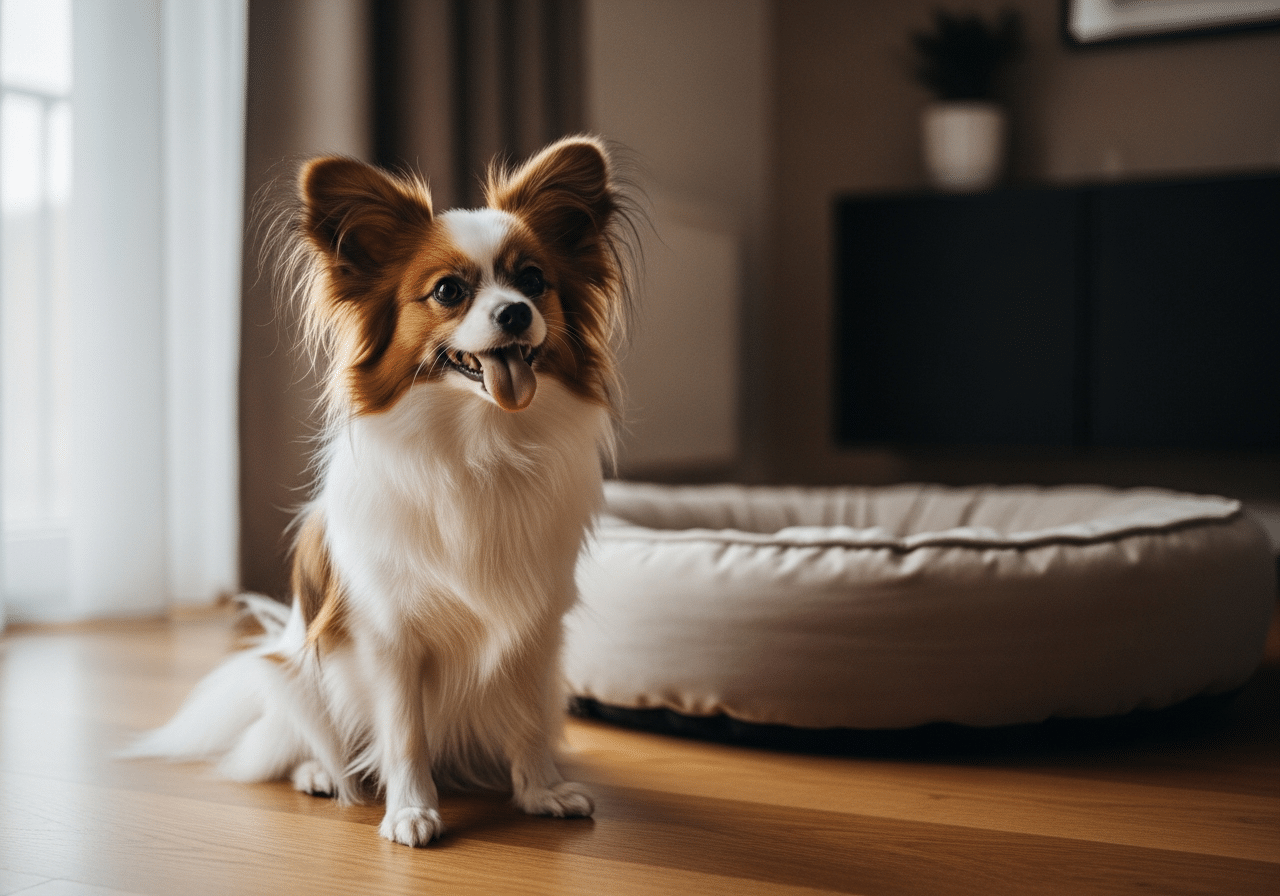
This is a care guide, not a full roundup, but the bed you choose determines how easy the routine is. This one makes washing as friction-free as it gets. Verified in stock; tap through for the live price.
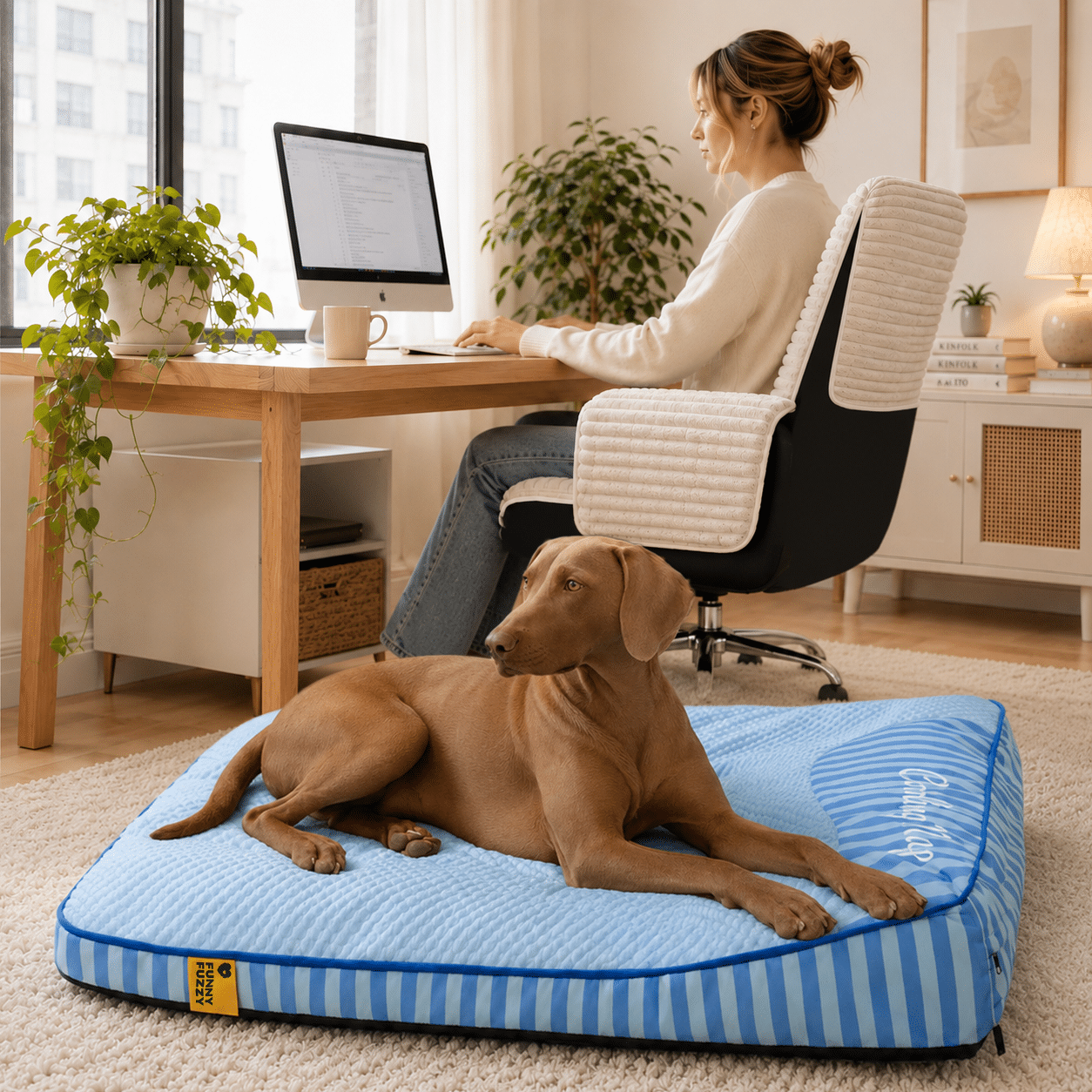
FunnyFuzzy Orthopedic Dog Bed
The FunnyFuzzy ticks every box this guide recommends: a zip-off washable cover that goes straight in the machine, a waterproof base that keeps the foam dry and mold-free, and a certified-orthopedic foam core that bounces back after years of use. If you’re buying a bed specifically because you want one that’s easy to maintain, this is the one to shortlist.
What we like
- Zip-off cover machine-washes easily, cover goes in weekly, bed stays fresh
- Waterproof liner between cover and foam blocks moisture reaching the insert
- Thick orthopedic foam holds its shape and springs back after prolonged use
- Bolster surround gives anxious or large dogs a sense of security while they sleep
The catches
- Foam insert itself should be spot-cleaned, not machine-washed (same as all foam beds)
- Bolster style may not suit flat-sleepers who prefer to sprawl without edges
- Larger sizes take up significant floor space, measure your room first
How often should you wash a dog bed? The honest answer
The baseline recommendation from veterinary and hygiene sources is to wash the removable cover once every one to two weeks. That aligns with guidance from the AKC and Dogster, and it’s a reasonable target for the average dog, one bath per week, minimal mud, no known allergies.
But averages are misleading. Here’s how to set your own schedule:
| Situation | Recommended cover wash frequency |
|---|---|
| Average indoor adult dog, low shedder | Every 1 to 2 weeks |
| Heavy shedder (Husky, German Shepherd, Golden) | Weekly |
| Dog that goes outside, rolls in grass, or plays in mud | Weekly, or after muddy outings |
| Puppy (accidents likely) | 2 to 3× per week or as needed |
| Incontinent senior dog | Every 2 to 3 days minimum |
| Dog with skin allergies or atopy | Twice per week (reduces allergen buildup) |
| Household member with dog allergies | Weekly minimum |
| Dog recovering from illness or infection | Daily until clear |
A good rule of thumb: if you can smell the bed before you’re close to it, it’s overdue. And if your dog is itching or has recurring skin issues, washing the bed more frequently is one of the first low-cost steps a vet will suggest, dander, dust mites, and shed skin cells accumulate fast.
Why washing the dog bed actually matters
A dog bed accumulates a lot more than just hair. Over days of use it collects:
- Dander and shed skin cells, food for dust mites, which trigger allergies in both dogs and humans
- Bacteria and yeast, especially in warm, damp conditions (a dog that sweats through their paws, or comes in wet from rain)
- Outdoor contaminants, pollen, mould spores, pesticides, and dirt tracked in from walks
- Flea eggs and larvae, the bed is a prime flea nursery; regular washing disrupts the life cycle
- Bodily fluids, saliva from chewing, urine accidents in puppies and seniors, anal gland secretions
The CDC and researchers published in the Canadian Medical Association Journal have flagged pet bedding as a transmission route for zoonotic diseases, organisms that jump from pets to people. Washing weekly doesn’t eliminate all risk, but it reduces it substantially and keeps the bed from becoming a chronic odour and allergen source. For a dog sleeping 12 to 16 hours a day, the bed is where they spend most of their life. It’s worth maintaining.
How to wash a dog bed cover: step by step
Most modern dog beds have a zip-off washable cover, and washing that separately from the insert is the right move. Here’s the routine that keeps it clean without damaging the fabric or the zip:
- Remove excess hair first. Before the cover goes anywhere near water, use a lint roller, a rubber glove run across the surface, or the upholstery tool on your vacuum to pull off as much loose fur as possible. Hair in the drum clogs the filter and wraps around the agitator drum, it’s worth the two minutes upfront.
- Check the care label. Most covers are cold or warm wash, gentle cycle. A few premium fabrics say hand-wash only. The label wins, follow it, or you risk shrinking the cover until it won’t zip back onto the insert.
- Unzip and shake out. Remove the insert, shake the cover outside if possible to dislodge loose debris, then zip the cover back up (washing with the zip open snags other laundry).
- Use a pet-safe, fragrance-free detergent. Dogs have sensitive noses and skin, heavy floral or chemical fragrances can irritate both. Look for a detergent labelled “free and clear” or “fragrance-free.” Enzyme-based formulas are particularly good at breaking down odour at the source rather than just masking it.
- Cold or warm water, gentle cycle. Hot water risks shrinkage or colour fade. A gentle cycle protects the fabric weave and any waterproof coating.
- Skip the fabric softener. Fabric softener coats fibres and can break down water-resistant finishes. It also leaves a chemical residue that some dogs find irritating.
- Dry thoroughly before replacing. A damp cover put back on the foam insert is a mould risk. Tumble dry on low heat if the label allows, or air-dry completely, which can take several hours indoors or an hour or two in direct sun. Sun has the bonus of mild UV disinfection.
How to clean the foam insert (and what not to do)
This is where most people go wrong. The foam or memory-foam insert, the part that actually provides support, should not go in a standard home washing machine. Here’s why, and what to do instead.
Why you can’t machine-wash most foam inserts
Foam is porous and absorbs water extremely readily. In a washing machine, the insert becomes waterlogged and extraordinarily heavy, damaging the drum, the bearings, or both. More critically, the agitation shreds the internal foam structure, destroying the support you bought the bed for in the first place. Memory foam in particular tears easily when wet and under mechanical stress. Putting it in a dryer is worse: high heat melts the foam’s cell structure and can be a fire hazard.
What to do instead: spot-cleaning
For routine maintenance, spot-cleaning is the correct approach for foam inserts:
- Mix a small amount of pet-safe liquid detergent or an enzyme cleaner with warm water
- Dip a clean cloth or sponge and dab, don’t scrub, at the soiled area
- Rinse by dabbing with a clean damp cloth (no soap residue left in the foam)
- Press dry towels firmly into the area and then allow to air-dry completely, which can take 24 to 48 hours for thicker inserts
- Never wring or twist memory foam, it tears internally even if it looks fine on the surface
Deep-cleaning a foam insert: the bathtub method
For a genuine deep-clean (every four to six weeks, or after a major soiling event), the bathtub is your friend:
- Fill a large tub or utility sink with lukewarm water and a small amount of gentle detergent
- Submerge the insert and gently knead, don’t twist or wring
- Drain and refill with clean water to rinse; repeat until no soap bubbles remain
- Press out excess water by squeezing gently (no wringing), then roll in large dry towels to blot moisture
- Air-dry flat, in a well-ventilated area or outside in sun, allow at least 24 hours, or until completely dry before replacing the cover
If your foam insert has a waterproof liner between the cover and the foam (the FunnyFuzzy does, and better orthopedic beds generally do), the insert itself may rarely need anything beyond occasional airing and spot treatment, the liner does the job of keeping moisture out.
Removing dog hair before washing: the step everyone skips
Loose dog hair is the enemy of washing machines. It sheds off the bed, bypasses the drum filter, clumps in the pump, and over time causes real mechanical damage. This step takes less than three minutes and saves you an expensive repair call.
Best methods for getting hair off a dog bed before it goes in the wash:
- Rubber glove trick: Put on a rubber dish glove and run your palm in firm strokes across the surface, the static grabs hair that lint rollers miss, especially in folds and seams
- Vacuum first: The upholstery attachment on most vacuums will pull out hair embedded in fabric weave
- Damp sponge: A barely-damp sponge wiped across the surface clumps loose hair so it lifts off easily
- Outside shake: Take the cover outside and shake vigorously before washing, simple but effective
If you have a heavy shedder (German Shepherds, Huskies, Labs), consider a mesh laundry bag rated for pet hair, it catches hair inside the bag so it doesn’t circulate in the drum. You’ll thank yourself the first time you clean out the drum and find it hair-free.
For the ongoing battle with dog hair on everything in your home, our dog beds hub links out to tools and techniques worth knowing about.
Deodorising a dog bed between washes
Even a clean bed can pick up odour between wash cycles, especially if your dog comes in from rain, has any ear or skin issues, or just has that distinct “dog” smell that accumulates with time. A few reliable techniques that don’t require a full wash:
- Baking soda: The most reliable option. Sprinkle a generous layer over the cover, let it sit for 15 to 30 minutes (longer is better), then vacuum off. Baking soda is a true odour neutraliser, not a masking agent, it absorbs odour molecules rather than covering them.
- White vinegar spray: Mix one part white vinegar with two parts water in a spray bottle, lightly mist the cover surface, and let air-dry completely. The vinegar smell dissipates as it dries and takes the dog odour with it.
- Sunlight and fresh air: Underrated. Take the whole bed outside for a few hours on a dry day. UV light kills bacteria and fresh airflow disperses volatile odour compounds. No products needed.
- Pet-specific enzyme sprays: Products like Nature’s Miracle or Rocco & Roxie are formulated to break down the organic compounds that cause pet odour, particularly urine and anal gland secretions. Useful for stubborn smells after an accident.
What not to use: bleach (irritating and can discolour fabric), air fresheners or fabric sprays (mask rather than neutralise, and the fragrance can irritate dogs), or essential oils (many are toxic to dogs, including tea tree, eucalyptus, and lavender at concentrated levels).
When to replace a dog bed: the checklist
Washing only takes a bed so far. Eventually the foam breaks down, the cover wears out, or the odour becomes structural, absorbed into the fill material in a way no wash can reverse. Here’s how to know when you’ve crossed that line.
Replace the bed when you see any of these:
- The foam no longer springs back. Press your palm firmly into the bed and hold for a few seconds. Quality foam should rebound within 2 to 3 seconds. If it stays compressed, craters, or feels thin and crunchy, the foam’s internal cell structure has collapsed and it no longer provides support. A “flat” orthopedic bed isn’t orthopedic anymore, it’s just a very expensive mat.
- Visible permanent body impressions. A depression shaped like your dog’s sleeping position that doesn’t bounce back means the foam has taken a set. Once the impression reaches half the original foam depth, the remaining cushion is negligible.
- Persistent odour that survives multiple washes. If you’ve washed the cover twice and the smell is still there after drying, the odour has migrated into the foam or fill. Foam is difficult to fully deodorise once saturated, the smell returns as soon as the bed warms up again.
- Rips, tears, or exposed fill. Torn fabric exposes stuffing that dogs will pull out and potentially ingest. A rip that can’t be cleanly sewn shut is a replacement trigger.
- Your dog stopped using it. Dogs aren’t sentimental. If a dog that previously slept on their bed consistently chooses the floor instead, the bed has probably degraded below the comfort threshold. A hard floor at least provides stable, even support, a flattened or lumpy bed offers neither comfort nor support.
- Visible mould or mildew. Black spots, musty smell that bleach won’t fix, or foam that crumbles when touched suggest mould that’s penetrated the fill. At that point the bed is a health hazard and should be replaced immediately.
- The dog has significantly changed size. Puppies grow fast. A bed sized for a 40-lb dog doesn’t support a 90-lb adult. If your dog’s legs hang off the edge or they can’t turn around, the bed is functionally too small even if structurally fine.
Typical lifespan by foam type
| Foam type | Expected lifespan | Factors that shorten it |
|---|---|---|
| Standard polyurethane foam | 1 to 2 years | Heavy dogs, irregular washing, moisture exposure |
| High-density orthopedic foam | 2 to 3 years | Same as above, but degrades more slowly |
| Memory foam | 2 to 4 years | Heat (softens), moisture in the insert, overuse |
| Polyfill/fiberfill (donut/bolster beds) | 6 to 18 months | Washing (clumps), vigorous dogs who dig at the fill |
| Elevated/raised beds (no foam) | 3 to 5 years | UV exposure outdoors, claw damage to mesh |
These are ranges, not guarantees. A high-quality foam bed used by a 40-lb dog that sleeps neatly will last longer than the same bed used by a 100-lb dog who digs, circles, and sleeps sprawled at full weight. The spring-back test is more reliable than any calendar date.
Wash routine summary: the quick-reference version
If you want the whole thing condensed into a routine you can actually stick to:
| Task | Frequency | Method |
|---|---|---|
| Vacuum / de-hair the cover | 2 to 3× per week | Rubber glove or upholstery tool |
| Baking soda deodorise | Weekly (between washes) | Sprinkle, 20 min, vacuum off |
| Machine wash the cover | Every 1 to 2 weeks | Cold/warm, gentle, fragrance-free detergent; air-dry or low heat |
| Spot-clean the foam insert | As needed | Damp cloth with enzyme cleaner; air-dry fully |
| Deep-clean the foam insert | Monthly or after accidents | Bathtub soak, gentle squeeze, 24-hr air-dry |
| Air the whole bed outside | Monthly | A few hours in direct sun on a dry day |
| Spring-back test the foam | Every 3 to 6 months | Palm press, should rebound in 2 to 3 sec |
| Replace the bed | Every 1 to 3 years | Earlier if foam fails spring-back test or odour won’t wash out |
The single biggest mistake dog owners make is washing the cover faithfully but ignoring the foam insert until it’s saturated and malodorous beyond saving. A waterproof liner between the cover and the foam, standard on better beds, makes this much easier to manage. It’s worth checking for when you buy.
For dogs with joint issues, a worn-out bed is a genuine health concern, not just a cleanliness one. A flattened foam bed puts a dog with arthritis or hip dysplasia effectively on the floor. If that describes your dog, our guide on what makes a dog bed truly orthopedic is worth a read before you replace it, not all foam is equal.
Dog bed washing and replacement: common questions
How often should you wash a dog bed?
Wash the removable cover every one to two weeks as a baseline. Wash more frequently, weekly or more, if your dog is a heavy shedder, goes outdoors regularly, is a puppy prone to accidents, is an incontinent senior, or lives with someone who has allergies. Spot-clean between machine washes and deodorise with baking soda as needed. Deep-clean the foam insert (separately, by hand) roughly once a month.
Can you put a dog bed in the washing machine?
The cover: yes, if it’s removable and the care label says machine-washable. Use cold or warm water, a gentle cycle, and a fragrance-free pet-safe detergent. The foam insert: no, for most beds. Machine washing tears the foam’s internal structure and can damage the drum. Instead, spot-clean the insert with a damp cloth and enzyme cleaner, or do a full soak in the bathtub for a monthly deep-clean. Always air-dry foam completely, never put it in a dryer.
What detergent should I use to wash a dog bed?
Use a fragrance-free, dye-free detergent, sometimes labelled “free and clear.” Dogs have sensitive noses and skin; heavy fragrances can irritate both. Enzyme-based formulas are especially good at breaking down pet odours at the source. Avoid fabric softener (it coats fibres, breaks down water-resistant finishes, and leaves residue that can irritate dogs) and avoid bleach on coloured fabric.
How do I get dog smell out of a dog bed?
For routine deodorising between washes: sprinkle baking soda on the surface, leave for 15 to 30 minutes, then vacuum off. A light mist of diluted white vinegar (1 part vinegar, 2 parts water) also works, the smell dissipates as it dries. For smells from urine or anal glands, an enzyme-based spray (Nature’s Miracle, Rocco & Roxie) breaks down the organic compounds rather than masking them. If a persistent smell survives multiple washes, the odour has migrated into the foam, at that point, replacement is usually more effective than further cleaning.
When should you replace a dog bed?
Replace a dog bed when the foam fails the spring-back test (press your palm in, it should rebound in 2 to 3 seconds; if it stays flat, the support is gone), when there are permanent body impressions that don’t bounce back, when persistent odour survives multiple washes, when the cover or insert is torn or mouldy, or when your dog stops using it and chooses the floor instead. As a rough guide: polyfill beds last 6 to 18 months, standard foam 1 to 2 years, high-density orthopedic foam 2 to 3 years, memory foam 2 to 4 years.
Can you wash a memory foam dog bed?
The cover: yes, machine wash if the label says so. The memory foam insert itself: no, never machine wash or tumble dry memory foam. It absorbs water, becomes extremely heavy (damaging the machine), and the agitation shreds the internal structure. Instead, spot-clean with a damp cloth and pet-safe enzyme cleaner, or do a gentle hand-wash in the bathtub using lukewarm water, blot with dry towels, and air-dry flat for at least 24 hours. Never wring or twist memory foam.