 Dog Gear, Sized Right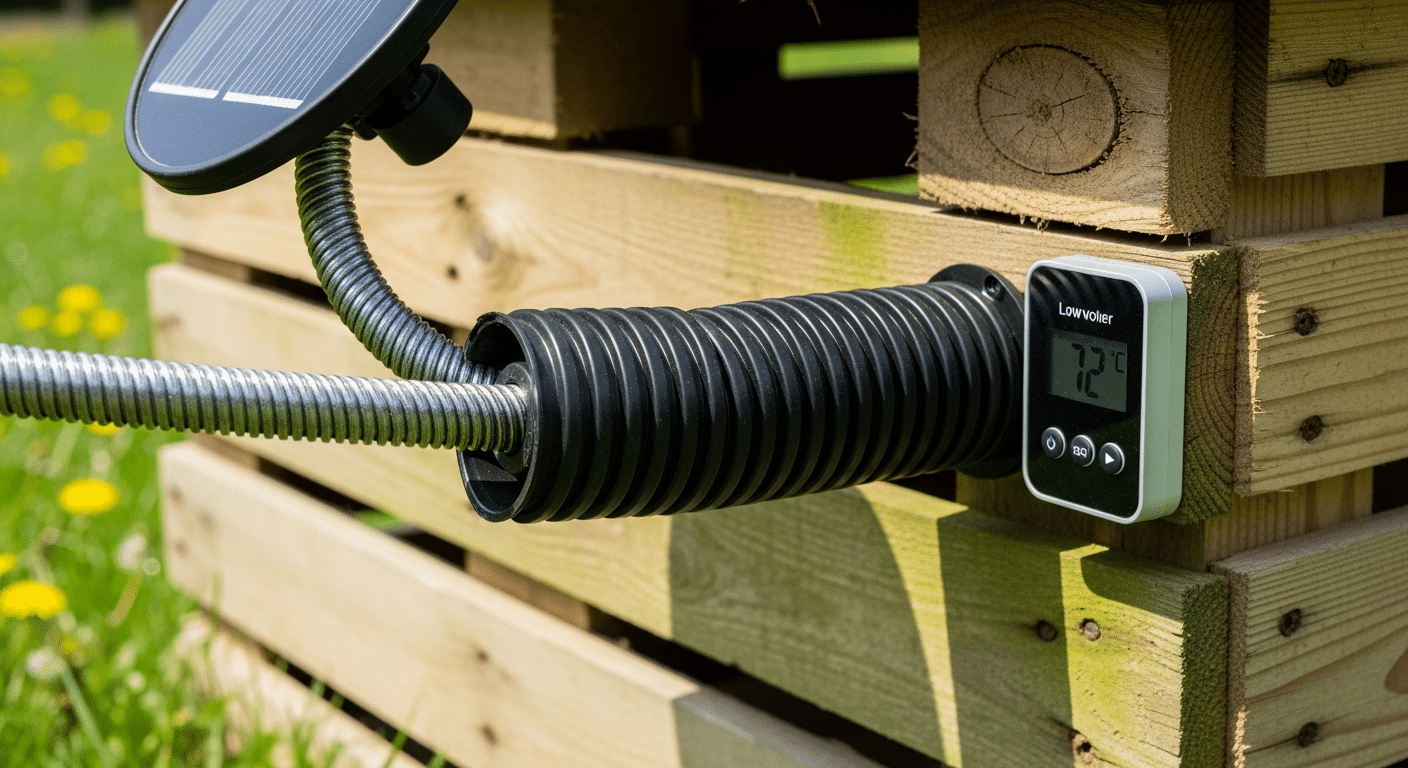
Top Pet-Safety Features in a Solar Heated Dog House
A heater that warms your dog has to be a heater that can’t hurt your dog. Here are the chew-proof, low-voltage, overheat-protected features that separate a safe solar house from a risky one.
The best solar dog house safety features are the ones that make a heater harmless to a curious dog: chew-proof cord conduit, a low-voltage 12V system, an overheat-cutoff thermostat, proper ventilation and a no-tip heated pad. It’s easy to shop for warmth and forget that the same heat keeping a dog comfortable runs on cords, batteries and electronics inches from a nose. Get these right and a solar heated dog house is one of the safest ways to keep a dog warm outdoors. Below is a checklist you can score any house against, followed by why each feature matters.
The solar dog house safety features checklist
Before you buy or build, run the house against this list. Anything missing is a gap you’ll want to close before a dog moves in.
| Safety feature | What to look for | Why it matters |
|---|---|---|
| Chew-proof cord protection | Steel-wrapped cord or armored conduit; cords routed outside the dog’s reach | Stops gnawing through to live wire, the #1 electrical risk |
| Low-voltage 12V system | 12V DC heated pad/heater fed from a battery, not 120V mains inside the house | 12V can’t deliver a dangerous shock if a cord is ever breached |
| Thermostat / overheat cutoff | Built-in thermostat that holds a safe temperature and shuts heat off if it climbs | Prevents burns, overheating and fire from a stuck-on heater |
| Ventilation | Baffled vents or a small gap that exchanges air without a draft | Clears condensation and stale air; stops damp, mold and chill |
| No-tip / chew-resistant pad | Heated pad with a hard ABS shell or weighted, secured base | A dog can’t flip, bunch or chew through to the element |
| Certified, pet-safe parts | UL/ETL-listed controller, charge controller, sealed battery | Vetted components fail safe instead of failing dangerous |
| Battery safety | Sealed AGM/LiFePO4 in a ventilated, dog-proof enclosure with fuse | No spilled acid, no exposed terminals, protection from short-circuit |
If a product page is vague about these, treat it as a red flag, safe gear advertises its safety. The sections below walk each item so you know exactly what “good” looks like.
Chew-proof cords lead the solar dog house safety features
The single most important safety feature of all is keeping a dog away from live wire. Dogs chew, and a bare power cord is the most dangerous thing in any heated shelter. The fix is layered: route cords outside the sleeping area wherever possible, and where a cord must enter, run it inside steel-wrapped sleeving or rigid PVC/metal conduit that teeth can’t penetrate.
- Armored / steel-wrapped cord: a flexible metal jacket over the cable, the gold standard for chew protection at the entry point.
- Rigid conduit: PVC or metal pipe that carries the cord through the wall, anchored so it can’t be dragged inside.
- Cord routing: the heated pad’s wire should exit at the floor edge and vanish into conduit at once, with no loose loop to grab.
Low-voltage 12V: the safest power for a dog house
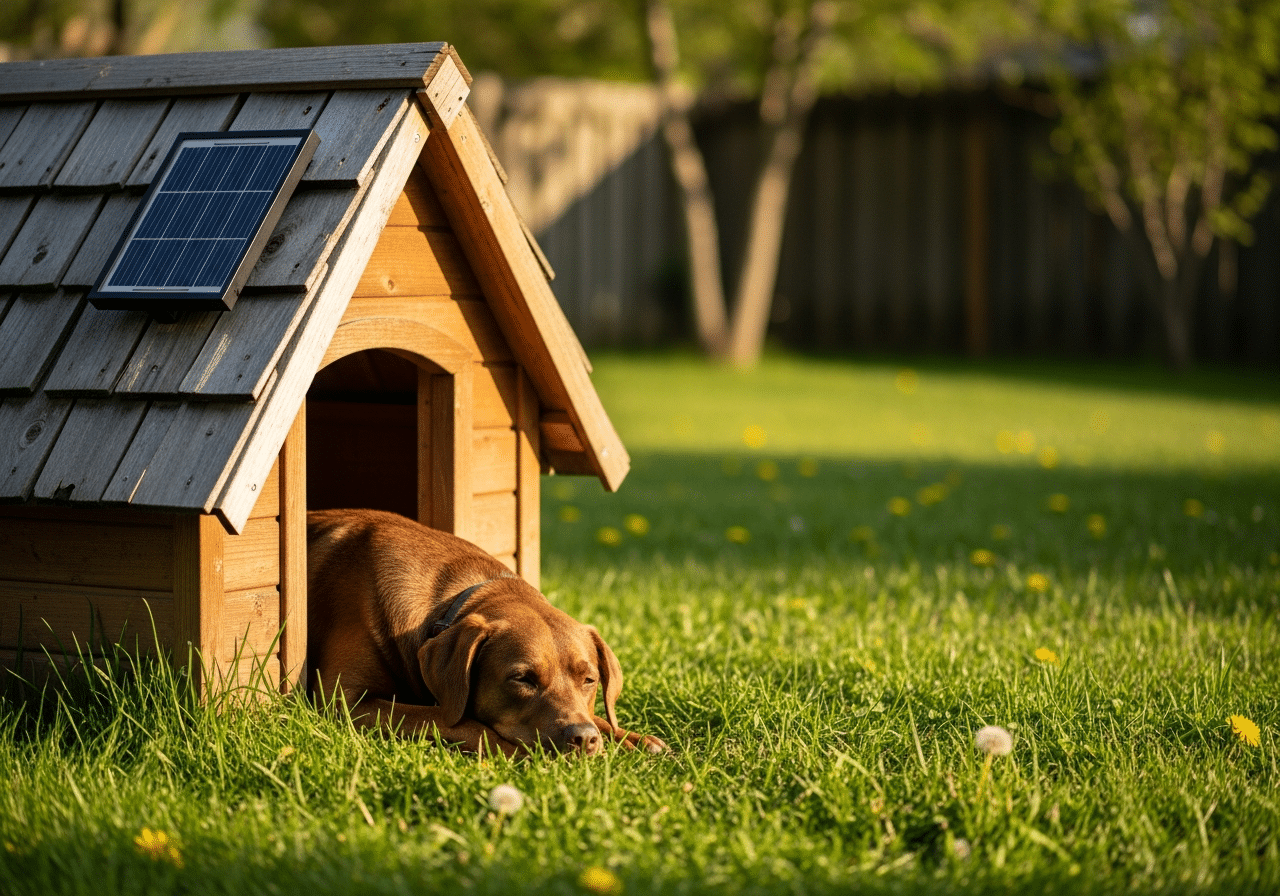
A solar heated dog house has a built-in safety advantage over a mains-powered one: it runs on low-voltage 12V DC. The panel charges a 12V battery, and that battery powers a 12V heated pad or low-watt heater. Twelve volts simply can’t push a dangerous shock through a dog the way 120V household current can, so even in the worst case of a chewed cord, the low-voltage system fails far more gently.
Look for a house where everything downstream of the battery is 12V. If a design instead runs a 120V heater inside the house, you lose this advantage and lean harder on cord protection and a GFCI. A clean, fully 12V layout is one of the strongest reasons to choose solar for safety. For the full component picture, see our guide to the features that matter in a solar heated dog house.
Thermostat and overheat cutoff
A heater that can’t turn itself off is a hazard. A good solar house uses a thermostatically controlled pad or heater that holds a comfortable temperature and, crucially, shuts off automatically if it climbs too high. This overheat cutoff is what prevents burns to a sleeping dog, stops a malfunctioning element from running away, and removes the fire risk of a stuck-on heater.
- Self-regulating pads warm only when a dog lies on them and draw down when empty, efficient and burn-safe.
- Adjustable thermostats let you set a target temp so the house never overheats on a sunny afternoon.
- Thermal cutoff / fuse is the last line of defense: it kills power if temperature or current spikes.
Pair the thermostat with sensible targets. Vets treat 45°F as the caution line for small, senior or thin-coated dogs, 32°F as the freezing point where hypothermia risk climbs, and 20°F as life-threatening for most breeds, so the heater holds the inside comfortably above those, not roasting hot.
Ventilation, no-tip pads and a stable base
Two quieter safety features make a big difference. Ventilation matters because a warm, sealed box full of a breathing dog turns into a damp one: condensation builds, bedding gets wet, and damp cold is more dangerous than dry cold. A baffled vent or a deliberate small gap exchanges air without creating a draft over the dog.
The heated pad itself needs to be chew- and tip-resistant. The safest pads have a hard ABS plastic shell or a weighted, secured base so a dog can’t flip them, bunch them against a wall, or gnaw through to the heating element. Combine that with a stable, level, slightly elevated floor and you remove the mechanical ways a dog can reach the dangerous parts.
Certified parts and battery safety
The last layer is the electronics you don’t see. Choose a house built from UL- or ETL-listed, pet-safe components: a listed thermostat or heated pad, a quality charge controller and a sealed battery. Certified parts are designed to fail safe, to cut out rather than overheat or short.
Battery safety deserves its own attention because the battery stores all the energy. Look for a sealed AGM or LiFePO4 battery (no spillable acid) in a ventilated, dog-proof enclosure, with a fuse on the positive lead to protect against a short circuit, and keep it and the charge controller outside the sleeping compartment. Done this way, the solar system that warms your dog stays sealed off from your dog. To keep it working safely over time, follow our solar panel care guide.