 Dog Gear, Sized Right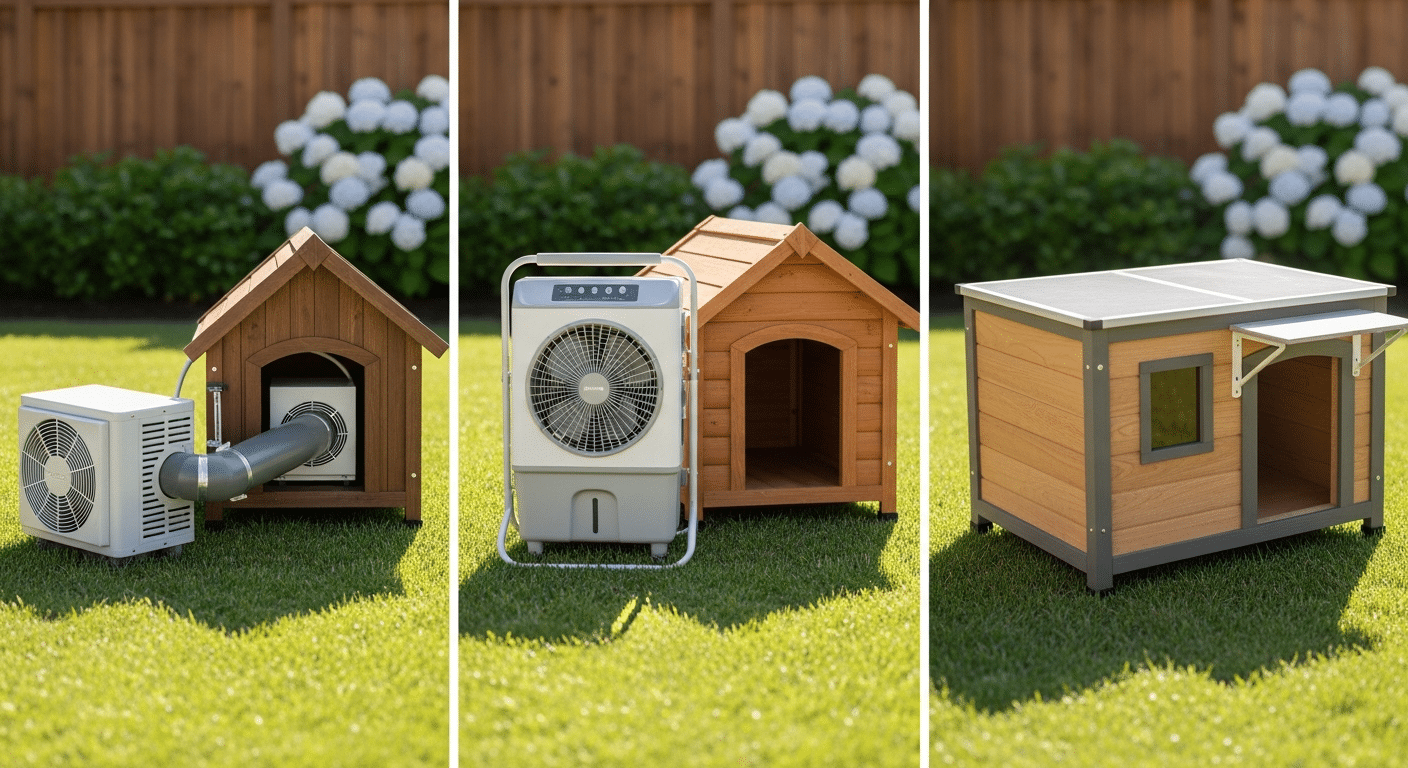
Air-Conditioned Dog House Buyer’s Guide: Types & Sizing
Three real ways to cool a dog house, how many BTUs you actually need, and the insulation, power and venting checks that decide whether it works.
The Best AC & Cooling Dog Houses
Each pick is verified in stock. Prices are last-checked, tap through for the live price.
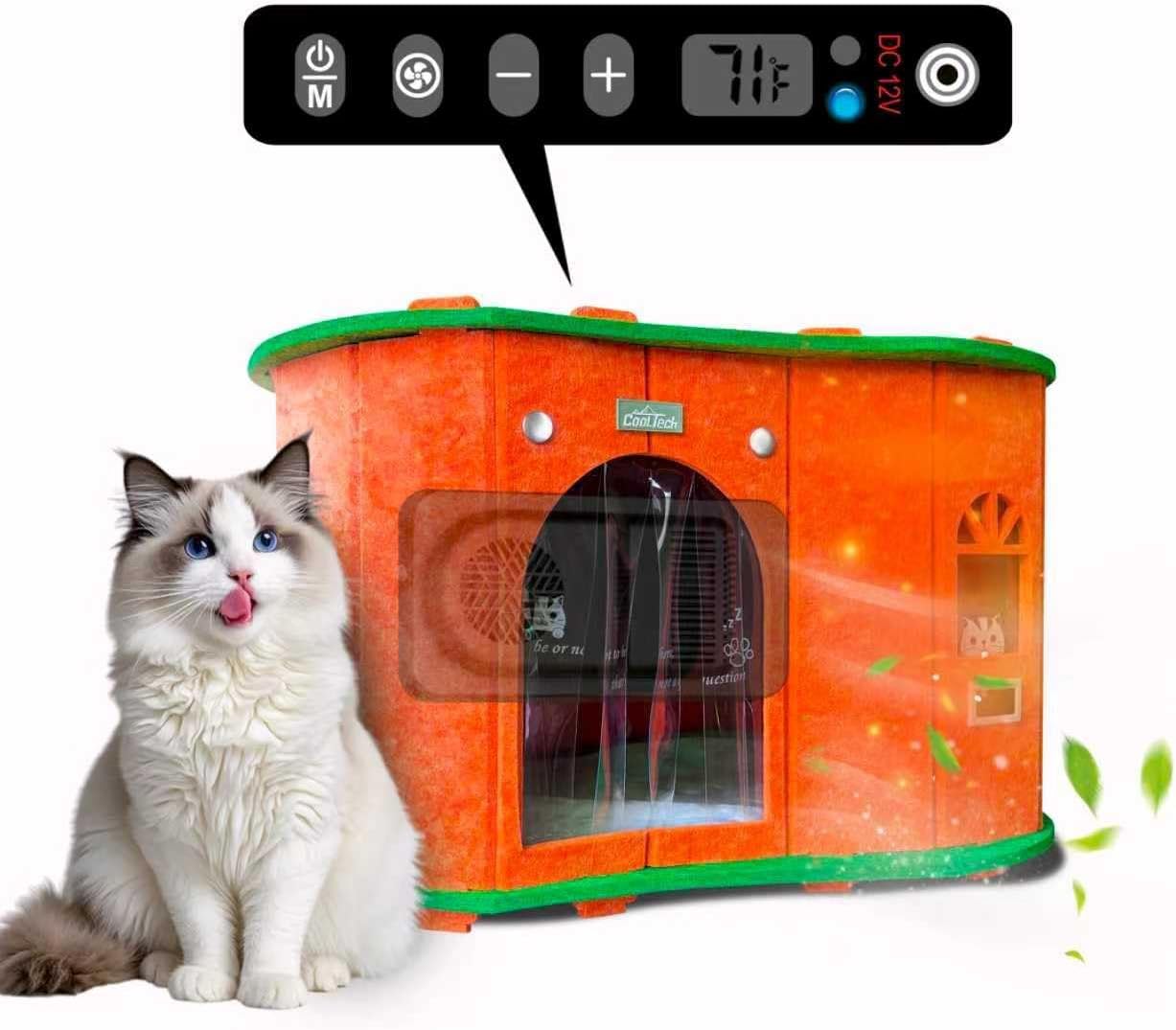
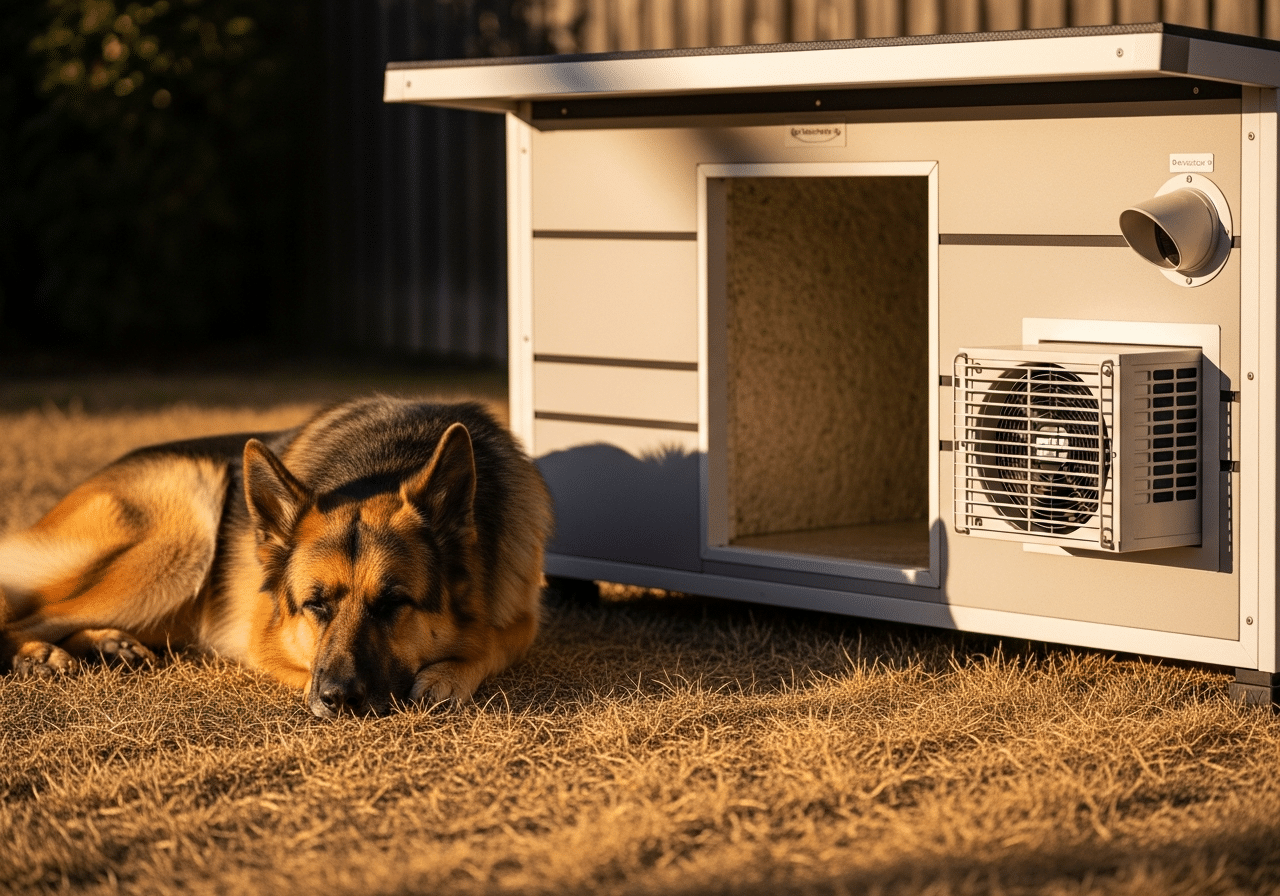
Thermoelectric AC Dog House
A 12V thermoelectric system that actively cools (and heats) the interior, the closest to true AC.
What we like
- Actively chills the air
- Doubles as heater
The catches
- Small to medium pets
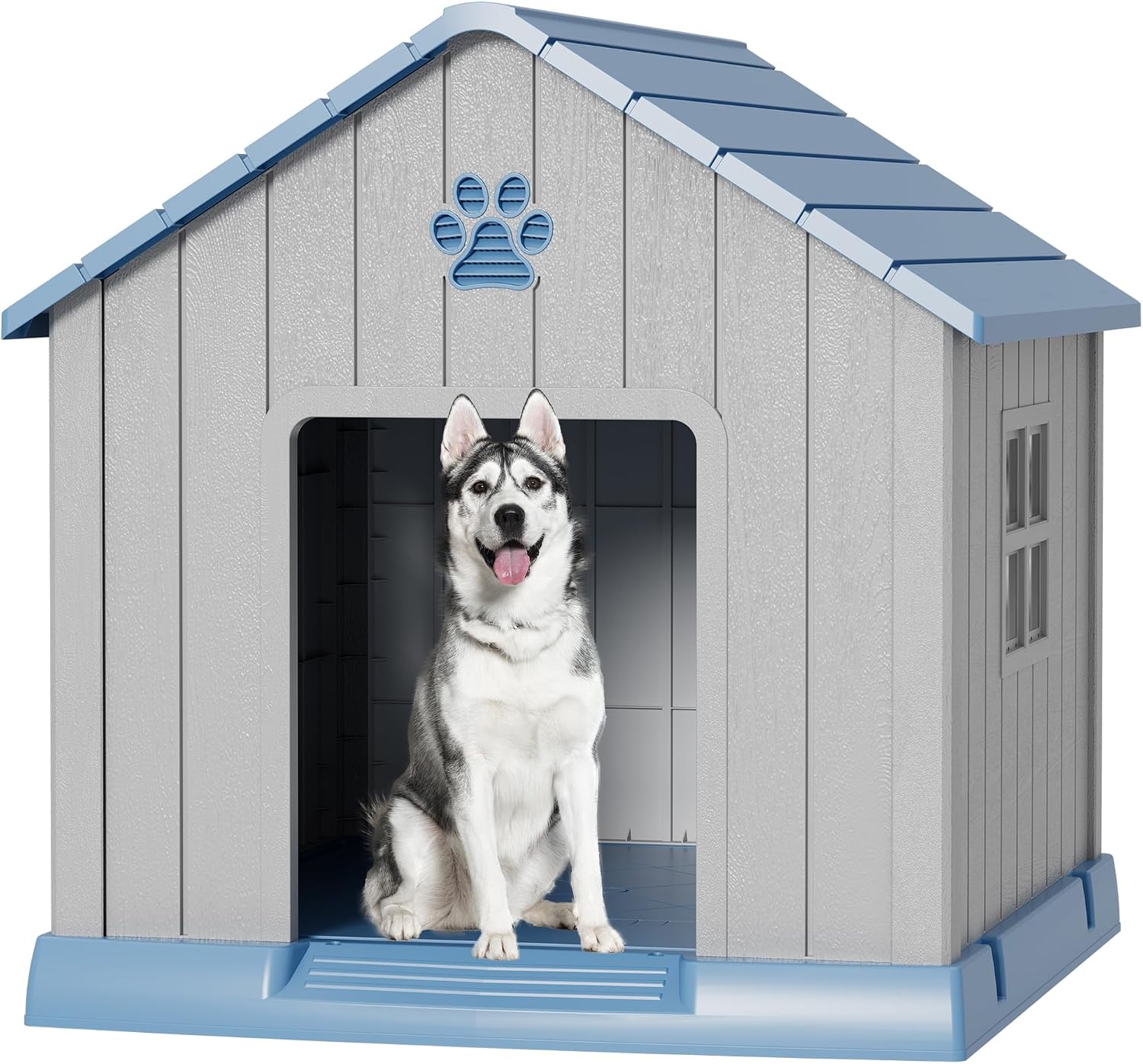
Fancyango Ventilated House
A resin house built to stay cool, cross-ventilation, reflective shell, raised floor. No power needed.
What we like
- Vents heat passively
- No power
The catches
- Not refrigeration
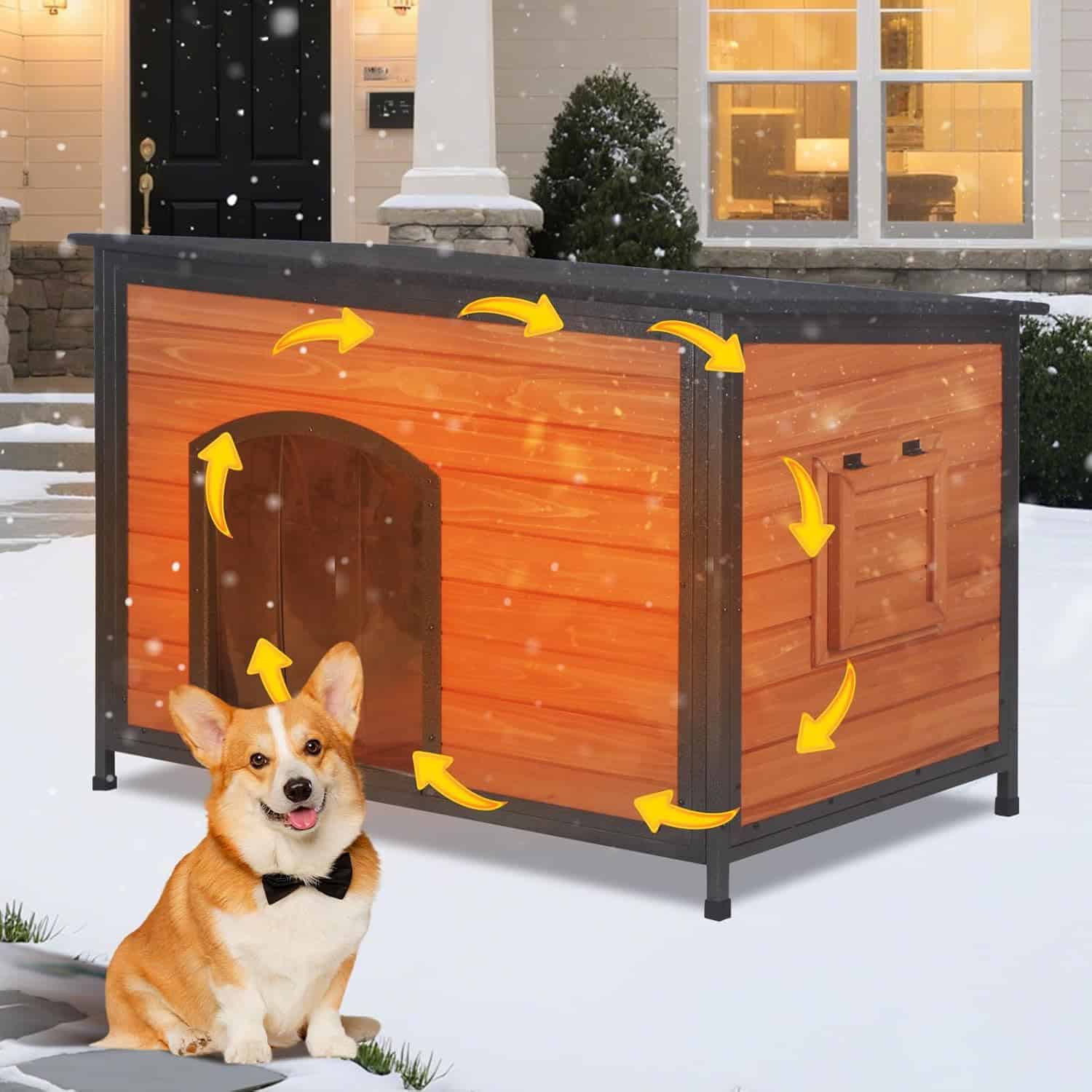
Insulated Wooden Dog House
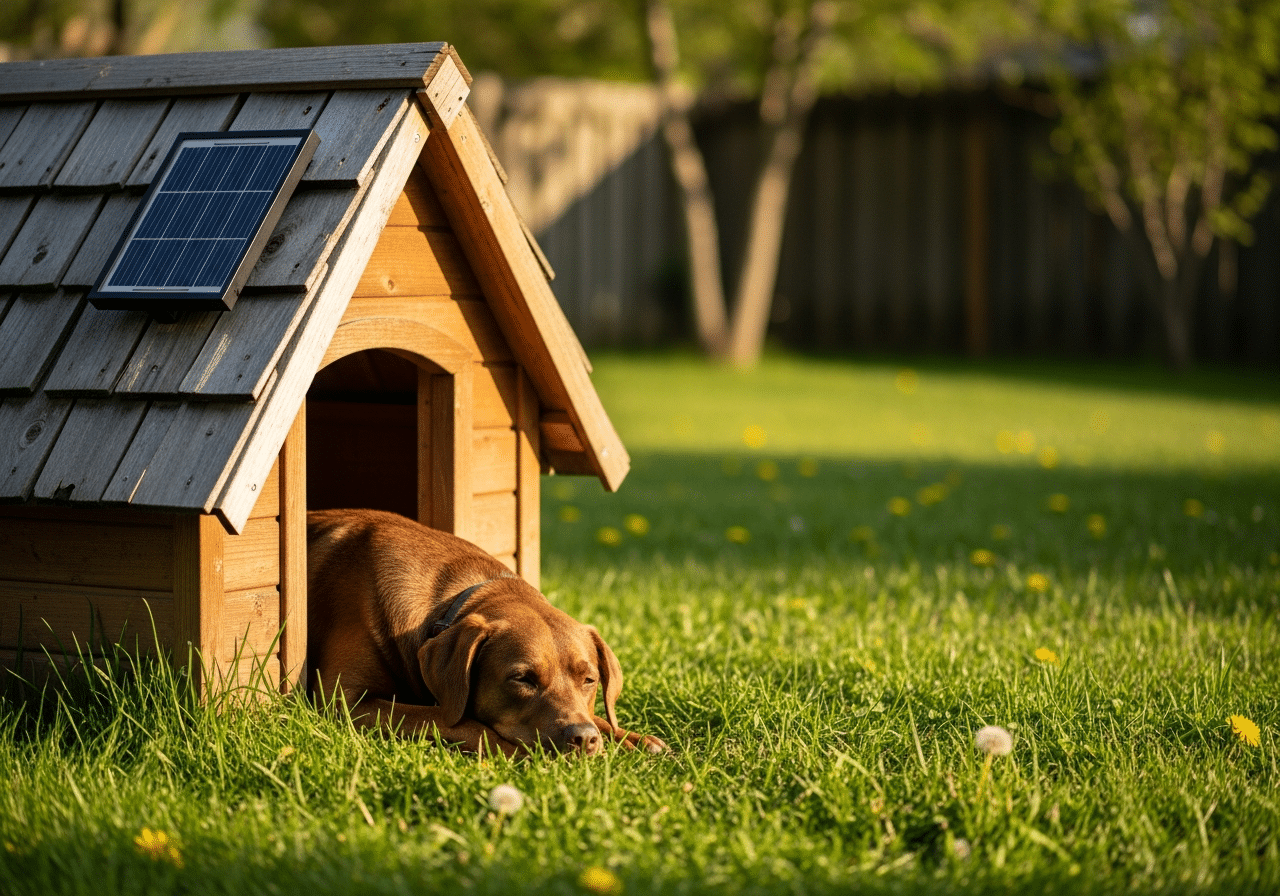
Solar heat is wasted on a draughty box. This insulated, raised, flap-doored house holds the warmth in.
What we like
- Makes heat count
- Weatherproof base
The catches
- Some assembly
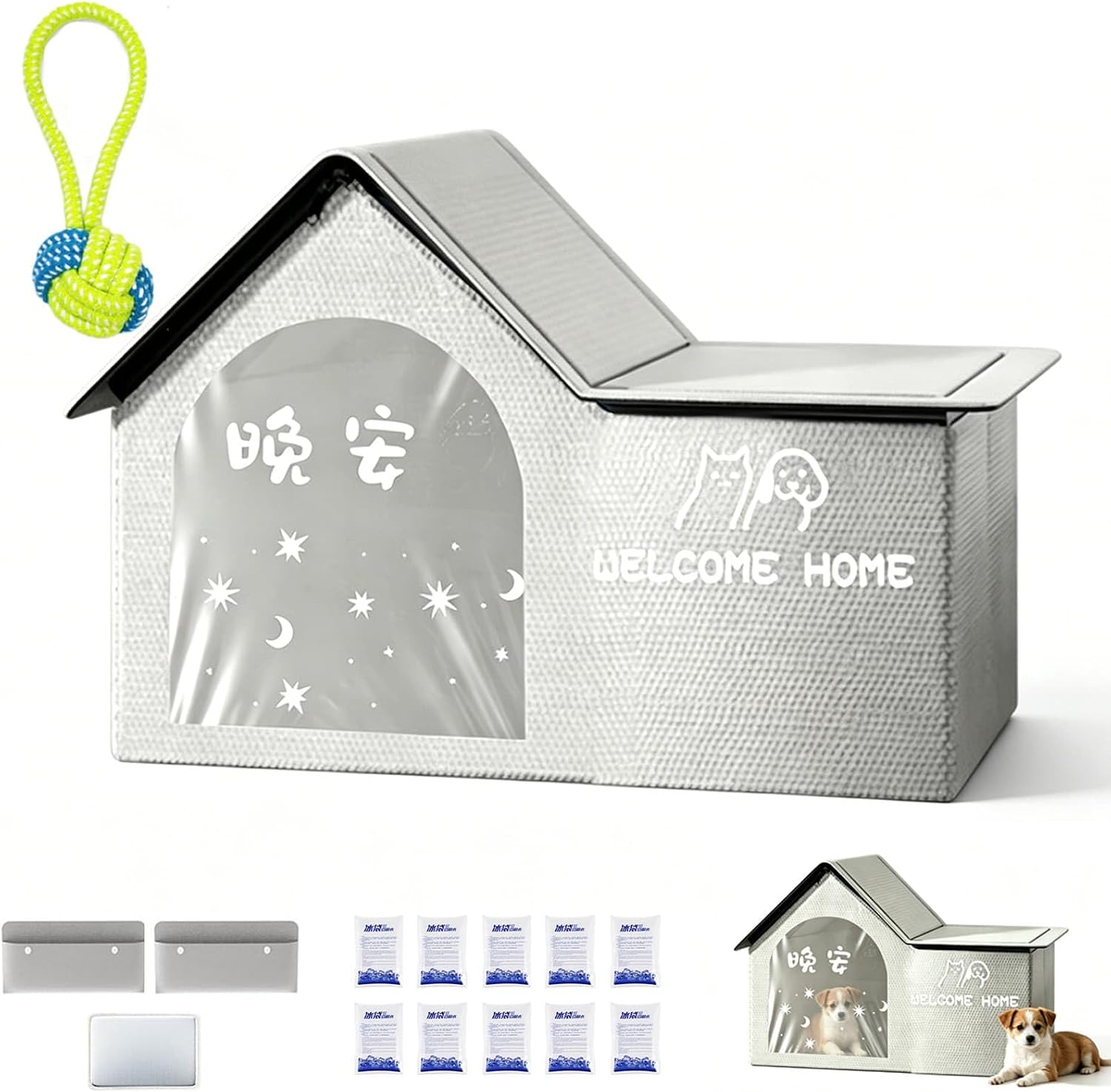
Foldable Ice-Pack House
A soft, foldable house with reusable gel ice-pack panels, cheapest way to a cooler den for a small dog.
What we like
- Cheapest cooling
- Folds away
The catches
- Small dogs; chill fades
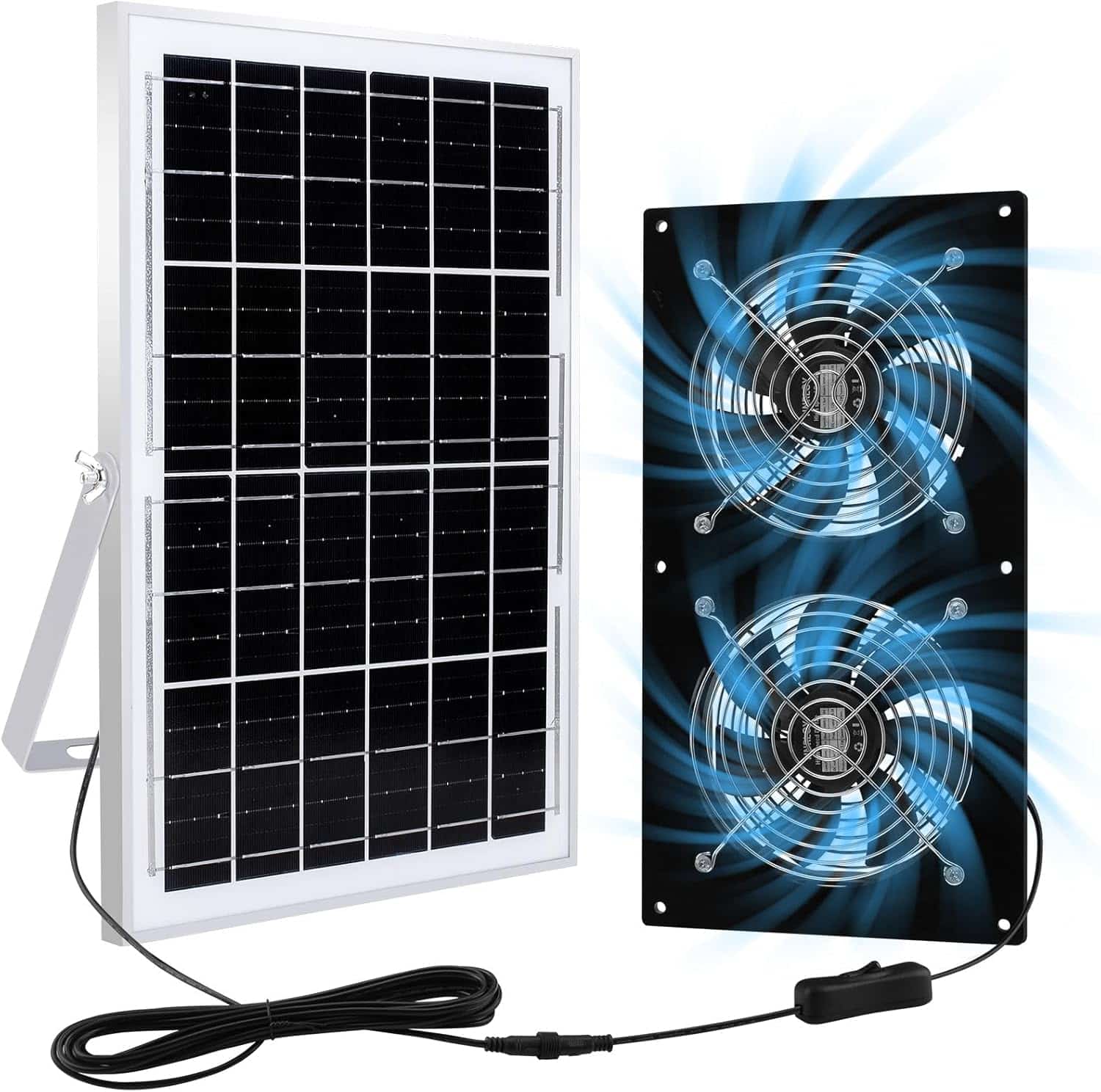
Solar Exhaust Fan
Bolt-on dual solar fans pull hot air out in summer, the same solar setup that warms in winter cools in summer.
What we like
- Off-grid airflow
- Fits any house
The catches
- Airflow only
An air conditioned dog house is one of the few ways to keep an outdoor dog genuinely safe when the heat turns dangerous, but “AC” covers three very different setups at very different prices. This buyer’s guide walks the types, shows you how to size the cooling to your house in BTUs, and lists the insulation, power and venting checks that separate a unit that actually cools from one that just hums and wastes electricity.
The three types of air-conditioned dog house
When people search for an air conditioned dog house, they’re really comparing three different approaches. Each cools, but they differ on cost, portability, power draw and how cold they’ll actually get the space. Match the type to your dog, your climate and your outlet before you shop.
| Type | How it works | Best for | Watch-outs |
|---|---|---|---|
| All-in-one thermoelectric house | A small Peltier (fan + cooling plate) built into a finished insulated house. Plug-and-play, no venting. | Small dogs, mild-to-warm climates, owners who want zero assembly. | Only drops the inside a few degrees below ambient, not true refrigeration. Struggles in extreme heat. |
| Portable AC + insulated house | A 5,000-BTU window/portable AC (or a battery micro-AC like the Zero Breeze) mounted in a custom-cut rear panel of an insulated house. | Most owners, real compressor cooling for one medium-to-large house. | You build the panel and seal it. Needs an outlet (or a beefy battery) and exhaust routing. |
| Mini-split kennel | A 12,000 to 24,000-BTU ductless mini-split serving a large insulated kennel or run. | Multiple dogs, a walk-in kennel, or extreme climates. | Overkill (and over-cooling) for a single doghouse; needs 110/220V and pro-style install. |
For one dog in a single house, the middle option, a portable AC paired with an insulated shell, is the sweet spot, and the one this guide sizes for below. If you’d rather buy a finished system than build one, our air-conditioned dog house hub rounds up the units worth considering.
BTU sizing: match the AC to the house
The single biggest mistake buyers make is grabbing the biggest AC they can find. Bigger is not better. An oversized unit short-cycles, never dehumidifies properly and wastes power; an undersized one runs flat-out and never catches up. Size the cooling to the cubic space of the house. As a rule of thumb, an insulated dog house needs roughly 30 to 40 BTU per cubic foot of interior volume in hot climates.
| House size | Approx. interior volume | Cooling needed | Typical unit |
|---|---|---|---|
| Small (toy / small breed) | Up to ~10 cu ft | ~300 to 400 BTU | Thermoelectric / micro-AC |
| Medium | ~10 to 25 cu ft | ~400 to 1,000 BTU | Battery micro-AC (e.g. Zero Breeze) |
| Large | ~25 to 60 cu ft | ~1,000 to 2,500 BTU | Smallest 5,000-BTU window/portable AC (de-rated) |
| XL / walk-in kennel | 60+ cu ft | 3,000+ BTU | Mini-split (12k+ BTU) |
Insulation: the cheap upgrade that makes AC work
An AC unit cools the air; insulation keeps it cold. Without it, your cooling pours straight out through thin plastic or single-layer wood walls, and the unit “struggles and wastes energy in an uninsulated shelter.” Before you spend on cooling, make sure the house is sealed:
- Rigid-foam insulation in the walls, roof and floor, the floor is the most-skipped panel and a major heat path.
- An insulated, weatherstripped doggie door (a heavy flap or offset entry) so cold air doesn’t dump out every time your dog moves.
- Sealed gaps around the AC panel, seams and the door, caulk or foam-tape every leak.
- Place the house in deep shade and raise it 4 to 6 inches off the ground; you’re cooling a shaded, sealed box, not a sun-baked one.
Do this first and you can run a smaller, cheaper, quieter unit. Skip it and even a powerful AC will lose the fight.
Power & venting: can you actually run it?
This is where backyard plans fall apart. A real compressor AC needs continuous power and a path for hot exhaust air. Check all of this before you buy:
- Power source: a 5,000-BTU AC draws ~450 to 500W and needs a grounded outdoor outlet on a weatherproof, GFCI-protected circuit. No nearby outlet means a heavy outdoor extension run or a solar/battery setup.
- Battery runtime: micro-ACs (Zero Breeze, Coolzy) give a true compressor in a portable body but typically only 3 to 5 hours per battery, plan spares or mains backup for a full hot day.
- Venting: a window/portable AC dumps heat out its back or a hose. That exhaust must vent outside the house, never recirculate, or you cancel the cooling.
- Condensation & safety: route the drip away from where your dog lies, keep all cords chew-protected, and confirm the unit is rated for outdoor/damp use.
For dogs that genuinely need active cooling, brachycephalic breeds (Bulldogs, Pugs, Frenchies), thick-coated huskies, seniors and puppies, getting power and venting right isn’t optional. The ASPCA’s hot-weather safety guidance is a good reality check on when cooling becomes a safety necessity rather than a comfort, and our can-you-air-condition-a-dog-house explainer covers the build basics if you go the DIY route.
What to check before you buy
Run this quick checklist against any air-conditioned dog house, finished unit or DIY plan, before you commit:
- Right-sized BTUs for the interior volume (use the table above, don’t oversize).
- Insulated walls, roof and floor, plus a sealed, weatherstripped door.
- A thermostat so it holds a target temperature instead of running flat-out.
- A real power plan, outlet, extension or battery with enough runtime for your hottest day.
- Proper venting for compressor units, with exhaust going outside.
- Correct interior size for your dog, big enough to lie flat and turn around, small enough to cool efficiently.
Heat caution starts around 75°F and turns dangerous above 85°F, so for at-risk dogs an air-conditioned dog house earns its keep. Tick every box above and you’ll buy cooling that actually cools, not a unit that hums all summer and barely moves the dial.