 Dog Gear, Sized Right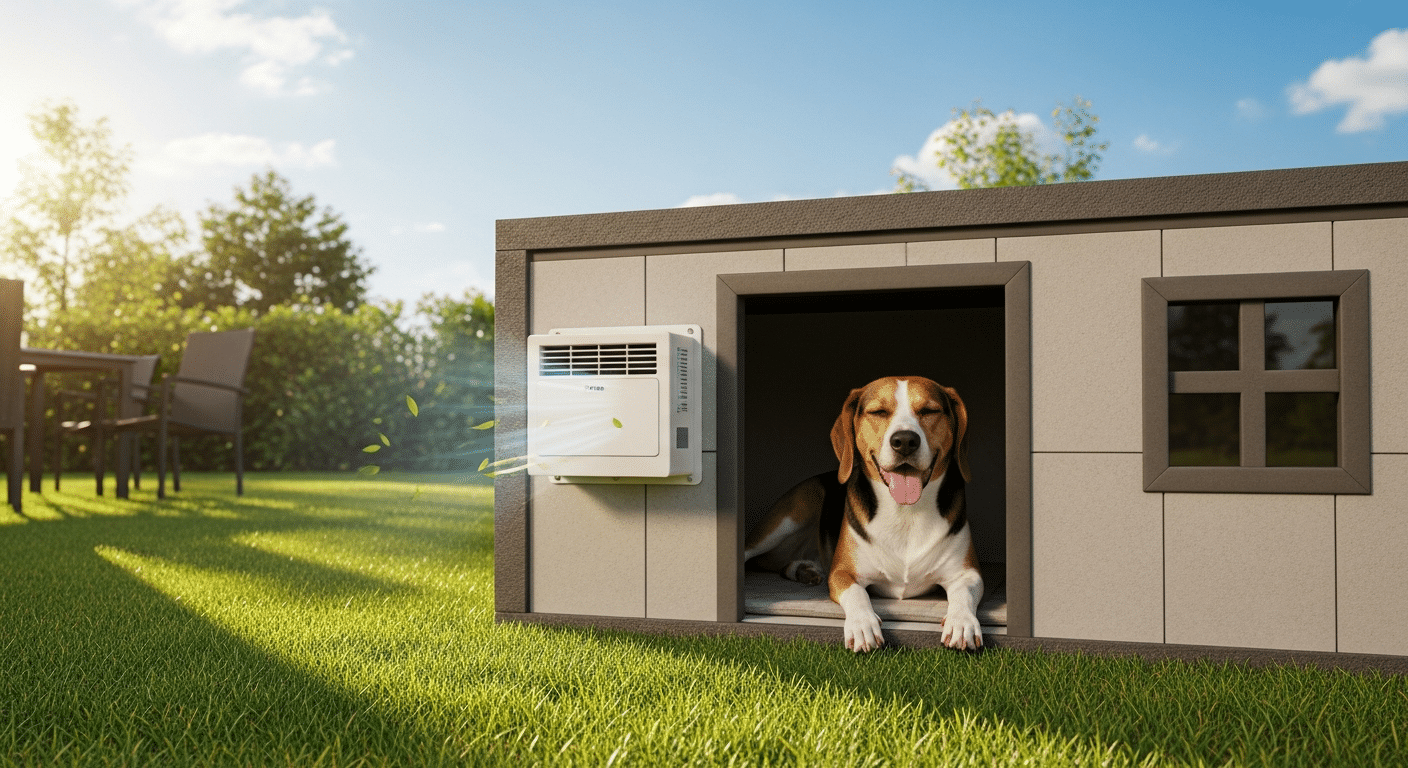
What Is an Air-Conditioned Dog House?
What actually counts as an “air-conditioned dog house”, the real cooling options, how each one works, who genuinely needs one, and the honest catch most listings won’t tell you.
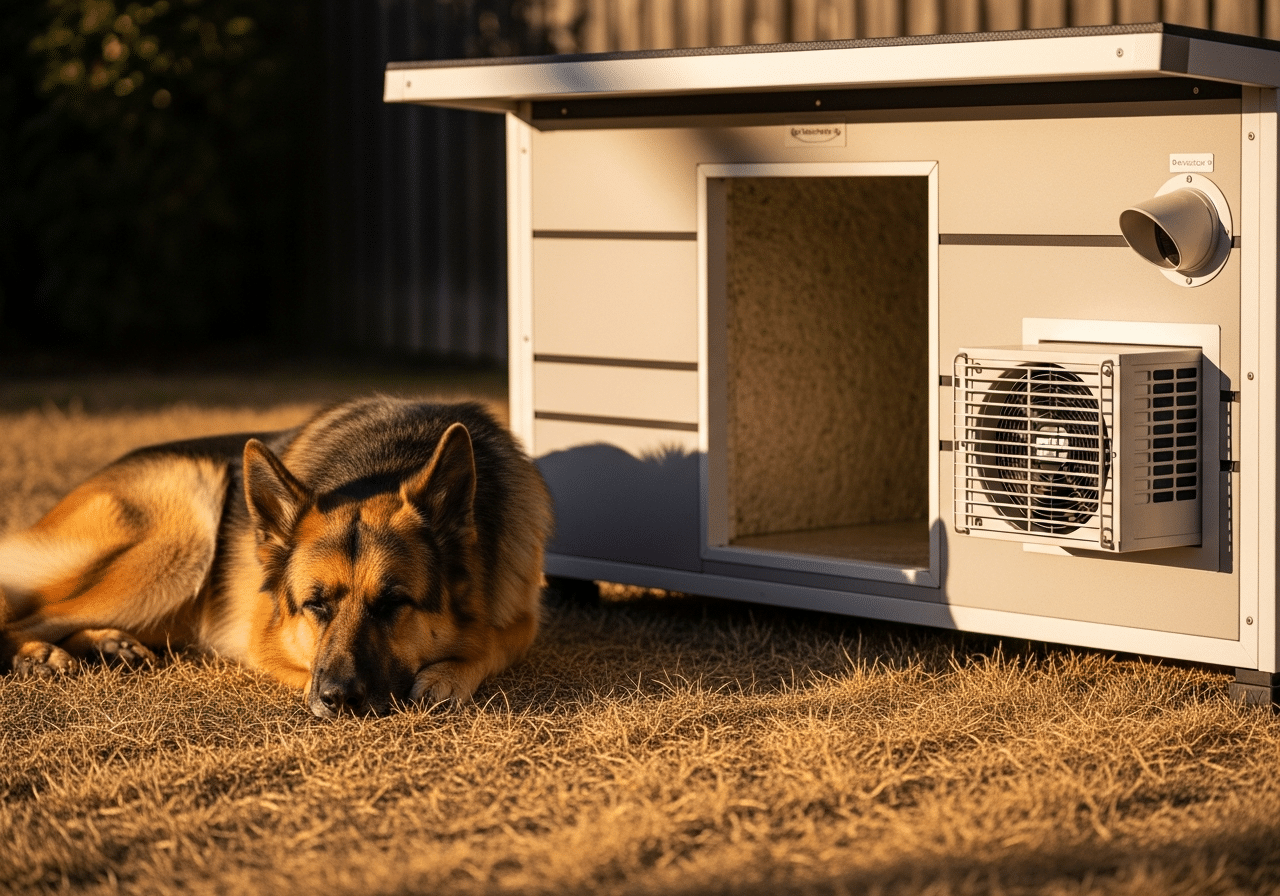
An air-conditioned dog house is an insulated outdoor shelter that’s actively cooled by a true compressor or thermoelectric air conditioner, not just shaded, vented, or fitted with a cooling mat. That distinction matters, because the phrase gets used loosely. Some products genuinely chill the air inside; many more simply circulate it or lower the surface a dog lies on. This explainer breaks down what really qualifies as AC, the four main ways people cool a dog house, how each one works, which dogs actually need active cooling, and the honest reality: a true all-in-one air-conditioned dog house you buy off the shelf is still rare. Most owners build one by pairing a well-insulated house with the right cooling unit.
What counts as an air-conditioned dog house?
The label “air-conditioned” should mean one thing: the air inside is actively refrigerated, pulled in, cooled by a compressor or thermoelectric module, and returned cooler than the outside air. That’s what an air conditioned dog house does that a shaded box does not. A real AC setup lowers the ambient temperature, not just the spot your dog is touching.
It helps to separate three things people lump together:
- True air conditioning: a compressor or thermoelectric unit that refrigerates the air. This is the only thing that genuinely “air-conditions” the house.
- Air movement: kennel fans push air around to aid evaporation off a dog’s body. Helpful, but they don’t lower the air temperature, they just move warm air.
- Conductive cooling: gel cooling mats and elevated cots pull heat from a dog by contact. Effective for the dog, but they do nothing to the air in the house.
All three help a dog stay comfortable. Only the first is air conditioning. Keep that in mind as you read listings, a “cooling dog house” is often a fan or a mat, not a refrigerated one.
The real cooling options, compared
Here’s how the genuine choices stack up, from true AC down to passive cooling, so you can see what you’re actually buying and what it does.
| Option | How it works | True AC? | Best for |
|---|---|---|---|
| Built-in thermoelectric unit | A Peltier module quietly chills the air a few degrees; low power, no compressor | Yes (mild) | Small houses, modest heat, quiet operation |
| Portable / micro AC | A true compressor unit (e.g. Zero Breeze, Coolzy) vented into a custom-cut panel; 3 to 5 hr battery | Yes | Real cooling off-grid or where you can’t run mains |
| Window / 5,000 BTU AC | A small window unit fitted into a sealed rear panel of an insulated house | Yes | DIY builds with mains power and real heat |
| Mini-split | 12k to 24k BTU wall unit; powerful and efficient but overkill for one house | Yes | Multi-dog kennels and large enclosures |
| Kennel fan | Moves air to speed evaporation; battery or mains | No | Shade-plus airflow in dry, moderate heat |
| Gel cooling mat / cot | Conducts body heat away by contact; no power needed | No | Cheap, simple relief for the dog directly |
Want to shop these directly? Our best air-conditioned dog house guide compares specific units by BTU, power and insulation.
How thermoelectric vs. compressor cooling differ
The two true-AC technologies work very differently, and the gap explains why some “AC dog houses” underwhelm in real heat.
- Thermoelectric (Peltier): passes current across a ceramic module to create a hot and a cold side. It’s quiet, light, has no refrigerant, and sips power, but it only drops the air a few degrees and struggles once outdoor temperatures climb. Great for taking the edge off, not for beating a heatwave.
- Compressor (portable micro AC, window units, mini-splits): uses refrigerant exactly like your home or car AC. It moves real heat out of the space and can cool meaningfully even when it’s genuinely hot. The trade-offs are weight, noise, power draw, and a hose or vent that has to dump warm air outside the house.
Who actually needs active cooling?
Most dogs in mild summers do fine with shade, airflow and water. Active AC earns its cost for specific dogs and specific climates. You’re a candidate if your dog is:
- Brachycephalic (flat-faced): Bulldogs, Pugs, French Bulldogs and Boxers can’t pant efficiently and overheat fast.
- Thick- or dark-coated: Huskies, Malamutes and similar breeds hold heat.
- A senior, a puppy, or overweight: all regulate temperature poorly.
- Living with heart or airway conditions: heat stress is far riskier.
Climate matters as much as the dog. Use simple thresholds: be cautious above 75°F, treat anything over 85°F as dangerous for a dog outdoors, and remember the “150 rule”, when the temperature in °F plus the humidity in % reaches 150 or more, heatstroke risk is high. The USDA standard for kenneled dogs holds that none should be above 85°F for more than four hours without ventilation, fans or air conditioning. For the full breakdown, see which dogs need an air conditioner.
If you’re weighing whether it’s worth the install at all, our honest take in should I put AC in a dog house? walks through when it’s justified and when shade and a fan are enough.
The honest reality: true AC houses are rare
Here’s the part the marketing skips. A genuine, buy-it-in-a-box air-conditioned dog house, insulated shell with an integrated, effective AC unit, barely exists at the consumer level. Most products sold under that name are either thermoelectric coolers that only nudge the temperature down, or insulated houses with a fan, or simply cooling mats. The serious cooling almost always comes from building it yourself: take a well-insulated house and add the right unit.
And insulation is the multiplier that makes any of it work. An AC unit “struggles and wastes energy in an uninsulated shelter,” so the order of operations is:
- Insulate first: rigid-foam in walls, roof and floor; weatherstrip the doorway; seal every gap. This is what lets a small unit actually hold a temperature.
- Cool passively before you spend: deep shade, elevate the house 4 to 6 inches off the ground, light reflective paint, a high cross-vent, fresh water. Often this alone is enough.
- Then size the AC to the space: a small thermoelectric or micro AC for a single insulated house; don’t over-cool, and don’t reach for a mini-split unless you’re cooling a multi-dog kennel.
None of this replaces common sense in extreme heat. The ASPCA’s hot-weather safety guidance is the authority on recognizing heat stress and knowing when a dog simply needs to come indoors.