 Dog Gear, Sized Right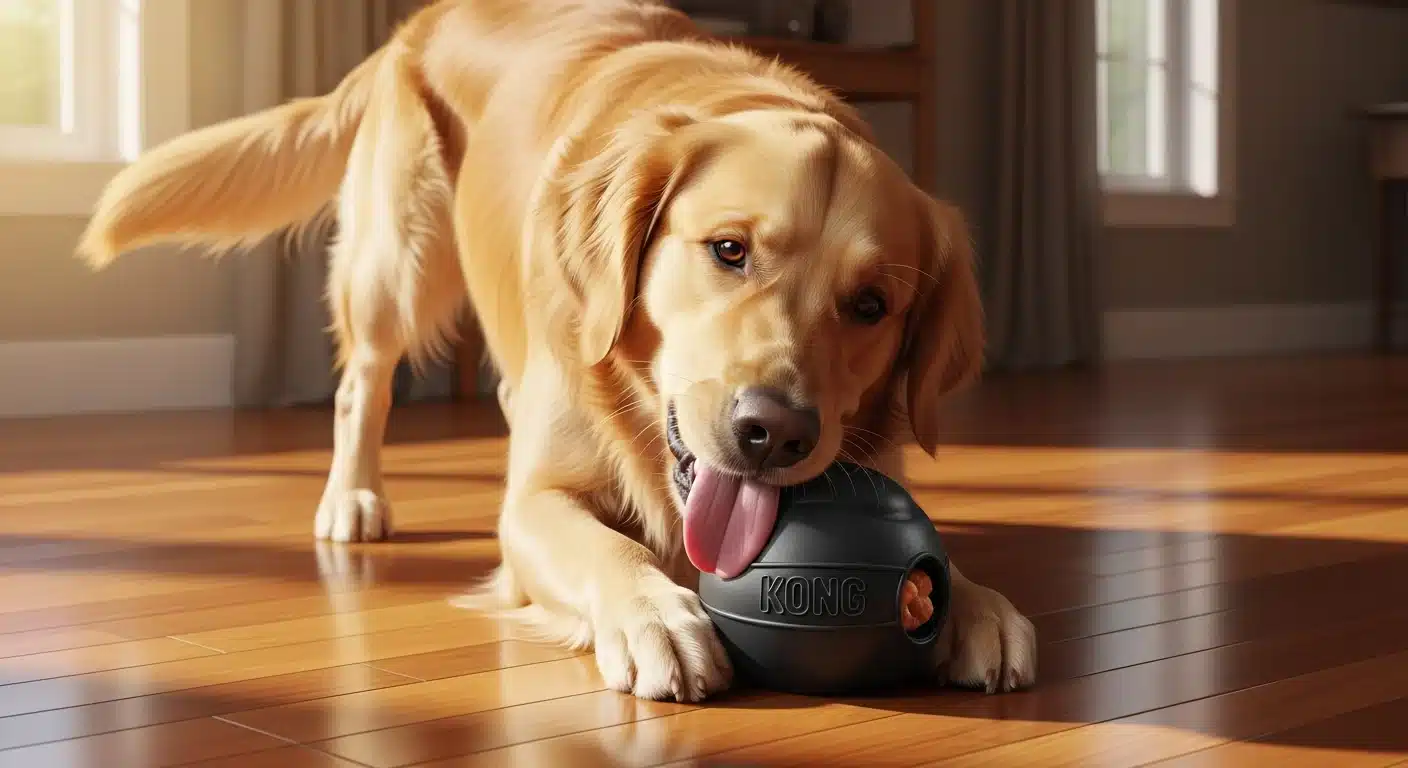
How to Use a KONG Dog Toy: Stuffing Recipes, Freeze Tips & Safety Rules
Everything you need to fill, freeze, size, clean, and safely use a KONG, so one $15 rubber toy replaces an hour of boredom.
A KONG is a hollow, snowman-shaped rubber toy with a small hole at the top and a larger opening at the base. Stuff it with food, freeze it, and your dog works for every bite instead of wolfing it down in seconds. The result: a 20 to 40 minute enrichment puzzle that drains mental energy as effectively as a long walk. This guide covers everything, stuffing technique, the best recipes, the freeze method, Classic vs Extreme sizing, cleaning, and the handful of foods that should never go inside.
Why the KONG Works: the chew-and-reward loop
Dogs are natural problem-solvers. In the wild, getting food required effort, sniffing, digging, chasing. A KONG recreates that effort indoors. The rubber walls flex unpredictably when your dog bats or chews it, dispensing food in random bursts that trigger the same dopamine loop as a real hunt. Studies on canine enrichment consistently find that working for food reduces anxiety, destructive chewing, and attention-seeking far better than simply providing the same calories in a bowl.
The design also matters. The thick walls absorb bite force rather than splintering. The widened base prevents the toy rolling under furniture every few seconds. And the interior cavity is large enough to hold a full meal’s worth of calories, meaning you can use it as a daily feeding tool, not just an occasional treat.
Classic (Red) vs Extreme (Black): which rubber is right?
KONG makes both models in the same sizes and shapes, but the rubber compound is completely different. Choosing the wrong one either wastes money (the Extreme is overkill for a gentle chewer) or creates a safety hazard (the Classic shreds under a power chewer in minutes).
| Model | Rubber | Best for | Typical lifespan |
|---|---|---|---|
| KONG Classic (Red) | Natural rubber, flexible, bouncy | Puppies, seniors, average chewers, gentle play | 6 to 18 months with normal use |
| KONG Puppy (Pink/Blue) | Even softer natural rubber | Puppies under 9 months, teething relief | Retire when adult teeth come in |
| KONG Extreme (Black) | Ultra-durable vulcanised rubber | Power chewers, large breeds, dogs who destroy everything | 12 months+ with heavy use |
| KONG Senior (Purple) | Softest natural rubber | Older dogs with sensitive gums or tooth loss | Supervised use recommended |
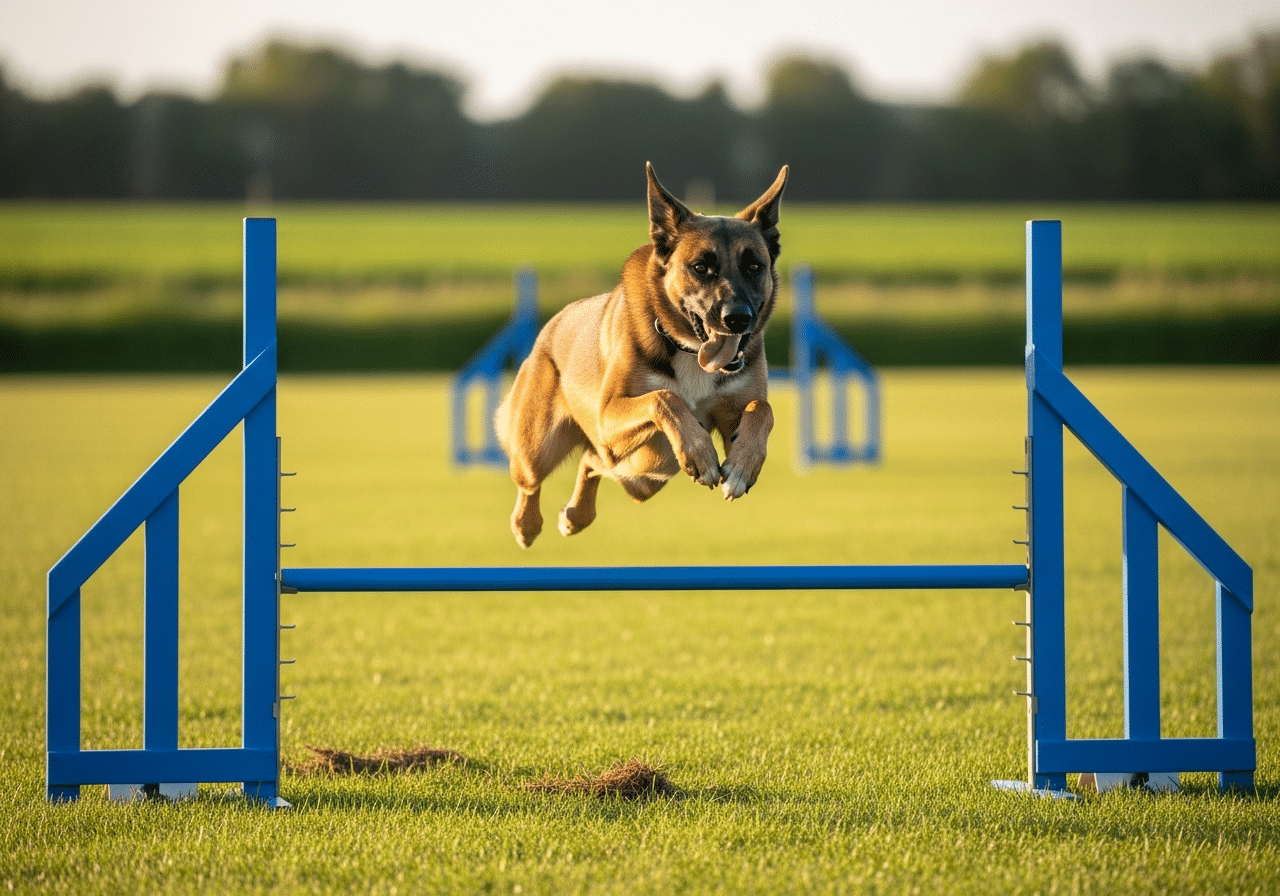
If your dog is a German Shepherd, Malinois, Rottweiler, Pit Bull, or any breed known for jaw strength, go straight to the black KONG Extreme (Large or XL), stuff it with kibble or peanut butter and freeze it to turn chewing into a 20 to 40 minute enrichment puzzle; ~$15, cheap enough to own two and rotate one from the freezer. Check price on Amazon →
KONG Size Chart: matching toy to dog
The golden rule: the widest ring of the KONG should be too large to fit past the back molars. If your dog can get the whole toy in its mouth, size up immediately, that’s a choking risk, not a toy. When torn between two sizes, always go larger.
| KONG Size | Dog weight | Example breeds |
|---|---|---|
| XS | Under 5 lb | Chihuahua, toy breeds |
| S | 5 to 20 lb | Shih Tzu, Miniature Dachshund |
| M | 15 to 35 lb | Cocker Spaniel, Beagle |
| L | 30 to 65 lb | Labrador, Husky, Standard Poodle |
| XL | 60 to 90 lb | German Shepherd, Rottweiler |
| XXL | 85 lb+ | Great Dane, Mastiff, Saint Bernard |
How to Stuff a KONG: the layering method
Random packing works, but the layering method extends engagement time by 30 to 50% by controlling how quickly different reward levels become accessible.
The four-layer system (base to top):
- Plug (tip of the KONG): A smear of peanut butter, cream cheese, or spray cheese pressed firmly into the small hole. This seals in loose kibble and gives your dog an instant reward that hooks them on the puzzle.
- Main fill (bottom two-thirds): Dry kibble, mixed wet food, cooked plain chicken, or freeze-dried food crumbles. Pack loosely for beginners; tighter for experienced dogs.
- Binder (middle layer): One tablespoon of unsweetened pumpkin puree, plain Greek yogurt, or mashed banana. This holds everything together during freezing and adds a smear reward between kibble clumps.
- Topper (wide opening): A tempting high-value treat, a cube of cheese, a piece of freeze-dried liver, or a small biscuit sticking out just enough to tease. This grabs attention and draws the dog in.
Best KONG Stuffing Ideas: a full ingredient list
Any dog-safe food works. Below is a reference list organised by category, mix and match based on what’s in your kitchen.
| Category | Safe options | Notes |
|---|---|---|
| Spreads & binders | Peanut butter (xylitol-free), almond butter, coconut oil, unsweetened pumpkin puree, plain yogurt, cream cheese | Always check peanut butter labels, xylitol is lethal |
| Kibble & wet food | Your dog’s regular kibble, canned dog food, freeze-dried food rehydrated | Counts toward daily calories, adjust bowl portions |
| Fruits | Banana, blueberries, apple (no seeds/core), watermelon (no rind), strawberries | Rinse and remove any pips or skins that could choke |
| Vegetables | Cooked sweet potato, carrots, green beans, peas, plain cooked pumpkin | Avoid onion, garlic, leeks, all toxic |
| Proteins | Cooked plain chicken or turkey, plain cooked egg, unseasoned cooked beef | No seasoning, no bones, no skin |
| Dairy | Plain Greek yogurt, cottage cheese, small cheddar cubes, spray cheese (sparingly) | Introduce slowly, some dogs are lactose intolerant |
| Broths | Low-sodium chicken or bone broth | Great liquid binder; avoid broths with onion/garlic/high sodium |
3 Tested KONG Stuffing Recipes (easy to frozen)
These progress from beginner-friendly to fully frozen, introduce your dog at the level that matches their KONG experience.
Recipe 1: First KONG (5 minutes, no freezing)
Best for puppies and first-time KONG users. Keep it simple so your dog learns the puzzle fast and stays motivated.
- Plug the tip with xylitol-free peanut butter
- Fill the cavity loosely with your dog’s regular kibble
- Dab a little peanut butter in the wide opening as the topper
- Give immediately, contents fall out easily, which rewards early effort
Recipe 2: Banana-Yogurt Crunch (10 minutes, freeze 2 hours)
A mid-difficulty option that lasts 20 to 30 minutes unfrozen, 40+ minutes frozen.
- Mash half a ripe banana into two tablespoons of plain Greek yogurt
- Stir in a handful of kibble so the mixture holds its shape
- Plug the tip with peanut butter, spoon in the mixture, press lightly
- Top with a blueberry or small biscuit sticking out
- Freeze for at least two hours (or overnight)
Recipe 3: Frozen Power Chewer Block (10 minutes, freeze overnight)
For dogs who crack a fresh KONG in under five minutes. The full freeze turns the interior into a dense block that takes real sustained effort to work through.
- Plug tip with cream cheese
- Layer in cooked plain chicken pieces and kibble in alternating spoonfuls
- Pour a splash of low-sodium chicken broth over the top to fill air gaps
- Seal the wide opening with a thick peanut butter smear
- Stand upright in a mug (wide end up) and freeze overnight
- Give straight from the freezer, do not thaw
The Freeze Method: why, how long, and how to progress
Freezing a stuffed KONG is the single biggest upgrade you can make. A fresh KONG lasts 5 to 10 minutes for most dogs. The same KONG frozen overnight lasts 30 to 60 minutes, and the act of licking cold food out activates calming jaw and tongue movements similar to what dogs do when they’re settling down after a hunt.
Freeze progression for new KONG users:
- Week 1: No freeze, loose kibble only. Let your dog learn how the toy moves.
- Week 2: Freeze for 30 minutes. Contents are chilled but not fully solid.
- Week 3: Freeze for 2 to 4 hours. Mix includes a liquid binder (yogurt, broth, pumpkin).
- Week 4+: Freeze overnight. Full block. Give straight from the freezer.
The binder ingredient is critical for a good freeze. Dry kibble alone won’t solidify, you need something with moisture. Plain yogurt, pumpkin puree, mashed banana, or low-sodium broth all work. Even a teaspoon of water poured over packed kibble is enough to bind it into a solid.
What NOT to Put in a KONG: the safety no-list
KONGs are forgiving, almost any dog-safe food works inside. But a handful of common kitchen items are toxic to dogs and turn enrichment into an emergency.
| Never stuff a KONG with… | Why it’s dangerous |
|---|---|
| Peanut butter containing xylitol | Xylitol is a sweetener that causes rapid, severe hypoglycaemia in dogs, even a small amount can be fatal. Check the label every time; brands reformulate. |
| Grapes or raisins | Linked to acute kidney failure in dogs. The toxic compound is still unidentified, so no dose is considered safe. |
| Macadamia nuts | Cause weakness, hyperthermia, vomiting, and tremors. Onset within 12 hours. |
| Chocolate | Theobromine is toxic to dogs, dark chocolate most severely. Even a small smear of chocolate-flavoured spread is a risk. |
| Onion, garlic, chives, leeks | All alliums damage red blood cells, causing haemolytic anaemia. This includes powdered forms hidden in broths or seasonings. |
| Avocado | Persin in the flesh and skin causes vomiting and diarrhoea; pit is a choking hazard. |
| Cooked bones | Splinter into sharp shards. Never use as a plug, raw marrow bones with appropriate size are the only bone-adjacent option, and even those need supervision. |
| Anything with heavy spices or salt | Seasoned foods cause sodium toxicity and GI distress. Plain is always safer. |
How to Clean a KONG: dishwasher, soak, or scrub?
A dirty KONG is a bacteria factory. Dried peanut butter in the narrow tip develops mould within days in warm weather. Cleaning takes two minutes, skip it and you’re handing your dog a petri dish.
Method 1: Dishwasher (Classic, Extreme, Senior. NOT Puppy soft rubber)
- Remove any loose food debris by rinsing under hot tap water first
- Place on the top rack, open end down, so water jets reach the interior
- Run a normal hot cycle, the rubber survives repeated dishwasher cycles well
- Air-dry completely before the next stuff; moisture trapped inside = mould
Method 2: Hot-water soak (all models)
- Fill a bowl with very hot water and a drop of pet-safe dish soap
- Submerge and soak for 10 to 15 minutes
- Use a bottle brush or a bent pipe cleaner to scrub the interior walls and tip hole
- Rinse thoroughly, soap residue is an irritant
- Air-dry open-end-down on a dish rack
How often: After every single use if stuffed with dairy, meat, or egg. Every 2 to 3 uses for dry-kibble-only stuffings. Never leave a used, unfrozen KONG sitting out for more than four hours, food-borne bacteria multiply quickly inside the insulated rubber cavity.
KONG Safety Rules: supervision, retirement, and chew monitoring
KONGs are among the safest chew toys on the market, but ‘durable’ doesn’t mean ‘indestructible’ and no toy should be treated as a babysitter.
- Always supervise the first three sessions with any new KONG, even if your dog has used a KONG before, a new size or model behaves differently.
- Right size, every time. The #1 KONG-related emergency is a toy wedged across the lower jaw of a dog who managed to compress it into their mouth. If the KONG fits fully in your dog’s mouth: size up immediately.
- Inspect weekly. Run your finger around the interior and all exterior surfaces. Any tear, chunk missing, or compromised wall = retire the toy. Swallowed rubber chunks cause intestinal blockages.
- No KONG for dogs who swallow chunks. Some power chewers will rip pieces off even black KONGs. If you see pieces missing after a session and can’t account for where they went: call your vet and switch to a nylon or dental chew.
- Frozen KONGs on hot days need monitoring. The melt makes floors slippery. Senior dogs and puppies can get too cold licking frozen food for extended sessions, limit to 20 to 30 minutes.
- One KONG per dog in multi-dog households. Resource guarding around high-value food-stuffed toys is common, separate dogs during KONG time to prevent fights.
Using a KONG to solve common behaviour problems
A KONG is a behaviour tool as much as a toy. Here are the five most common applications that trainers reach for first:
- Separation anxiety: Give the frozen KONG five minutes before you leave. Your dog associates your departure with the best thing that happens all day. Start with short absences and build up gradually.
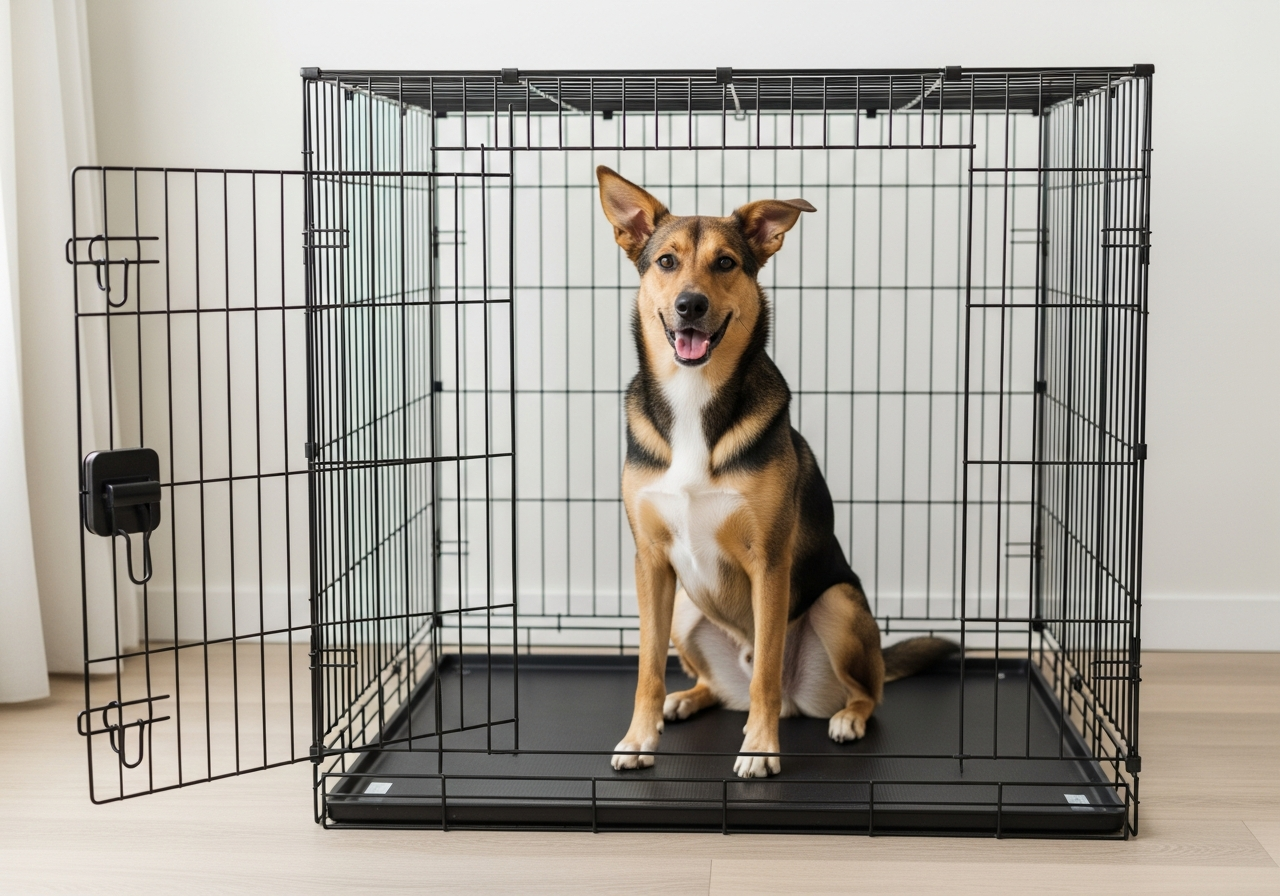
- Crate training: Never force a crate, lure with a frozen KONG. Toss it in, let the dog follow, let them exit freely. Within a week, most dogs voluntarily go to the crate expecting their KONG.
- Destructive chewing: Dogs chew because they’re bored and it relieves tension. A frozen KONG gives an appropriate outlet for the same jaw pressure, redirect every destructive chew episode to the KONG for two weeks and you’ll see a measurable drop.
- Meal-time enrichment: Replace the bowl three days a week. Use 50% of the meal in the KONG and give the rest in the bowl, this extends mealtime from 30 seconds to 15 minutes with zero extra calories.
- Vet / grooming desensitisation: The act of licking is physiologically calming. A smear of peanut butter in a KONG given during nail clips or ear cleaning dramatically reduces stress responses in most dogs within a few repetitions.
For more ideas on keeping a dog mentally engaged, our durable chew toy guide covers the full range of rubber, nylon, and natural chew options beyond the KONG.
KONG questions, answered
How long does a stuffed frozen KONG last?
A loosely packed fresh KONG lasts 5 to 10 minutes for most dogs. Freeze it overnight and the same toy lasts 30 to 60 minutes, sometimes longer for less experienced KONG users. The denser and colder the fill, the more time it takes to lick out.
What is the best thing to put in a KONG?
Xylitol-free peanut butter is the classic choice, it sticks to the walls, smells irresistible, and freezes well. For a more nutritious fill, mix plain Greek yogurt, mashed banana, and your dog’s regular kibble, then freeze. The ‘best’ fill is the one your dog is most motivated by, high-value fillings are more useful when you need the KONG to work hard (separation anxiety, crate training).
Is the KONG Classic or KONG Extreme better for large dogs?
For large dogs with strong jaws. German Shepherds, Labradors, Rottweilers, Pit Bulls, the KONG Extreme (black rubber) is the right choice. The Classic red rubber can be destroyed in one session by a power chewer. The Extreme uses a significantly denser vulcanised compound that resists sustained bite pressure far better.
Can I put a KONG in the dishwasher?
Yes, the Classic, Extreme, and Senior models are dishwasher-safe on the top rack. Place open-end down so water jets reach the interior. The soft Puppy KONG (pink or blue) should be hand-washed to avoid deforming the softer rubber. Always air-dry completely before re-stuffing, moisture trapped inside causes mould.
How do I know what size KONG to get?
The widest ring of the KONG should be larger than the space between your dog’s back molars. If the toy fits entirely inside your dog’s mouth, it’s too small, size up immediately to prevent choking. When between sizes, always choose the larger option. KONG’s size chart goes XS (under 5 lb) to XXL (85 lb+), but jaw strength matters too, a strong-jawed medium dog may need a large KONG for durability.
What should you NOT put in a KONG?
Never put xylitol-containing peanut butter (toxic, rapidly fatal), grapes or raisins (kidney failure), macadamia nuts (neurological symptoms), chocolate, onion, garlic, chives, avocado, or cooked bones inside a KONG. Also avoid heavily salted or seasoned foods, low-sodium, plain ingredients only. When in doubt, check the ASPCA Animal Poison Control list before stuffing.
How often can my dog use a KONG?
Daily use is fine and beneficial, many trainers recommend using it as a meal-replacement three or more days per week. Just track the calories: if the KONG is stuffed with peanut butter and kibble, reduce the regular bowl portion accordingly to avoid weight gain. Replace (retire) the KONG whenever you see chunks missing, visible tears, or significant deformation.