 Dog Gear, Sized Right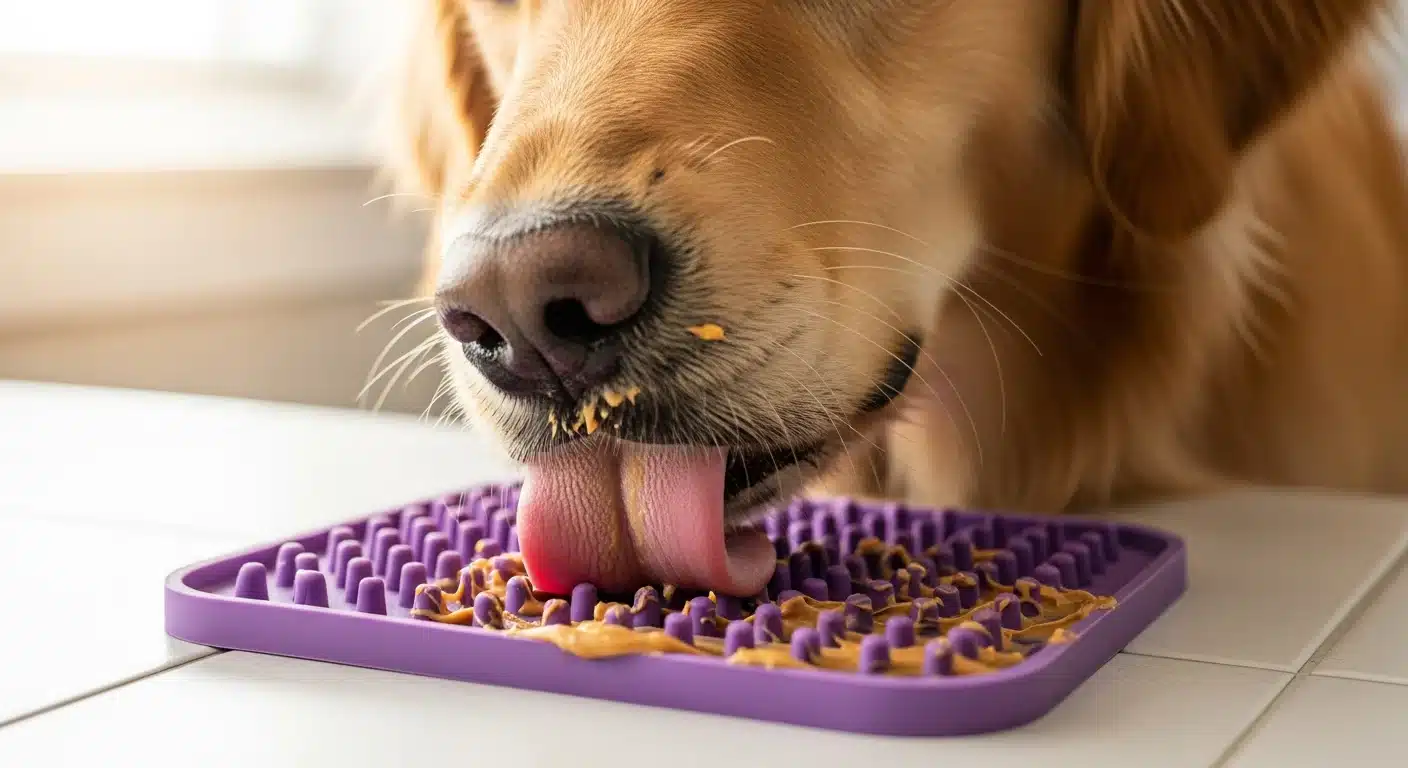
Are Lick Mats Good for Dogs? Benefits, Best Spreads, and How to Use Them Safely
Short answer: yes, lick mats calm dogs, slow eating, and deliver real mental enrichment with almost zero effort.
Lick mats have become one of the most recommended dog-enrichment tools for a simple reason: they work on multiple levels at once. The act of licking is neurologically calming, the ridged surface slows eating to a crawl, and the low-stimulation format is perfect for dogs that need to decompress without being further wound up. The short answer to ‘are lick mats good for dogs?’ is a clear yes, provided you use the right spreads, keep sessions to 15 to 20 minutes, and clean the mat after every use. This guide covers everything: the real benefits, what to spread (including the xylitol warning every owner needs to know), how to use and freeze a lick mat, grooming and anxiety applications, and how to get those suction cups to actually stay put.
What Is a Lick Mat?
A lick mat is a flat, food-grade rubber or silicone mat textured with ridges, grooves, crosses, or raised dots designed to hold spreadable food. Dogs lick the surface to extract the food, turning a meal or snack into an extended, calming activity. Unlike sliding-panel puzzle toys that require paw or nose work to open compartments, a lick mat’s challenge is purely tongue dexterity, working every crevice clean.
Most mats are made from food-safe silicone or natural rubber and are designed to be:
- Flat or slightly curved to sit flush on a surface
- Textured with a pattern that traps soft, spreadable food
- Suction-cup equipped on the underside to prevent sliding during use
- Dishwasher-safe (most models, check your specific mat)
The key distinction from a slow feeder bowl is that lick mats are purely for spreadable foods, peanut butter, yogurt, pureed pumpkin, wet food, rather than kibble. They’re also designed for licking, not chewing. A dog that chews a lick mat is using it incorrectly, which is both a safety issue and a sign the mat isn’t providing the right kind of enrichment for that dog.
5 Real Benefits of Lick Mats for Dogs
The benefits of lick mats aren’t marketing fluff, each one has a clear physiological mechanism behind it.
1. Calming and anxiety relief
The repetitive motion of licking triggers the release of endorphins, natural feel-good chemicals that lower heart rate and reduce cortisol. This is the same self-soothing mechanism behind other repetitive oral behaviors in dogs (like nooking or chewing). Because the licking motion requires sustained, rhythmic focus, it naturally pulls a dog’s attention away from anxiety triggers. Dogs that become agitated by thunderstorms, fireworks, nail trims, or being left alone consistently respond well to a lick mat introduced before the stressor begins.
2. Mental stimulation without physical arousal
Lick mats provide genuine mental engagement, the dog has to work every groove and ridge to extract the last of the spread, but without the physical excitement of fetch or tug. That distinction matters enormously for dogs that are already over-aroused. A puzzle toy or tug game can ramp up excitement; a lick mat brings it down. It’s one of the few enrichment tools that actively reduces arousal while still engaging the brain.
3. Slow feeding and bloat risk reduction
Dogs that eat too fast gulp air along with their food, which is one of the contributing factors in gastric dilatation and volvulus (bloat), a life-threatening emergency, particularly in large, deep-chested breeds. Spreading a meal across a lick mat’s surface physically prevents fast eating. The dog has to lick one small area at a time, extending a meal that would normally take 30 seconds into 5 to 15 minutes of steady licking. For giant breeds like Great Danes or German Shepherds, this can be a genuine safety measure, not just enrichment.
4. Dental health support
The textured ridges of a lick mat act as a mild mechanical cleaner as the tongue works across them, stimulating saliva production, which contains natural antimicrobial compounds that help reduce bacteria in the mouth. The mat’s surface also scrapes gently against the tongue and cheeks as the dog licks. It’s not a substitute for brushing or dental chews, but regular lick mat use is a valid supporting element of a dental hygiene routine, especially for dogs that resist tooth brushing.
5. Distraction during grooming and vet visits
This may be the most underrated benefit. A lick mat smeared with peanut butter or cream cheese and pressed to the side of a bath, a grooming table, or a vet exam table gives the dog something intensely absorbing to focus on during an otherwise stressful experience. The dog’s brain is so occupied with the licking task that it’s simply less available for anxiety. Many groomers and vets now recommend owners bring a frozen lick mat to appointments for exactly this reason.
What to Put on a Lick Mat: Safe Toppings and the Xylitol Warning
The best lick mat fillings are spreadable, sticky (so they stay in the grooves), and appropriate for your dog’s dietary needs. Here’s a breakdown of what works and what to avoid.
| Food | Notes | Calorie Load |
|---|---|---|
| Peanut butter (xylitol-free) | Classic dog favourite. High stickiness, fills grooves well. Check label before every purchase, see xylitol warning below. | High, use sparingly |
| Plain Greek yogurt | High in protein and probiotics. Freeze well for extended sessions. Ensure it’s unsweetened with no artificial sweeteners. | Low to moderate |
| Pumpkin puree | Excellent for digestion and high in fibre. Use 100% pure canned pumpkin, not pumpkin pie filling, which contains spices and sweeteners toxic to dogs. | Very low |
| Wet dog food | Great for working the mat into a mealtime enrichment tool. Counts toward daily ration. Spreads easily into grooves. | Varies, count as meal |
| Cream cheese (plain) | High palatability, spreads cleanly into ridges. Use low-fat versions for calorie-conscious dogs. A thin smear goes a long way. | Moderate to high |
| Mashed banana | Natural sweetness dogs love; high in potassium. Mix with yogurt for better texture in the grooves. | Low to moderate |
| Low-sodium bone broth | Pour into grooves and freeze solid. Very low calories. Dogs often work at a frozen broth mat for 20 to 30 minutes. | Very low |
| Cottage cheese (plain) | High protein, spreads easily. Good for dogs on lower-fat diets. Avoid flavoured or added-salt versions. | Low to moderate |
What to avoid entirely
- Any peanut butter containing xylitol, toxic
- Pumpkin pie filling, contains spices (nutmeg is toxic to dogs) and sweeteners
- Grapes, raisins, or grape products, toxic to dogs
- Macadamia nuts or nut butters containing macadamia, toxic
- Avocado, contains persin, which is toxic to dogs
- Chocolate or cocoa-based spreads, toxic
- Any dairy product with added sweeteners or artificial flavours
How to Use a Lick Mat: From First Introduction to Frozen Sessions
Getting the most out of a lick mat is as much about technique as ingredient choice. Here’s how to do it right.
First session: start at room temperature
Introduce the lick mat with a soft spread at room temperature, peanut butter or yogurt works well. Don’t freeze it yet. The goal of the first session is for the dog to understand that this object releases food when licked. A frozen mat can frustrate a dog unfamiliar with the concept, because the food won’t come loose easily and the dog doesn’t yet know that persistence is the answer. Once the dog reliably engages with an unfrozen mat across 2 to 3 sessions, you can start freezing.
Freezing: the upgrade that changes everything
A frozen lick mat is significantly more effective than an unfrozen one:
- Session length extends from 5 to 8 minutes to 15 to 30 minutes
- Mental engagement is deeper, the dog has to work harder for each lick
- The cooling effect is pleasant, especially in warm weather
- The mat can be prepped the night before and pulled from the freezer ready to use
Freeze prep tip: spread the filling, place the mat filling-side up on a small baking sheet or cutting board, and freeze for at least 2 hours (overnight is ideal). This keeps the mat flat and prevents drips during transport.
How often can you give a dog a lick mat?
1 to 2 times per day is appropriate for most dogs. The key constraint isn’t the lick mat itself, it’s the caloric content of the spreads. If you’re using peanut butter or cream cheese daily, those calories add up quickly. The practical approach for daily use: use your dog’s regular wet food or a small amount of plain Greek yogurt as the base, and save higher-calorie spreads for special occasions or high-value use cases (vet visits, grooming).
Session length: when to take it away
Limit sessions to 15 to 20 minutes. Beyond that, there’s a risk of the dog’s tongue becoming sore from extended licking across a textured surface. If a frozen mat is lasting 30+ minutes, it’s either too large for the dog’s size or packed so densely that it’s essentially becoming a permanent fixture. The right sized mat for your dog should provide 15 to 20 minutes of genuine engagement when frozen.
The 90/10 rule applies here
Lick mat fillings count as treats. Treats should make up no more than 10% of your dog’s daily calorie intake (the 90/10 rule). If you’re using a lick mat daily, reduce the main meal accordingly to keep total intake balanced. Your vet or the feeding guide on your dog food packaging can help you calculate the right daily calorie budget.
Using a Lick Mat for Anxiety, Bath Time, and Grooming
The grooming and anxiety applications of lick mats are arguably where they shine brightest, and they require a slightly different approach than everyday use.
Bath time
Smear the lick mat with peanut butter or cream cheese and press it to the inside wall of the bath or shower at nose height. The suction cups hold it firmly to tiles or fibreglass. The dog licks continuously while you shampoo, rinse, and dry. For dogs that historically struggle with bath time, this is often a genuine game-changer, within a few sessions, many dogs begin to associate the bath with the lick mat reward, rather than the spray and handling they disliked.
Grooming table
For professional grooming, bring a frozen lick mat in a small insulated bag. The groomer can use it during the portions of the groom the dog finds most challenging, nail filing, ear cleaning, scissoring around the face. The dog’s attention is on the mat, not the tool. Always check with your groomer that this is welcome, most professional groomers love the idea.
Vet visits
A frozen lick mat brought to a vet appointment can make examinations significantly less stressful, both for the dog and the vet. The licking behaviour activates the parasympathetic nervous system (the calm-and-rest mode), which directly counteracts the sympathetic stress response of a new environment. Bring the mat out in the waiting room, not just in the exam room, giving the dog time to settle into licking before the stressful part begins is more effective than introducing it mid-examination.
Thunderstorms and fireworks
Introduce the lick mat before the storm or fireworks begin, ideally 20 to 30 minutes before the expected trigger. A dog that is already calmly licking when the first thunderclap sounds is far less likely to escalate to full panic than a dog who’s handed a mat after they’ve already started pacing. Pairing the lick mat with a safe den space (crate or covered bed) increases the effectiveness further.
Separation anxiety
Giving a frozen lick mat at the moment of departure occupies the dog during the first 20 to 30 minutes after you leave, the highest-anxiety window for separation-anxious dogs. This works best as one element of a broader separation anxiety management plan (including desensitisation practice), not as a standalone fix for severe cases. For mild to moderate separation anxiety, however, a departure lick mat can meaningfully reduce stress-related behaviour during that initial window.
How to Clean a Lick Mat. Including Dishwasher Safety
Cleaning a lick mat thoroughly after every use isn’t optional, the same textured grooves that hold spreadable food so effectively also trap bacteria if not cleaned properly. Dried peanut butter or yogurt residue in those grooves is a bacterial growth environment you don’t want near your dog’s mouth repeatedly.
After every use: hot water and soap
The standard cleaning approach is hot water and mild dish soap, applied with a soft brush (a toothbrush or small bottle brush reaches the deeper grooves well). Rinse thoroughly and air dry. This is sufficient for most use cases, silicone and food-grade rubber don’t retain bacteria the way porous materials do, so a thorough rinse is effective when done consistently.
Dishwasher safety
Most silicone and food-grade rubber lick mats are dishwasher safe on the top rack. The bottom rack in most dishwashers is too close to the heating element and can warp or degrade silicone over time. Check the specific manufacturer guidelines for your mat, most reputable brands specify top-rack dishwasher safe on the packaging. If your mat has any metallic components or non-silicone elements, hand washing is safer.
Deep cleaning after frozen use
Frozen spreads can become very deeply embedded in textured grooves. If hot water and a brush aren’t clearing all residue, soak the mat in hot (not boiling) water for 10 minutes to loosen the food, then scrub. For natural rubber mats specifically, avoid boiling, prolonged high heat can degrade the rubber compound over time.
When to replace a lick mat
- Any visible cracks, tears, or punctures in the surface, these harbour bacteria that cannot be fully cleaned out
- If the suction cups have torn away from the base
- Any time the dog has been chewing the mat rather than licking it, chewing changes the surface texture and can create small fragments
- If the mat has developed a persistent odour despite thorough cleaning
Lick mats are inexpensive enough to replace regularly. A mat that’s showing wear is a hygiene risk, not an economy, replace it.
Getting the Suction Cups to Actually Stick
One of the most common lick mat complaints is that the suction cups won’t stay attached to the surface, especially during an enthusiastic licking session. The fix is almost always surface preparation:
- The surface must be smooth and non-porous. Suction cups only work on smooth, non-textured surfaces, tiles, fibreglass, glass, stainless steel, sealed shower walls. Rough tile grout, textured plastic, or paint with texture will never hold a suction cup reliably.
- Wet both the suction cups and the surface before pressing. A small amount of water creates a better initial seal. Press the mat firmly onto the wet surface and hold for 3 to 5 seconds.
- The surface must be free of soap residue. Soap acts as a lubricant and breaks the suction seal. If you’ve just cleaned the bath wall, rinse it thoroughly before applying the mat.
- Temperature matters. Very cold surfaces (like a refrigerator door) don’t hold suction cups as effectively. Room-temperature or slightly warm surfaces work best.
- If suction cups consistently fail, a non-slip bath mat under the lick mat (on a flat surface) can replace suction altogether, the dog stands on the non-slip mat and the lick mat sits flat on the floor rather than being wall-mounted.
Supervision and Safety: What to Watch For
Lick mats are one of the safer enrichment tools available, but a few rules keep them that way.
- Always supervise new dogs and puppies for the first 3 to 5 sessions. Watch to confirm the dog is licking, not chewing. A dog that bites at the mat surface is doing it wrong, take the mat away and try again with a softer, more compelling spread. Most dogs will lick if the food is appealing enough; a dog that bites is usually doing it because the spread isn’t motivating or because they haven’t figured out the lick-to-extract mechanic yet.
- Lick mats are for licking, not chewing. If your dog is a serious power chewer, supervise every session, some dogs will try to bite chunks out of a soft silicone mat. If your dog consistently chews rather than licks, a slow feeder bowl designed for soft food is a safer alternative that provides similar slow-feeding benefits without the chewable flat surface.
- Size to your dog. Most lick mat brands offer small/medium and large sizes. A small mat for a large dog will be consumed too quickly to provide meaningful enrichment, and the dog may try to pick up and mouth the entire mat.
- Replace worn mats immediately. Tears, punctures, or bite marks in a lick mat are both a hygiene problem (bacteria in cracks) and a safety issue (small fragments). The cost of replacing a lick mat is minimal; the cost of ignoring damage is not.
- Xylitol check is mandatory every time you buy peanut butter. Formulations change, new products get added to ranges, and own-brand peanut butters are reformulated without fanfare. Make it a habit.
Lick mat questions, answered
Are lick mats good for dogs with anxiety?
Yes. The repetitive motion of licking releases calming endorphins and activates the parasympathetic (rest and calm) nervous system, directly counteracting the stress response. For dogs with mild to moderate anxiety, including thunderstorm phobia, separation anxiety, and grooming anxiety, a lick mat introduced before the trigger is highly effective. Introduce it 20 to 30 minutes before the expected stressor for best results. For severe anxiety, a lick mat should be part of a broader behaviour management plan guided by a vet or qualified trainer.
How often should I give my dog a lick mat?
1 to 2 times per day is appropriate for most dogs. The limiting factor isn’t the mat itself, it’s the caloric content of the spreads. If you use peanut butter or cream cheese daily, those calories add up. For daily use, plain Greek yogurt, pumpkin puree, or a portion of your dog’s regular wet food are lower-calorie options. Save high-calorie spreads for high-value use cases like vet visits or grooming sessions.
Can I put peanut butter on a lick mat for dogs?
Yes, as long as the peanut butter contains no xylitol. Xylitol is an artificial sweetener found in some sugar-free, natural, or low-calorie peanut butters that is highly toxic to dogs, even in small amounts. Check the ingredient label of every new jar you buy, the formulation can change. Safe peanut butters use no sweetener, or use sugar. If you see xylitol, sorbitol listed as a sweetener, or any ingredient with ‘xyl’ in the name, do not use it for your dog. Plain Greek yogurt or pumpkin puree are safe alternatives.
How long should a dog lick a lick mat?
Limit sessions to 15 to 20 minutes. Beyond that, there’s a risk of the dog’s tongue becoming sore from the textured surface. Most dogs extract the food within this window anyway, a well-filled frozen mat typically provides 15 to 25 minutes of engagement for most dogs. If the mat consistently runs out in under 5 minutes, try freezing it and using a thicker spread. If sessions are routinely exceeding 30 minutes, the mat may be over-filled for the dog’s size.
Are lick mats dishwasher safe?
Most silicone lick mats are dishwasher safe on the top rack only. The bottom rack sits too close to the heating element in most dishwashers and can warp or degrade silicone over time. Always check the manufacturer’s instructions for your specific mat. Natural rubber mats are typically hand-wash only, high heat can degrade the rubber compound. If in doubt, hot water, mild dish soap, and a small soft brush is safe for all mat types.
Can I freeze a lick mat?
Yes, freezing is one of the best things you can do with a lick mat. A frozen mat extends a session from 5 to 8 minutes to 15 to 30 minutes, provides a cooling treat in warm weather, and can be prepared the night before for zero-prep use. Spread the filling, place the mat filling-side up on a cutting board or baking sheet, and freeze for at least 2 hours (overnight is ideal). Keep 2 mats on rotation so one is always ready in the freezer.
Can I leave my dog alone with a lick mat?
After 3 to 5 supervised sessions to confirm your dog licks rather than chews the mat, most dogs can be left alone with it for the duration of a session. The key caveats: the mat must show no signs of wear (no tears or bite marks), and the dog must have established a licking pattern, not a chewing one. Power chewers should always be supervised, some dogs transition from licking to chewing once the spread is gone, and a chewed silicone mat can produce fragments. For chewers, collect the mat once the food is gone rather than leaving it as a continuing object.