 Dog Gear, Sized Right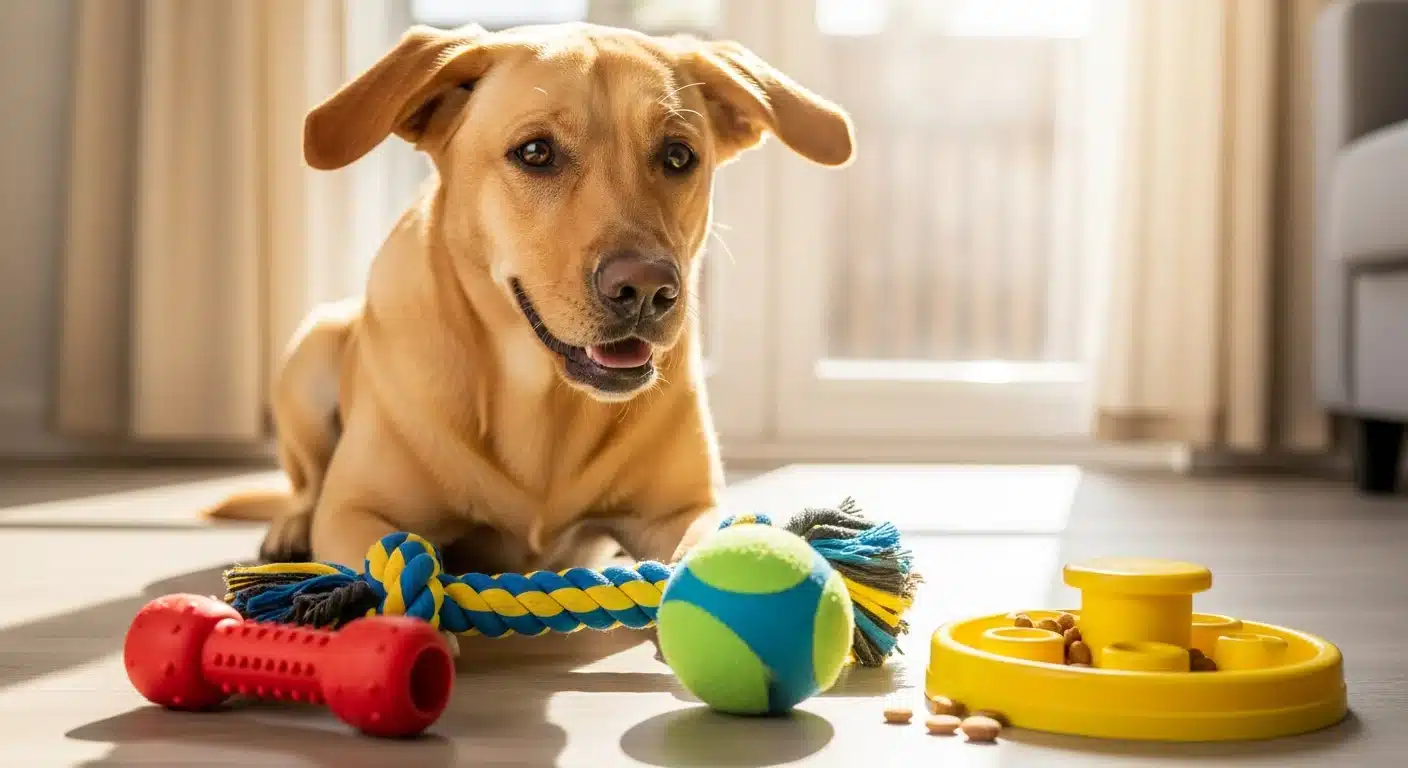
Do Dogs Need Toys? Yes. Here’s How Many, Which Kinds, and Why It Matters
The short answer is yes, here’s how many toys dogs actually need, which kinds by age and breed, and how to choose safe ones.
Dogs are not decorative. They evolved alongside humans as working animals, herding, hunting, guarding, and their brains and bodies are wired for sustained mental and physical effort. In most modern homes, that effort never comes. Toys are how we fill that gap. This guide breaks down why dogs need toys (the science), how many is actually right, what changes by age and breed, which toy types serve which purposes, and how to pick safe ones. No fluff, no fabricated product claims, just the stuff that actually matters.
Yes, Dogs Need Toys, and Here’s the Evidence
The short version: dogs that have appropriate toys are calmer, less destructive, less anxious, and better socialised than dogs that don’t. The long version involves neuroscience, evolutionary biology, and a great deal of carpet-chewing.
Dogs have a strong foraging drive built in from their wild ancestors. In the wild, acquiring food required effort, sniffing, digging, problem-solving, running. Domestication removed the task, but not the need for it. A dog left idle in a home is a dog whose brain is waiting for a problem that never arrives. Toys provide that problem in a controlled, safe form.
The benefits split into four categories:
- Mental stimulation. Puzzle feeders, stuffable chew toys, and treat-dispensing balls engage the problem-solving circuits that would otherwise get wired into destructive habits. A dog that works for its food mentally is noticeably calmer within days.
- Physical exercise. Tug toys, fetch toys, and flirt poles provide aerobic output without requiring a two-hour walk. For high-energy breeds, a 15-minute tug session burns energy equivalent to a 30-minute on-lead walk.
- Behavioural outlet. Chewing is not a bad habit, it’s a biological need. Dogs chew to relieve jaw tension, reduce anxiety, and explore texture. Without an appropriate outlet, any household object becomes the toy. Furniture, shoes, and skirting boards are all casualties of a dog with nothing to chew.
- Emotional comfort. Soft plush toys, especially for puppies and anxious dogs, provide a self-soothing outlet, similar to how a child holds a stuffed animal. Dogs under stress often return to a comfort toy to self-regulate.
What Happens If a Dog Doesn’t Have Toys
This is the question most owners only ask after something breaks. The signs are predictable and consistent across breeds:
- Destructive chewing. Baseboards, furniture legs, cushions, shoes. Any object that provides texture and resistance becomes a target when a dog has no sanctioned alternatives.
- Attention-seeking and barking. Boredom manifests as noise. A dog that barks constantly at nothing, paces, or tail-chases is often understimulated, not anxious by nature.
- Hyperactivity indoors. Unspent physical and mental energy doesn’t disappear, it comes out at the worst possible times. Sudden bursts of zoomies in small spaces, jumping on guests, unable to settle in the evening: all common in toy-deprived dogs.
- Separation anxiety escalation. Dogs without enrichment activities can’t self-soothe when left alone. They don’t have a mechanism for occupying themselves, so the absence of their owner becomes the dominant experience.
- Weight gain. A mentally under-stimulated dog that’s also physically inactive gains weight faster. Enrichment toys double as a calorie regulation tool when you use them to feed meals.
None of this is a character flaw in the dog, it’s a predictable response to an environment that doesn’t meet their needs. The fix is straightforward: the right toys, in the right number, for the right dog.
How Many Toys Does a Dog Actually Need?
The instinct is to buy more. The evidence says the answer is nuanced. Having too few toys is obviously a problem, but so is having fifty toys permanently available. When every toy is always accessible, none of them are special. Dogs habituate fast.
The framework that works for most dogs:
- 3 to 5 toys out at any one time. This is a manageable selection that gives your dog choice without overwhelming them or killing the novelty of any single toy.
- 8 to 12 toys total in rotation. More than this and you’re spending on toys that never get used. Fewer than this and rotation gets repetitive quickly.
- Rotate every 2 to 4 days. Swap out the available set and bring back ‘old’ toys as if they’re new. Dogs reliably re-engage with a toy that’s been absent for a week.
| Toy type | How many to own | How many out at once |
|---|---|---|
| Chew toy (rubber/nylon) | 2 to 3 | 1 |
| Puzzle / enrichment toy | 2 to 3 | 1 to 2 |
| Tug toy | 1 to 2 | 1 (interactive, put away after play) |
| Fetch toy (ball/disc) | 2 to 3 | 1 |
| Comfort / plush toy | 1 to 2 | 1 (leave out full-time) |
| Squeaky toy | 1 to 2 | Optional, supervised only |
Toy Needs by Age: Puppy, Adult, and Senior
A dog’s toy needs shift significantly across their life. What engages a 12-week-old puppy may bore a 3-year-old adult, and what an adult loves may cause pain to a 10-year-old senior.
| Life stage | Key needs | Best toy types | What to avoid |
|---|---|---|---|
| Puppy (0 to 1 yr) | Teething relief, exploration, bite inhibition development, socialisation | Soft rubber teethers, rope toys (supervised), plush comfort toys, puppy-specific stuffables | Hard rubber or nylon toys (jaw not yet strong enough to use safely, adult toys can damage developing teeth); toys small enough to swallow |
| Adult (1 to 7 yr) | High physical output, mental challenge, sustained chewing, interactive play | Durable chew toys, puzzle feeders, tug toys, fetch toys, stuffable enrichment toys | Toys that are undersized for their jaw strength (choking risk); flimsy plush toys given unsupervised to power chewers |
| Senior (7+ yr) | Joint-friendly activity, gentle mental engagement, comfort, pain-free play | Soft plush, gentle puzzle feeders (easy level), comfort toys, slow-rolling balls; reduce tug intensity | High-impact tug that strains arthritic joints; hard nylon bones that stress sensitive teeth; fast fetch that overloads aging hips |
Two notes on puppies: first, teething peaks at 4 to 6 months, when adult teeth are pushing through. This is when chewing intensity spikes dramatically, have more chew options available during this window, not fewer. Second, avoid giving puppies adult toys ‘to grow into.’ A toy that’s wrong for the jaw development stage can cause real dental harm.
Senior dogs often get fewer toys as owners assume they’re past it. They’re not, mental stimulation is even more important for cognitive health in aging dogs. Lower the intensity, not the enrichment.
Toy Needs by Breed and Energy Level
Breed groups were originally developed for different working functions, and those functions directly predict what a dog needs from its toys.
| Breed group / energy level | Working drive | Toy priority | Examples |
|---|---|---|---|
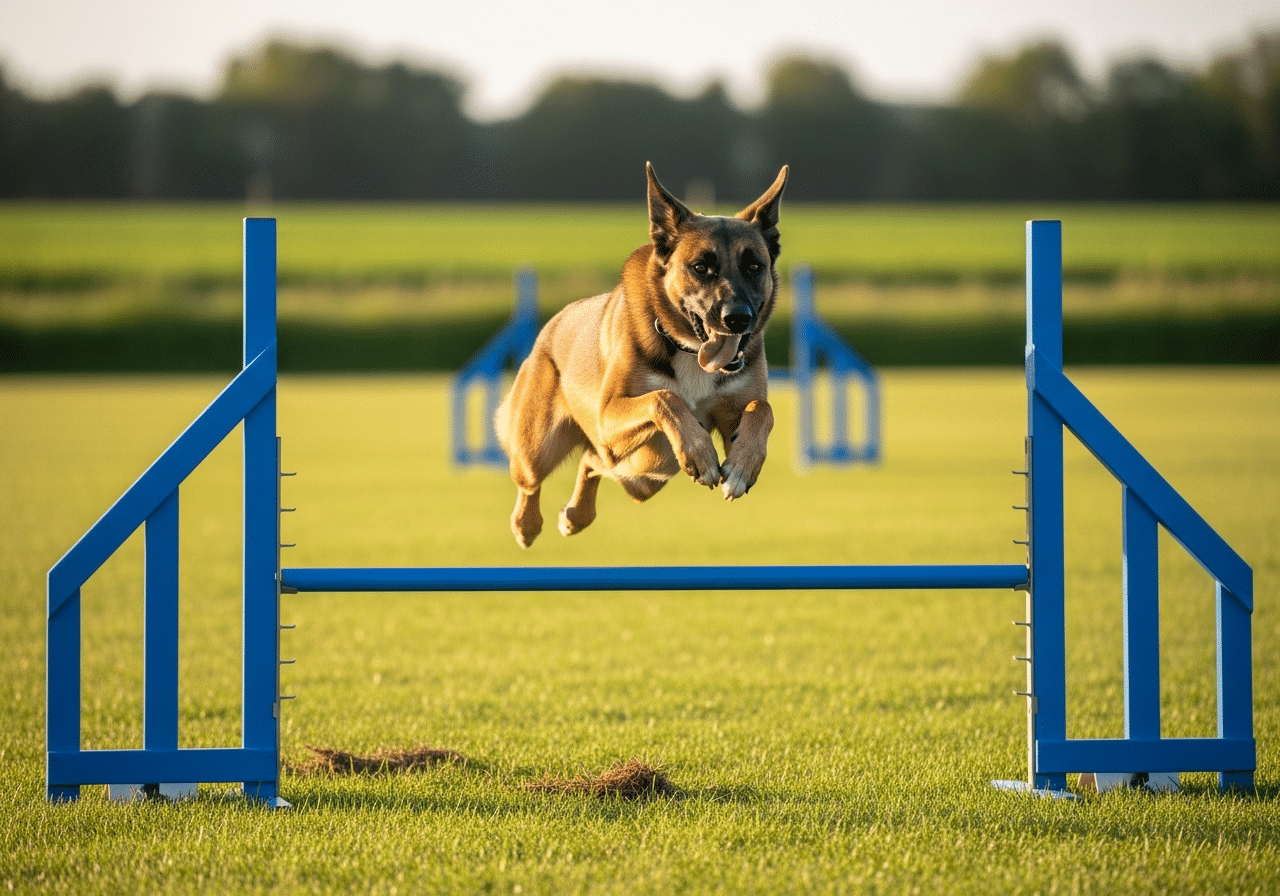
| High-energy working/herding | Intense, bred to work all day | Interactive tug, fetch, puzzle feeders, stuffable chews; needs frequent rotation and high-difficulty puzzles | German Shepherd, Belgian Malinois, Border Collie, Husky, Australian Shepherd |
| Terrier & sporting breeds | High, prey drive, fetch obsession | Fetch toys, flirt poles, durable chews, squeaky toys (supervised) | Jack Russell, Labrador, Golden Retriever, Springer Spaniel |
| Power chewer / guardian breeds | Moderate to high, jaw strength focus | Ultra-durable rubber chews, nylon bones, stuffable toys, must be size-matched and rated for heavy chewers. Standard chew toys fail within minutes. | Rottweiler, Pit Bull, Mastiff, Cane Corso, Boxer |
| Scent / hound breeds | Moderate, nose-drive dominant | Snuffle mats, puzzle feeders, treat-dispensing toys; less interested in tug or fetch, more engaged by smell-based search games | Beagle, Basset Hound, Bloodhound, Dachshund |
| Companion / toy breeds | Lower, but don’t underestimate them | Smaller versions of all the above; don’t skip puzzle toys, toy breeds are often smarter than their size suggests and go stir-crazy without challenge | Shih Tzu, Chihuahua, Pomeranian, French Bulldog |
| Low-energy / senior-type breeds | Low, comfort and gentle stimulation | Plush comfort toys, easy puzzle feeders, gentle chew options; shorter active play sessions | Basset Hound, Bulldog, Chow Chow, Saint Bernard |
Which Types of Dog Toys Does My Dog Actually Need?
Not all toy categories serve the same function. A well-rounded toy collection covers at least three of these five categories, the right mix depends on your dog’s breed, age, and solo time.
1. Chew toys (rubber or nylon)
The single most important category for most dogs. Chewing relieves anxiety, maintains dental health by scraping plaque, and provides a sustained physical outlet that tires dogs in a different way than running. Power chewers. Pit Bulls, Rottweilers, German Shepherds, Mastiffs, need ultra-durable rubber rated for heavy chewers; standard chew toys are destroyed in under five minutes and become a choking risk.
The black KONG Extreme (Large or XL) is the canonical choice for power chewers: stuff it with kibble or peanut butter and freeze it to turn chewing into a 20 to 40 minute enrichment puzzle; ~$15, cheap enough to own two and rotate one from the freezer. Check price on Amazon →
2. Puzzle / enrichment toys
Treat-dispensing balls, snuffle mats, sliding puzzle boards, and wobble feeders engage the problem-solving circuits that would otherwise go to waste. These toys are especially important for dogs left alone for more than four hours, they provide a ‘task’ during the period when boredom peaks.
3. Tug toys
Rope toys, rubber rings, and fleece braids used in interactive tug games provide aerobic output and bond-building with the owner. Importantly: tug does not make dogs aggressive when played with clear rules (you initiate, you end). Store tug toys away after sessions so they retain their interactive value, leaving them out full-time kills the association with owner play.
4. Fetch toys
Balls, discs, and bumpers for retrieving dogs. Critical for sporting and herding breeds that need aerobic output at pace. Choose size-appropriate balls, a tennis ball is a choking hazard for a large breed with strong enough jaws to compress it.
5. Comfort / plush toys
Soft stuffed toys that provide tactile comfort and self-soothing. More important than many owners realise for anxious dogs and puppies. A comfort toy left with a dog during crate time or alone time reduces stress markers measurably. Supervise with heavy chewers, plush stuffing and squeakers become ingestion hazards if the toy is destroyed.
How to Choose Safe Dog Toys: the 5-point check
The toy industry is largely unregulated. ‘Durable’ on a label means nothing, it’s a marketing word with no standard. Here’s how to actually evaluate a toy before you buy:
- Size match. The toy’s smallest dimension should not fit past the back molars and into the throat. When in doubt: size up. A too-small toy becomes lodged across a dog’s lower jaw, a common and terrifying emergency that requires sedation to resolve.
- Durability match to chew style. Gentle chewers can safely use soft rubber, rope, and plush. Power chewers need vulcanised rubber (KONG Extreme grade), hard nylon, or natural options like bully sticks. Never give a power chewer a toy rated for a gentle chewer, it won’t survive long enough to be enrichment, and the fragments become hazards.
- No detachable small parts. Eyes, bells, buttons, and ribbons on plush toys come off under sustained attention. Any small part that detaches = a swallowing risk. Remove or avoid toys where the detachable parts aren’t visible from the outside.
- Material safety. Avoid latex if your dog has sensitivities. Avoid toys with strong chemical smells, cheap dyed materials can contain heavy metals. Stick to brands with published safety testing. Natural rubber, food-grade nylon, and cotton rope are the safest base materials.
- Regular inspection. Run your hand over the toy weekly. Any crack, missing chunk, loose fabric, or squeaker exposure = retire the toy immediately. A swallowed rubber chunk or squeaker can cause a life-threatening intestinal blockage.
Toy Rotation: the simple system that keeps dogs engaged
Dogs habituate to their environment quickly. A toy that excited them on Tuesday is furniture by Friday. Toy rotation solves this without spending more money, you’re resetting novelty with toys you already own.
A simple weekly rotation (8 to 12 toys total):
- Divide your toys into two or three groups of 3 to 5.
- Make Group A available for 2 to 4 days. Store Groups B and C.
- Swap to Group B. Put Group A away completely, including out of the dog’s line of sight.
- After 4 to 7 days, Group A comes back as ‘new.’ Dogs reliably re-engage with toys that have been absent for a week.
The one exception: comfort toys. If your dog has a ‘security blanket’ plush toy, leave it out permanently, rotating it causes distress, not novelty. Only apply rotation logic to interactive and chew toys.
Interactive toys (tug, puzzle) should be put away after each session regardless of rotation schedule. Their value is tied to the activity around them, leaving them out full-time converts them into background furniture.
Dog toy questions, answered
Do dogs really need toys, or is it just marketing?
Dogs genuinely need toys, not as a luxury, but as a functional requirement for mental and physical wellbeing. Without appropriate toys, dogs default to destructive chewing, excessive barking, and anxiety-driven behaviours that are consistently linked to under-stimulation. The science on canine enrichment is clear: dogs that have outlets for their natural foraging, chewing, and play drives are calmer, healthier, and better socialised than those that don’t.
How many toys should a dog have?
Most dogs do best with 3 to 5 toys available at any one time, with a total collection of 8 to 12 toys rotated every 2 to 4 days. More toys aren’t better if they’re all available simultaneously, dogs habituate to a permanently accessible toy in days. Rotation restores novelty without buying anything new. One comfort toy (if your dog has one) can stay out permanently, only apply rotation to interactive and chew toys.
What toys do puppies need that adult dogs don’t?
Puppies need softer materials that won’t damage developing teeth, puppy-specific rubber toys and rope toys (supervised) are appropriate; hard nylon and adult-grade rubber chews are not. They also need more comfort toys for the security they previously got from their littermates. Teething peaks at 4 to 6 months, so have more chew options available during this window. Adult toys marked ‘for large breeds’ or ‘power chewers’ are not appropriate until the jaw is fully developed, typically from 12 to 18 months depending on breed size.
Are puzzle toys good for dogs?
Yes, puzzle toys are among the most effective enrichment tools available. They engage the problem-solving and foraging drives that dogs would otherwise use destructively. They’re especially valuable for dogs left alone for more than 3 to 4 hours, as they provide a sustained ‘task’ during the period when boredom peaks. Start with easy levels and graduate difficulty as your dog masters each stage, a puzzle that’s too hard gives up immediately, and one that’s too easy stops being stimulating within a session.
How do I know if a dog toy is safe?
Five checks: (1) size, the toy’s smallest dimension cannot fit past the back molars; (2) durability rating matches your dog’s chew style, power chewers need vulcanised rubber or hard nylon, not soft rubber or plush; (3) no detachable small parts, eyes, bells, and buttons on plush toys become swallowing hazards; (4) material safety, avoid strong-smelling dyes, stick to natural rubber, food-grade nylon, or cotton rope; (5) inspect weekly and retire any toy with cracks, missing chunks, or exposed squeakers immediately.
Can a dog have too many toys?
Yes, having all toys permanently available causes habituation (the dog stops engaging with them) and can actually make boredom worse. When every toy is always there, none of them are special. The solution isn’t fewer toys, it’s rotation. 8 to 12 toys total, rotating groups of 3 to 5 every 2 to 4 days, produces consistently better engagement than 50 toys piled in a basket that never gets touched.
Do senior dogs still need toys?
Yes, senior dogs need mental stimulation even more as they age, as cognitive enrichment is one of the factors associated with slower cognitive decline. The key is adapting the toys: lower physical intensity (no high-impact tug that strains arthritic joints), softer textures (easier on sensitive teeth and gums), and gentler puzzle difficulty. Don’t remove enrichment from a senior dog, reduce the physical demand while keeping the mental engagement.