 Dog Gear, Sized Right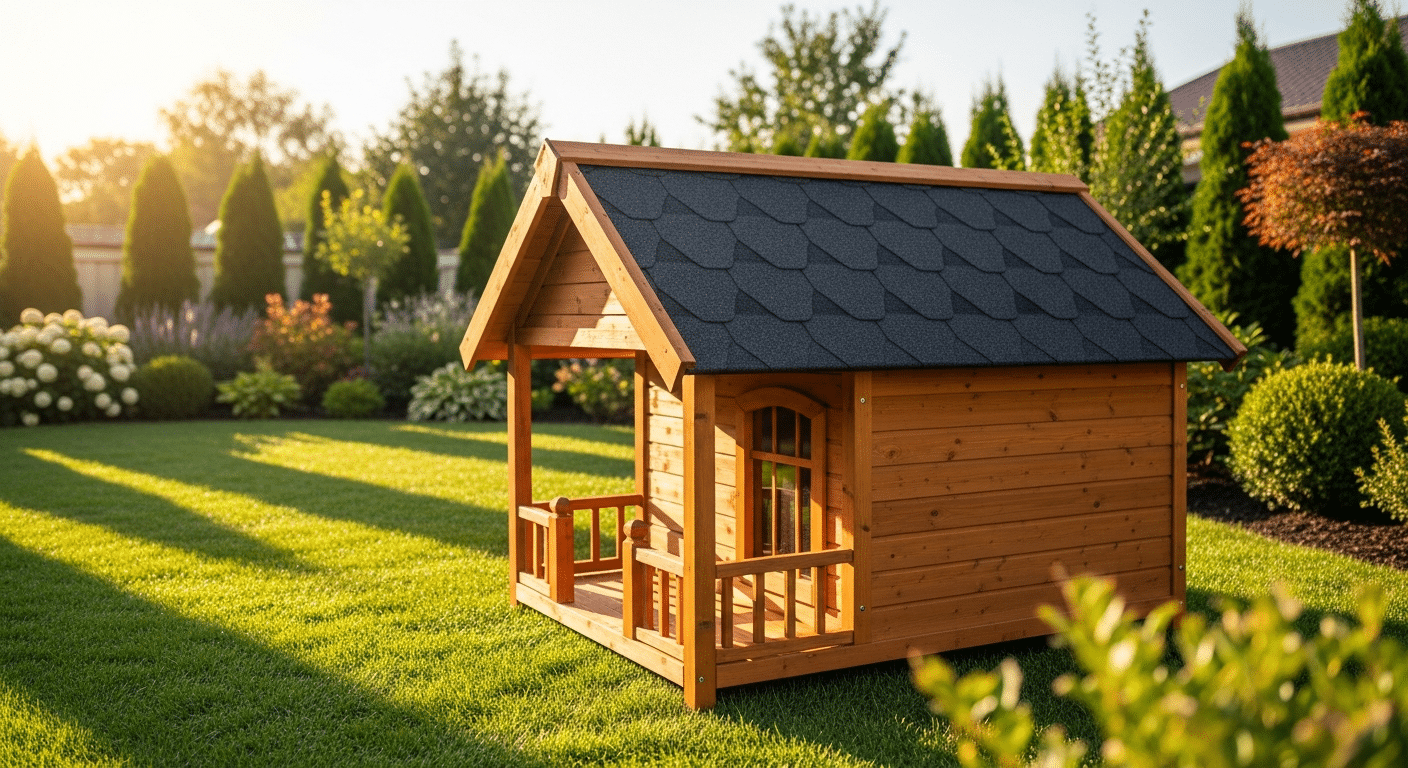
The Best Insulated Dog Houses
Insulation is the one feature that keeps an outdoor dog warm in winter and cooler in summer. We compared insulated wood, igloo and resin houses on real build, size and price, here are the picks that actually hold temperature.
A good insulated dog house is the cheapest climate control you can buy: no power, no running cost, just walls that trap your dog’s body heat in the cold and block the sun’s radiant heat in the summer.
The catch is that most listings slap ‘insulated’ on a thin single-wall box that does almost nothing. What actually matters is a solid or double-wall build, a raised floor off the cold ground, and a doorway you can seal against drafts, sized snugly, because a house that’s too big can’t hold heat around the dog.
Below we compare five houses that genuinely earn the label, from a budget elevated resin shelter to a premium pine build, plus exactly how to match insulation, size and door style to your climate.
Insulated dog houses compared
Five houses that genuinely hold temperature, by type, build and the climate each suits best.
| Product | Best for | Type | Best climate | Our rating | |
|---|---|---|---|---|---|
| Wood Trixie Natura Classic | Most owners | Solid pine, peaked roof | Cold + mild | ★★★★½ 4.6 | Check price |
| Large GUTINNEEN Insulated | Large & tough dogs | Insulated wood + steel | Cold | ★★★★ 4.4 | Check price |
| S to M TRIXIE natura | Small to medium | Solid pine | Cold + mild | ★★★★ 4.3 | Check price |
| Igloo IRIS USA Igloo | Small to medium | Structural-foam dome | All-weather | ★★★★ 4.2 | Check price |
| Budget Insulated Elevated | Lowest price | Double-wall resin | Mild | ★★★½ 4.0 | Check price |
Our best insulated dog houses, reviewed
Wood, igloo and resin, ranked for how well they actually trap heat and block weather.
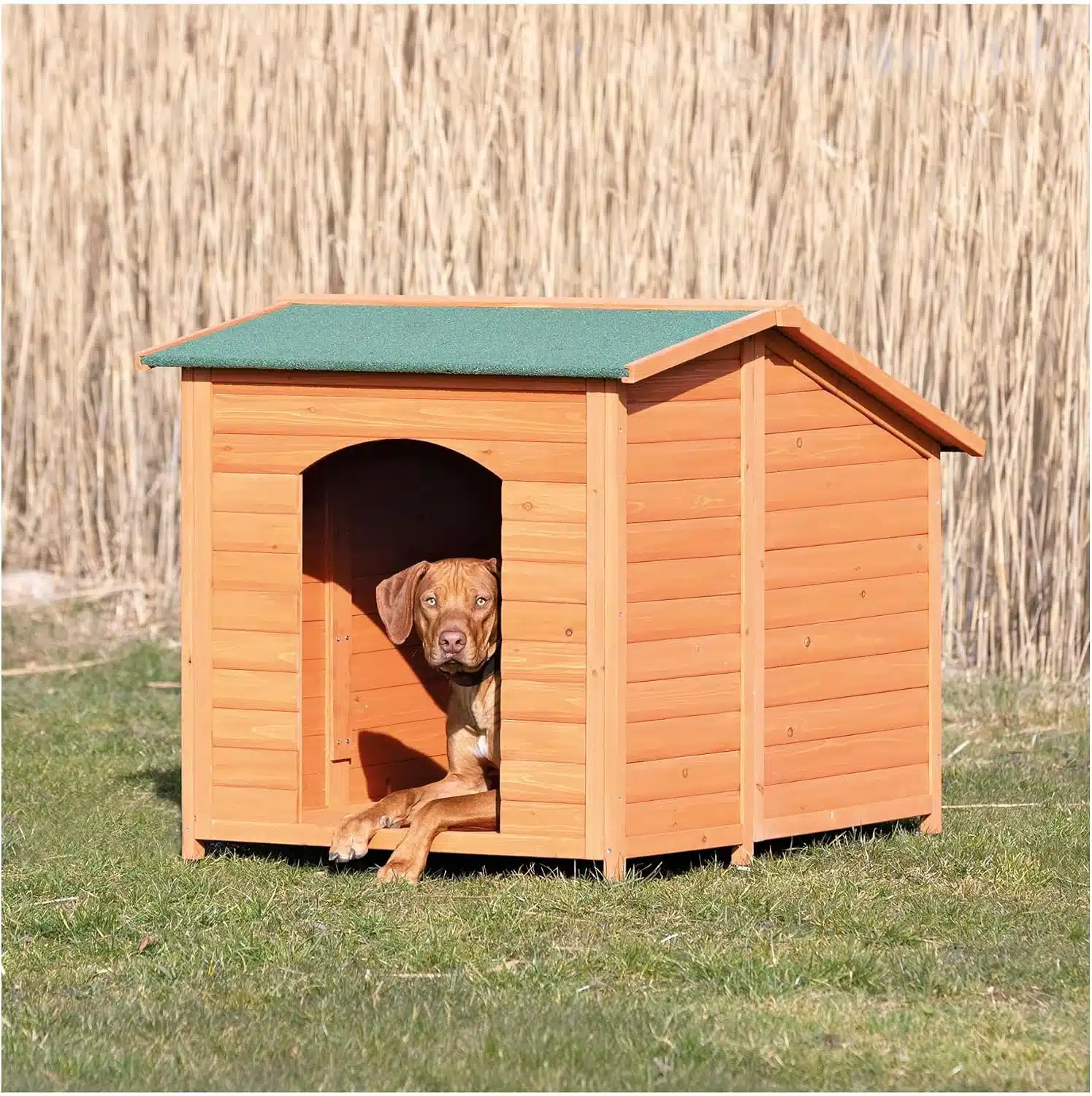
Trixie Natura Classic Dog House
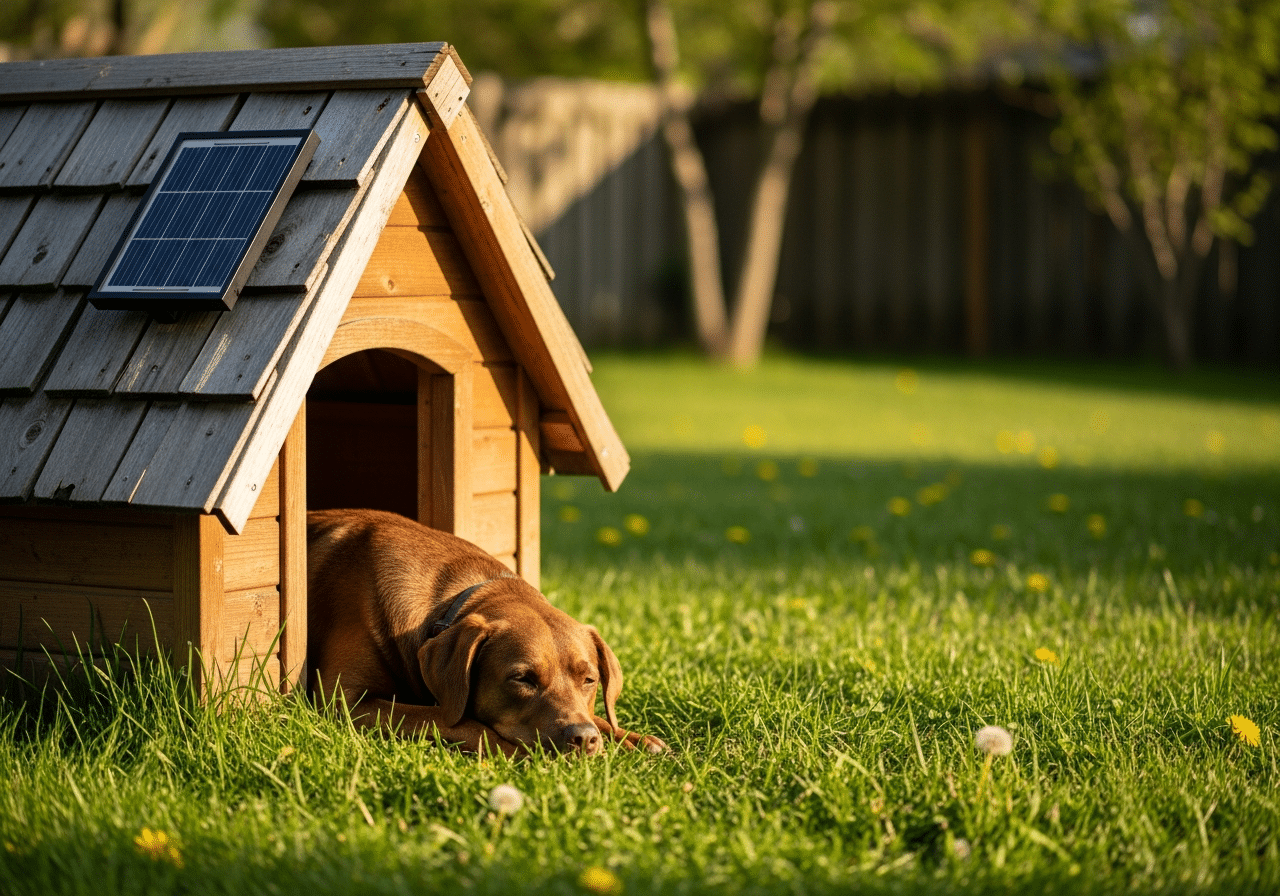
The pick we’d buy first. Trixie is an established brand and it shows: solid pine walls, an overhanging peaked roof with asphalt shingles that sheds rain and snow, adjustable feet to level it on any ground, and a hinged roof for cleaning. The weather protection and build quality are a clear step above generic houses.
What we like
- Reputable brand and noticeably better build
- Overhanging peaked roof sheds rain & snow
- Adjustable feet level it on uneven ground
- Hinged roof opens fully for cleaning
The catches
- Priciest pick here
- Solid-wood insulation, add a door flap/pad for deep cold
- Assembly takes time

GUTINNEEN Insulated House
Built for big, hard-on-their-gear dogs: insulated wood panels wrapped in a powder-coated steel frame with chew-guarded edges, sitting on raised metal legs that keep it off cold, wet ground. Roomy enough for a Golden or Lab and far tougher than a plain wooden box.
What we like
- Insulated walls + steel frame survive rough dogs
- Raised legs block ground cold & damp
- Large interior for big breeds
- Flat hinged roof opens for cleaning
The catches
- Heavy to reposition once built
- Flat roof prefers a covered spot in heavy snow
- Longer assembly
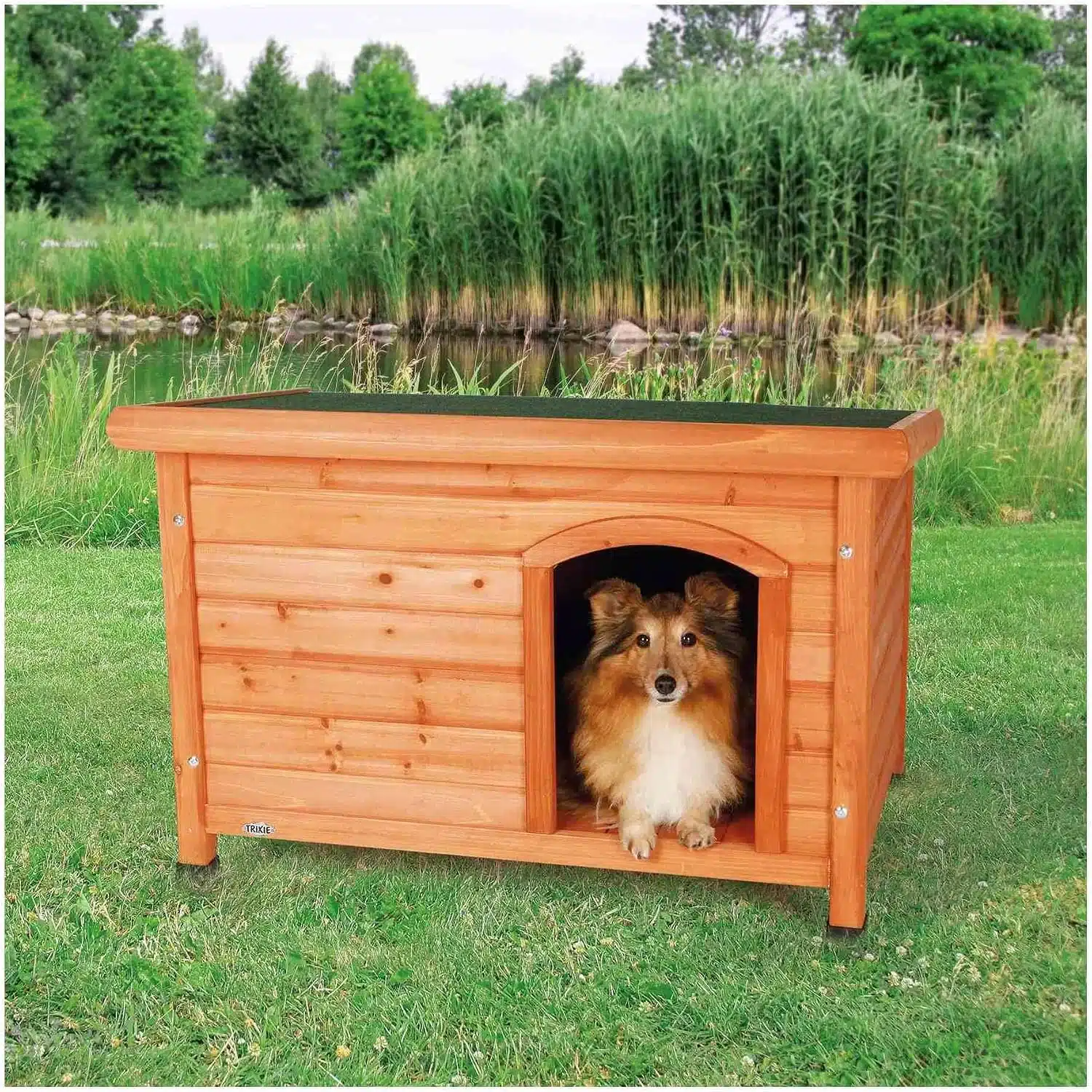
TRIXIE natura Flat-Roof House
The right call for small and medium dogs, where a snugly-sized house traps body heat far better than an oversized one. Trixie’s classic pine build with a slightly sloped, hinged roof and adjustable feet, simple, trusted, and well-priced.
What we like
- Snug size holds body heat for smaller dogs
- Trusted Trixie build at a low price
- Adjustable feet for uneven ground
- Hinged roof for easy cleaning
The catches
- Too small for large breeds
- Solid wood (no foam core), add a flap for winter
- Basic styling
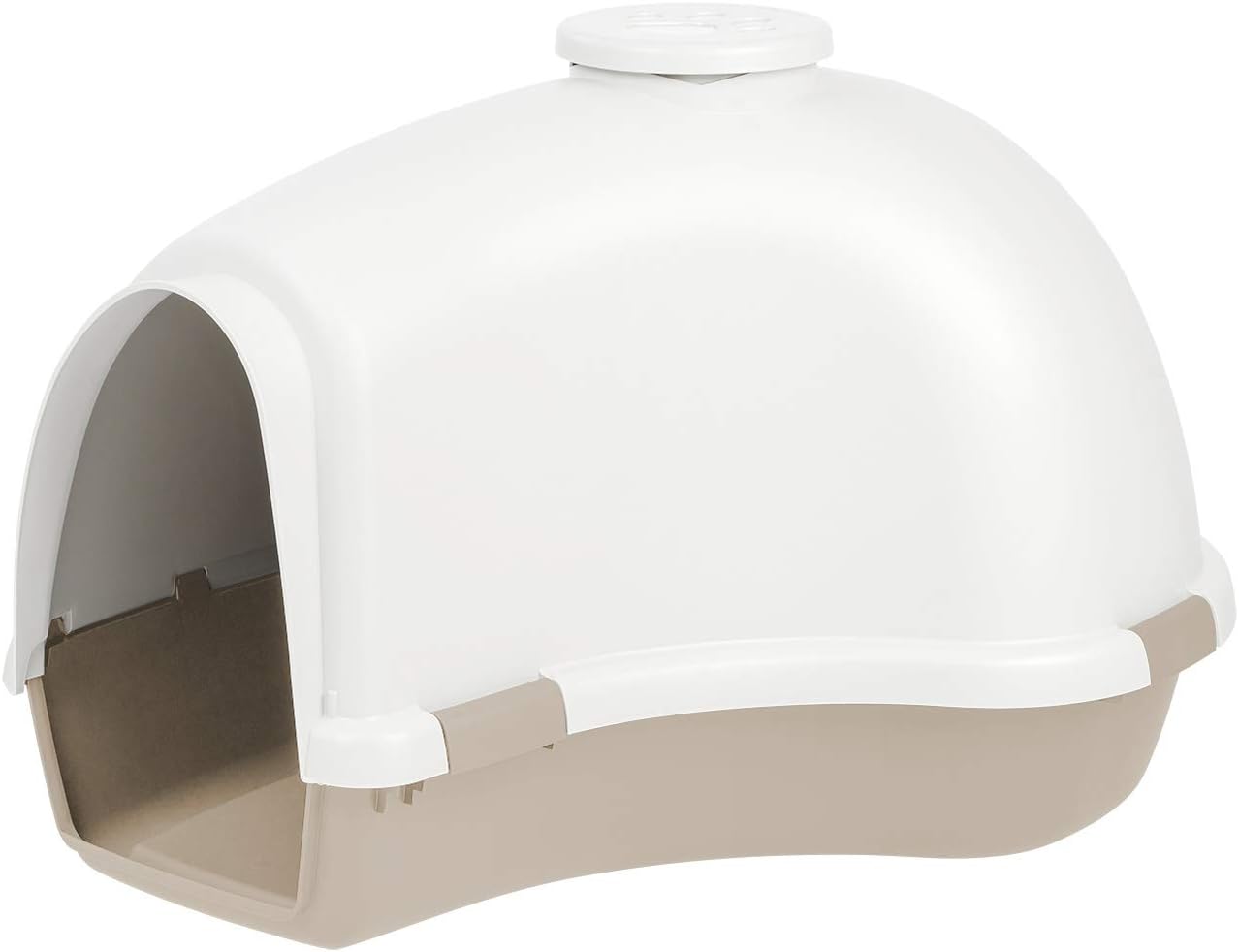
IRIS USA Igloo Dog House
The classic dome works because of its shape, not just its walls: structural-foam plastic traps body heat while the offset doorway and curved roof block wind and shed snow. A rooftop vent lets you crack it open in summer, so it genuinely earns its all-weather name.
What we like
- Dome shape traps body heat & blocks wind
- Structural insulation, not a single plastic skin
- Rooftop vent helps in summer heat
- Easiest pick to hose out
The catches
- Plastic doesn’t feel as warm as wood
- Small to medium only
- Door flap sold separately
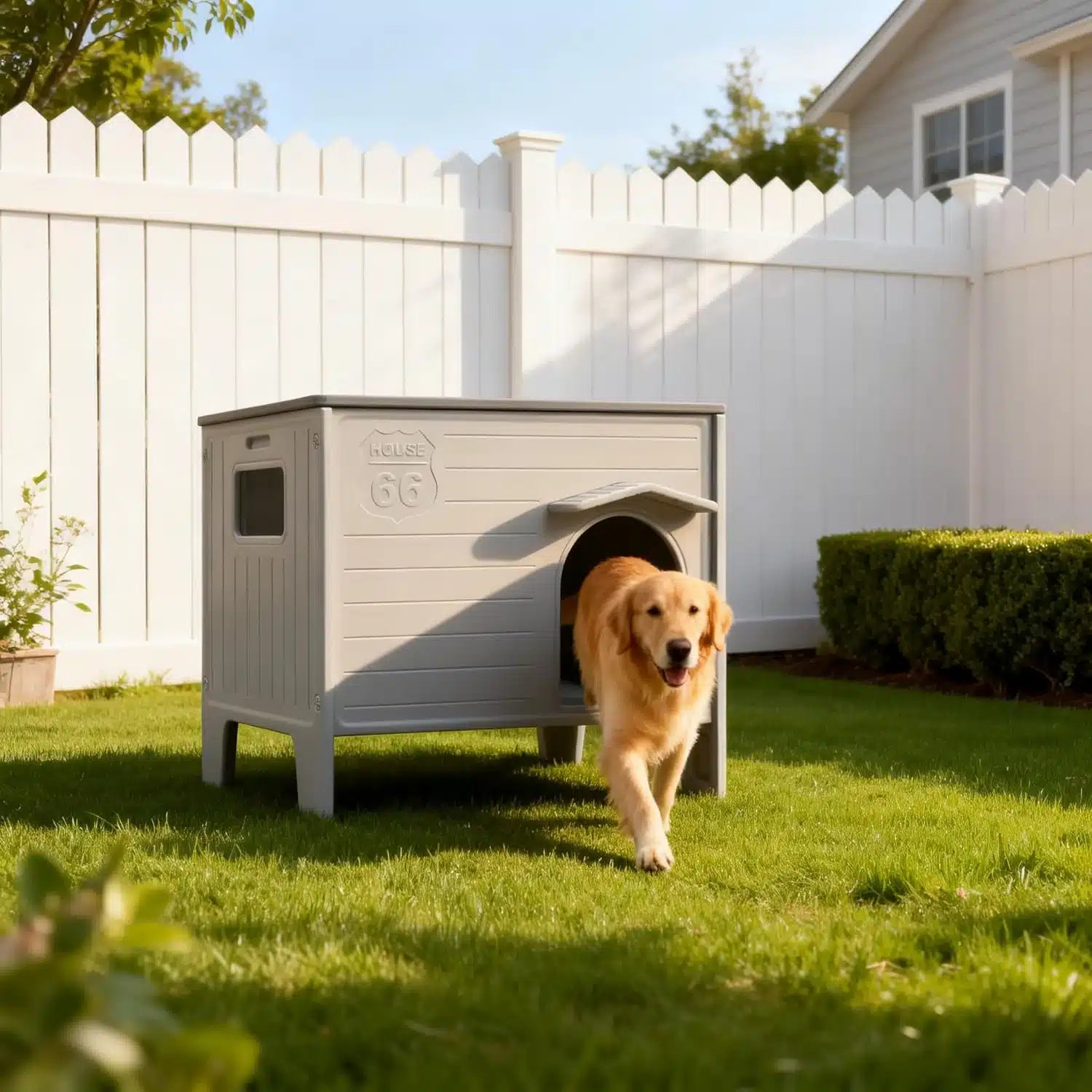
Insulated Elevated Resin House
The cheapest way into a genuinely weather-ready house. A double-wall resin shell on raised legs keeps your dog off cold, wet ground, with a side window for airflow and a wipe-clean interior. Not as warm as insulated wood, but a solid budget shelter that won’t rot.
What we like
- Lowest price here
- Raised legs block ground damp
- Resin won’t rot or soak up water
- Hoses out in seconds
The catches
- Resin isn’t as warm as insulated wood
- Small to medium only
- Add bedding/flap for cold snaps
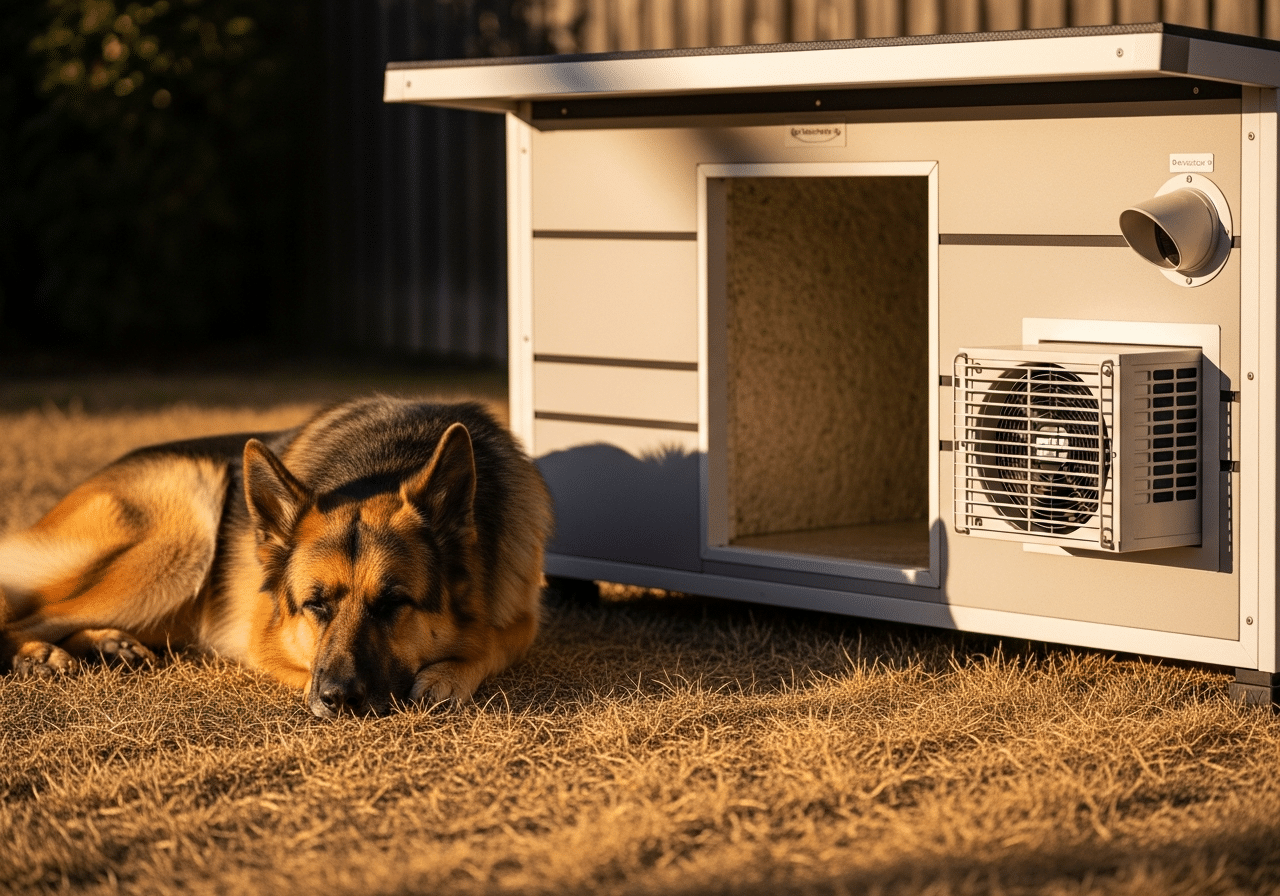
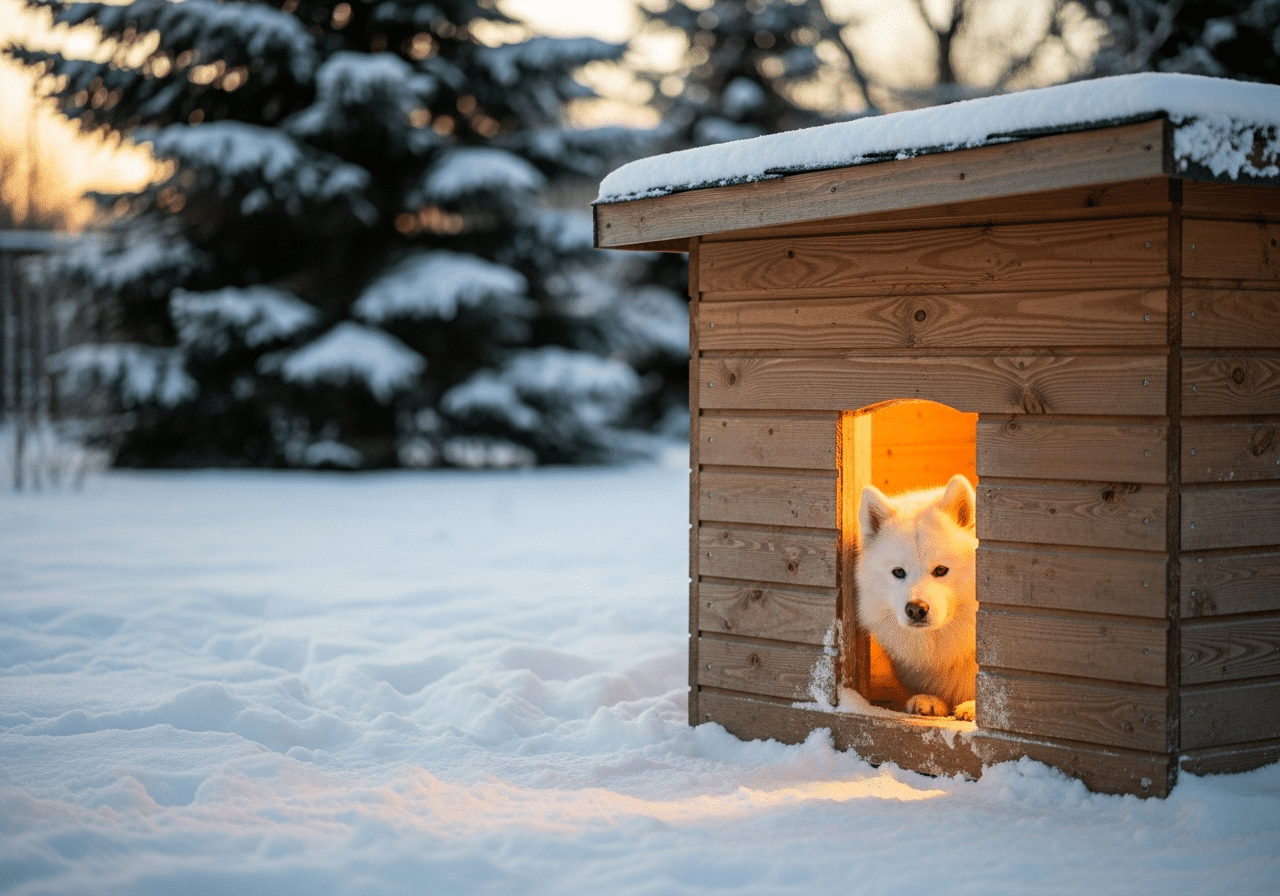
Fighting mostly heat, or mostly cold?
Insulation helps both ways, but if one season dominates, start with the matching guide.
How to choose an insulated dog house
The five things that separate a house that holds temperature from a thin box.
01 What “insulated” really means
Skip thin single-wall plastic. Real insulation is a solid-wood, double-wall or foam-core build, the more continuous material between your dog and the outside air, the better it traps body heat in winter and blocks the sun’s radiant heat in summer. That’s why a properly built house works in both seasons.
02 Match it to your climate
Cold-dominant: solid or insulated wood, a small doorway and a door flap. Hot-dominant: a vented igloo or resin shell in deep shade with airflow. Both: a sturdy house you can seal in winter and vent (or shade) in summer.
03 Size it tight
This is the mistake most people make. A house should be just big enough for your dog to stand, turn around and lie down, no bigger. An oversized house has too much air for body heat to warm, so your dog stays cold no matter how thick the walls are.
04 Floor, door & elevation
A raised floor keeps the structure off cold, damp ground, the single biggest heat-loss path. An offset doorway with a flap blocks wind from blowing straight onto your dog. Both matter as much as wall thickness.
05 Insulation isn’t a heater (or an AC)
In mild cold, a snug insulated house is enough on its own. In sub-freezing weather, add a thermostatically-controlled heated pad. In extreme heat, add shade and airflow. Never use a household space heater in a dog house, only pet-rated, thermostatic units.
How we vet every insulated pick
No product is listed until it clears all three. If we wouldn’t put it on our own dogs, it isn’t here.
Model the real demand
We study what’s genuinely working for owners, match the depth of the best guides, then verify every claim independently.
Check the real build
Wattage, R-values, materials, cord safety and weight limits, confirmed against the maker, not the listicle.
Route to the best deal
410+ merchants compared. The buy button goes to the one that’s in stock and priced fairly, never the one that just pays us most.
Insulated dog house FAQs
Do insulated dog houses really work?
Yes, a genuinely built house (solid or double-wall, raised floor, sealed doorway) noticeably traps your dog’s body heat in winter and blocks radiant heat in summer. The caveat is that many cheap houses are labelled ‘insulated’ but are really thin single-wall plastic, which does very little.
Are insulated dog houses good for summer too?
They help. A solid, shaded house blocks the sun’s radiant heat from baking the interior, so it stays cooler than a thin plastic one. But because insulation traps air, in hot weather you also need airflow, a vent, deep shade, or a fan.
What makes a dog house well insulated?
Three things: solid or double-wall construction (foam core is best, thick solid wood is good), a raised floor so cold doesn’t conduct up from the ground, and a sealed, offset doorway (ideally with a flap) so wind can’t blow straight in. Wall thickness alone isn’t enough without the floor and door.
Is wood or plastic better for an insulated dog house?
Solid or insulated wood holds heat best and feels warmest, but costs more and needs occasional sealing. Resin or structural-foam plastic is lighter, cheaper, won’t rot and is easier to clean, and a foam dome blocks wind well, but it doesn’t retain heat quite as well as a thick wood build.
Do I still need a heater with an insulated dog house?
In mild winters, a well-built, snugly-sized house is often enough on its own. Once nights drop near or below freezing, pair it with a thermostatically-controlled heated pad, the insulation then holds that warmth in efficiently instead of fighting a constant heat leak.
What size insulated dog house should I get?
Snug, not spacious. Your dog should be able to stand, turn around and lie down comfortably, and not much more. Extra interior volume is air that body heat has to warm, so an oversized ‘insulated’ house can actually leave a dog colder than a smaller one.
Are igloo dog houses insulated?
The good ones are, quality igloos use structural-foam walls, not a single plastic skin, and the dome shape plus offset doorway block wind and shed snow. Pair an igloo with a door flap and a raised base and it performs well in cold and wind; use the rooftop vent in summer.
What’s the best dog house for cold weather or winter?
For genuinely cold or snowy climates, look for a solid or double-wall insulated house with a raised floor and a sealed, flap-covered doorway, the three things that define real insulation. The models buyers and reviewers most often name for winter are the ASL Solutions Dog Palace, Aivituvin insulated wooden cabins and the classic Petmate Indigo; any of our top insulated picks above will hold a dog’s body heat far better than thin single-wall plastic. In sub-freezing conditions, pair the house with a thermostatic heated pad or furnace.