 Dog Gear, Sized Right
The Best Dog House Heaters
A heater turns an insulated dog house into a warm winter shelter, safely, if you pick the right type. We compared furnaces, heated pads and heated beds on wattage, safety and price.
The safest way to keep an outdoor dog warm in winter is a pet-rated, thermostatically-controlled heater inside an insulated house, never a household space heater.
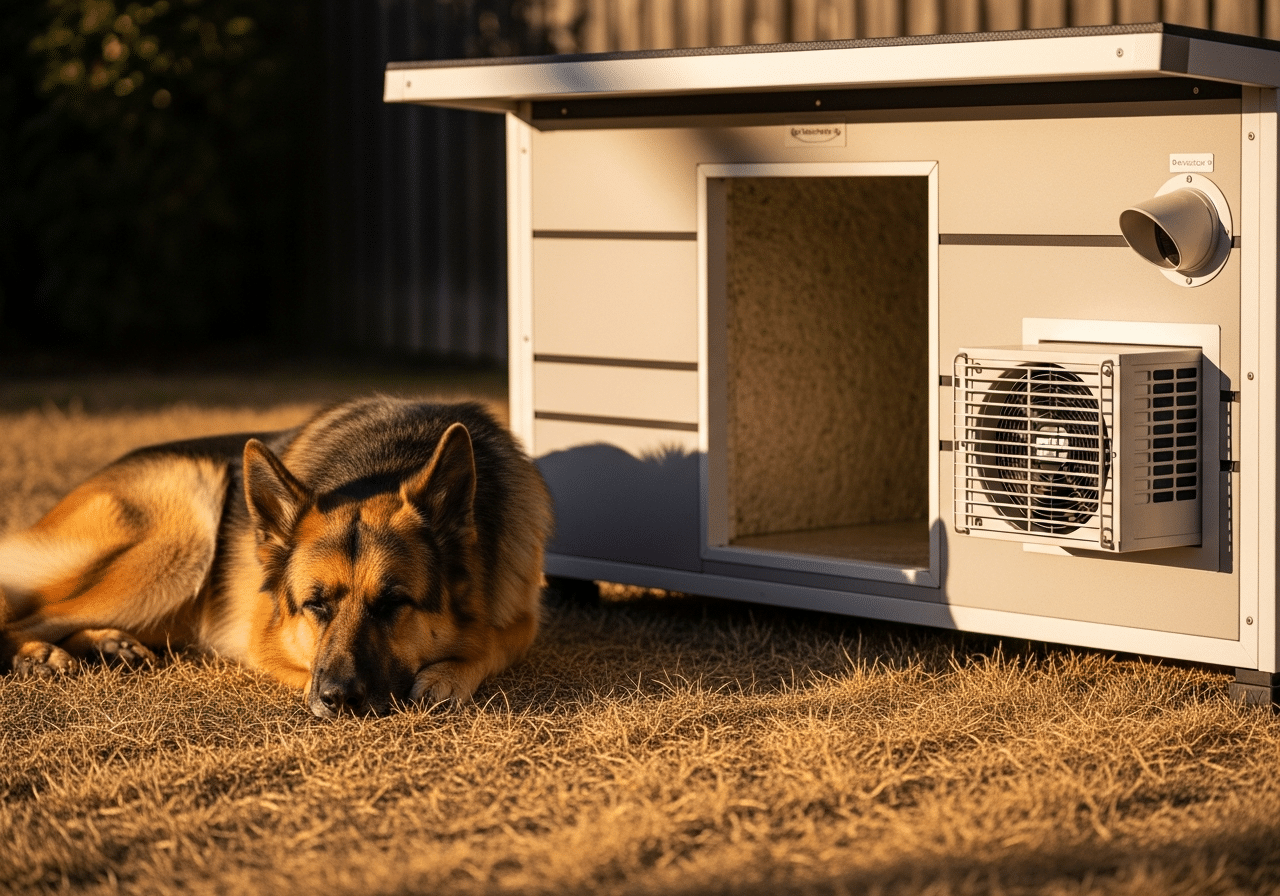
There are three honest approaches: a wall-mount furnace that heats the air, a heated pad or bed that warms the dog directly, or an all-in-one house with heating built in. Which is best depends on your dog, your climate and your house.
Whatever you choose, two rules are non-negotiable: the house must be insulated (a heater does little in a drafty box), and the heater must be pet-rated, thermostatic, with a chew-proof cord and overheat protection. Below are six picks that clear that bar, plus how to size and place one safely.
Dog house heaters compared
Furnaces, pads and beds, by how they heat, what they suit and price.
| Product | Best for | Type | Best in | Our rating | |
|---|---|---|---|---|---|
| Furnace Akoma Hound Heater | The benchmark | Forced-air furnace | Cold | ★★★★½ 4.7 | Check price |
| Furnace TURBRO 400W Heater | Best value | 400W wall-mount | Cold | ★★★★½ 4.5 | Check price |
| Pad K&H Lectro-Kennel | Warm the dog | Rigid heated pad | Sub-zero | ★★★★½ 4.6 | Check price |
| Bed K&H Lectro-Soft Bed | Soft & warm | Heated bed | Sub-zero | ★★★★½ 4.6 | Check price |
| Budget GOLOPET Heated Pad | Cheapest | Thermostatic pad | Cold | ★★★★ 4.2 | Check price |
| All-in-one Heated Elevated House | No retrofit | House + heat pad | Cold | ★★★★ 4.2 | Check price |
Our best dog house heaters, reviewed
Heat the air, warm the dog, or buy a house with heating built in.
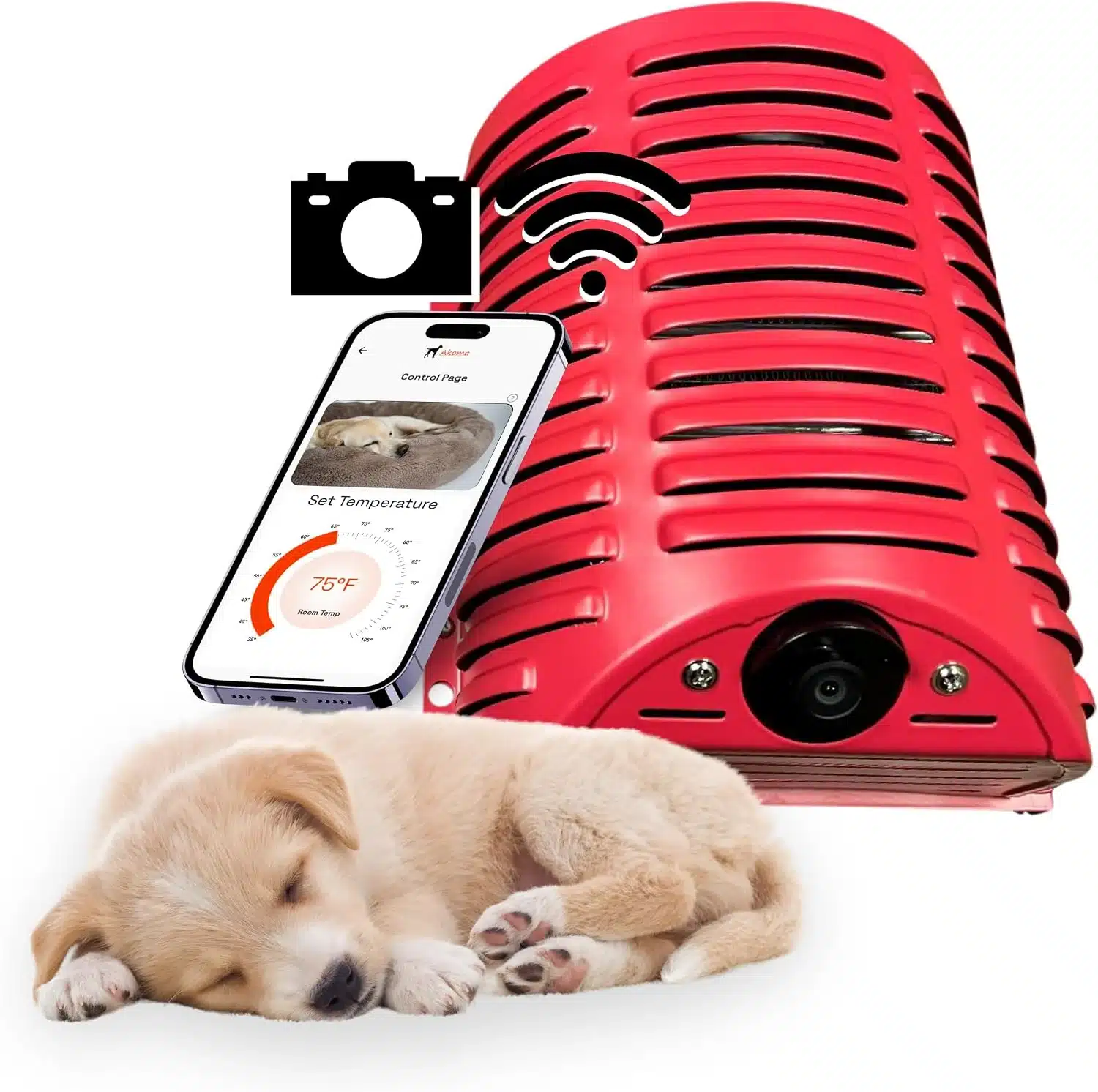
Akoma Hound Heater
The industry standard, and what most experts name first: Akoma’s Hound Heater is a forced-air dog house furnace with an internal heat shield that keeps the front safe to the touch, an app/thermostat you set to a target temperature, and a chew-resistant steel-wrapped cord. Heats a well-insulated house up to ~100 cubic feet.
What we like
- The category benchmark, built for the job
- Set-and-forget app/thermostat control
- Heat shield keeps the housing safe to touch
- Chew-resistant steel-wrapped cord
The catches
- Priciest pick here
- Only effective in an insulated house
- Needs mains power + install
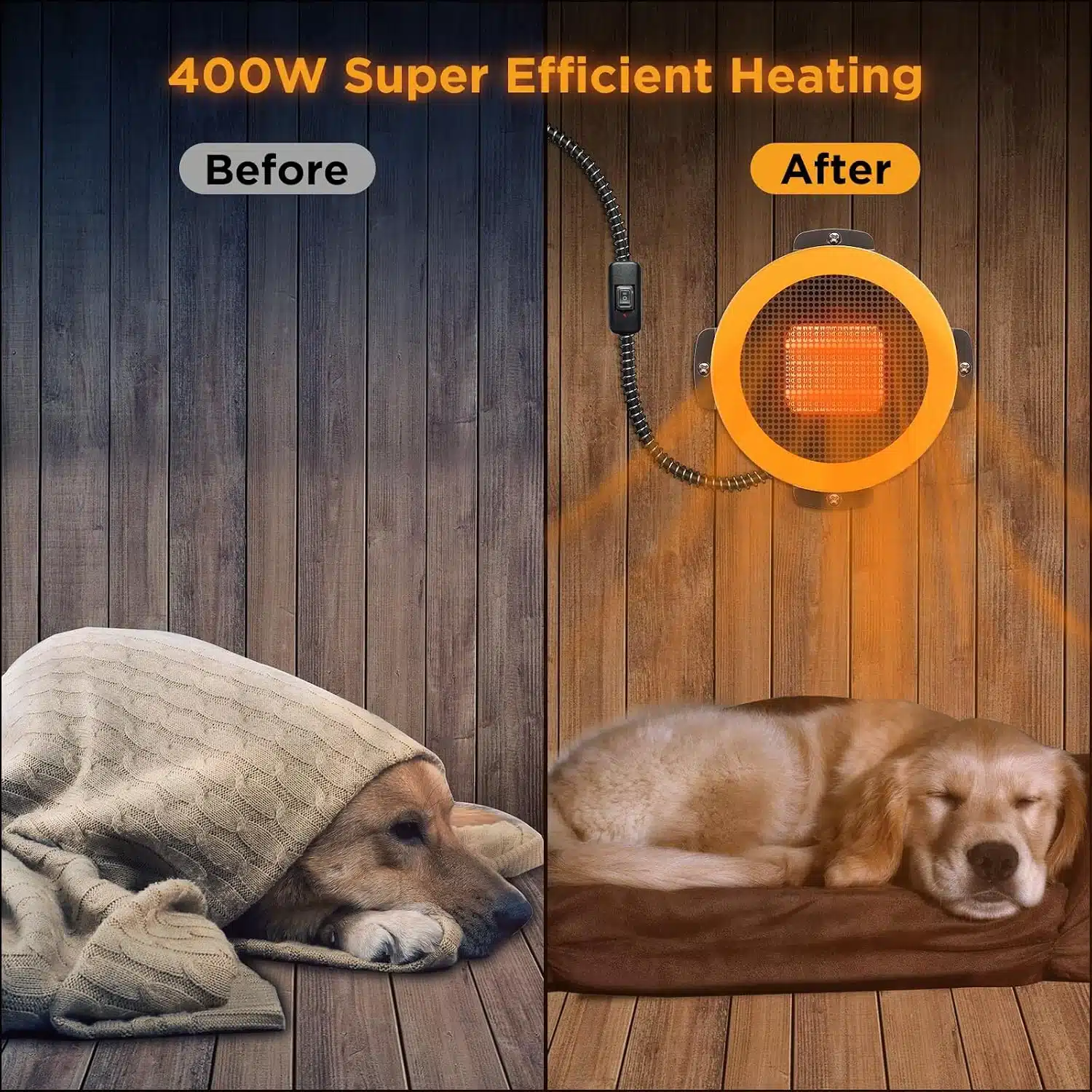
TURBRO 400W Dog House Heater
The budget furnace that punches above its price: TURBRO’s 400W unit wall-mounts inside the house, circulates warm air with a built-in fan, and has two heat levels, an IPX4 waterproof outside control, overheat protection and a 10ft steel-wrapped anti-chew cord (UL tested).
What we like
- Heats the whole interior, up to ~100 cu ft
- Two heat levels (200/400W)
- Waterproof external control dial
- UL tested with a chew-proof cord
The catches
- Only works in an insulated house
- Requires mains power
- A few minutes to install
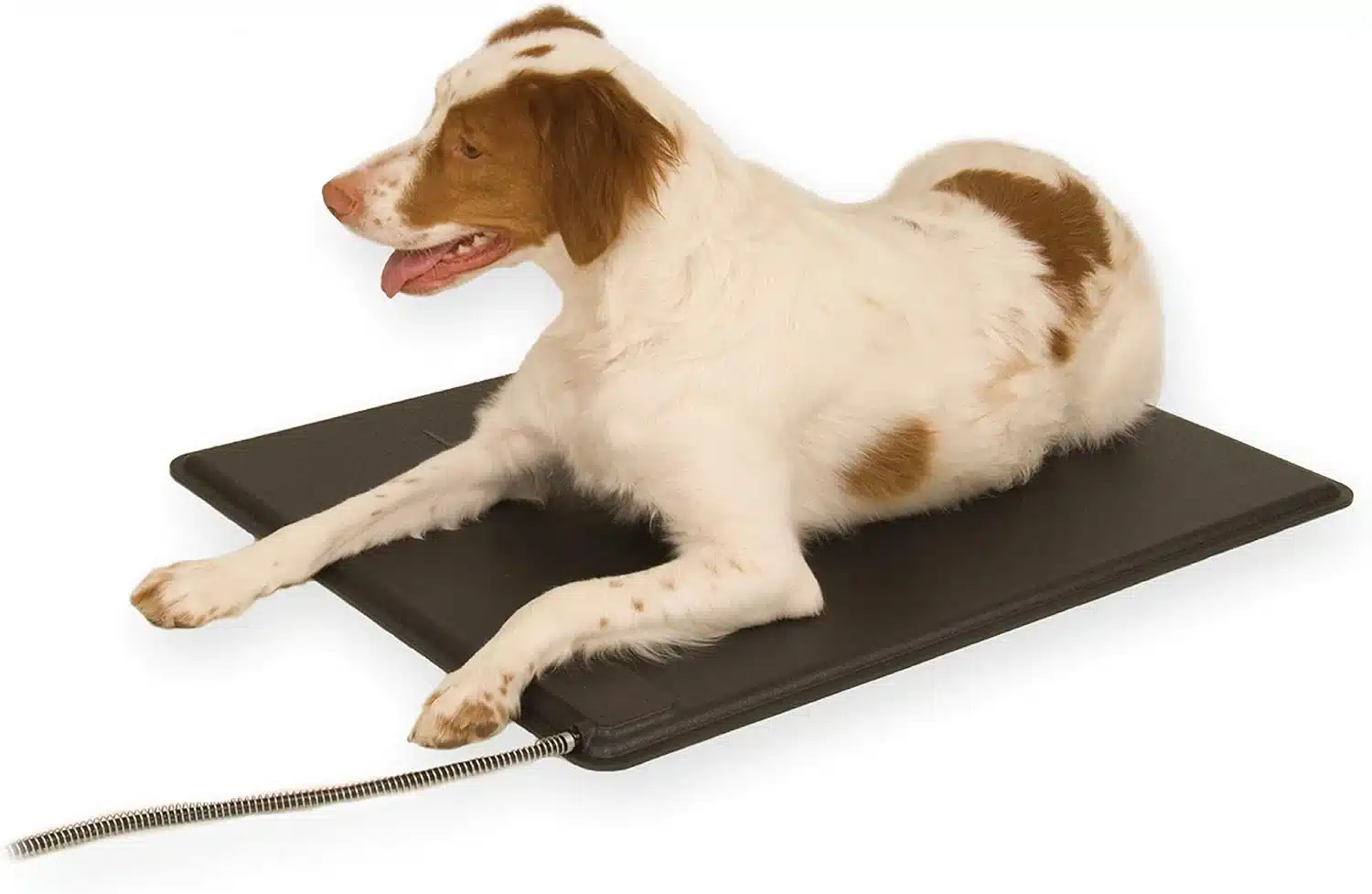
K&H Lectro-Kennel Heated Pad
Instead of heating the air, this warms the dog directly, a thermostatically-controlled mat that reaches your pet’s body temperature only when in use. Tough ABS-plastic housing and a steel-wrapped cord make it the durable, chew-resistant choice K&H is known for.
What we like
- Warms the dog directly, very low running cost
- Tough ABS housing survives outdoor use
- Reaches safe body temperature only when occupied
- Reputable K&H brand
The catches
- A pad, not whole-house heat
- Rigid (not a soft bed)
- Needs mains power
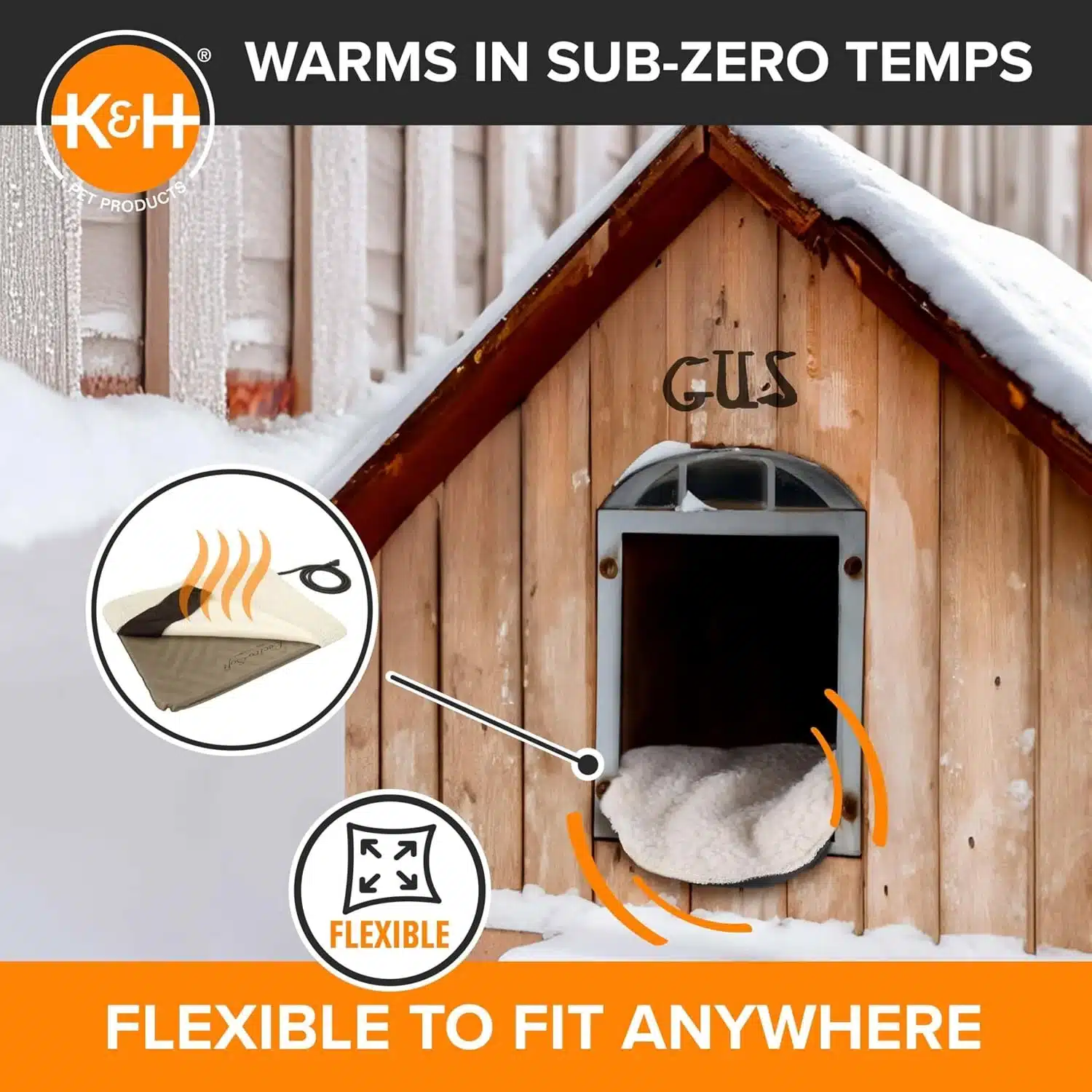
K&H Lectro-Soft Heated Bed
The soft, flexible cousin of the Lectro-Kennel: a thermostatically-controlled heated bed that warms when your dog lies on it, holding a safe surface temperature even in sub-zero weather. The comfortable pick for a dog that likes to curl up.
What we like
- Soft, orthopedic-style heated top
- Warms only when occupied, energy-safe
- Reputable K&H brand
- Durable steel-wrapped cord
The catches
- Warms the dog, not the house
- Needs mains power
- Cover wears over years of use
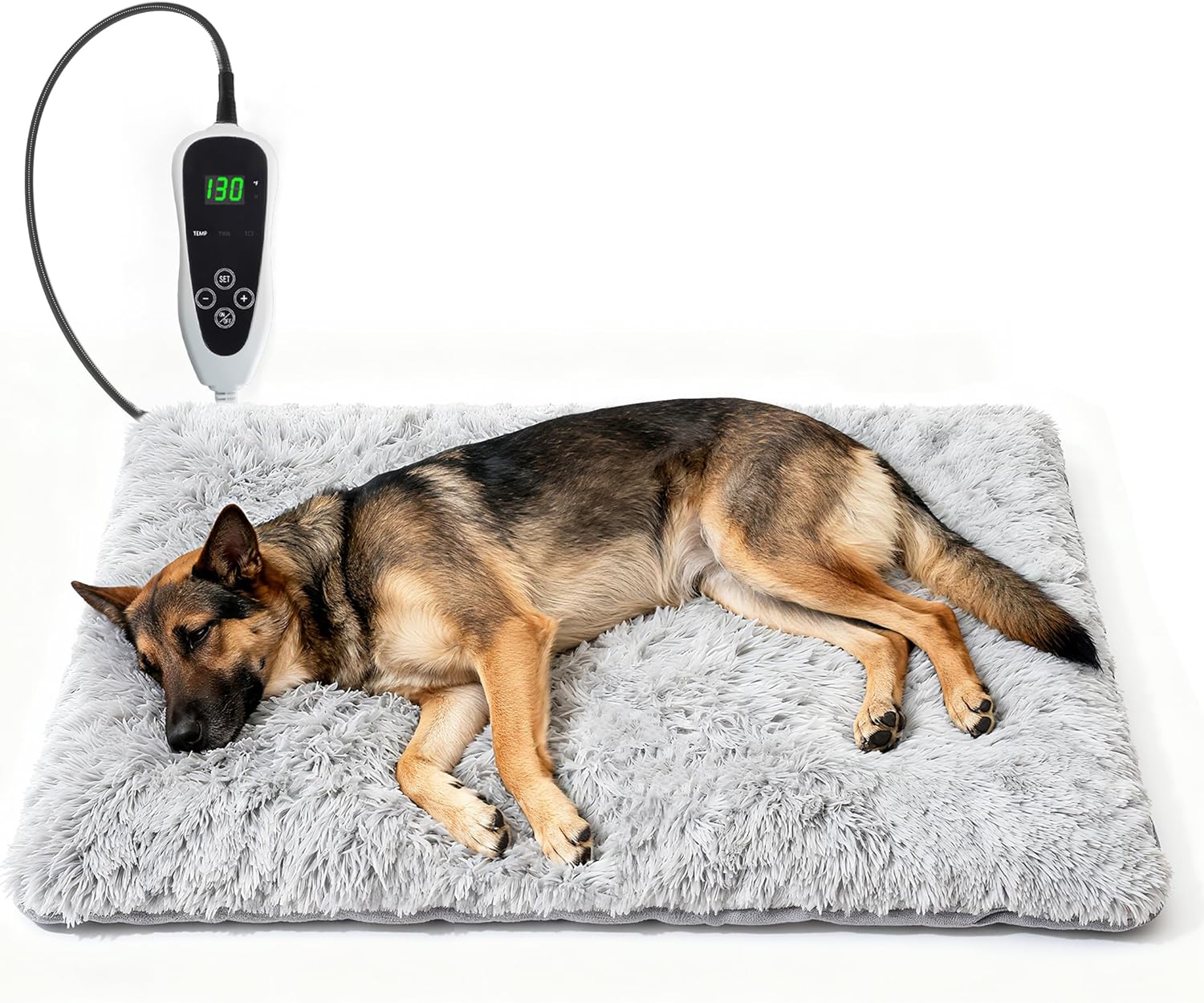
GOLOPET Thermostatic Heated Pad
The cheapest safe way to add warmth: a thermostatically-controlled pad that holds a steady, safe surface temperature instead of running flat-out. Tough housing and a chew-resistant cord make it a simple drop-in for any insulated house or kennel.
What we like
- Lowest price here
- Thermostatic, won’t overheat
- Chew-resistant cord
- Fits most houses & kennels
The catches
- Heats the surface, not the air
- Smaller footprint
- Basic build
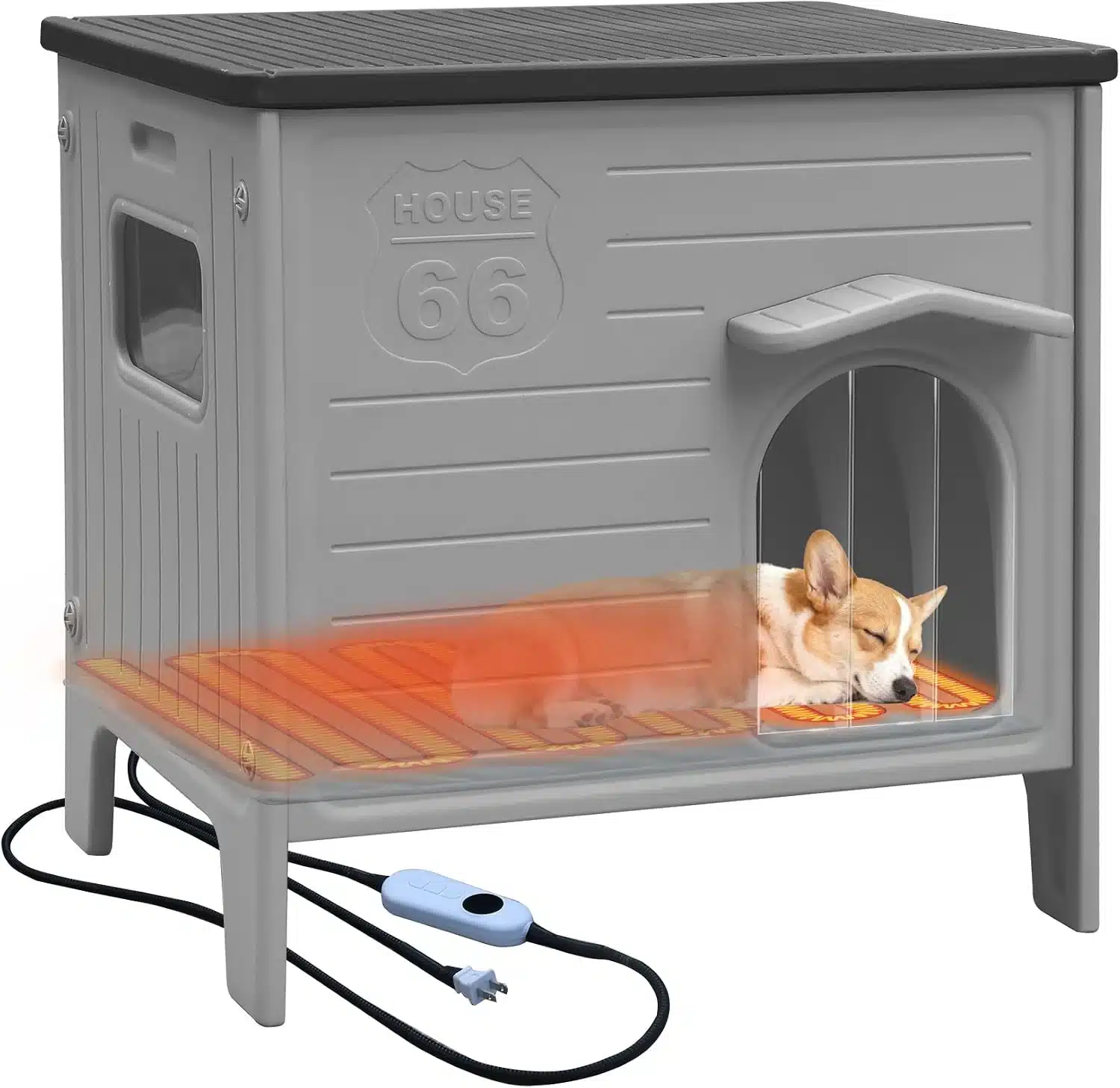
Heated Elevated Dog House
If you’d rather not retrofit a heater, this elevated resin house comes with a warming pad built into the floor, raised off cold, wet ground, cord-controlled, ready to go out of the box. The simplest path to a heated shelter for a small or medium dog.
What we like
- Heater and house in one, no retrofit
- Raised off cold, wet ground
- Resin won’t rot
- Plug-in and go
The catches
- Small to medium dogs only
- Needs a nearby outlet
- Resin insulates less than wood
Need the house, not just the heater?
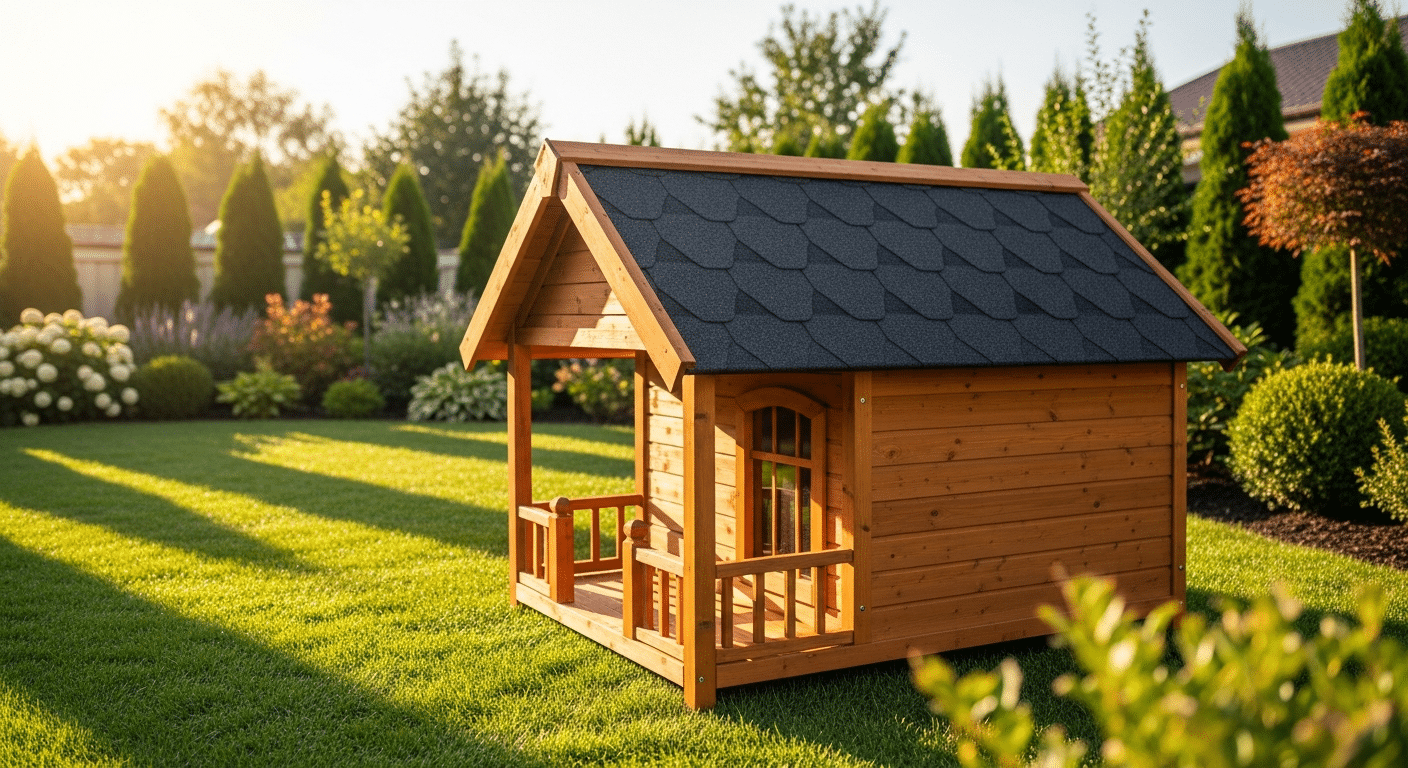
A heater only works in an insulated, draft-sealed house. If you need that first, start here.
How to choose a dog house heater
Type, wattage and the safety rules that actually matter.
01 Furnace, pad or bed?
A furnace (Akoma, TURBRO) heats the air, best for larger or multi-dog houses. A heated pad or bed warms the dog directly and uses less power, ideal for one dog that likes to curl up. Many owners run a pad in an insulated house and add a furnace only in severe cold.
02 Match wattage to house size
Bigger isn’t safer. A 400W furnace heats roughly up to 100 cubic feet; over-heating a small house can be dangerous. Measure your interior volume and size the heater to it, and always use the built-in thermostat rather than running it flat-out.
03 Insulation comes first
A heater does almost nothing in a drafty, uninsulated box, the warmth leaks straight out. The house needs insulated walls, a raised floor and a door flap before a heater can hold a comfortable temperature. If yours isn’t insulated, fix that first.
04 Safety is non-negotiable
Only use pet-rated heaters: thermostatically controlled, with a chew-proof (ideally steel-wrapped) cord and overheat/tip protection. Never put a household space heater, heat lamp or extension-cord setup in a dog house, they’re a serious fire and burn risk.
05 Power & placement
You’ll need a nearby outdoor-rated outlet. Route the cord so the dog can’t reach it, mount a furnace high and to the side (not where the dog lies against it), and keep bedding clear of the heating element. Test it for a day before relying on it.
How we vet every heater pick
No product is listed until it clears all three. If we wouldn’t put it on our own dogs, it isn’t here.
Model the real demand
We study what’s genuinely working for owners, match the depth of the best guides, then verify every claim independently.
Check the real build
Wattage, R-values, materials, cord safety and weight limits, confirmed against the maker, not the listicle.
Route to the best deal
410+ merchants compared. The buy button goes to the one that’s in stock and priced fairly, never the one that just pays us most.
Dog house heater FAQs
Do dog house heaters work?
Yes, in an insulated house. A pet-rated furnace or heated pad will keep an insulated, draft-sealed dog house comfortably warm in winter. In a thin, drafty house the heat leaks straight out, so insulation has to come first.
Are dog house heaters safe?
Pet-rated ones are. Look for thermostatic control, a chew-proof (steel-wrapped) cord and overheat/tip protection. What’s not safe is a household space heater, heat lamp or extension-cord rig in a dog house, those cause fires and burns. Stick to units made for the job.
What wattage dog house heater do I need?
Match it to the interior volume. A 400W furnace heats roughly up to 100 cubic feet; smaller houses need less. Don’t oversize, over-heating a small space is dangerous, and always run it through the thermostat rather than at full power.
Furnace or heated pad, which is better?
A furnace heats the air, best for bigger or multi-dog houses. A heated pad or bed warms the dog directly, uses less power and suits a single dog that curls up. Many owners use a pad in milder cold and add a furnace only when it’s severe.
Can I use a regular space heater in a dog house?
No. Household space heaters, heat lamps and extension-cord setups are a serious fire and burn hazard in a dog house, chewed cords, tip-overs and contact burns are all real risks. Use only a pet-rated, thermostatic dog house heater with a chew-proof cord.
How warm should a heated dog house be?
Aim for a comfortable, not hot, interior, warm enough that your dog isn’t shivering, with room to move away from the heat source. A thermostat set to take the chill off (rather than reach room temperature) is safest, and your dog should always be able to choose a cooler spot.