 Dog Gear, Sized Right
The Best Elevated Dog Houses
Elevation is the single fix that stops ground cold, damp and mud from sapping your dog’s warmth. We compared raised dog houses on insulation, build quality, size and price, here are the picks that actually keep dogs off the ground.
The ground is the biggest heat thief in a dog house. On a cold night, an uninsulated floor conducts heat away from your dog faster than cold air through thin walls, and on a wet day, standing water, mud and rot attack any house sitting directly on soil.
An elevated dog house solves this with raised legs: the floor sits clear of the ground, blocking cold conduction, pooled water and mud, while the air gap underneath also helps airflow in warm weather. It’s one change that improves comfort in both seasons.
The picks below are compared on whether they pair insulation with elevation (a much better package than elevation alone), build material, size and price, from a $44 budget shelter to a $123 fully insulated large-dog house.
Elevated dog houses compared
Five raised dog houses compared by build, insulation and the climate each suits best.
| Product | Best for | Type | Best climate | Our rating | |
|---|---|---|---|---|---|
| Overall WHEGETED Insulated Elevated | Most owners, large dogs | Insulated, weatherproof shell | Cold + mild | ★★★★½ 4.5 | Check price |
| Comfort DWVO + Cushion | Loungers, comfort priority | Water-resistant elevated | Mild + sheltered | ★★★★ 4.3 | Check price |
| Value Insulated Elevated Resin | Budget insulated elevated | Double-wall resin, raised legs | Mild | ★★★½ 4.0 | Check price |
| Budget Elevated (Basic) | Lowest price entry | Elevated, indoor/outdoor | Mild/indoor | ★★★ 3.8 | Check price |
| Airflow Veehoo Elevated Canopy | Hot climates, shade | Raised cot + breathable canopy | Hot + mild | ★★★★ 4.2 | Check price |
Our best elevated dog houses, reviewed
Raised designs ranked for ground clearance, insulation and overall weather protection.
WHEGETED Insulated Elevated House
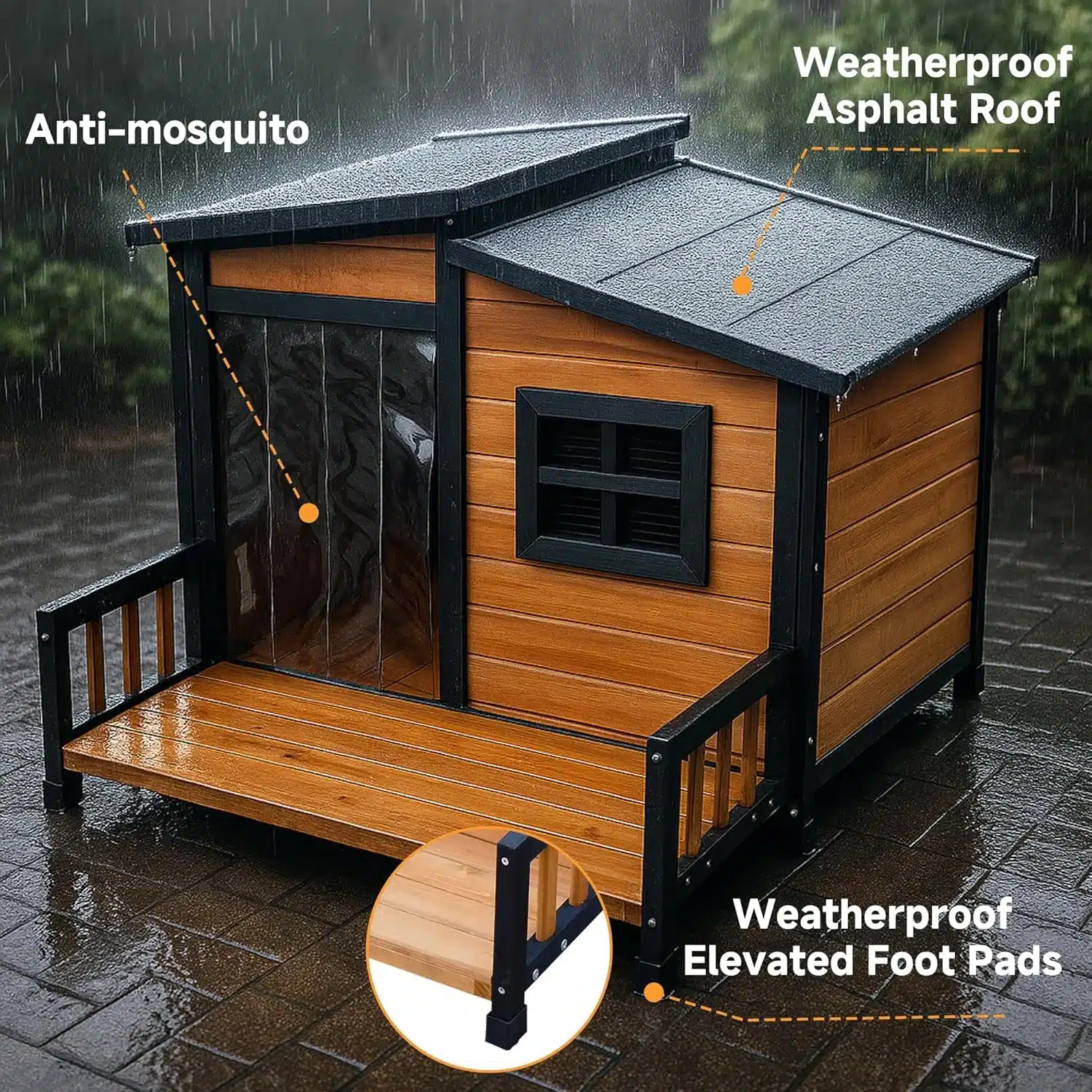
Our top pick for most outdoor dogs. The title tells you the key facts: weatherproof construction, genuine insulated walls, and a raised elevated design that lifts your dog off cold, wet ground. At 39×37×30 inches it fits large breeds, and it arrives with the two things that matter most for outdoor comfort, insulation to hold body heat and elevation to block ground chill, handled out of the box.
What we like
- Insulated AND elevated in one unit
- 39×37×30 in fits large breeds
- Weatherproof construction handles rain & wind
- Raised floor blocks ground cold and moisture
The catches
- Higher price than plain elevated shelters
- Material/door details not confirmed by listing, verify before purchase
- Assembly required (typical for this style)
DWVO Elevated House with Cushion
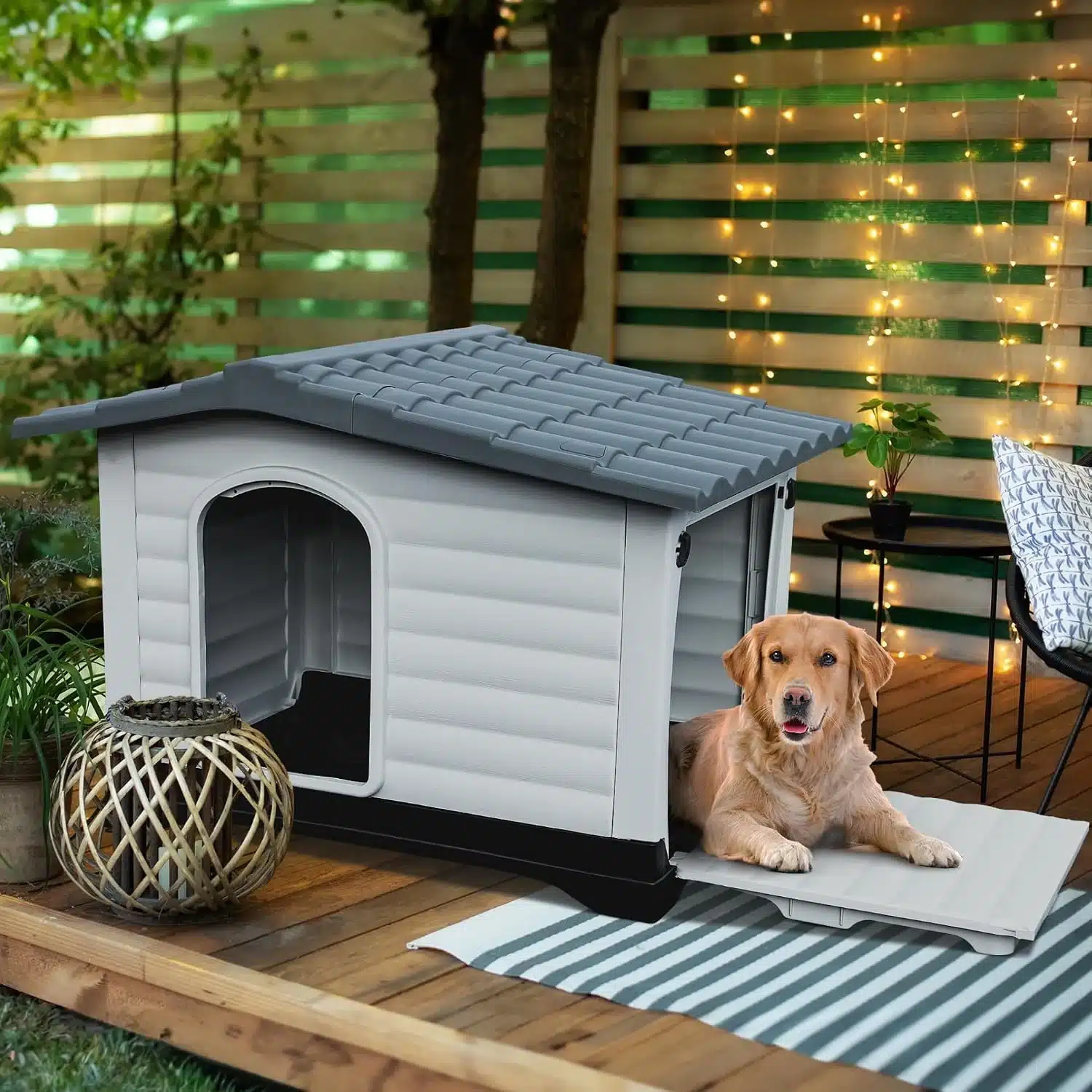
The only pick here that ships with a cushion built in, a practical advantage if your dog likes a soft surface. It’s elevated (good ground separation), water-resistant on the shell, and requires assembly. The cushion adds comfort without the cost of buying bedding separately, making this the best-value pick if your dog is a lounger.
What we like
- Cushion included, saves buying bedding separately
- Elevated floor separates dog from cold, damp ground
- Water-resistant shell handles wet weather
- Good comfort-to-price ratio
The catches
- Listed as water-resistant, not fully weatherproof, consider a covered spot in heavy rain
- Not described as insulated in the listing
- Assembly required
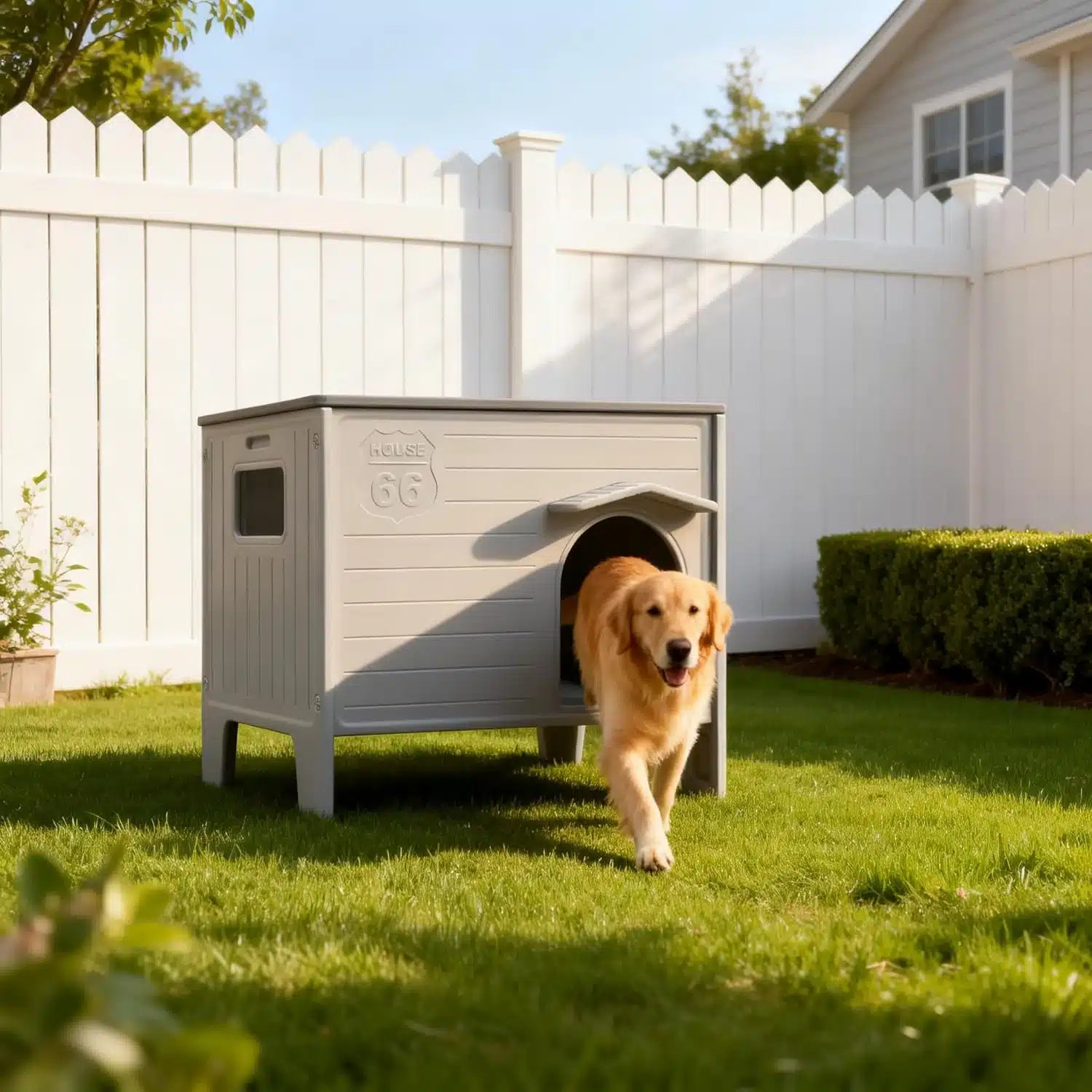
Insulated Elevated Resin House
The cheapest way into a genuinely weather-ready elevated house. A double-wall resin shell on raised legs keeps your dog off cold, wet ground, with a side window for airflow and a wipe-clean interior. Not as warm as insulated wood, but a solid budget shelter that won’t rot, and the elevated legs handle the most important ground-contact problem.
What we like
- Lowest price for an insulated elevated pick
- Raised legs block ground damp
- Resin won’t rot or soak up water
- Hoses out in seconds
The catches
- Resin isn’t as warm as insulated wood
- Smaller interior than the WHEGETED
- Add bedding/flap for cold snaps
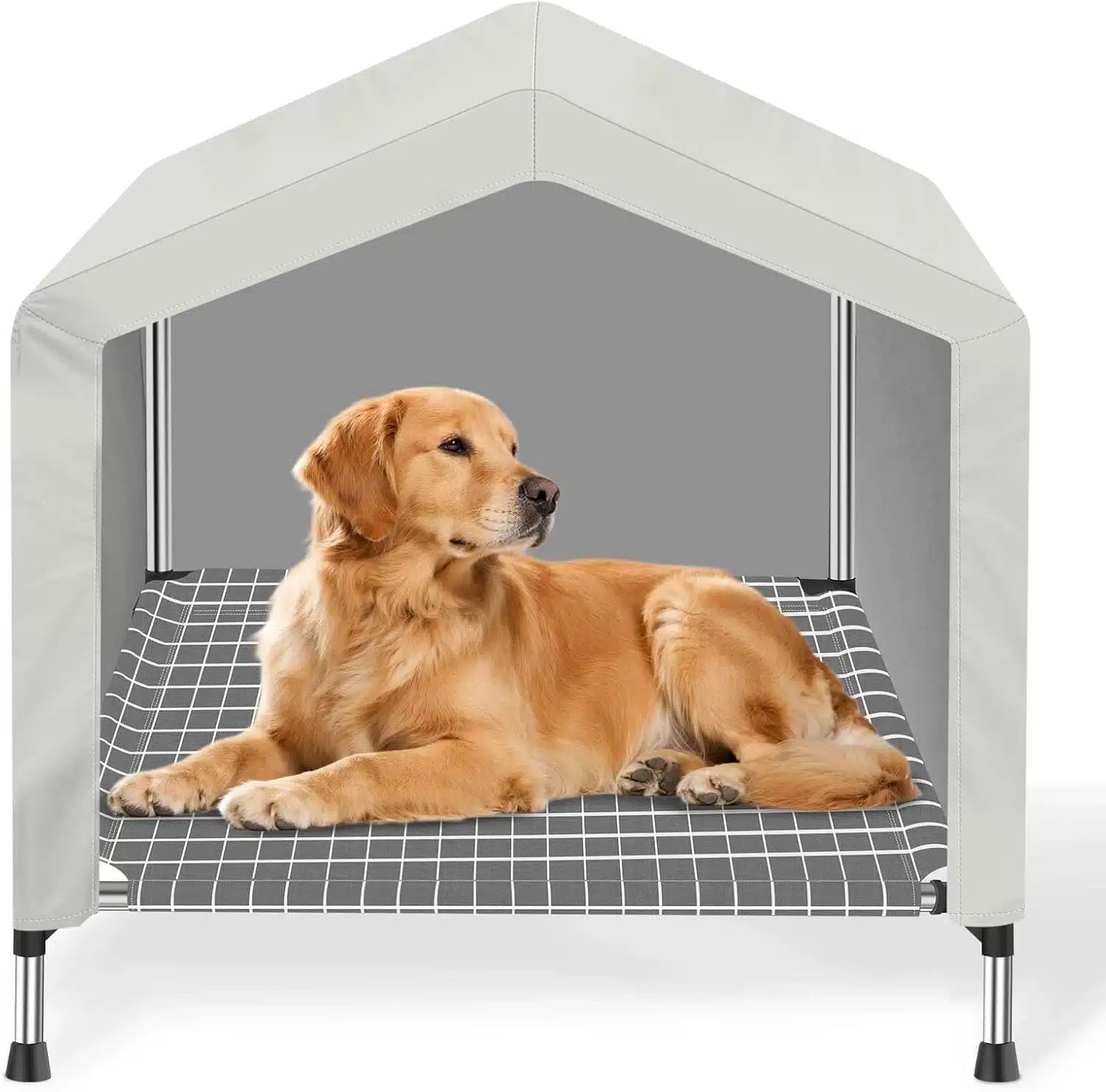
Elevated Dog House (Budget)
The entry-level elevated pick. It solves the one thing that matters most at any budget, getting your dog off the ground, at the lowest price here. Listed for indoor and outdoor use. Don’t expect insulation or weatherproofing at this price point; treat it as a bare elevated shelter and add your own bedding or pad for colder months.
What we like
- Cheapest elevated pick on the list
- Elevated floor still separates dog from ground cold & damp
- Indoor/outdoor rated
- Simple to set up
The catches
- No insulation listed
- Weatherproofing not specified, add a cover for heavy rain
- Best for mild climates or indoor use
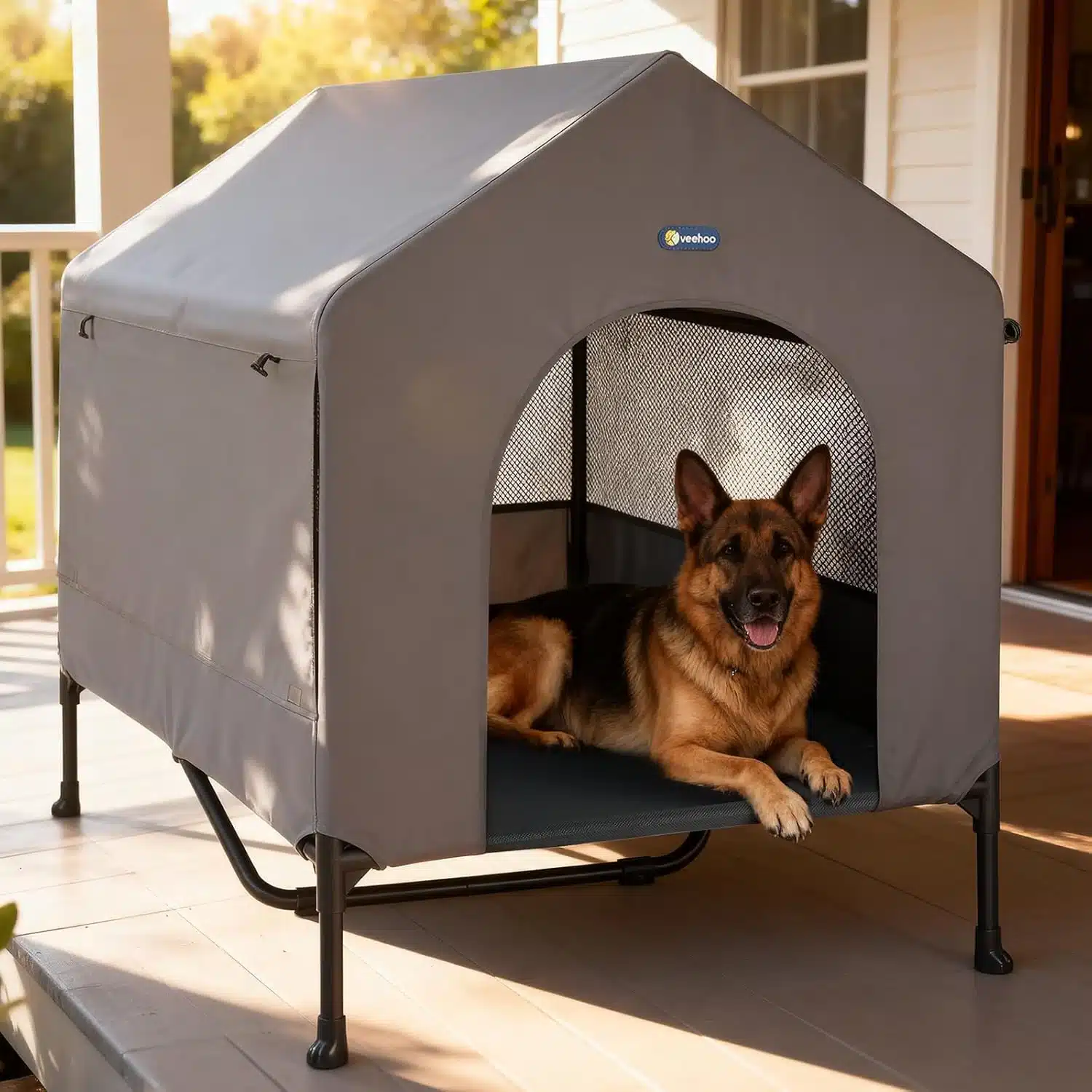
Veehoo Elevated Canopy House
The pick for hot climates and shade. Instead of solid walls, Veehoo pairs a raised cot floor with a peaked, weatherproof canopy and three breathable mesh sides, so air moves through while the top still blocks sun and rain. The elevated metal frame keeps your dog off hot or wet ground, and it’s roomy enough for a large breed. Treat it as a summer and shade shelter rather than a cold-weather house, there’s no insulation, and the open mesh sides trade wind protection for airflow.
What we like
- Three breathable sides move air, ideal for heat
- Raised cot lifts the dog off hot or wet ground
- Weatherproof canopy shades sun and sheds rain
- Roomy enough for large breeds
The catches
- No insulation, not a cold-weather house
- Fabric canopy is less durable than a hard shell
- Open mesh sides offer less wind protection in winter
Add insulation, or real heat?
Elevation handles the ground. If your climate needs more, these guides cover the next step.
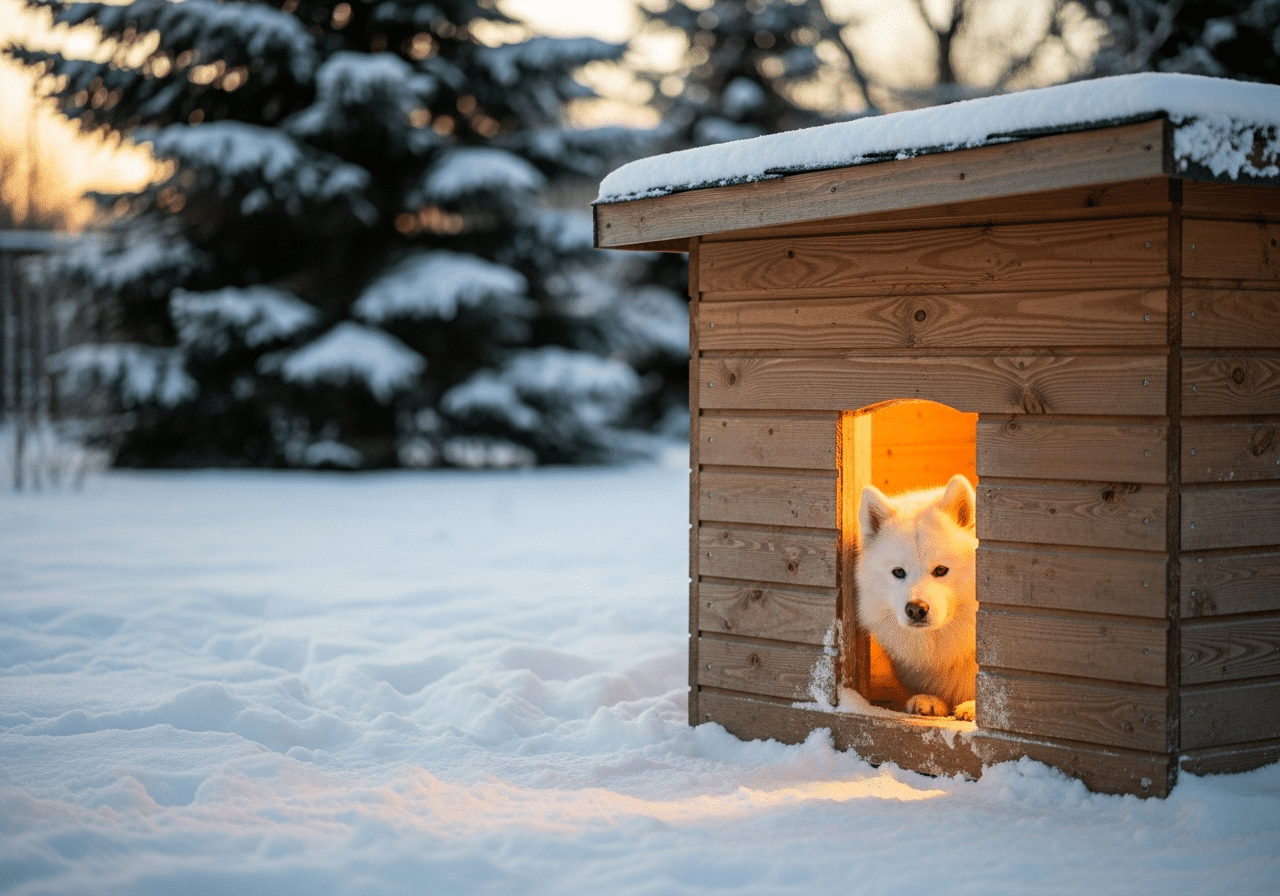
How to choose an elevated dog house
The five things that separate a well-raised shelter from one that still traps ground cold.
01 Why elevation matters more than it looks
Ground contact is the single biggest heat-loss path in an outdoor dog house. Cold, wet soil conducts heat out of the floor faster than cold air through the walls, and standing water rots any structure sitting directly on soil. Raised legs cut both problems: they block conduction from below and prevent the rot cycle that shortens the life of any dog house.
02 Leg height, stability and leveling
A few inches of clearance is enough to block ground cold and moisture, you don’t need a lot of height. What matters more is stability: legs should be rigid and wide enough that the house doesn’t tip or rock when your dog jumps in. Adjustable or leveling feet are a bonus on uneven ground or patio surfaces.
03 Insulated shell vs plain elevated shelter
Elevation fixes the floor; the walls are a separate problem. A plain elevated shelter stops ground chill but still loses heat through thin walls in cold weather. An insulated elevated house handles both at once, the best pairing for cold climates. In mild climates a plain elevated shelter with added bedding may be enough.
04 Size it snug
Your dog should be able to stand, turn around and lie down, nothing more. Excess interior air volume is the enemy in cold weather: a house that’s too big gives body heat nothing to warm. This is especially true in an elevated house without active heating, where body heat alone does the work.
05 Doorway, flap and weatherproofing
Elevation handles the floor. For the entry, a doorway flap blocks wind from blowing straight onto your dog, a cheap addition that makes a real difference in cold or wet weather. Check that the roof overhangs and sheds rain, and that there’s no gap where the wall meets the raised floor platform. Drainage channels or a slatted floor (for covered runs) are worth checking if your dog’s space gets wet.
How we vet every elevated pick
No product is listed until it clears all three. If we wouldn’t put it on our own dogs, it isn’t here.
Model the real demand
We study what’s genuinely working for owners, match the depth of the best guides, then verify every claim independently.
Check the real build
Wattage, R-values, materials, cord safety and weight limits, confirmed against the maker, not the listicle.
Route to the best deal
410+ merchants compared. The buy button goes to the one that’s in stock and priced fairly, never the one that just pays us most.
Elevated dog house FAQs
Are elevated dog houses better?
For most outdoor dogs, yes. The biggest practical benefit is separating the floor from cold, wet ground, the single biggest heat-loss path and the main cause of rot in any dog house sitting on soil. In warm weather, the air gap underneath also helps ventilation. The main trade-off is slightly less stability than a flat-bottomed house; look for wide, rigid legs.
Do raised dog houses stay warmer?
They stay warmer at the floor specifically, which is the part dogs lose heat from fastest. Ground contact conducts warmth away more quickly than cold air through walls. That said, an elevated house with plain thin walls will still lose heat through the sides; if warmth is the priority, look for a house that is both elevated and insulated.
How high off the ground should a dog house be?
A few inches, roughly 3 to 6 inches, is enough to block ground cold and prevent pooled water from reaching the floor. You don’t need significant height; what matters more is that the legs are stable and the gap stays clear of debris. Taller legs can work but may make entry harder for smaller or older dogs.
Are elevated dog houses good for hot weather?
Yes, the air gap underneath helps airflow, which keeps the floor cooler in summer heat compared to a house sitting on hot ground or paving. Pair elevation with a shaded position and ventilation (a vent, open doorway or a slightly elevated platform that allows airflow from multiple sides) for best results in hot weather.
Elevated vs ground-level dog house, which is better?
In most outdoor situations, elevated wins: it protects the floor from ground cold, damp and rot, and the air gap helps in summer. Ground-level houses are simpler, often cheaper and more stable, they suit mild indoor environments or completely covered/dry runs where ground moisture is not a concern.
Do elevated dog houses need insulation?
Elevation handles the floor; insulation handles the walls and roof, they do different jobs. In mild weather, an elevated plain-wall house with added bedding can be enough. In cold climates or for overnight outdoor use, an elevated house that is also insulated is the better choice: it solves both the floor and the walls together.
Can I use an elevated dog house indoors?
Yes. An elevated dog house used indoors functions more as a den or crate alternative, the raised floor keeps it off cold tile or concrete and gives dogs the enclosed, den-like feeling many prefer for rest. The same sizing rule applies: snug enough to hold body heat, not so large it feels exposed.