 Dog Gear, Sized Right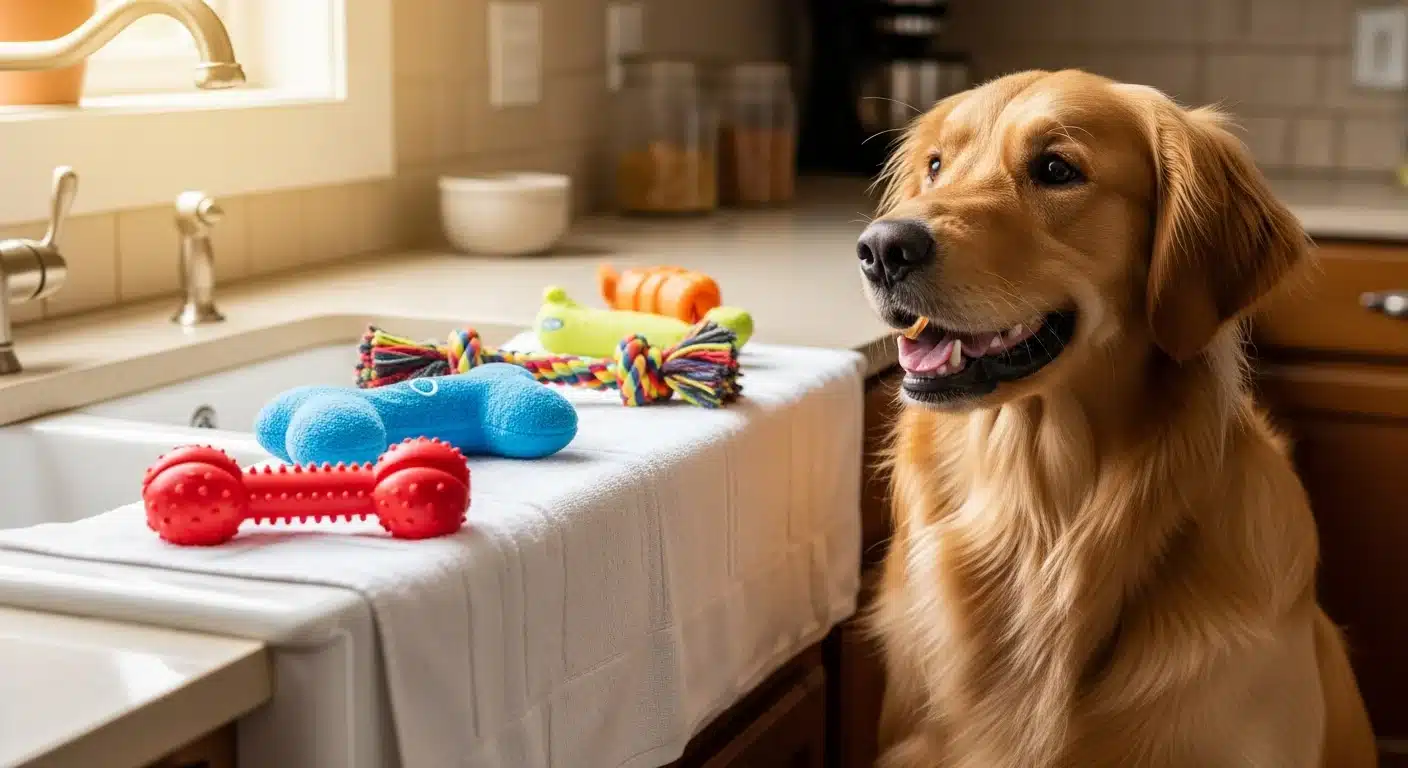
How to Clean Dog Toys: By Material, How Often & When to Toss Them
A clean toy is a safe toy. Here’s exactly how to wash every material, rubber, plush, rope, nylon, without harming your dog or ruining the toy.
Dog toys harbour bacteria, mould, and viruses in ways that aren’t always visible. A study on household pet items found E. coli, Staphylococcus, and yeast on toys that looked perfectly clean. The fix is straightforward, two minutes of hot water and the right technique per material, but use the wrong method and you’ll ruin the toy or leave residue that’s worse than what you started with. This guide covers every material, every method, frequency, safe cleaners, mould removal, and the signs that a toy is past saving.
Why Dirty Dog Toys Are a Genuine Health Risk
Toys land on the floor, go in the garden, get chewed with bacteria-rich saliva, then sit in a warm toy box. That combination creates ideal conditions for pathogen growth. Key risks from uncleaned toys include:
- Bacteria: E. coli, Staphylococcus, and Salmonella have all been cultured from dog toy surfaces. Dogs lick their toys obsessively, a contaminated toy is a repeated oral dose of whatever’s living in the material.
- Mould and fungal growth: Rope toys and plush toys stay damp after being mouthed. Internal fibres dry slowly, creating pockets where black mould can establish within 48 to 72 hours in warm weather.
- Viral survival: Parvovirus can survive on porous surfaces, including rope and fabric toys, for weeks to months without disinfection. If your dog has been around sick dogs, toy decontamination is non-negotiable.
- Cross-contamination to humans: Children who handle dog toys and then touch their faces or mouths are at risk from the same bacteria. Households with young children should clean toys at least weekly.
How Often Should You Clean Dog Toys?
Cleaning frequency depends on how the toy is used. The table below gives practical guidance, weekly is the minimum for any toy in regular rotation.
| Scenario | Recommended frequency |
|---|---|
| Indoor-only toys, average use | Once a week |
| Outdoor toys, dog park toys | After every outing |
| Rubber stuffable toys (food residue) | After every use if dairy/meat; every 2 to 3 uses for dry kibble |
| Plush toys (mouthed daily) | Every 1 to 2 weeks |
| Rope toys (moisture-retaining) | Weekly minimum; bi-weekly if heavily chewed |
| Dogs on raw-meat diets | Daily, raw meat residue is high-risk |
| After illness in the household | Immediately, thorough disinfection |
When in doubt, clean it. Overcleaning does far less harm than under-cleaning, provided you use gentle pet-safe products and let toys dry fully before returning them.
How to Clean Rubber Dog Toys
Rubber toys, including durable chew toys, tug toys, and hollow stuffable toys, are the easiest to clean because the non-porous surface doesn’t absorb bacteria the way fabric does. You have two good methods.
Method 1: Dishwasher (recommended for solid rubber)
- Rinse off loose food debris under hot running water first.
- Place the toy on the top rack only, the heating element is at the bottom and direct heat can warp rubber.
- For hollow toys (stuffables), orient them open-end down so the water jets reach the interior cavity.
- Run a normal hot wash cycle. Skip the heated dry setting if your rubber is thin or soft, let the toy air dry instead.
- Check the manufacturer’s label first: most solid rubber toys are dishwasher-safe; very soft rubber (puppy teethers) should be hand-washed.
Method 2: Hot-water hand wash (all rubber)
- Fill a bowl with the hottest tap water you have and a small amount of fragrance-free, pet-safe dish soap.
- Submerge the toy and soak for 10 to 15 minutes to loosen dried food and biofilm.
- For hollow toys: use a bottle brush or pipe cleaner to scrub the interior walls, this is where mould starts.
- Rinse thoroughly under running water until no soap remains. Soap residue is an irritant if ingested.
- Air-dry completely, at least a few hours, before returning the toy to your dog.
How to Clean Plush and Stuffed Dog Toys
Plush toys, squeaky toys, stuffed animals, tug toys with fabric covers, can usually go in the washing machine. The key is using the right settings to avoid destroying the filling or squeaker.
Washing machine method:
- Check for loose seams, torn fabric, or exposed stuffing before washing, a toy that’s already coming apart will disintegrate in the machine and block the drain.
- Place toys in a mesh laundry bag to protect them and contain any loose fibres.
- Use the gentle or delicate cycle with cold or warm water. Hot water shrinks fabric and can melt any internal plastic parts (squeakers, rattles).
- Use a small amount of fragrance-free, dye-free laundry detergent. Scented products and artificial dyes leave residues that can irritate a dog’s mouth and skin.
- Skip dryer sheets entirely, the chemical coating is toxic to dogs. Use an unscented wool dryer ball instead, or simply air dry.
- Air dry fully before returning. Wet plush toys left in a toy box develop mould faster than almost any other toy type.
Squeaker preservation: Squeakers are a loose plastic disc or air chamber inside the toy. Machine washing doesn’t usually damage squeakers in quality toys, but very vigorous spin cycles can dislodge them. If preserving the squeak matters, do a hand-wash in warm soapy water and squeeze the toy several times to flush the interior. Air dry squeaker-side down.
How to Clean Rope Dog Toys
Rope toys are the highest-risk toy type for mould growth. The tightly woven natural fibres (cotton or jute) wick moisture deep into the core where it stays warm and damp, perfect for mould spores. A rope toy that smells musty almost certainly has mould in the fibres even if you can’t see it.
Standard rope-toy cleaning:
- Soak the rope toy in a bowl of very hot water with a small amount of pet-safe dish soap for 20 to 30 minutes. This loosens saliva, food residue, and surface bacteria.
- Work the fibres with your hands to push soapy water through the core, squeezing and releasing repeatedly.
- Rinse thoroughly under running water. Rope toys hold soap in the fibres longer than you’d expect, keep rinsing until the water runs clear and squeeze several times.
- Dry outdoors in direct sunlight if possible. UV light kills surface bacteria and the airflow dries the core fibres much faster than indoor drying.
- Never return a rope toy that’s still damp. Indoor storage of a damp rope toy in a toy box restarts mould growth within hours.
The microwave method (bacteria kill): After soaking and rinsing, wet rope toys can be microwaved for 60 to 90 seconds on high. The steam generated inside the fibres kills bacteria and speeds drying. Important caveats:
- The toy must be wet, never microwave a dry rope toy (fire risk).
- Remove any metal clips, tags, or plastic components before microwaving.
- Let the toy cool fully on a rack before handling, it will be extremely hot.
- This method works on cotton rope toys, not synthetic fibre or mixed-material toys.
How to Clean Nylon and Hard Plastic Dog Toys
Nylon chew toys (like Nylabone and similar hard chews) and hard plastic toys (fetch launchers, puzzle feeders, treat dispensers) are the easiest to clean of all toy types because their non-porous surfaces don’t absorb bacteria or odours.
Dishwasher cleaning (best method for hard plastic):
- Check the toy for a dishwasher-safe label or manufacturer guidance. Most hard plastic puzzle toys and treat dispensers are rated dishwasher-safe.
- Place on the top rack. Bottom-rack placement near the heating element can warp thin plastic.
- Run a standard hot wash. The high temperature sanitises effectively.
Hand wash (nylon chews and non-dishwasher-safe plastics):
- Scrub under hot running water with a stiff-bristled brush and pet-safe dish soap. Nylon chew grooves collect saliva and food debris, work the brush into every channel.
- Rinse completely and air dry.
- Nylon chews don’t need soaking, a firm scrub under running water is sufficient because the smooth hard surface doesn’t harbour bacteria the way porous materials do.
For treat-dispensing puzzle toys with multiple parts: disassemble fully before washing. Food often collects in joints and cavities that are invisible when the toy is assembled, the dishwasher won’t reach them unless the toy is pulled apart.
Safe Cleaners vs Toxic Ones: What to Use (and Avoid)
Most cleaning product labels don’t mention dogs, but dogs chew toys for hours, any residue left on the surface goes directly into their mouths. Several common household cleaners are dangerous to use on dog toys.
| Product | Safe to use? | Notes |
|---|---|---|
| Pet-safe, fragrance-free dish soap | ✅ Yes | Best all-round cleaner. Rinse thoroughly to remove all residue. |
| White vinegar (diluted 1:4 with water) | ✅ Yes | Natural antibacterial and deodoriser. Completely safe once rinsed. Avoid if your dog is sensitive to strong smells, dilute more if needed. |
| Baking soda paste | ✅ Yes | Effective at lifting odours and mild stains on rubber and nylon. Mix with water to form a paste, scrub, rinse fully. |
| Bleach (undiluted) | ❌ No | Leaves toxic residue that damages rubber and fabric. Exception: properly diluted bleach (1 tbsp per gallon of water) with 5-minute contact time and thorough rinsing is used for parvovirus decontamination only, not for routine cleaning. |
| Ammonia-based cleaners | ❌ No | Fumes are harmful to dogs. Never use on any toy surface. |
| Scented laundry detergent | ❌ No | Artificial fragrances and dyes irritate dogs’ sensitive noses and can cause skin reactions. Use unscented only. |
| Scented dryer sheets | ❌ No | Toxic chemical coating (cationic softeners), never use with any dog toy or bedding. |
| Essential oil sprays | ❌ No | Many essential oils (tea tree, eucalyptus, clove, citrus) are toxic to dogs. Never use as a toy freshener or cleaner. |
| Hydrogen peroxide (3%) | ⚠️ Caution | Low-concentration hydrogen peroxide is sometimes used for disinfecting hard toys. Rinse very thoroughly, ingested in quantity it causes vomiting. Not recommended for routine use when dish soap works equally well. |
Removing Mould and Bad Smells from Dog Toys
A toy that smells musty or shows black or green spots has mould growth. For hard-surface toys (rubber, nylon, plastic) this is usually salvageable. For rope and plush toys with mould visible inside the fibres, the safest call is to replace the toy, deep mould in fabric cannot be reliably removed at home.
Mould removal on rubber and hard plastic toys:
- Make a paste of two tablespoons of baking soda and enough white vinegar to form a thick paste. The fizzing reaction is safe and helps lift mould from crevices.
- Apply to all mouldy surfaces, including the interior of hollow toys, using an old toothbrush. Scrub firmly, working into all grooves and channels.
- Let the paste sit for 10 minutes, then scrub again.
- Rinse thoroughly under hot running water. Follow with a hot dishwasher cycle or a 15-minute soak in very hot soapy water to complete disinfection.
- Inspect after cleaning. If you can still see mould marks or the smell persists after full drying, the mould is embedded, replace the toy.
Removing stubborn odours (not mould):
- Soak in a solution of one part white vinegar to four parts water for 30 minutes. Vinegar neutralises the sulphur compounds that cause the ‘dog smell’ in rubber toys.
- For plush toys: add half a cup of baking soda to the washing machine drum alongside the unscented detergent. Baking soda absorbs odour molecules during the wash.
- Air dry in direct sunlight. UV light breaks down odour-causing organic compounds faster than any commercial deodoriser.
Decontaminating Toys After Illness
If your dog has been sick, or has been around a dog with a contagious illness (parvovirus, kennel cough, ringworm, Giardia), standard cleaning isn’t enough. These pathogens require specific disinfection steps.
After parvovirus exposure:
- Parvo is extremely hardy, it survives on surfaces for months and resists most household cleaners. The reliable option is a diluted bleach solution: 1 tablespoon of household bleach per gallon of water.
- Hard toys: soak in the diluted bleach solution for 10 to 15 minutes, then rinse extremely thoroughly and air dry. Any lingering bleach smell means more rinsing is needed.
- Porous toys (rope, plush): cannot be reliably decontaminated from parvo. Discard them and replace once your dog is fully recovered and your vet confirms it’s safe to introduce new toys.
After ringworm (fungal infection):
- Wash all toys your dog has had contact with using hot water and soap immediately.
- Hard toys can be wiped with a diluted antifungal solution, ask your vet for guidance on the specific product; many vet-recommended disinfectants work well here.
- Ringworm spores can persist on fabric, plush toys in contact with an infected dog should be discarded during the treatment period.
After Giardia:
- Giardia cysts survive on toys and can reinfect your dog or spread to people. All toys should be scrubbed with hot soapy water, boiled if possible (rubber toys can handle a brief boil), or discarded if heavily porous.
When to Throw a Dog Toy Away
Cleaning can’t fix a toy that’s past its safe useful life. These are the signs that a toy should go in the bin, not the wash basket:
- Chunks or pieces missing: If rubber or nylon is missing a section and you can’t account for where it went, your dog may have swallowed it. Call your vet and replace the toy immediately. Swallowed toy fragments are a leading cause of intestinal blockage surgery.
- Cracks or splits in rubber: Hairline cracks in rubber toys harbour bacteria that can’t be reached by cleaning. They also weaken the structure, a cracked toy can split unexpectedly and create sharp edges.
- Rope toys with heavy fraying: Loose long threads from frayed rope toys are ingestion hazards. Short, even fraying is normal; long trailing threads that a dog could separate and eat are a sign to retire the toy.
- Plush toys with exposed stuffing: Once the stuffing is accessible your dog can pull it out and ingest it. Exposed squeakers are also a choking hazard. A toy with a seam that keeps re-opening after repairs should be discarded.
- Persistent mould smell after cleaning: If you’ve cleaned a toy thoroughly and it still smells musty when fully dry, the mould is embedded in the material structure. Replace it, you can’t clean out what you can’t reach.
- Contact with a parvovirus case (porous toys only): Rope and plush toys that cannot be bleach-sanitised should be discarded after parvo exposure even if they look fine.
- After infectious illness recovery: Even cleanable toys should be replaced after a dog recovers from a contagious illness, especially in a multi-dog household, to prevent reinfection cycles.
Dog toy cleaning questions, answered
Can you put dog toys in the dishwasher?
Most solid rubber and hard plastic dog toys are dishwasher-safe. Place them on the top rack, the heating element is at the bottom and direct heat can warp rubber. Run a normal hot wash cycle and air dry (skip the heated dry if the rubber is soft). Plush toys and rope toys should not go in the dishwasher, use the washing machine (gentle cycle) for plush and a hot-water soak for rope. Always check the manufacturer’s label if you’re unsure whether a specific toy is rated for the dishwasher.
Can dog toys go in the washing machine?
Yes, plush and stuffed dog toys can go in the washing machine. Use the gentle or delicate cycle with cold or warm water, and fragrance-free, dye-free laundry detergent. Place toys in a mesh laundry bag to protect them. Skip dryer sheets (toxic to dogs) and let toys air dry completely before returning them. Hard rubber and nylon toys are not suitable for the washing machine, they need hand washing or the dishwasher.
What is the safest cleaner for dog toys?
The safest everyday cleaner for dog toys is fragrance-free, pet-safe dish soap with hot water. It removes bacteria, biofilm, and food residue without leaving harmful residue. White vinegar diluted 1:4 with water is a good natural alternative, it’s antibacterial, neutralises odours, and is completely safe for dogs once rinsed. Avoid bleach (except for parvo decontamination in very diluted form), ammonia-based products, scented detergents, and any product containing essential oils, all are harmful to dogs at the residue levels left after typical washing.
How often should dog toys be cleaned?
At minimum, dog toys should be cleaned once a week. Toys used outdoors or in multi-dog settings should be cleaned after every outing. Rubber toys stuffed with food (dairy, meat, egg) need cleaning after every single use, food residue develops harmful bacteria within hours in the warm interior. Rope toys should be cleaned at least weekly because they retain moisture and develop mould quickly. Dogs on raw diets should have their toys cleaned daily, as raw meat residue carries Salmonella and other pathogens.
How do you get mould off dog toys?
For rubber and hard plastic toys with surface mould, make a paste of baking soda and white vinegar, apply it to the mouldy areas with an old toothbrush, let it sit for 10 minutes, scrub thoroughly, then rinse and follow with a hot dishwasher cycle or 15-minute hot-water soak. If the mould smell persists after the toy is fully dry, the mould is embedded, replace the toy. For rope and plush toys with visible mould in the fibres, replacement is the safest call, you cannot reliably clean mould from deep inside porous materials at home.
How do you get rid of the smell from dog toys?
Soak rubber toys in a 1:4 white vinegar and water solution for 30 minutes, vinegar neutralises the sulphur compounds that cause the ‘dog smell’. For plush toys, add half a cup of baking soda to the washing machine drum alongside unscented detergent. After washing any toy, air dry in direct sunlight. UV light breaks down odour-causing organic compounds faster than any commercial deodoriser. Never use scented sprays, essential oil diffusers, or fabric fresheners near dog toys, the fragrance chemicals they leave behind are irritants at best and toxic at worst.
When should you throw away a dog toy?
Retire a dog toy if you see: chunks or pieces missing (potential ingestion); cracks or splits in rubber (sharp edges, bacteria harbour); heavy fraying on rope toys with loose long threads; plush toys with exposed stuffing or accessible squeakers; any toy that still smells musty after thorough cleaning and full drying (embedded mould); porous toys (rope, plush) that contacted a dog with parvovirus; or any toy that cannot safely be cleaned after a contagious illness. When in doubt, replace it, a new toy is far cheaper than a vet visit for intestinal blockage or repeated illness.