 Dog Gear, Sized Right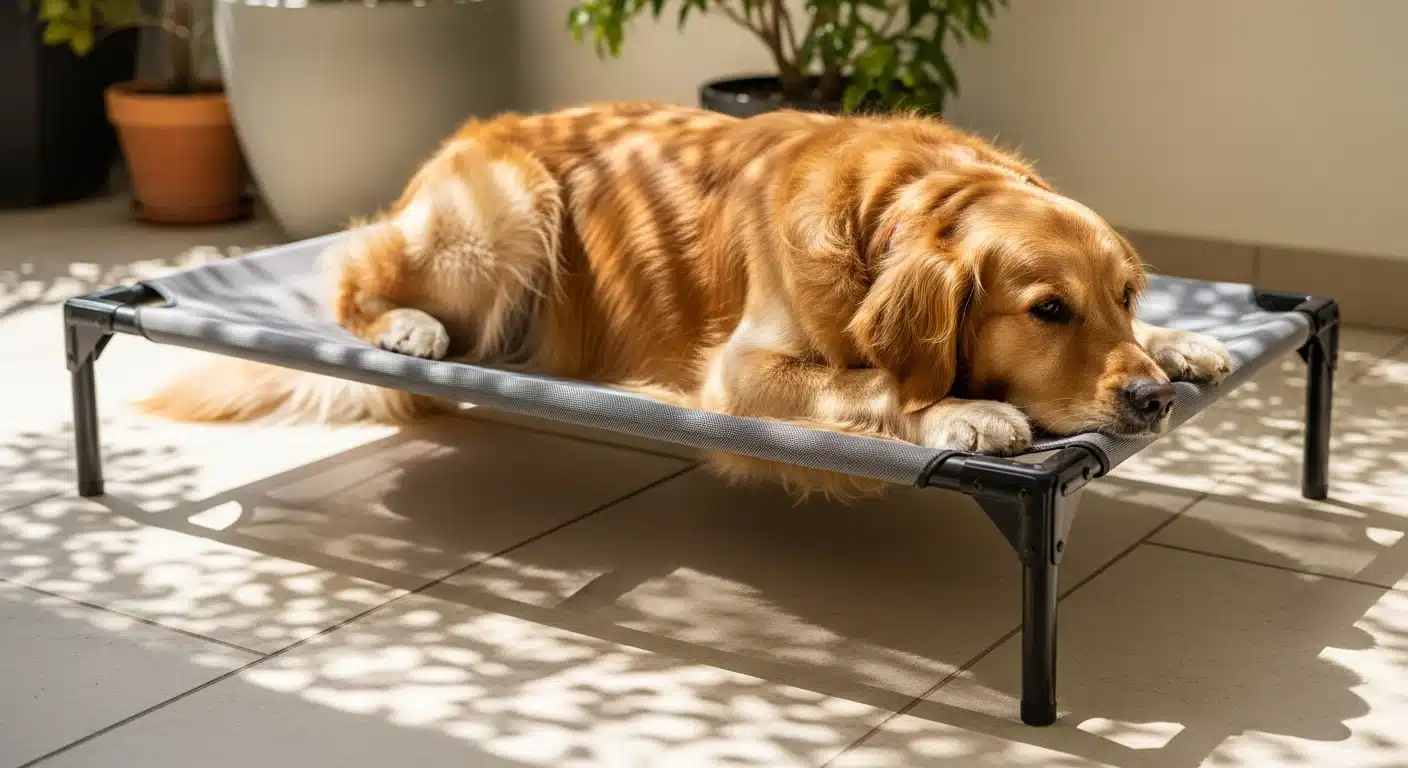
Are Elevated (Raised) Dog Beds Good for Dogs?
Elevated cots suit a lot of dogs brilliantly, and the wrong dogs terribly. Here’s who benefits, who doesn’t, and what to use instead.
Are elevated dog beds good for dogs? For the right dog, yes, they’re genuinely excellent: exceptional airflow, nothing to chew and gut, easy to hose down, and a firm supportive surface that handles outdoor or messy environments without complaint. For the wrong dog, a bony senior with arthritis, a small breed that feels the cold, or a dog that needs to sink into padding, a raised mesh cot can be uncomfortable or even counterproductive. This guide gives you the honest split: what an elevated (or “cot”) bed actually is, the real pros and cons, which dogs are best matched for one, and which dogs need an orthopedic bed instead.
When a cot isn’t right: our top orthopedic pick
Elevated cots work brilliantly for many dogs, but if yours needs cushioned support rather than firm mesh, here’s what we’d recommend instead. Verified in stock; tap through for the live price.
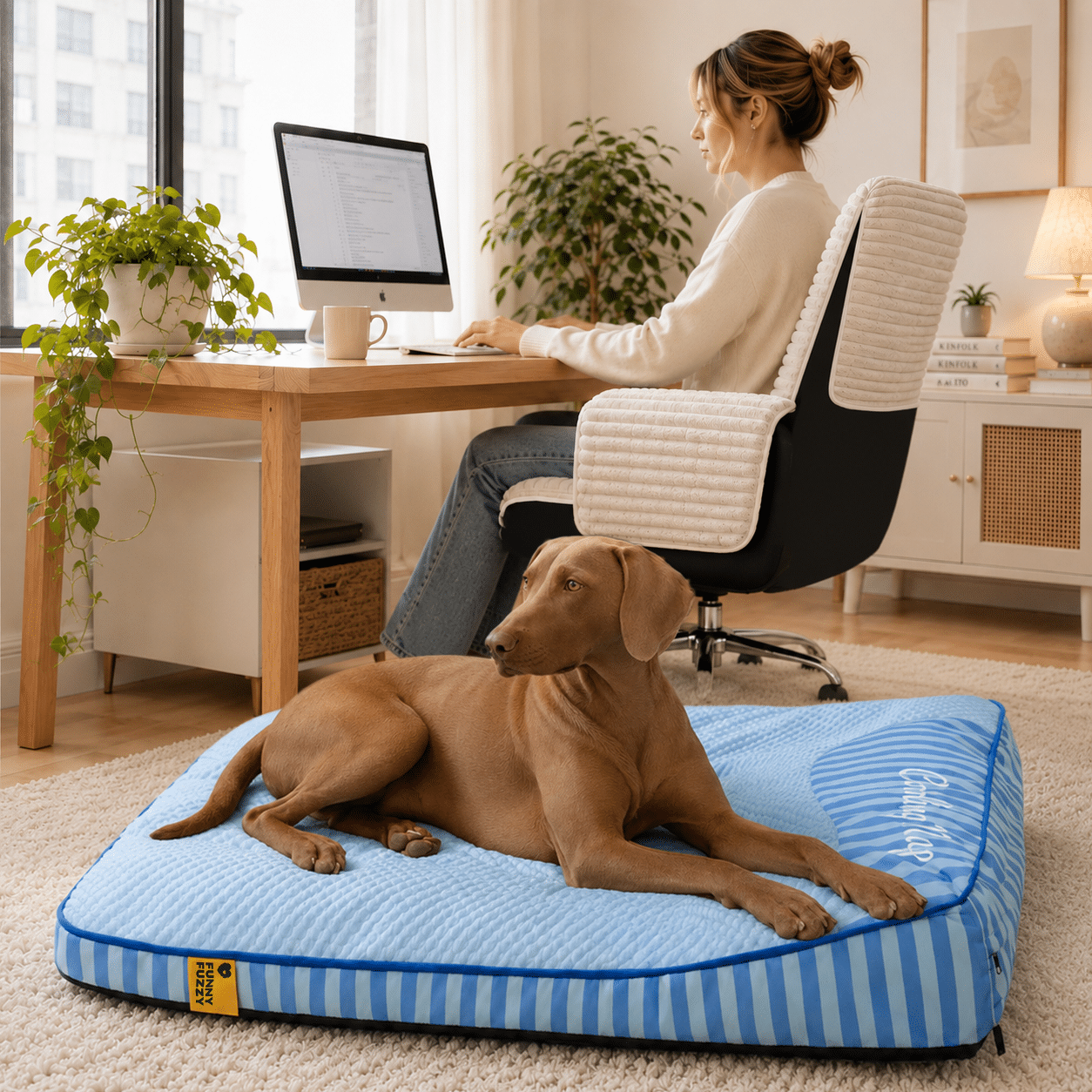
FunnyFuzzy Orthopedic Dog Bed
For dogs that an elevated cot doesn’t suit, seniors with thin muscle mass, arthritic joints, or dogs that simply want to sink into something soft, the FunnyFuzzy Orthopedic gives you genuine memory-foam support plus a wraparound bolster to rest against. The waterproof base protects floors, the cover zips off for washing, and the surround design means even restless sleepers can’t roll out. If your dog needs cushioning rather than airflow, this is where to start.
What we like
- True orthopedic foam distributes weight evenly, no pressure points on hips or elbows
- Wraparound bolster gives anxious or restless dogs something to lean against
- Waterproof base keeps floors dry, good for incontinent seniors
- Zip-off cover is machine washable for easy cleaning
The catches
- Foam retains heat, less ideal in warm climates without AC compared to a cot
- Bolster sides can be tricky to step over for dogs with severe mobility issues
- Higher up-front cost than a basic cot bed
What is an elevated dog bed?
An elevated dog bed, also called a raised bed, cot bed, or dog cot, is a flat platform made from mesh, fabric, or canvas stretched taut across a rigid frame, usually aluminium or steel, that sits several inches off the ground. There’s no fill, no foam, no stuffing. The sleeping surface itself is the mesh or fabric, held under tension by the frame.
They come in a wide range of sizes (most brands go up to XXL for 100 lb+ dogs) and in indoor or outdoor-rated versions. Popular brands include K9 Ballistics, Kuranda, and Coolaroo, none of which we’re selling here, and they sit anywhere from 4 to 9 inches off the floor. The design is specifically optimised for airflow, durability, and ease of cleaning, which makes them excellent for specific situations and a poor match for others.
What they are not is a soft, cushioned bed. That distinction is the key to understanding whether one is right for your dog.
The real pros of elevated dog beds
When the fit is right, elevated cots genuinely earn their reputation:
1. Outstanding airflow and cooling
This is the single biggest advantage. A solid floor, foam pad, or stuffed mattress traps body heat underneath your dog. An elevated mesh bed lets air circulate freely in all directions, beneath, around, and up through the surface itself. In hot climates, on patios, in garages, or for heavy-coated breeds (huskies, Malamutes, Bernese Mountain Dogs, double-coated retrievers) that run warm, the temperature difference is significant. Many owners in warm states report their dogs gravitating to the cot over a plush bed in summer specifically because of this cooling effect.
2. Off cold, hard, wet ground outdoors
A dog lying on a concrete patio, tile floor, or damp lawn is in contact with a hard, heat-leeching surface. A raised bed lifts them off it entirely. This matters especially outdoors, on decks, patios, in kennels, in vehicles, where you can’t always use a foam pad without it getting soaked. The elevated design also means no pooling water underneath if it rains; the bed drains and dries quickly.
3. Extremely durable, nothing to gut
Chewing dogs destroy stuffed beds by gripping a seam and pulling the fill out. A mesh or canvas cot has no fill, no batting, no stuffing to target. Most are built with chew-resistant fabric or reinforced seams specifically because the design removes the motivation and the material to chew. For dogs that habitually destroy plush beds, a cot often ends the cycle entirely.
4. Easy to clean, hoseable
Shake off the mud, hose it down, let it dry in twenty minutes. Mesh doesn’t hold odours the way foam or fibrefill does, and there’s no cover to keep laundering. For outdoor dogs, dogs that come in muddy from walks, or multi-dog households where beds need frequent cleaning, this convenience is a genuine win.
5. Even, supportive surface
The mesh surface distributes weight reasonably evenly across the frame, no sagging or sinking that creates pressure points over time the way a worn-out foam mattress can. For dogs that sleep on their sides flat out, or large dogs with healthy joints, this firm, flat surface works well.
6. Ideal for incontinent or messy dogs
For dogs that are older and have accidents, or for post-surgery dogs on restricted activity, a cot is far easier to deal with than a foam mattress. There’s no absorbent material to soak through; fluids fall away and the surface wipes clean. Combined with a waterproof mat underneath if needed, it makes hygiene straightforward.
The honest cons of elevated dog beds
Elevated cots are not the right answer for every dog, and it’s worth being direct about where they fall short:
Not cushioned, and that matters for some dogs
The mesh surface is firm. It distributes weight reasonably but provides no padding, no pressure relief for bony prominences, and no sink-in comfort. For a thin, bony, or elderly dog, especially one that’s lost muscle mass, lying on a firm mesh surface for hours can create pressure sores on hips, elbows, and shoulders. Senior dogs with arthritis or joint pain often do better on orthopedic memory foam that moulds to their body and genuinely offloads pressure points, not a taut mesh platform.
Some dogs find the mesh uncomfortable or unfamiliar
Dogs that have slept on soft beds their whole lives sometimes refuse to use a cot. The texture, the slight spring, and the firmness are all different from what they know. While many dogs adapt quickly, some shelter studies show a preference for elevated beds over floor mattresses, others consistently choose the floor over the cot, which tells you something about that individual dog’s preference.
Cold airflow in winter
The same airflow that cools a dog in summer can make a cold-prone dog uncomfortable in winter, especially in unheated spaces. Thin-coated breeds (greyhounds, whippets, Dobermanns, Vizslas) and older dogs that feel the cold more acutely may be chilly on a cot in a draughty room or garage. A plush cushioned bed on the floor is warmer in those conditions.
Getting on and off
A dog with significant joint stiffness, a very small breed, or an older dog recovering from surgery may find the step up onto a raised cot awkward or painful. Most cots sit 4 to 9 inches off the ground, which is low, but the step is still a step. If your dog hesitates or struggles getting onto furniture, observe how they approach the cot before committing.
Elevated vs orthopedic: the honest comparison
These two bed types solve different problems. The table below covers the key trade-offs at a glance:
| Factor | Elevated Cot Bed | Orthopedic Foam Bed |
|---|---|---|
| Cooling / Airflow | Excellent, open mesh, air circulates freely underneath and through the surface | Poor, foam traps heat; some have cooling covers but it’s not the design’s strength |
| Joint & pressure-point support | Moderate, even surface, no sagging, but no cushioned pressure relief | Excellent, memory foam moulds to the body and offloads bony pressure points |
| Durability / chew resistance | Excellent, no fill to gut; many are made with reinforced chew-resistant fabric | Fair, covers can be chewed; foam fill is destructible (though bolster beds are tougher) |
| Ease of cleaning | Excellent, shake off + hose down; no absorbent fill; dries fast | Good, zip-off covers are washable; foam base can’t be fully submerged |
| Outdoor / patio use | Excellent, drains, dries fast, handles wet surfaces and concrete | Poor, foam absorbs moisture; most aren’t weatherproof |
| Best for | Hot climates, active dogs, chewers, outdoor/patio, large dogs with healthy joints | Seniors, arthritic dogs, bony or thin-coated dogs, any dog needing pressure relief |
The takeaway: it’s not that one type is universally better. They’re solving different problems. An elevated cot is primarily a cooling and durability solution; an orthopedic bed is primarily a joint support and comfort solution. The mistake is applying the wrong one.
Who elevated dog beds are best for
Elevated cots are genuinely excellent for these dogs:
- Dogs in hot climates or warm homes. If your dog runs warm, sleeps on cool tile by choice, or lives in a state where temperatures climb, a cot’s all-round airflow is the most effective cooling bed design available. It beats cooling covers on foam beds by a significant margin.
- Heavy-coated breeds. Huskies, Malamutes, Bernese Mountain Dogs, Golden Retrievers, Newfoundlands, double-coated dogs that overheat easily are natural cot candidates. The mesh keeps air moving around a coat that would otherwise trap heat against any solid surface.
- Outdoor or patio dogs. A cot handles concrete, decking, gravel, and grass without soaking through or going mouldy. It’s the right bed for a sheltered porch, a kennel, or any outdoor resting spot.
- Chewers and gutters. If your dog has destroyed multiple stuffed beds by pulling out the filling, a cot removes the behaviour’s pay-off. There’s nothing to gut.
- Incontinent or messy dogs. Older dogs with accidents, dogs on medication that causes incontinence, or post-surgical dogs with restricted movement do well on a cot because there’s no absorbent fill to soak through and the surface is genuinely easy to clean.
- Large, active dogs with healthy joints. A young or middle-aged large breed in good condition. Labradors, German Shepherds, Weimaraners, Ridgebacks, that sleeps sprawled flat benefits from the firm even surface and the airflow without needing cushioning.
- Multi-dog or kennel households. When you’re cleaning multiple beds regularly, the hoseable, quick-dry cot is simply easier to manage at scale.
Who should use an orthopedic bed instead
For these dogs, a cot is the wrong call, and it’s worth being clear about why:
- Senior dogs with arthritis or joint pain. A dog with osteoarthritis, hip dysplasia, or elbow dysplasia needs genuine pressure relief. Memory foam that moulds to the body and cushions bony prominences is what reduces pain and improves sleep quality, a taut mesh surface doesn’t provide that. An orthopedic bed built with certified supportive foam is the right choice.
- Thin or bony dogs. Greyhounds, Whippets, Italian Greyhounds, and other sight hounds have very little muscle or fat over their hips and elbows. Lying on a firm mesh surface for extended periods can cause pressure sores. They need softness.
- Post-surgical or recovering dogs. Dogs recovering from orthopaedic surgery need to rest comfortably without pressure on healing joints. The firmness of a cot isn’t appropriate here; orthopedic foam is.
- Cold-climate or cold-prone dogs. If your home is cold in winter, your dog is a thin-coated breed, or your dog is older and feels the cold more, the airflow a cot provides in summer becomes a liability in winter. A cushioned bed that retains warmth is a better call.
- Dogs that prefer to burrow or nest. Some dogs want to push into soft bedding, pull it around themselves, or nest before lying down. A firm mesh cot offers none of this. If your dog does this on every bed, observe whether they actually use a cot before investing in one.
If you’re unsure what type of bed your senior dog actually needs, our guide to what orthopedic dog beds actually are explains how the foam differs and what to look for.
The best of both: cot + orthopedic topper
Here’s something most articles don’t mention: you don’t have to choose. A cot bed with an orthopedic foam topper gives you the best of both types, the elevated airflow and easy-clean frame of a cot, with a removable foam or fleece layer on top for warmth and cushioning.
This combination works especially well for:
- Dogs in variable climates, use the cot bare in summer, add the topper in winter.
- Older dogs that still need airflow but whose joints need a little more cushioning than a bare cot provides.
- Multi-season outdoor setups where you want a weatherproof base but some comfort added indoors.
If you go this route, choose a topper sized to the cot’s surface with a waterproof base layer so it doesn’t absorb moisture from the mesh. Remove and wash it regularly, the topper becomes the hygiene weak point that the bare cot avoids. This approach won’t match a fully orthopedic bed for joint support, but it’s a meaningful upgrade over a bare cot for a dog that needs a little padding.
Elevated bed vs cooling bed: is there overlap?
Owners sometimes ask whether they need a dedicated cooling dog bed or whether an elevated cot does the same job. The honest answer is that for most dogs in warm climates, a cot does the cooling job extremely well, the continuous airflow underneath and through the mesh is one of the most effective passive cooling mechanisms in any dog bed design.
Dedicated cooling beds (gel-fill pads, water-fill mats) work differently, they pull heat conductively from the dog’s body rather than via airflow. They can be more effective in very high heat for short periods, but they tend to be less durable, harder to clean, and not suitable for outdoor or rough use. For an outdoor patio setup, a cot will outlast and outperform most dedicated cooling pads. For a dog on a hot car journey or a working dog in extreme heat, a gel pad has a role.
For most owners choosing a summer bed for a warm-running dog, an elevated cot is the simpler, more durable, and more versatile choice, and it doubles as an outdoor bed, which few cooling mats do.
How to choose the right elevated bed
If you’ve decided a cot is the right fit for your dog, a few things are worth checking before you buy:
- Size. The bed should be long enough for your dog to lie flat with their body fully on the surface. Most manufacturers publish weight limits and dimensions, for a large dog, measure your dog lying down and add a few inches each way.
- Frame material. Aluminium frames are lighter and rust-resistant, making them better for outdoor and patio use. Steel frames are heavier but often more rigid under a heavy dog. Both work, pick based on where the bed will live.
- Fabric type. Coolaroo-style breathable mesh has maximum airflow. Heavy-duty canvas or nylon is tougher and more chew-resistant but less breathable. For a chewer, the tougher fabric wins; for a hot climate, prioritise the mesh.
- Height off ground. Most cots sit 4 to 9 inches up. Higher isn’t always better, a dog with joint issues needs the lowest height so the step up is manageable. Consider adding ramp steps for elderly dogs if you go higher.
- Indoor vs outdoor rating. Outdoor cots use UV-resistant, weather-proof fabric and rust-resistant frames. If the bed will live outside, check this explicitly, not all cots are weatherproof.
For a broader look at what to prioritise when choosing any large dog bed, our large dog bed buying guide covers the full picture. And our main dog beds hub compares types side by side.
Elevated dog beds: common questions answered
Are elevated dog beds good for dogs?
Yes, for the right dogs, they’re excellent for cooling, outdoor use, chewers, messy or incontinent dogs, and large active breeds with healthy joints. The airflow from a raised mesh surface is one of the most effective passive cooling designs available, and there’s nothing to gut or stain. They’re less suited to senior dogs with arthritis, thin or bony dogs that need pressure relief, or cold-prone breeds in winter, those dogs need orthopedic foam instead.
Are raised dog beds good for dogs with arthritis?
Generally no, a bare raised cot provides a firm, taut surface with no cushioning, which doesn’t relieve pressure on arthritic hips, elbows, or shoulders. Dogs with arthritis do better on orthopedic memory foam that moulds to their body and genuinely offloads pressure points. A cot with a thick foam topper added on top can work as a mild compromise, but for dogs with real joint pain, a proper orthopedic bed is the right call. See our best orthopedic dog beds guide for detailed picks.
Are cot dog beds good for large dogs?
Yes, with the right conditions. Large active dogs with healthy joints benefit from the even, firm surface and the cooling airflow, there’s no sagging foam to bottom out, and the mesh handles their weight well. Most elevated cots go up to XXL size and have high weight limits. The caveat: large senior dogs or large breeds prone to hip/elbow dysplasia (German Shepherds, Labradors, Rottweilers) need orthopedic support rather than a firm cot. Size of dog alone doesn’t determine which is right, age and joint health does.
Do elevated dog beds help with cooling?
Yes, this is one of the strongest genuine advantages of a cot. The open mesh allows air to circulate freely beneath and through the sleeping surface, so body heat doesn’t build up the way it does on a solid foam pad or stuffed mattress. For dogs in hot climates, heavy-coated breeds, or outdoor setups, an elevated cot is one of the most effective passive cooling bed designs available. For very high heat, a gel cooling pad provides more aggressive conductive cooling, but for everyday warmth a cot handles it well.
Can I use an elevated dog bed outdoors?
Yes, and this is one of the best uses for them. Look for outdoor-rated cots with UV-resistant, weatherproof fabric and rust-resistant aluminium frames, not all cots are built for outdoor exposure. A good outdoor cot lifts your dog off damp grass, wet concrete, and hard paving; drains and dries quickly after rain; and handles the dirt and mud of outdoor life far better than any stuffed mattress. Many owners keep a cot on the patio or deck year-round for this reason.
Should senior dogs use elevated beds?
It depends on the individual dog’s joint health and mobility. A healthy senior dog with no arthritis and good mobility can do fine on a cot, and may actually benefit from the cooler surface if they tend to run warm. But a senior dog with arthritis, significant muscle loss, or joint pain needs orthopedic foam that cushions pressure points, not a firm taut mesh. If your dog hesitates to get up and down, chooses the floor over beds, or has visible stiffness after lying down, an orthopedic bed is the more appropriate choice.