 Dog Gear, Sized Right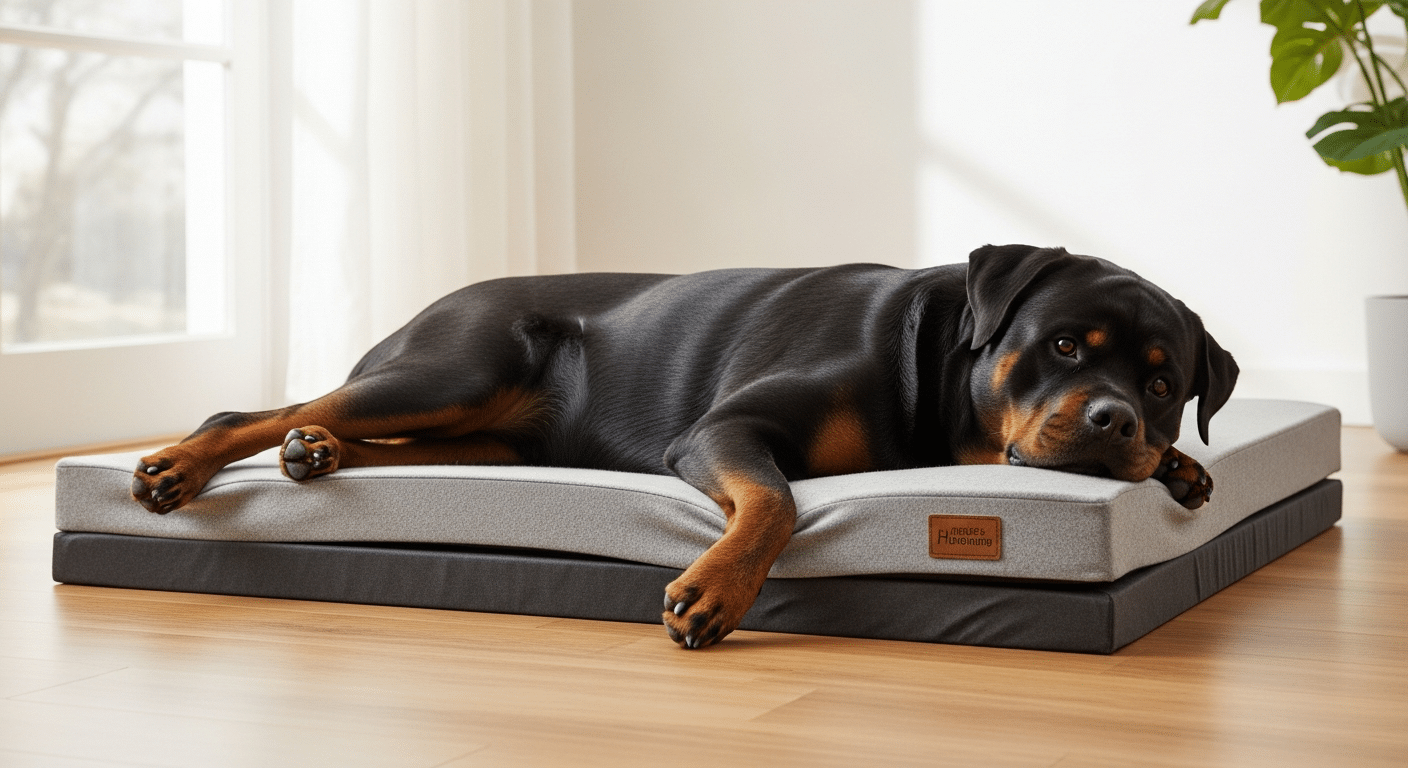
Best Dog Bed for a Rottweiler
A Rottweiler is a heavy, dense, muscular dog of 80 to 135 lb, and that weight is exactly why so many beds fail it. A thin or cheap bed simply bottoms out under a Rottie, leaving the dog on the hard floor and loading the joints this breed is famously prone to. Here are the genuinely supportive, correctly-sized, durable beds that suit the breed, ranked, in stock, and sized right.
Looking for the best dog bed for a Rottweiler? Start here: a Rottweiler is a heavy, blocky, powerfully built dog of about 80 to 135 lb, and that weight shapes everything about the right bed. A dense, muscular Rottie puts far more load on a bed than a leaner dog of the same height, so a thin pad or a cheap shredded-foam bed bottoms out under it, leaving the dog effectively lying on the floor. That hard pressure on the elbows, hocks and hips causes calluses and pressure sores and loads the exact joints Rottweilers are most prone to trouble with, the breed sits near the top of the list for both hip and elbow dysplasia. What you actually want is a large orthopedic bed with thick, high-density foam that won’t compress flat, a durable washable cover that survives a strong dog, and a footprint big enough for a Rottweiler to sprawl right out. Below we explain exactly how to size a bed for this breed, why orthopedic support and foam density matter so much for a heavy dog, how to stop a bed bottoming out, how to handle the chewing, and then the three beds we’d actually buy, one best-overall, one clinical-grade orthopedic, and one built for chewers. For everything else your dog needs, see our Rottweiler gear guide.
The best dog beds for a Rottweiler, ranked
Every pick is an orthopedic, Rottweiler-appropriate bed we’d put under a heavy 90 to 130 lb dog, verified in stock. Tap through for the live price.
FunnyFuzzy XL Washable Rectangle Orthopedic Dog Bed
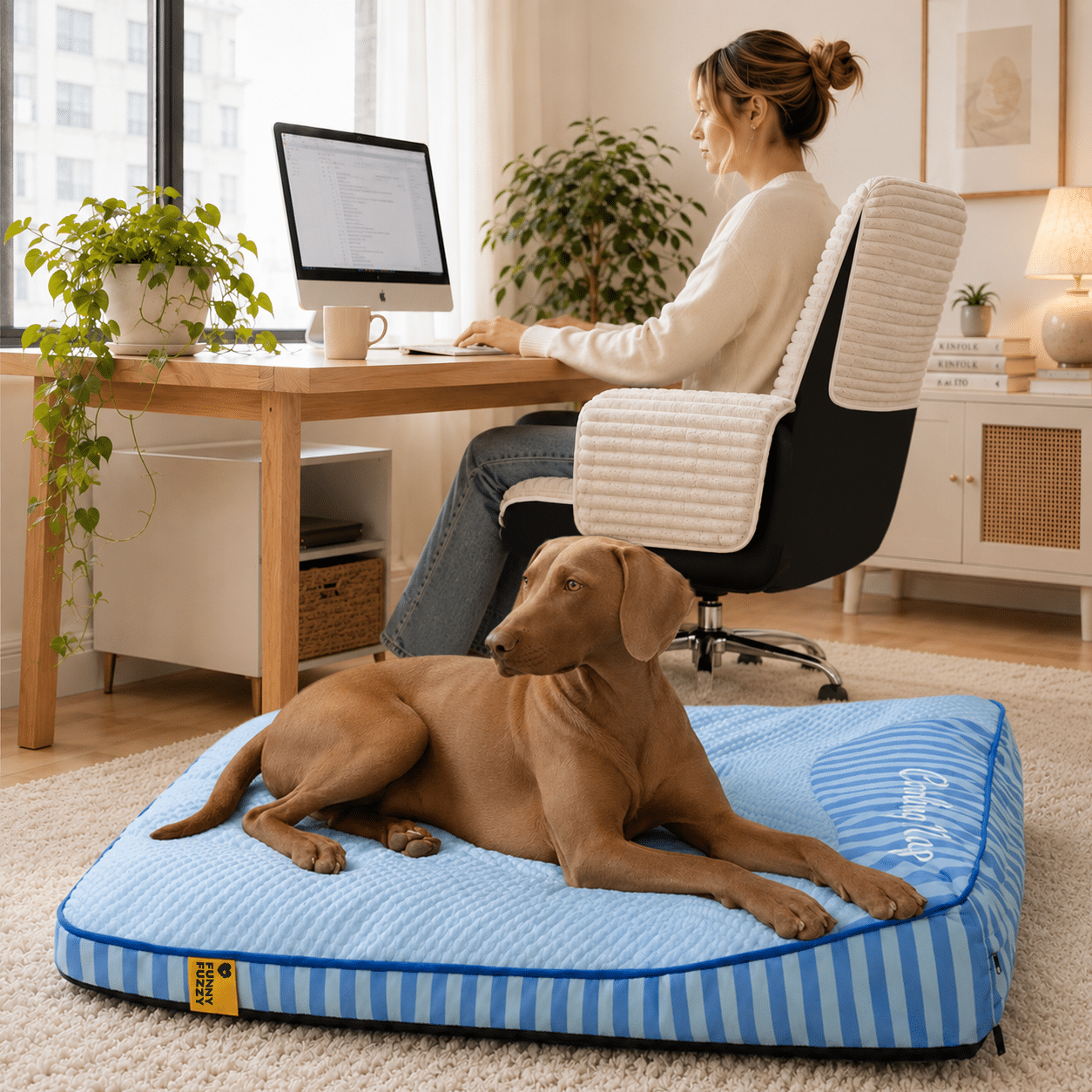
Our top pick for most Rottweilers. Rotties are heavy, blocky dogs that love to sprawl flat out on their side, and this is exactly the bed for that: a generous rectangular orthopedic foam mattress with no restrictive bolsters to fold a big dog into, wrapped in a fully machine-washable cover. The supportive foam base is thick enough to keep a 100 lb-plus Rottweiler genuinely off the hard floor, the thing that prevents the elbow calluses and joint pressure heavy breeds are prone to, and the whole cover zips off for the wash, which matters for a dog that sheds and tracks in mud. At well under a hundred dollars it badly undercuts the boutique orthopedic beds while still giving real support. Choose the Extra Large for a typical Rottweiler, and size up if yours is a 120 lb-plus male or a true sprawler.
What we like
- Big flat orthopedic surface suits a Rottweiler that sprawls rather than curls
- Supportive foam keeps a heavy 100 lb+ dog off the floor, no calluses, no bottoming out
- Entire cover is removable and machine-washable, built for shedding and muddy paws
- Far cheaper than the boutique orthopedic beds without skimping on support
The catches
- Pick the Extra Large (or size up for a 120 lb+ male), smaller sizes are too snug for a Rottweiler
- Foam is supportive but not the 7-inch slab a heavy senior with arthritis may want
- Not a chew-proof bed, fine for a settled adult, not a determined destroyer
Big Barker 7″ Orthopedic Dog Bed (Giant)
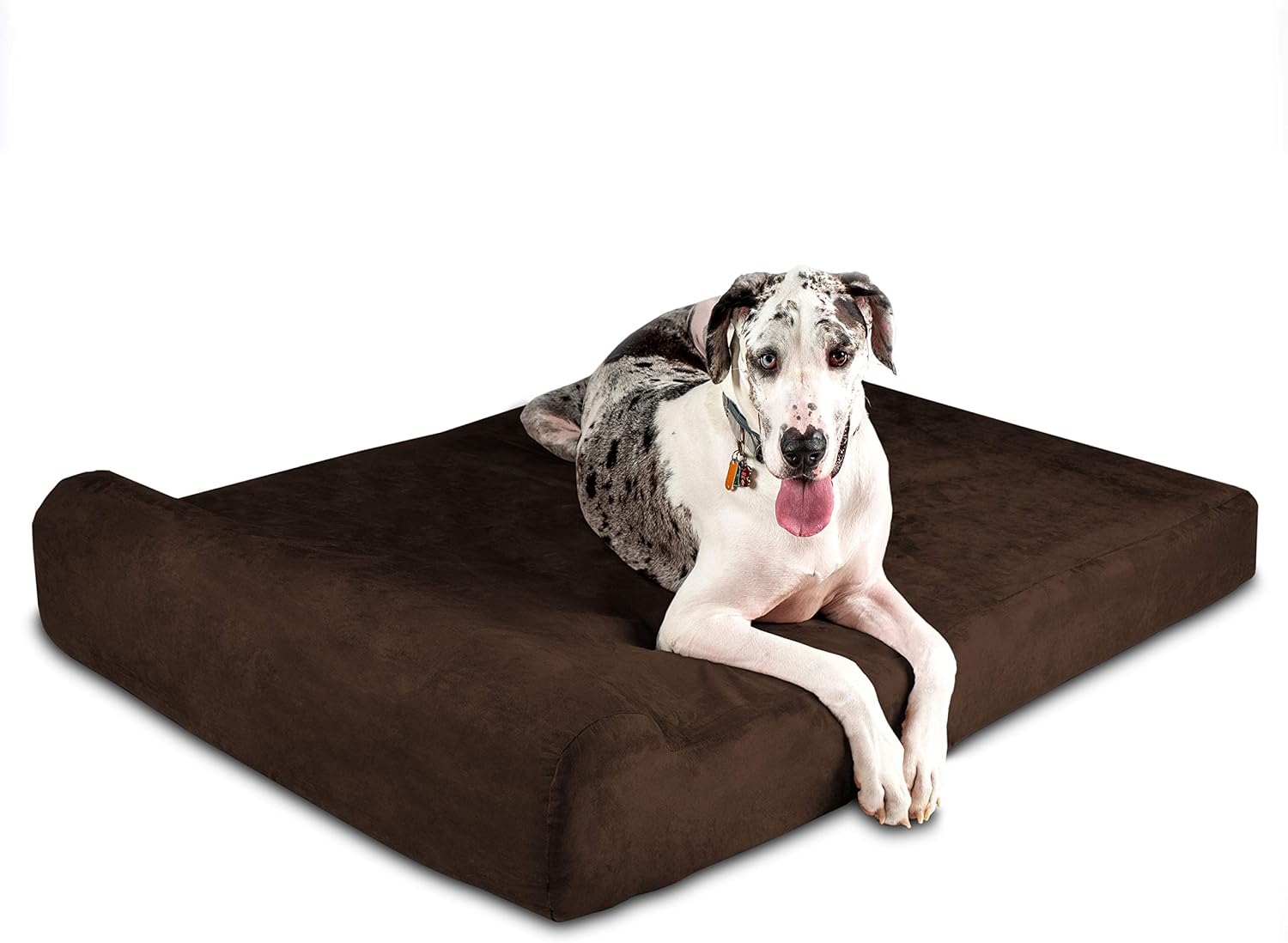
If your Rottweiler is older, on the heavier end, or already showing stiffness, this is the bed. Big Barker is the large-breed orthopedic flagship: a full 7 inches of American-made therapeutic foam in a 3-layer system that stops even a 130 lb dog from bottoming out onto the floor. It’s the only dog bed backed by a University of Pennsylvania School of Veterinary Medicine study, which found large dogs had reduced joint pain and improved mobility after sleeping on one. For a heavy Rottweiler the Giant size is the right call, room to stretch with a headrest bolster, and the washable microsuede cover plus a 10-year don’t-go-flat warranty make it a genuine buy-it-once bed for a breed that’s high on the list for both hip and elbow dysplasia.
What we like
- 7″ of clinical-grade foam keeps even a 120-135 lb Rottweiler off the floor, no bottoming out
- The only dog bed with a peer-reviewed UPenn vet-school study behind it
- Giant size suits the biggest Rottweilers, with a headrest edition for head-resters
- 10-year guarantee it won’t go flat, genuinely a buy-it-once bed
The catches
- The most expensive pick here, it’s an investment, not an impulse buy
- Cover is washable but not marketed as chew-proof
- Roll-packed; it needs a day or two to fully expand out of the box
K9 Ballistics XL Tough Ripstop Orthopedic Bed
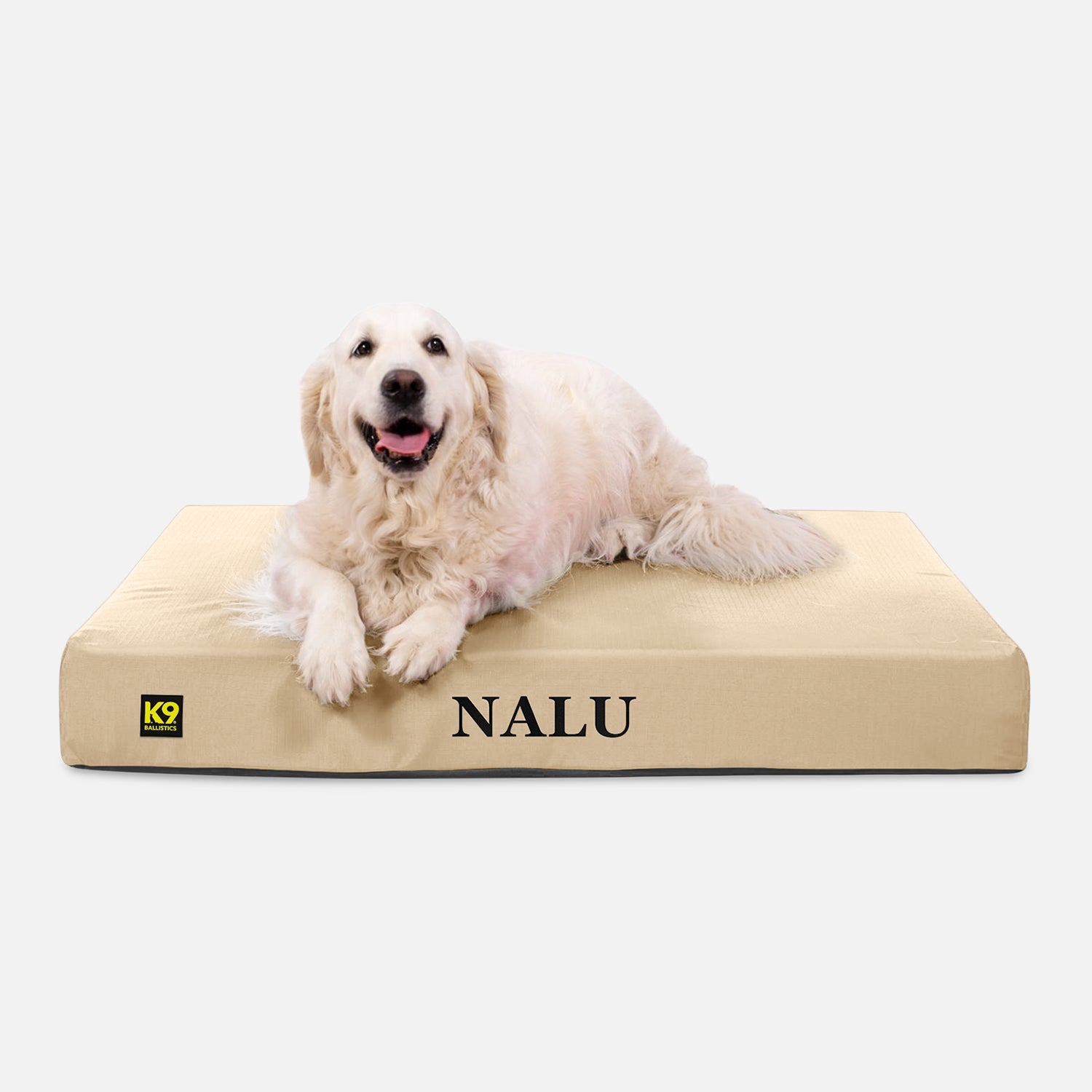
Rottweilers are powerful, strong-jawed dogs, and a soft plush bed can last about a week with a bored chewer. This is the answer: a genuinely chew-resistant and dig-resistant orthopedic bed wrapped in ballistic ripstop fabric over a solid orthopedic foam core. You still get real joint support, but in a cover built to survive a 100 lb-plus working dog. The cover is removable, machine-washable and water-resistant, and the XL size (about 54″ × 38″) gives a big Rottweiler room to flop and stretch with the heavy frame fully supported. It’s the smart middle ground between a cushy bed and an indestructible aluminum cot.
What we like
- Ballistic ripstop cover survives chewers and diggers that destroy plush beds
- Solid orthopedic foam core still supports a heavy Rottweiler’s joints and prevents calluses
- Removable, machine-washable, water-resistant cover handles drool and mud
- XL (54×38) size gives a big, muscular Rottweiler room to flop and stretch
The catches
- Tough fabric is less plush-soft than a microsuede bed on day one
- No bolster headrest in the flat rectangle version
- A truly determined destroyer can still defeat any fabric, then go elevated/aluminum
Why a Rottweiler needs a special kind of bed
A Rottweiler looks like it could sleep on concrete and not care, and that’s exactly the trap. The very things that make a Rottie a Rottie also make most off-the-shelf dog beds a poor fit. A Rottweiler is a heavy, dense, powerfully muscled dog: males stand 24 to 27 inches and weigh roughly 95 to 135 lb, females 22 to 25 inches and 80 to 100 lb. All that weight is concentrated on a blocky frame, and it puts three specific demands on a bed.
Three things separate a good Rottweiler bed from one that fails within months:
- It has to carry the weight without bottoming out. A 100 to 135 lb Rottweiler loads a bed far harder than a lanky dog of the same length. On a thin pad or cheap shredded-foam bed, all that weight compresses the filling flat in the middle, so the dog ends up lying on the floor through the bed. A bed that bottoms out under a Rottweiler never really worked, and it’s the single most common mistake owners make.
- It has to support the joints. Rottweilers are one of the breeds most predisposed to both hip and elbow dysplasia, plus arthritis and cruciate-ligament trouble as they age. A proper orthopedic surface distributes the dog’s considerable weight and takes pressure off the hips, elbows and spine, preventive care for a young Rottie and real pain relief for an older one.
- It has to survive a strong dog. Rottweilers are powerful, intelligent working dogs and, when bored or under-exercised, can be hard on their bedding. The cover needs to be durable, washable and water-resistant, and for a chewer, genuinely chew-resistant.
Get those three things right, high-density orthopedic foam that won’t bottom out, correct XL/Giant sizing, and a tough washable cover, and you’ve got a bed that lasts years and keeps a Rottweiler’s joints and elbows protected. Miss any one and you’ll be re-buying by next season. The rest of this guide walks through each. If you’re outfitting your Rottweiler from scratch, the bed is one piece; our Rottweiler gear guide covers the crate, harness, toys and the rest.
What size dog bed for a Rottweiler?
This is the question that trips up most owners, because dog-bed “sizing” is wildly inconsistent between brands, one company’s “Large” is another’s “Medium,” and almost none are built with a 130 lb dog in mind. So ignore the label and size by your actual dog.
The rule: your Rottweiler should be able to lie fully stretched out on its side, legs extended, without any part hanging off the edge. Rottweilers are big-bodied dogs and many sleep flat-out, so this matters. To find the right number, measure your dog from nose to base of tail while it’s standing or lying stretched, then add 8 to 12 inches to get the minimum bed length. For a full-grown Rottweiler that almost always lands you in XL-to-Giant territory, roughly a 48 to 54 inch bed (a big 120 lb-plus male or a sprawler wants the 54″ end or a true Giant).
| Rottweiler | Typical weight | Recommended bed size | Approx. bed length |
|---|---|---|---|
| Female adult | 80 to 100 lb | Large to XL | ~46 to 48″ |
| Male adult | 95 to 120 lb | XL | ~48 to 54″ |
| Big male / sprawler | 120 to 135+ lb | Giant | 54″+ |
| Rottweiler puppy (still growing) | varies | Buy for the adult size | size to grown dog |
Two more sizing notes specific to this breed:
- Check the foam, not just the dimensions. A bed can be the right length and still be far too thin, under a heavy Rottweiler, a 2 to 3 inch pad compresses to nothing. Look for at least 4 inches of high-density foam (and 7 inches for a heavy senior, more on this below) so the dog is genuinely lifted off the floor.
- If your Rottweiler sprawls, go flat and size up. Many Rotties sleep flat-out on their side with the legs fully extended rather than curled. If yours does, a large flat orthopedic mattress (rather than a bolster bed that folds the dog in) at the larger end of XL, or a Giant, keeps the whole dog on the supportive surface.
Orthopedic foam and bottoming-out: why density matters for a heavy breed
For a Rottweiler, “orthopedic” isn’t a marketing upsell, it solves a real physics problem. Here’s the issue: a Rottweiler is one of the heaviest common companion breeds, and all of that weight presses down through a relatively small contact area when the dog lies down. On a thin pad or a cheap bed stuffed with loose shredded foam, that weight compresses the filling flat in the middle, the dog bottoms out and is effectively lying on the floor, which causes calluses and pressure sores and puts hard pressure on the exact joints this breed is prone to having trouble with.
A real orthopedic bed solves this with thick, high-density foam that holds its shape under a heavy dog’s weight, distributing the load so no single joint or bony point bears it. What to look for:
- Thickness: aim for at least 4 inches of foam for an adult Rottweiler, and 7 inches for a heavy, senior, or arthritic dog. Thin “orthopedic” pads of 2 to 3 inches will bottom out under a 100 lb-plus Rottweiler within months.
- Density: this is the one that matters most for a heavy breed. Look for high-density foam (around 4.5 to 5 lb/cu ft) in a single solid core or a layered support system, not loose shredded fill, which packs down under weight and goes flat fast. Density, not just thickness, is what stops a bed bottoming out under a Rottweiler.
- CertiPUR-certified foam: a third-party standard confirming the foam is made without certain harmful chemicals, worth having for a dog spending hours a day on it.
- Memory foam vs. support foam: memory foam contours to the body and relieves pressure points (which protects a Rottweiler’s elbows and hips); firmer support foam resists bottoming out under the weight. The best beds layer both, a firm supportive base topped with a contouring comfort layer.
This is the area where the premium beds earn their price. The Big Barker, for example, uses a 7-inch, 3-layer foam system and is the only dog bed backed by a peer-reviewed University of Pennsylvania veterinary study, which found that large dogs sleeping on one showed measurably reduced joint pain and improved mobility. For a young Rottweiler that’s preventive joint care and callus prevention; for a heavy older one it can be the difference between getting up stiffly and getting up comfortably. It’s also why we’d never recommend a flat blanket, a cheap bagel bed, or a shredded-foam bed as a Rottweiler’s main bed, however cozy it looks, they all bottom out under the weight.
Hip and elbow dysplasia: the Rottweiler joint reality
This is the part that matters most for a Rottweiler specifically. The breed is near the top of the list for both hip dysplasia and elbow dysplasia, most large breeds worry about one or the other, but Rottweilers are high-incidence for both, and that changes what the bed needs to do.
Why the joints take the strain. A Rottweiler carries a lot of weight on a heavy, compact frame, and dysplasia (a malformation of the hip or elbow joint) means those joints already fit and load imperfectly. Every hour the dog spends on a hard or bottomed-out surface adds pressure to joints that are already working harder than they should. Over years that accelerates arthritis and stiffness. A thick orthopedic surface that distributes the dog’s weight takes concentrated pressure off the hips, elbows and shoulders, it won’t cure dysplasia, but it reduces the joint loading and the painful pressure points that make an affected dog stiff and slow to rise.
It’s preventive, not just palliative. Owners often think of an orthopedic bed as something you buy after a dog develops joint trouble. For a Rottweiler it’s the reverse: because the breed is so predisposed, supporting the joints from a young age is genuine preventive care. Combine the right bed with sensible weight management (keeping a Rottweiler lean takes load off the joints), controlled exercise as a puppy, and your vet’s guidance, and you give those joints the best chance.
Calluses, pressure points and the heavy Rottweiler frame
Right alongside the joints, this is the day-to-day issue a good Rottweiler bed solves. Because a Rottweiler is so heavy, its bony points, the elbows, hocks and hips, bear a lot of concentrated weight every time the dog lies down, and on hard surfaces that punishes them.
Calluses and pressure sores. Repeated lying on a hard floor or an under-padded, bottomed-out bed rubs a Rottweiler’s elbows and hocks into thickened, hairless calluses, and in bad cases cracked, infected pressure sores. It’s a classic heavy-breed problem, and the weight makes it worse than in a lighter dog. The fix is simple, and it’s the whole reason foam density matters for this breed: a thick, high-density bed that the dog can’t compress flat cushions those bony points so calluses never start. If your Rottweiler already has elbow calluses, a proper orthopedic bed that doesn’t bottom out is the single most useful thing you can change.
Pressure on the joints. The same weight means a thin or bottomed-out bed puts hard, concentrated pressure on the hips and shoulders, exactly the joints a Rottweiler is predisposed to have trouble with. Distributing that load across a thick orthopedic surface is preventive care for a young dog and pain relief for an older one. Keep an eye on existing calluses, keep them moisturised, and see your vet if one cracks or looks infected, but the bed is what stops new ones forming.
Durability, chewing and cleaning: building for a Rottweiler
A Rottweiler is a powerful, intelligent working dog, and the bed has to respect that. Two breed traits drive the kind of cover you need.
Shedding and cleaning. Rottweilers shed steadily, more than the short coat suggests, with seasonal blow-outs, and a big active dog tracks in mud, drools a little, and the occasional accident happens. A bed for this breed should have a removable, machine-washable cover and, ideally, a water-resistant inner liner so spills and post-walk dirt don’t soak into the foam. “Spot clean only” is a dealbreaker for a dog this size.
The chewing. Not every Rottweiler chews its bed, but a bored, under-exercised or anxious Rottweiler absolutely can, and a Rottweiler’s jaw strength means it can shred a plush bed in minutes. How hard your dog is on bedding decides the cover you need:
- Settled adult, doesn’t chew: a standard tough washable orthopedic bed (like our FunnyFuzzy top pick) is perfect, real support and easy cleaning.
- Chews or digs at bedding: step up to a genuinely chew-resistant, dig-resistant cover, ripstop ballistic fabric like the K9 Ballistics Tough line, which keeps orthopedic foam inside a cover built to take abuse from a strong dog.
- Truly destructive: go to an elevated aluminum-frame cot (brands like Kuranda and K9 Ballistics’ elevated line). Aircraft-grade frames are effectively chew-proof and easy to hose off, though you trade away soft orthopedic foam, so they suit yards, crates and warm climates more than a main indoor bed.
One more durability detail: reinforced seams and a non-slip base. A heavy Rottweiler flopping onto a bed stresses the seams hard, and a bed sliding across a tile floor under all that weight is annoying and a slip hazard. The best beds reinforce both. If your Rottweiler is also a crate dog, match the bed to the crate footprint, our what size crate for a Rottweiler guide has the dimensions to size against. And because a lot of bed-chewing is really under-stimulation, a tired Rottweiler chews less: pair the bed with proper exercise and good chew toys for a Rottweiler.
Bed styles compared: flat orthopedic vs. bolster vs. elevated vs. donut
“Best bed” also depends on how your Rottweiler sleeps. Here’s how the main styles stack up for this heavy, often-sprawling breed:
| Style | Best for | Watch out for |
|---|---|---|
| Flat orthopedic mattress | Sprawlers (most Rotties); heavy dogs; maximum joint support; easy to size up to XL/Giant, our top-pick style | No headrest; pick high-density foam so it doesn’t bottom out |
| Bolster / sofa (orthopedic base + raised sides) | Rottweilers that rest their head on an edge or like to feel secure | Make sure the base is truly orthopedic, not just stuffed sides, and big enough that the dog isn’t folded into it |
| Elevated aluminum cot | Chewers, hot climates, outdoor/yard use, easy hose-off cleaning | No soft foam, a hard primary bed; better as a secondary/outdoor option |
| Donut / cuddler | Curl-up sleepers; anxious dogs that like to feel enclosed | Almost always too small and under-supported for a 100 lb+ Rottweiler, rarely the right main bed |
For most Rottweilers we’d start with a large flat orthopedic mattress, it gives a sprawling, heavy dog the most supportive surface area and is the easiest style to find in a true XL or Giant. A bolster orthopedic bed is a good pick if your Rottweiler likes to rest its head on a raised edge, as long as the base is genuinely orthopedic and big enough. Reserve the elevated cot for chewers or warm climates, and treat a donut bed as a secondary “extra cozy” option rather than the main support bed, most are far too small and too soft to properly support a Rottweiler.
Health notes every Rottweiler owner should know
A few breed-specific health realities make the right bed more than a comfort purchase:
- Hip & elbow dysplasia. Rottweilers are high-incidence for both. A supportive orthopedic surface won’t cure them, but it reduces joint loading and the painful pressure points that make an affected dog stiff first thing in the morning.
- Arthritis & cruciate (ACL/CCL) trouble. Heavy, active breeds like the Rottweiler are prone to osteoarthritis with age and to cruciate-ligament injuries. A bed that lets the dog rest in comfort and rise without strain helps an aging or recovering dog.
- Elbow & hock calluses. The classic heavy-breed problem. Thick, high-density foam that doesn’t bottom out prevents the constant hard-floor pressure that creates calluses and pressure sores in the first place.
- Weight management. Carrying extra pounds multiplies the load on a Rottweiler’s already-vulnerable joints. Keeping the dog lean is one of the best things you can do for its joints, and a comfortable bed encourages proper rest and recovery.
- Heavy frame & recovery. Rottweilers are powerful working dogs, and quality rest is when muscle and joints recover. A comfortable, supportive bed encourages a dog to actually settle and rest deeply between bursts of activity.
How we picked these beds
We started from the breed, not the bed. A Rottweiler’s heavy, dense frame, its high predisposition to both hip and elbow dysplasia, its callus risk and its powerful jaws set hard requirements. XL/Giant sizing, thick high-density orthopedic foam that won’t bottom out, and a durable, washable cover, and we only considered beds that meet them and are actually in stock right now. Then we ranked for the three most common Rottweiler situations:
- Best overall for a typical adult Rottweiler: the FunnyFuzzy XL Washable Rectangle Orthopedic Dog Bed, a big flat orthopedic surface a Rottie can sprawl across, with a fully washable cover, at a price that doesn’t punish you for owning a big dog.
- Best orthopedic / for seniors and the heaviest dogs: the Big Barker 7″ (Giant), the clinical-grade, UPenn-studied flagship, correctly sized for a heavy Rottweiler, and the bed we’d choose for an older, arthritic, or dysplasia-prone dog.
- Most durable / for chewers: the K9 Ballistics XL Tough Ripstop, real orthopedic foam inside a chew- and dig-resistant ballistic cover, in a true XL.
All three are correctly sized for a Rottweiler, all three have washable covers, and every buy button goes to a live listing we verified in stock before publishing. For more dog beds beyond the Rottweiler-specific picks, see our full dog bed buyer’s guide.
Best dog bed for a Rottweiler: common questions
What size bed for a Rottweiler?
An XL bed, usually about 48 to 54 inches long, and a big 120 lb-plus male should go Giant. Ignore brand size labels and size to your dog: measure from nose to base of tail and add 8 to 12 inches to get the minimum bed length. Rottweilers are heavy, big-bodied dogs and many sleep stretched flat out, so a full-grown Rottweiler (80 to 135 lb) almost always needs an XL rather than the Large its height alone might suggest, and a 120 to 135 lb male or a true sprawler should go to a Giant. Also check the foam, not just the dimensions: aim for at least 4 inches of high-density foam (7 inches for a heavy senior) so the bed doesn’t bottom out under the weight. For a puppy, buy for the adult size now rather than re-buying as it grows.
What is the best orthopedic bed for a heavy breed like a Rottweiler?
For a heavy breed like a Rottweiler, the standout orthopedic bed is the Big Barker 7″ in the Giant size. It uses 7 inches of American-made therapeutic foam in a 3-layer system that keeps even a 130 lb dog from bottoming out onto the floor, which is exactly what prevents the elbow calluses and joint pressure heavy dogs are prone to, and it’s the only dog bed backed by a peer-reviewed University of Pennsylvania School of Veterinary Medicine study, which found large dogs had reduced joint pain and improved mobility after sleeping on one. It carries a 10-year warranty that it won’t go flat, which matters for a breed high on the list for both hip and elbow dysplasia. If you want orthopedic support at a lower price, the FunnyFuzzy XL orthopedic bed is our best-overall pick for a typical adult Rottweiler.
Why does my Rottweiler’s bed keep going flat?
Because it’s bottoming out, the foam is too thin or too low-density to carry a Rottweiler’s weight. A Rottweiler is one of the heaviest common breeds, and all that weight presses down through a small contact area when the dog lies down. A thin pad or a bed stuffed with loose shredded foam simply compresses flat in the middle, so the dog ends up lying on the floor through the bed. The fix is foam density, not just thickness: look for at least 4 inches of high-density foam (around 4.5 to 5 lb/cu ft) in a solid core or layered support system, and 7 inches for a heavy or senior dog. Solid orthopedic foam holds its shape under a heavy dog where shredded fill and thin pads collapse.
Do Rottweilers need an orthopedic bed?
Yes, more than almost any breed their size. A Rottweiler is a heavy, dense, muscular dog, so a thin or bottomed-out bed leaves it effectively on the hard floor, which causes calluses and pressure sores and loads the joints. And Rottweilers are high-incidence for both hip and elbow dysplasia, plus arthritis and cruciate trouble with age, most large breeds only worry about one of these, but the Rottie is prone to several. A thick (4 to 7 inch), high-density orthopedic bed distributes the dog’s considerable weight, cushions the bony points, and takes pressure off the joints. For a young Rottweiler it’s preventive joint and callus care; for a senior it’s real pain relief. It’s one of the few “comfort” purchases that genuinely doubles as preventive health care.
Are Rottweilers chewers, and will they destroy a soft bed?
Some are, especially as puppies or when bored, under-exercised or anxious. Rottweilers are powerful dogs with strong jaws, and the ones that chew or dig at their bedding can shred a soft plush bed quickly. If your Rottweiler is hard on its things, skip the plush bed and choose a chew-resistant, dig-resistant cover made from ripstop ballistic fabric (like the K9 Ballistics Tough line) over orthopedic foam. For a truly destructive dog, an elevated aluminum-frame cot is effectively chew-proof and easy to hose off, though it sacrifices soft foam, so keep it for yards or warm climates. A settled adult that doesn’t destroy bedding can use a standard tough washable orthopedic bed. Remember that a lot of bed-chewing is really under-stimulation, a well-exercised Rottweiler with good chew toys is far less likely to demolish its bed.
How much should I spend on a bed for a Rottweiler?
Plan for more than a small-dog bed, because of the size and the foam involved, but you can still get a good Rottweiler bed without the giant-breed boutique price. A solid washable orthopedic bed sized for a Rottweiler runs roughly $60-$130 (our FunnyFuzzy and K9 Ballistics picks sit here), while a premium clinical-grade bed like the Big Barker Giant runs around $280+. It’s worth spending up for a heavy, callus-prone, or senior dog: a thick, high-density orthopedic bed lasts years and protects the joints and elbows, whereas a cheap pad bottoms out under the weight, holds odor, and gets re-bought every few months, costing more over time. The thing to avoid is a flimsy thin bed that’s too small and too low-density for a heavy Rottweiler at any price.
Are elevated beds good for a Rottweiler?
They have a place, but they’re rarely the best main bed for a Rottweiler. An elevated, aluminum-frame cot (like Kuranda or K9 Ballistics’ elevated line) is effectively chew-proof, keeps the dog off hot or wet ground, and hoses clean, genuinely useful for a destructive chewer, a yard or patio, or a warm climate. The trade-off is that an elevated cot has no soft orthopedic foam, so it doesn’t cushion a heavy Rottweiler’s joints and bony points the way a thick orthopedic mattress does, and it can be a hard surface for an older or arthritic dog. Our take: use an elevated cot as a secondary or outdoor bed, but give a Rottweiler a thick, high-density orthopedic bed as its primary indoor resting place to protect the joints it’s so prone to having trouble with.