 Dog Gear, Sized Right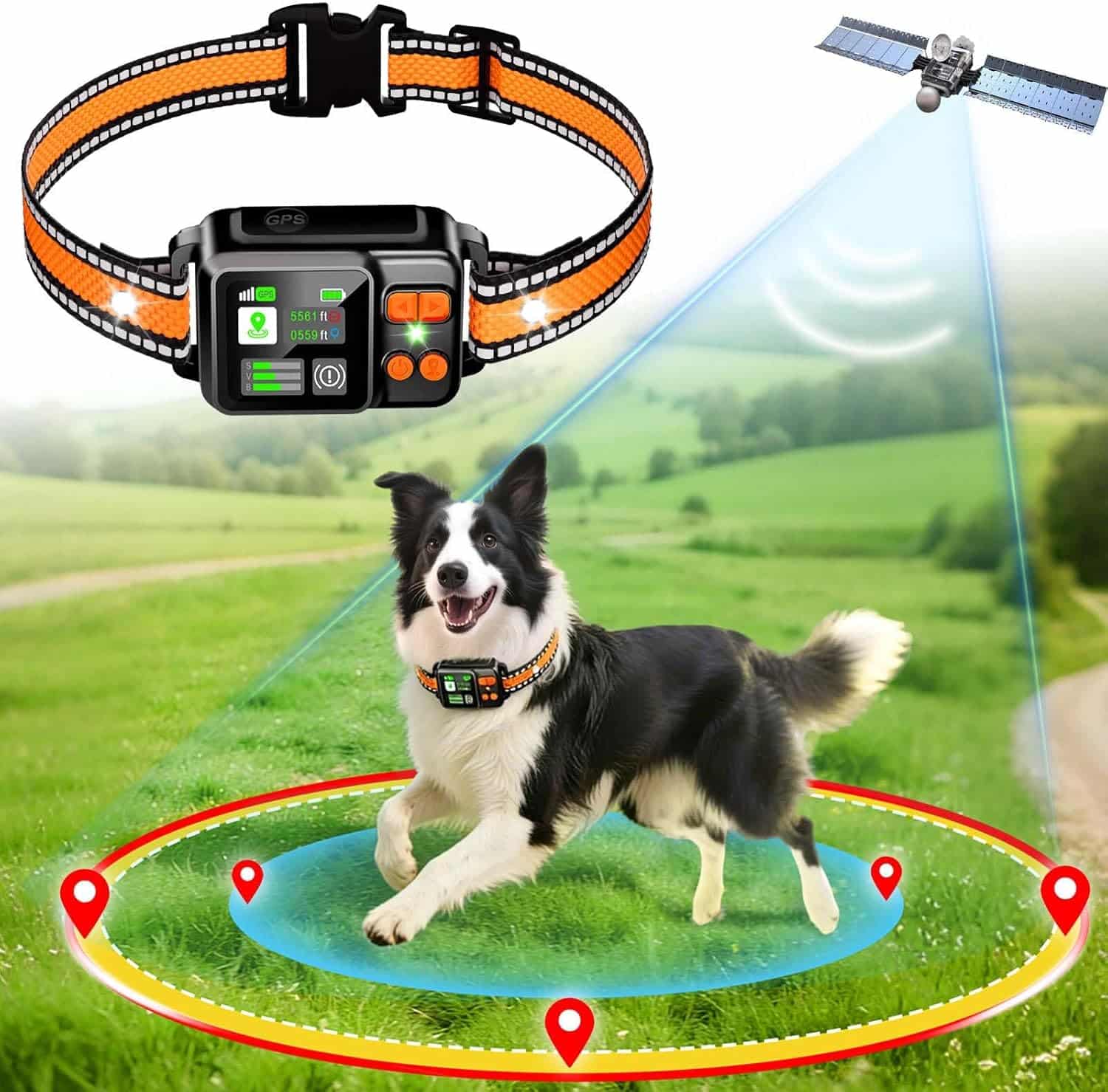
GPS Wireless Dog Fence System
A genuinely wire-free way to fence almost any shape of yard from your phone, no digging, no transmitter box. It’s the best value in GPS containment if you have open sky, but tree cover and tight boundaries expose its limits.
GPS Wireless Dog Fence System at a glance
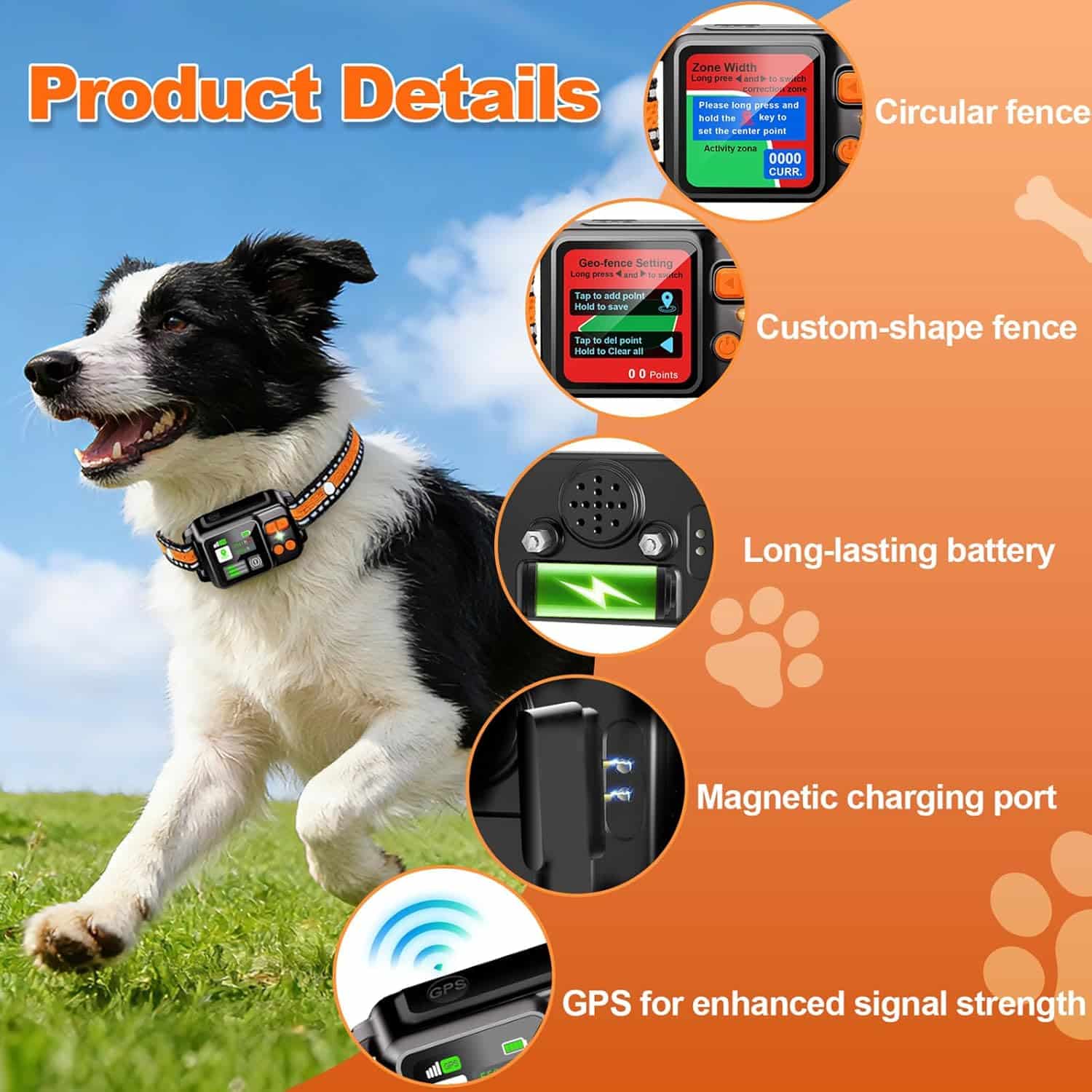
| Boundary type | GPS satellite (no buried wire, no transmitter) |
|---|---|
| Fence shapes | 2 modes, circular & free-form / polygon |
| Range / size | Adjustable radius ~49 ft to 6,561 ft (up to ~10+ acres) |
| Collar battery | Rechargeable, magnetic charging port |
| Waterproof | IPX7 collar (rain & splash-proof) |
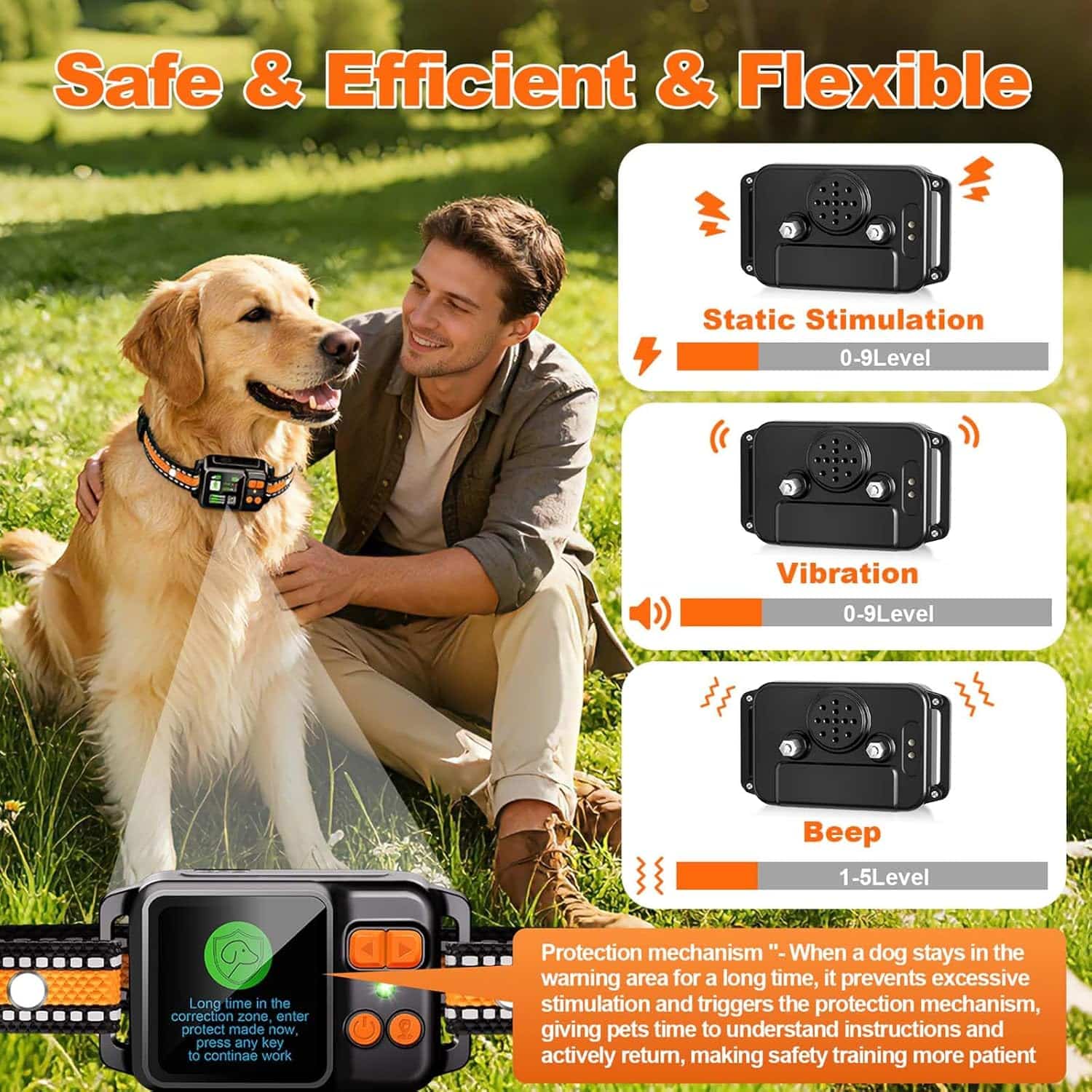
| Correction modes | Tone (beep), vibration & static, adjustable levels |
| Dogs supported | One collar per dog; add collars for more |
| Price | ~$109.99 |
Who it’s for
This GPS fence is for owners who want to contain a dog on land where a wired system is impractical, a big open lot, a rural property, a rented yard you can’t dig up, or a place you visit (a cabin, a campsite) where there’s simply no fence. Because the boundary lives in software, you draw it on the collar in minutes and move it whenever you like. It suits dogs that already respond to basic training and have a stable temperament, since GPS containment relies on warning tones the dog learns to respect rather than a hard physical barrier. It is not the right tool for a small city yard, a dog that bolts at any cost, or a property smothered in tree canopy, those situations need an in-ground wire or a real fence. Match it to open sky and a trainable dog and it earns its keep.
How the GPS boundary works
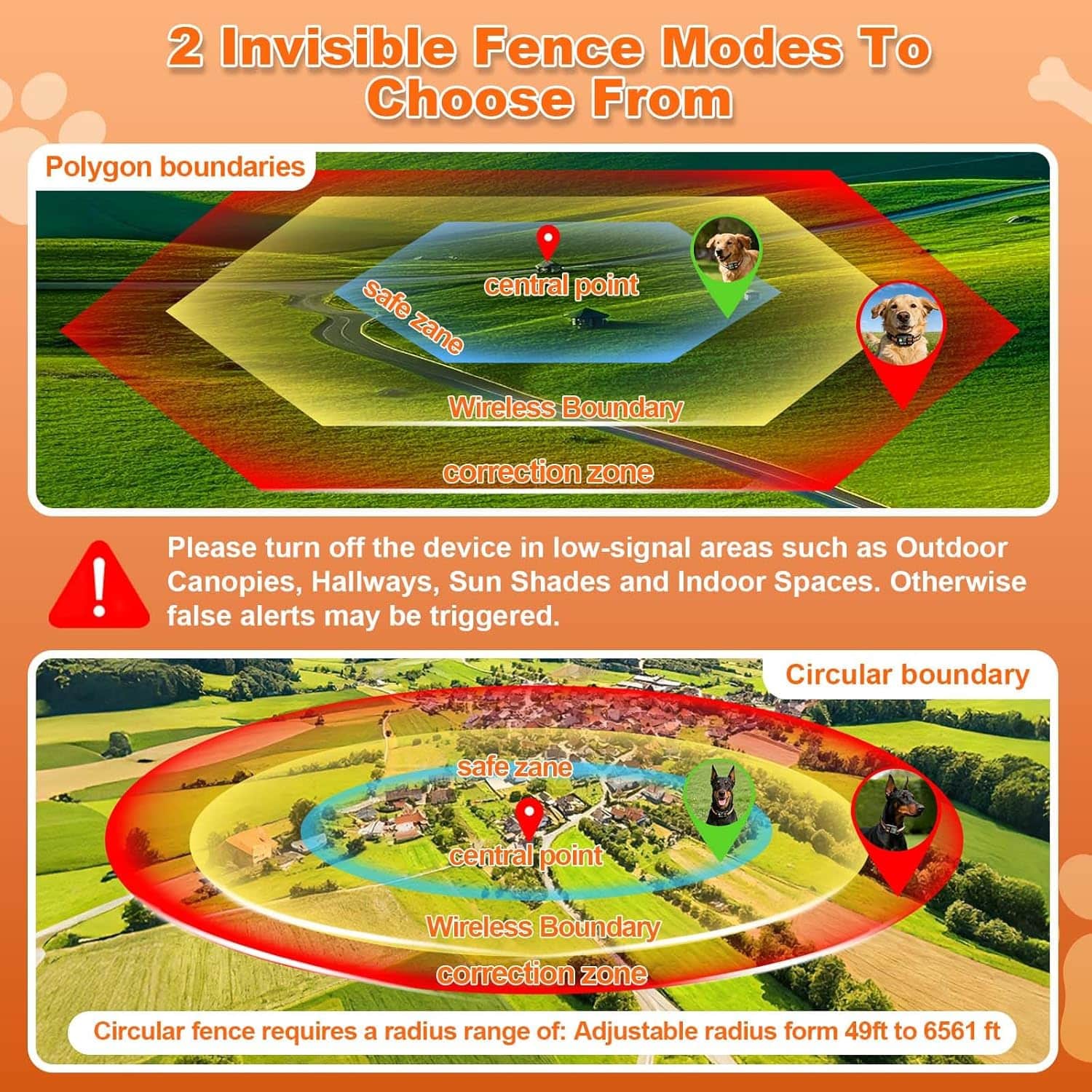
The collar contains a GPS receiver that constantly checks its own position against a boundary you define. There are two modes: a circular fence, where you set a center point and dial in a radius (adjustable from roughly 49 ft out to 6,561 ft), and a free-form boundary, where you walk or plot a custom polygon around irregular land. As your dog nears the edge it gets a warning tone; cross the line and it escalates to vibration or static. There’s no buried wire and no transmitter box, the satellites are the system. Accuracy depends entirely on signal. In open fields GPS holds to within a handful of feet; under heavy trees, beside tall buildings or in low-signal spots the position can drift, which is why the maker tells you to keep boundaries away from canopies and to switch the collar off indoors to avoid false triggers.
Setup & training
Physical setup is the easy part: charge the collar over the magnetic port, stand at your chosen center, set the mode and radius, and you have a fence in minutes, no trenching, no splicing wire. Training is the work that actually makes it succeed. Spend the first days on a long line, walking your dog toward the boundary so it hears the tone, then guiding it back and rewarding the retreat. The goal is for the dog to learn that the beep means “turn around”, long before any static is involved. Keep early sessions short and positive, use the lowest correction level that gets a response, and only let the dog off-line once it reliably turns at the tone on its own. Rush this and you’ll get either an anxious dog or one that learns to blow through the boundary. Done patiently over one to two weeks, most dogs respect the line reliably.
GPS vs in-ground & wireless
Three technologies, three trade-offs. An in-ground wire fence is the most precise, you bury a wire so the boundary is razor-sharp and works under trees and right up to a property line, but you have to dig, and the shape is fixed once it’s down. A traditional wireless (radio) fence needs no digging but only makes a circle around a plug-in transmitter, and that circle shrinks near walls and metal. This GPS system is the only one that gives you any shape, any size, anywhere, with nothing to install, its weakness is that it’s the least precise and needs clear sky. Rule of thumb: choose in-ground for a small, wooded, or tightly-bounded yard; choose GPS for large, open, or temporary land where flexibility matters more than inch-perfect edges. For many big-dog owners on acreage, GPS is the only practical option.
If you have open land and a trainable dog, this GPS fence delivers real wire-free containment at a fraction of the cost of premium GPS systems, set up in minutes and reshape any time. Just go in clear-eyed: it needs open sky, it isn’t inch-perfect under trees, and the training is on you. Get those right and it’s a smart, flexible pick.
Pros & catches
What we like
- Truly wire-free, no digging, no transmitter box, fence ready in minutes
- Any shape or size: circular radius or custom free-form boundary, up to several acres
- Rechargeable IPX7 waterproof collar with magnetic charging
- Tone, vibration and static, each with adjustable levels (start gentle)
- Far cheaper than premium GPS containment systems
The catches
- GPS can drift under heavy tree canopy or near buildings, accuracy isn’t inch-perfect
- Needs open sky and a clear signal; poor in wooded or tightly-bounded yards
- Success depends on patient training, it’s a learned boundary, not a physical barrier
GPS Wireless Dog Fence System FAQs
Do GPS dog fences work?
Yes, in the right conditions. A GPS fence reliably contains a trained dog on open land with a clear view of the sky, holding the boundary to within a few feet. It works less well under dense tree canopy or beside tall buildings, where the signal can drift. The bigger factor is training: the dog has to learn to turn back at the warning tone for the system to work.
Does it need a subscription?
No. This collar uses GPS satellites directly and sets the boundary on the device itself, so there’s no monthly fee or cellular plan to keep it running. You charge the collar, set your fence, and you’re done. (Some premium GPS brands do charge subscriptions, this one does not.)
Will it work on a large or wooded property?
Large, open property: yes, the adjustable radius reaches thousands of feet, so it’s well suited to acreage. Heavily wooded property: less reliably. Dense tree canopy blocks and reflects GPS signal, which causes position drift and false triggers. The maker recommends keeping boundaries clear of canopies, hallways and sheltered spots. If your land is mostly forest, an in-ground wire fence is the safer choice.
How do I train my dog to it?
Work on a long line for the first days. Walk your dog toward the boundary so it hears the warning tone, then guide it back and reward the retreat, so it learns the beep means “turn around.” Keep sessions short and positive and use the lowest correction level that works. Only let the dog off-line once it reliably turns at the tone on its own, usually after one to two weeks of consistent practice.
GPS vs in-ground fence, which is better?
It depends on your yard. An in-ground wire fence is more precise and works under trees and right to a property line, but you have to dig and the shape is fixed. A GPS fence needs no installation and lets you draw any shape, any size, anywhere, but it needs open sky and isn’t inch-perfect. Choose in-ground for small, wooded or tightly-bounded yards; choose GPS for large, open or temporary land.