 Dog Gear, Sized Right
Doberman Gear Guide: Essential Supplies for a Working Guardian Breed
Everything a Doberman owner actually needs, harness, crate, bed, toys, bowls, leash, grooming, a cold-weather coat and enrichment, with one hero pick per category and links to our full deep-dive guides. Gear chosen for a deep-chested, thin-coated, athletic and brilliantly smart guardian breed.
The Doberman Pinscher is the consummate working guardian breed: elegant, athletic, fiercely loyal and one of the most intelligent dogs on earth. Adults are large but lean, most run 60 to 100 lbs and stand 24 to 28 inches tall (males bigger, females smaller). Four breed traits shape almost everything you buy: a Doberman is deep-chested (so feeding setup and bloat awareness matter), wears a short single coat with almost no insulation (genuinely cold-sensitive), is a powerful athletic puller (a harness over a collar), and is off-the-charts intelligent (without a job, a destructive one). So the Doberman supplies you choose should fit the breed, not just the weight. This guide is the hub: an honest run-through of every essential a Doberman owner needs, harness, crate, bed, chew toys, plus bowls, a leash and collar, grooming, a winter coat and enrichment, with one hero pick we trust in each category and a link to our full deep-dive guide where the detailed sizing and rankings live. Whether you’re writing a Doberman puppy checklist or upgrading an adult’s kit, start here.
The Doberman essentials, at a glance
One hero pick in each core category, harness, crate, bed and toy, each chosen for a deep-chested, thin-coated, athletic and highly intelligent breed and verified in stock. Tap through for the live price, and read the category sections below for our full deep-dive guides.
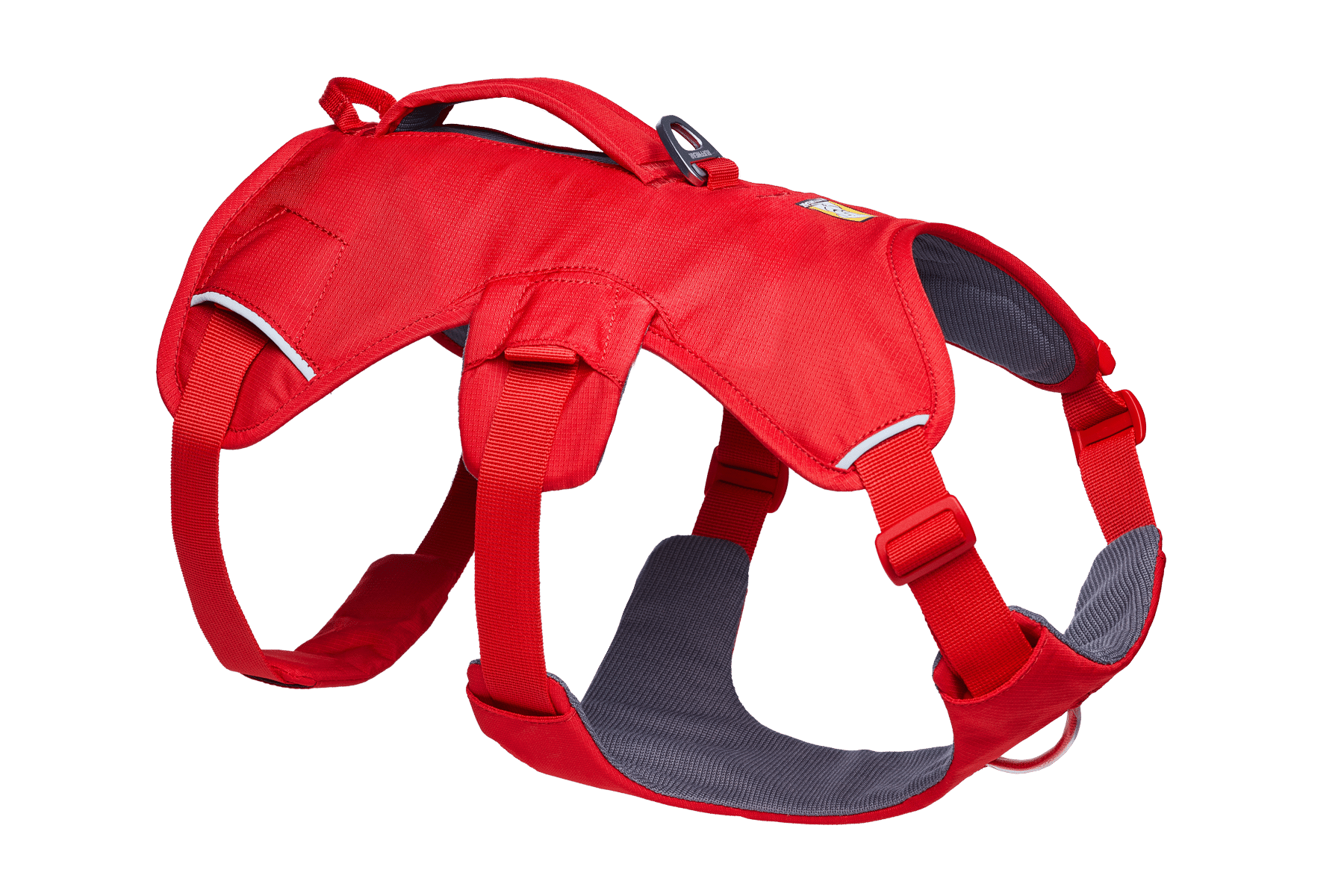
Ruffwear Web Master Harness
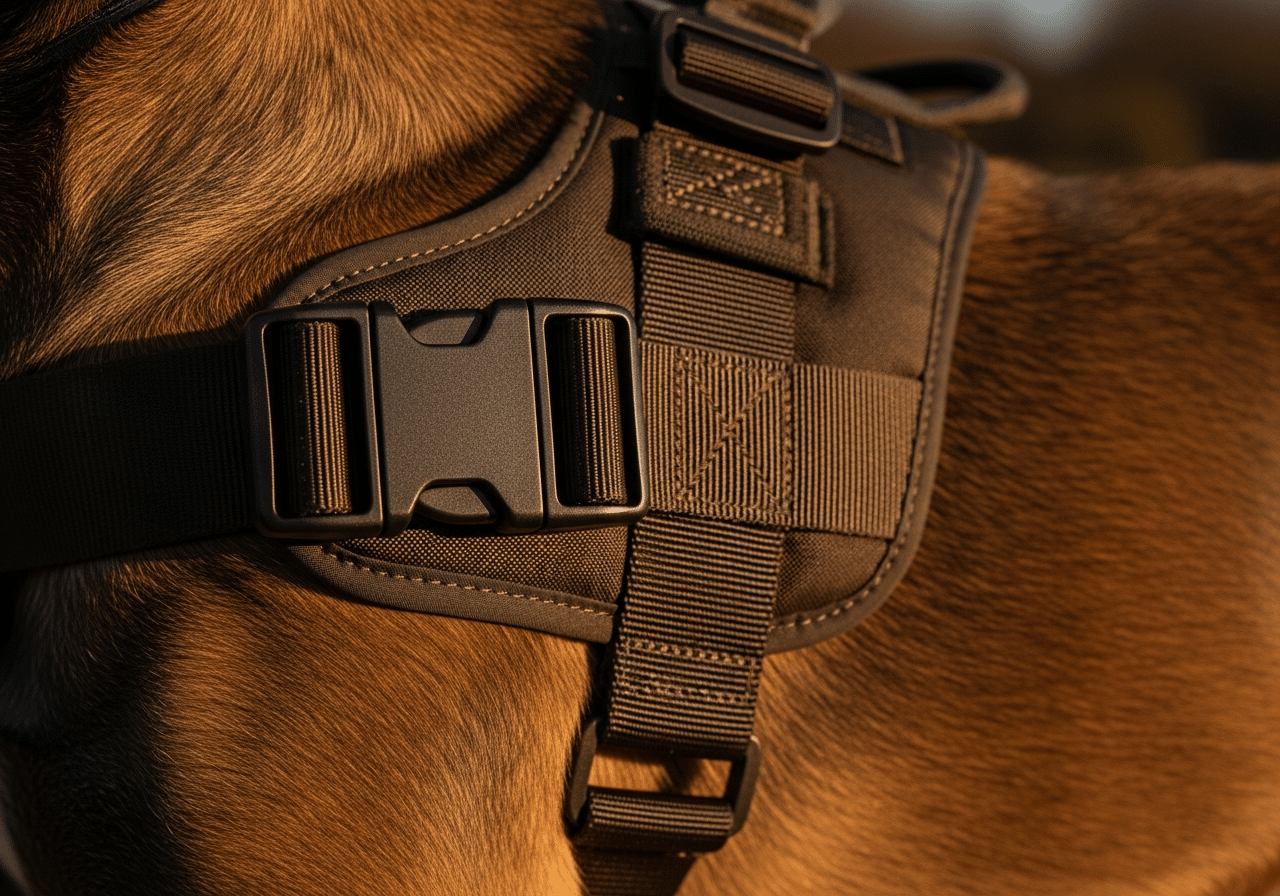
A Doberman is a lean, explosively strong athlete that can hit the end of a leash hard, and a thin collar puts all of that force on the windpipe. The Web Master spreads the load across the chest, adds a sturdy top control handle to steady or redirect a powerful dog, and won’t slip off a deep, tapered Doberman chest. Tough enough for an everyday working breed and the single most important piece of Doberman walking gear.
What we like
- Takes leash pressure off the throat, protects the windpipe of a strong, lunging dog
- Top handle lets you steady or redirect a powerful, athletic Doberman in traffic or at the vet
- Wide padded chest spreads pulling force; the snug fit won’t let a deep-chested dog back out
- Tough, weather-ready build that survives a high-drive, year-round working breed
The catches
- Pricier than a basic strap harness
- Measure the chest girth, a Doberman is usually a Large, not the size the label suggests
- More harness than a fully leash-trained, calm dog strictly needs (a front-clip no-pull is the alt)
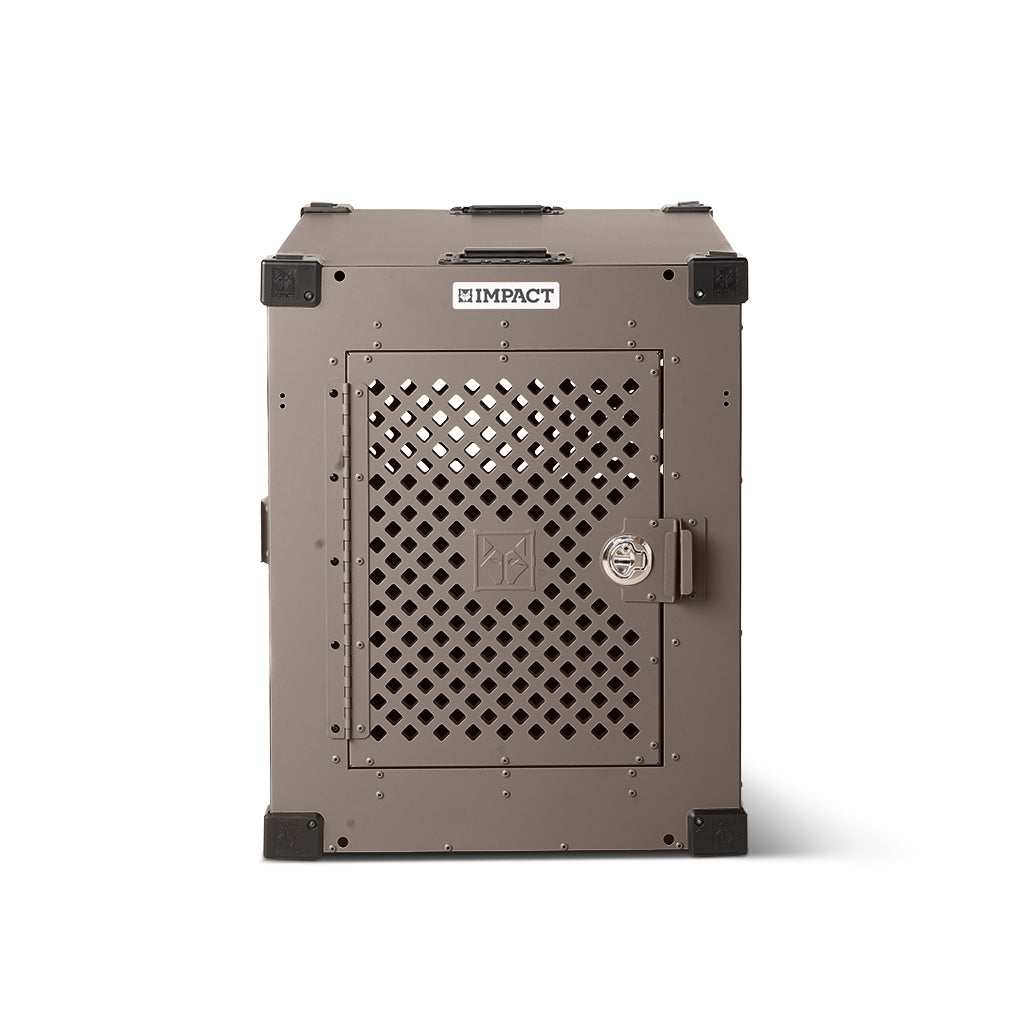
Impact Stationary Dog Crate
Dobermans are highly intelligent and can be genuine escape artists when bored or anxious, a flimsy wire crate gets popped, bent or chewed. Impact’s aircraft-grade aluminum walls give a Doberman a calm, secure den with tooth-safe edges and real ventilation. Sized to a Doberman (most adults fit the 450/550), it’s a buy-once crate. On a budget? A sturdy 42-inch divider crate is the value route while a puppy grows.
What we like
- Solid aluminum walls hold a determined, clever dog with no flex or chewing escape
- Den-like calm helps a bright, easily-bored Doberman settle and self-soothe
- Excellent airflow and a secure latch a smart dog can’t paw open
- Backed by a long dog-damage warranty, genuinely a once-in-a-lifetime crate
The catches
- Premium price, far more than a folding wire crate
- Heavy; you set it once rather than move it room to room
- Most adult Dobermans want the 450/550; size to the dog, not down to save money

FunnyFuzzy Fully Orthopedic Surround-Support Bed
A Doberman’s short single coat gives almost no padding over the elbows and hocks, and the breed is prone to joint and mobility issues with age, so a thin mat on a hard floor means pressure sores and a cold, stiff dog. FunnyFuzzy’s orthopedic foam base with a raised surround bolster cushions the joints and gives this breed a soft, warm place to curl up out of the draft, with a removable, washable cover. Comfort that doubles as warmth and joint insurance.
What we like
- Orthopedic base cushions the hips and elbows on a hard floor
- Soft, warm, draft-blocking surface suits a cold-sensitive short-coated breed
- Surround bolster gives a chin-and-back rest a curling dog burrows into for warmth
- Removable, machine-washable cover handles a muddy, active dog
The catches
- Confirm you’re ordering the Large size for a 60 to 100 lb adult Doberman
- Premium foam costs more than a flat poly-fill bed
- A determined chewer may need a chew-resistant bed instead

West Paw Tux Treat Toy
A bored Doberman is a destructive Doberman, this is one of the smartest, most driven breeds there is, and a normal plush toy lasts minutes. West Paw’s Zogoflex Tux is one of the toughest stuff-and-chew toys made: pliable but near-impossible to destroy, dishwasher-safe, and stuffable to turn chewing into a long, calming puzzle. Exactly the kind of mental workout a working breed needs as much as a run. Backed by a one-time replacement guarantee.
What we like
- Pliable, near-indestructible Zogoflex built to survive a strong-jawed working dog
- Stuff with treats to turn chewing into a long mental workout for a highly intelligent breed
- Floats, bounces and goes straight in the dishwasher to clean
- Backed by a one-time tough-chew replacement guarantee
The catches
- No toy is fully indestructible, supervise and replace if it splits
- Get the large size; a Doberman can pocket a small one
- Best as a stuffable chew, not an everything fetch toy
Why Doberman gear is breed-specific (and not just ‘big dog’ gear)
Before the shopping list, the why, because with a Doberman it changes what you buy. A Doberman is a large, lean working breed: adults typically stand 24 to 28 inches at the shoulder and weigh roughly 60 to 100 lbs (males larger, females smaller). They’re built like an athlete, deep-chested, narrow-waisted, all muscle and drive, and they don’t fully mature mentally until two or three, so you’re often buying for a powerful, restless adolescent.
Four breed traits should drive every purchase:
- Deep chest, like other deep-chested breeds, Dobermans carry a recognized risk of bloat (gastric dilatation-volvulus, or GDV), so how you feed, slow-feeder, sensible timing, is part of the gear conversation. (We keep this practical, not medical; talk to your vet.)
- Short single coat, sleek and low-maintenance, but with almost no insulation: a Doberman feels the cold badly (a winter coat is genuine gear, not a costume), and has little padding over bony joints, so a soft, supportive, warm bed matters.
- Athletic, powerful puller, a fit Doberman can pull hard and lunge fast, so it does far better on a harness than a collar, with metal hardware that won’t fail under load.
- Exceptional intelligence. Dobermans are routinely ranked among the smartest breeds, which is a gift and a warning: without enough exercise and mental work, a bored Doberman gets anxious and destructive, so durable toys, puzzles and enrichment are essentials, not extras.
Get those four things right and the rest of the list follows. Below we go category by category, one hero pick each, then a link to the full guide. Not sure on crate dimensions? Our dog crate size calculator turns your dog’s measurements into the right size in seconds.
Harness, the most important Doberman walking purchase
We’re putting the harness first on purpose, because for a powerful, athletic breed it’s the piece of gear that protects your dog and gives you control. A fit Doberman is fast, strong and high-drive: when it hits the end of a leash after a squirrel, a thin collar dumps all that force onto the throat and windpipe. A well-fitted harness moves that force onto the chest and shoulders, keeping the neck out of it, and gives you a far better handle on a dog that can out-muscle most owners.
For a Doberman we look for: a wide padded chest that spreads pressure, sturdy metal hardware (a strong dog will pop a plastic clip), a snug fit that a deep, tapered chest can’t back out of, and ideally a top control handle so you can steady or lift a powerful dog. A front-clip no-pull design is the other great option for a dog still learning leash manners, it turns the dog back toward you instead of letting it tow you down the street. Fit is usually a Large (adult chest girth commonly runs about 28 to 36 inches), but measure the girth and check the brand chart rather than trusting the label. Our hero pick, the Ruffwear Web Master above, nails the off-the-neck design, padding, a secure fit and a grab handle.
For girth sizing charts, no-pull vs everyday, and our full ranked picks, see the deep-dive above, plus our best dog harnesses hub across all breeds and sizes.
Crate, a calm, secure den a clever dog can’t outsmart
A crate is one of the first things a Doberman owner needs, for house-training, safe downtime, and giving a high-drive dog a place to truly switch off. Two things matter most: size and security. Size: the crate should be just big enough to stand fully, turn around and lie down stretched out, for an adult Doberman that’s typically a 42-inch (Large) crate, with the biggest males needing a 48-inch. Too small is cruel; too large lets a puppy soil one end, which is why a divider (or our size calculator) is so useful while they grow.
Security matters more for a Doberman than most breeds, for one simple reason: they are brilliant. A bored or separation-anxious Doberman will study a latch, lever a wire panel, or chew its way out of a flimsy crate. For a strong, clever or anxious dog we lean toward a heavy-gauge steel or aircraft-aluminum model with a secure latch, our hero pick is the well-ventilated Impact Stationary above. A sturdy 42-inch divider crate is the budget route while a puppy grows into it. Pair the crate with enough exercise and mental work, because no crate fixes a Doberman that hasn’t had a job to do.
For the full ranked lineup across budgets, wire, heavy steel and aluminum, see our best dog crates roundup, and run the numbers through the crate size calculator before you buy.
Bed, orthopedic support and real warmth
A Doberman’s bed has two jobs that a generic dog bed doesn’t. First, joint support: the breed is prone to mobility and joint issues with age, and its short coat leaves the elbows and hocks with almost no natural padding, so a thin mat on a hard floor leads to pressure sores and calluses. Second, and this one is bigger for a Doberman than almost any large breed, warmth: that short single coat means a Doberman gets genuinely cold and loves to burrow into something soft and draft-free. The answer is a real Large orthopedic bed, a supportive (memory or high-density) foam base thick enough not to bottom out, big enough for a dog that loves to stretch and curl, with a removable, washable cover.
Because Dobermans curl up to conserve heat and like to rest their long muzzle, a bolster or surround gives them both a chin rest and a draft block they’ll actually use. Our hero pick is the FunnyFuzzy fully orthopedic surround-support bed above, orthopedic foam plus a raised bolster, soft and warm, in real Large sizing. For a senior or thin Doberman in a cold home, a gently heated bed is well worth a look. Whatever you choose, size to the dog: a Doberman wants a Large (around 42 to 48 inches), and put it somewhere warm and out of the draft.
See the full sizing-and-support breakdown above, or browse every option in our best dog beds hub.
Chew toys & enrichment, tough enough, and brain-busy enough
Toys are not optional for a Doberman, they’re how you keep one of the smartest, most driven breeds in the world out of trouble. Two requirements: durability and mental stimulation. A Doberman’s jaws will shred a normal plush or thin rubber toy in minutes, and swallowed pieces are a choking and blockage risk, so you want toys built for strong chewers: thick, non-toxic rubber (the West Paw Zogoflex and KONG Extreme families are the benchmark), plus long-lasting natural chews for downtime. Avoid rawhide (it swells and can block the gut) and anything that splinters.
For this breed the brain matters even more than the jaw. A Doberman that’s mentally bored is anxious and destructive even if it’s physically tired, they were bred to think and work alongside a handler. Stuffable toys, puzzle feeders, snuffle mats, scent games and short training sessions turn idle energy into a calming job. Our hero pick is the West Paw Tux above, one of the toughest stuff-and-chew toys made, and stuffable so it doubles as a food puzzle. Rotate two or three durable toys plus a puzzle to keep a brilliant dog occupied, always buy the largest size, and supervise, no toy is truly indestructible, and a Doberman loves a challenge.
For our full ranked list of durable toys, chews and enrichment, and what to avoid, read the deep-dive guide above.
Bowls & feeding, slow it down for a deep-chested breed
Feeding gear gets overlooked, but for a deep-chested breed it’s a genuine safety item. Like other big-chested dogs, Dobermans carry a recognized risk of bloat (gastric dilatation-volvulus, or GDV), a fast, life-threatening twisting of the stomach. Gulping food and air is a risk factor, so the simplest, cheapest piece of insurance is a slow-feeder bowl that forces your dog to eat in smaller mouthfuls.
- Slow-feed bowl, a ridged or maze-style bowl to slow gulping. The single most useful feeding upgrade for a Doberman; pair it with smaller, more frequent meals and a calm rest after eating.
- Heavy stainless bowls, an athletic Doberman will skate a light plastic dish across the kitchen; weighted stainless stays put, won’t harbor bacteria and survives a chewer.
- Raised feeders, with a caveat. A raised bowl can look tidy, but the evidence is mixed and some studies have actually linked tall feeders to higher bloat risk in large breeds. So don’t assume “elevated = safer”, ask your vet before committing, especially for a deep-chested dog.
- A water bowl that holds enough, a hard-running Doberman drinks a lot, particularly after exercise; keep cool, clean water always available.
Bloat is a medical topic, so treat the above as practical setup guidance and talk to your vet about your individual dog, especially around meal timing and exercise. The goal of the feeding station is simple: slower, calmer eating from clean, stay-put bowls, with cool water always available.
Leash & collar, for ID and control, not for pulling
Here’s the Doberman rule of thumb: walk on the harness, keep the collar for ID. A powerful dog shouldn’t take pulling force on the throat, so the collar’s main job is to carry tags and clip on quickly, the harness does the walking. Buy both for quality, because the failure point is almost always the hardware:
- Leash: a 4 to 6 ft reinforced-nylon or leather lead with a solid metal (not plastic) bolt or trigger snap gives you real control over a strong dog. Skip retractable leads, they offer little control and encourage exactly the lunging you’re trying to avoid in a powerful breed.
- Collar: a comfortable flat collar in wide nylon or leather with a sturdy buckle and a welded D-ring, snug enough that a startled Doberman can’t back out of it. Use it for ID and quick clips, not for leash pressure.
- ID tag + microchip: a flat, securely attached tag is non-negotiable, and a microchip is the backup, since an athletic, driven Doberman can clear a fence or bolt through a gate.
Day to day, clip the leash to the harness for walks and to the collar only for a quick “hold still”, or use a leash that can clip to both. For a puller, a front-clip harness plus calm, consistent training beats any “stronger” collar, and works with a smart dog instead of against it.
Cold-weather coat, essential gear for a short-coated breed
This is the category most owners forget, and for a Doberman it’s a genuine essential. With a short single coat and very little body fat, a Doberman has almost no insulation, they get cold fast, shiver in winter, and many simply refuse to do their business in a freezing yard. A well-fitted dog coat or jacket isn’t a fashion statement for this breed; it’s the difference between a proper walk and a miserable dash back to the door, and it matters most for puppies, seniors and lean, fit dogs with no fat to spare.
- Winter coat: an insulated, water-resistant jacket with good belly and chest coverage for cold or wet walks. Measure the back length and chest girth for a snug, non-restrictive fit over those deep ribs.
- A warm, draft-free indoors spot: the same lack of insulation means a Doberman wants a warm bed away from cold floors and drafts, pair the coat outside with a soft, warm orthopedic bed inside.
- Paw protection: in ice, salt or hot pavement, balm or booties protect the pads of a dog that loves to run.
In short, cold-weather gear is part of the standard Doberman kit, not an optional add-on. A thin-coated working breed that lives to move shouldn’t be sidelined by the weather, a good jacket keeps the exercise (and the sanity, for both of you) going through winter.
Grooming, easy coat, but don’t skip the skin, nails and teeth
Good news: a Doberman’s short, sleek coat is about as low-maintenance as dog coats get, no clipping, no matting, no elaborate de-shedding sessions. The catch is that Dobermans still shed (more than people expect), can have skin sensitivity, and need the same nail and dental care as any dog. A short kit covers it:
- Rubber curry brush or grooming mitt, a quick weekly once-over lifts loose hair (a short coat sheds fine hairs that stick to everything) and spreads healthy skin oils for that signature glossy coat.
- Gentle dog shampoo, bathe only as needed; over-washing strips the coat and can aggravate skin. A sensitive-skin formula is a smart default.
- Nail clippers or a grinder, an active dog wears nails down somewhat, but keep them short for healthy feet and a clean gait.
- Toothbrush, dog toothpaste & dental chews, dental care is genuinely important; pair brushing with chews that help scrape plaque. Check the ears, too, especially on cropped-ear dogs.
Ten minutes a week with a curry mitt, plus regular nail trims and tooth brushing, keeps a Doberman gleaming, comfortable and shedding far less around the house.
Doberman supplies checklist (puppy & adult)
Pulling it together, here’s the full Doberman must-haves list in one place, ideal as a Doberman puppy checklist. Start with the core gear before your dog comes home; add the rest in the first weeks.
| Category | What to get | Why it matters for a Doberman |
|---|---|---|
| Harness | Large padded no-pull or handle harness, metal hardware | Control for a strong puller; keeps force off the windpipe |
| Crate | 42″ Large (48″ for big males), secure latch; divider for a puppy | Calm, escape-resistant den a clever dog can’t outsmart |
| Bed | Large orthopedic with bolster, washable cover | Cushions joints; warm and draft-free for a thin coat |
| Toys & enrichment | Durable rubber + natural chews + puzzle feeder + snuffle mat | Survives strong jaws; works a brilliant, busy mind |
| Bowls | Slow-feeder + heavy stainless bowls | Slows gulping (bloat-smart) and stays put |
| Leash & collar | 4 to 6 ft leash + flat collar with ID tag; microchip | Harness walks; collar/chip for ID and recovery |
| Winter coat | Insulated, water-resistant jacket with belly coverage | Short single coat = genuinely cold-sensitive |
| Grooming | Curry mitt, sensitive-skin shampoo, nail clippers, toothbrush | Easy coat, but skin, nails and dental care matter |
| Puppy extras | Large-breed puppy food, pen/gate, training treats, poop bags, first-aid kit, car harness | Controlled growth, safe confinement, training basics |
Doberman supplies: common questions
What supplies does a Doberman need?
The essential Doberman supplies are: a Large padded no-pull or handle harness (a harness, not a collar, because Dobermans are strong pullers), a 42-inch Large secure crate, a Large orthopedic bed in a warm spot, durable toys, natural chews and a puzzle feeder for a brilliant mind, a slow-feeder plus heavy stainless bowls, a 4 to 6 ft leash and a flat ID collar (plus a microchip), an insulated winter coat for a short single coat, and a grooming kit (curry mitt, sensitive-skin shampoo, nail clippers, toothbrush). Add large-breed food, a pen or gate, training treats, poop bags, a first-aid kit and a car harness. Choose everything for a 60 to 100 lb, deep-chested, thin-coated, athletic and highly intelligent breed.
What size crate does a Doberman need?
Most adult Dobermans need a 42-inch (Large) crate, big enough to stand fully, turn around and lie down stretched out, and the biggest males may need a 48-inch. Choose a crate with a secure latch, because a clever Doberman will work a flimsy one open. While a puppy grows, use a crate with a divider so the space stays right-sized and house-training stays on track. Measure your dog and run the numbers through our crate size calculator, and see our full Doberman crate size guide.
What size harness does a Doberman need?
A Doberman is usually a Large harness, adult chest girth typically runs about 28 to 36 inches depending on the dog. Always measure the widest part of the chest and check the brand’s girth chart rather than trusting a size label, and choose a harness with a wide padded chest and metal hardware that won’t fail under a strong dog. Because a Doberman has a deep, tapered chest, get a snug fit so it can’t back out, and consider a front-clip no-pull or a control handle. Our best harness for a Doberman guide has full sizing details.
Why does a Doberman need a harness instead of a collar?
Because a Doberman is a powerful, athletic puller. When a strong dog lunges or hits the end of the leash, a collar concentrates all that force on the throat and windpipe, which can injure the neck and gives you very little control. A well-fitted harness spreads the force across the chest and shoulders, keeps the neck out of it, and, with a front clip or a control handle, lets you steer and steady a dog that can out-muscle you. Walk a Doberman on a padded no-pull or handle harness and keep the collar mainly for ID. See our best harness for a Doberman guide.
Do Dobermans need a coat in winter?
Usually, yes. A Doberman has a short single coat and little body fat, so it has almost no insulation and gets cold quickly, especially puppies, seniors and lean, fit dogs, and on wet or windy days. A well-fitted, water-resistant dog coat with good belly coverage makes cold walks comfortable and stops a shivering Doberman from refusing to go outside. Pair it with a warm, draft-free bed indoors. This is one of the few breeds where a winter coat is genuine, year-round-essential gear rather than an optional extra.
Are Dobermans prone to bloat, and does feeding gear help?
As a deep-chested breed, Dobermans carry a recognized risk of bloat (GDV), a fast, life-threatening twisting of the stomach. A slow-feeder bowl that stops your dog gulping food and air is a simple, cheap precaution, alongside smaller, more frequent meals and a calm rest after eating. Evidence on raised feeders is mixed, some studies link tall bowls to higher bloat risk in large breeds, so don’t assume elevated is safer; ask your vet. Feeding gear helps with calmer eating, but bloat is a medical topic, so discuss meal timing, risk factors and warning signs with your vet.
What toys are best for a Doberman?
Choose toys made for strong chewers, thick, non-toxic rubber like West Paw Zogoflex or KONG Extreme, plus long-lasting natural chews and, crucially for this breed, enrichment: stuffable puzzles, snuffle mats and food-dispensing toys. Dobermans are among the most intelligent dogs alive, and a mentally bored Doberman is an anxious, destructive one, so mental work matters as much as a chew. Avoid rawhide and anything that splinters, always buy the largest size, and supervise. Rotate a couple of durable toys and a puzzle feeder. See our best chew toys for a Doberman guide.