 Dog Gear, Sized Right
Our Top Back-Clip Harness Picks
Padded, step-in, no-neck-strain harnesses for relaxed everyday walks.
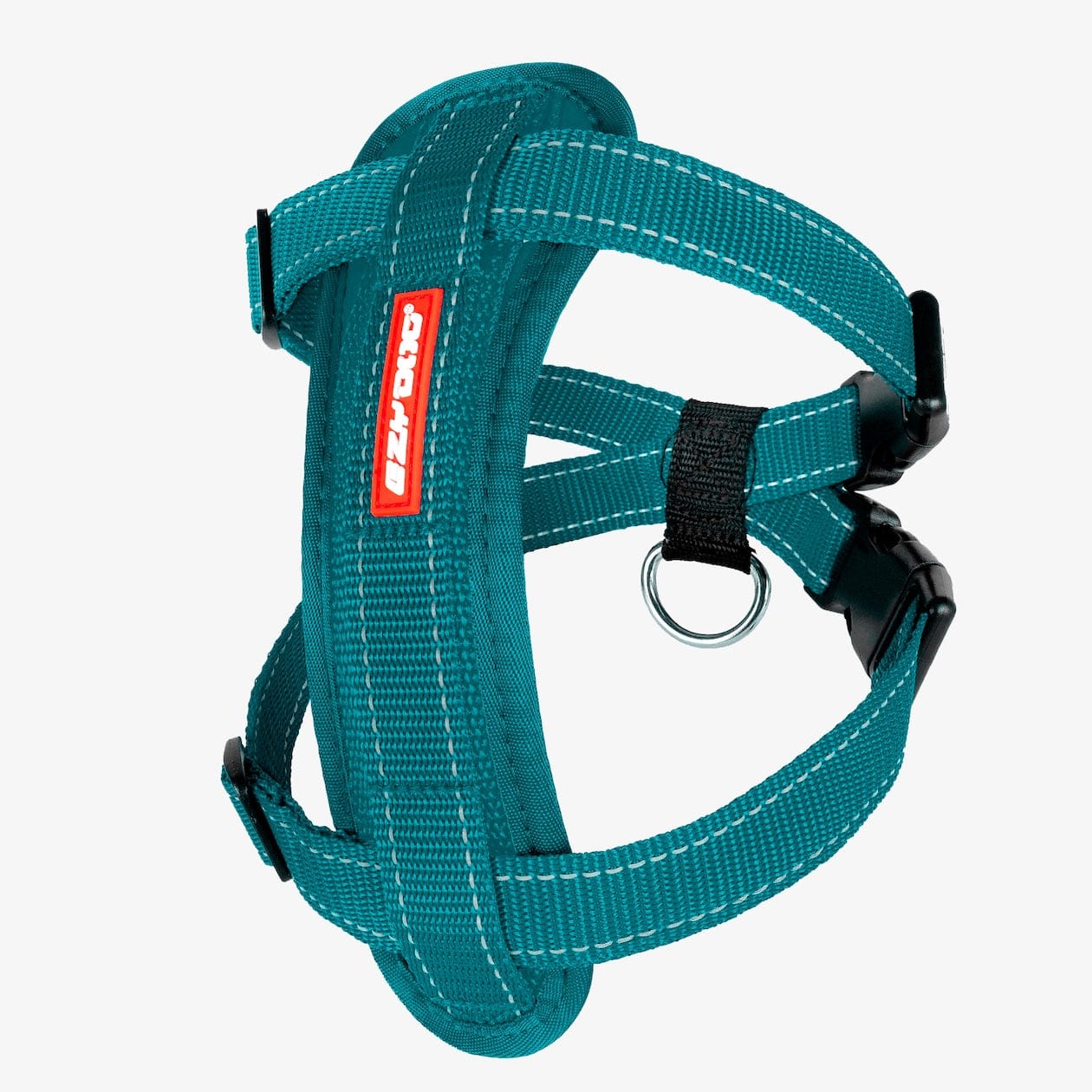
EzyDog Chest Plate Harness
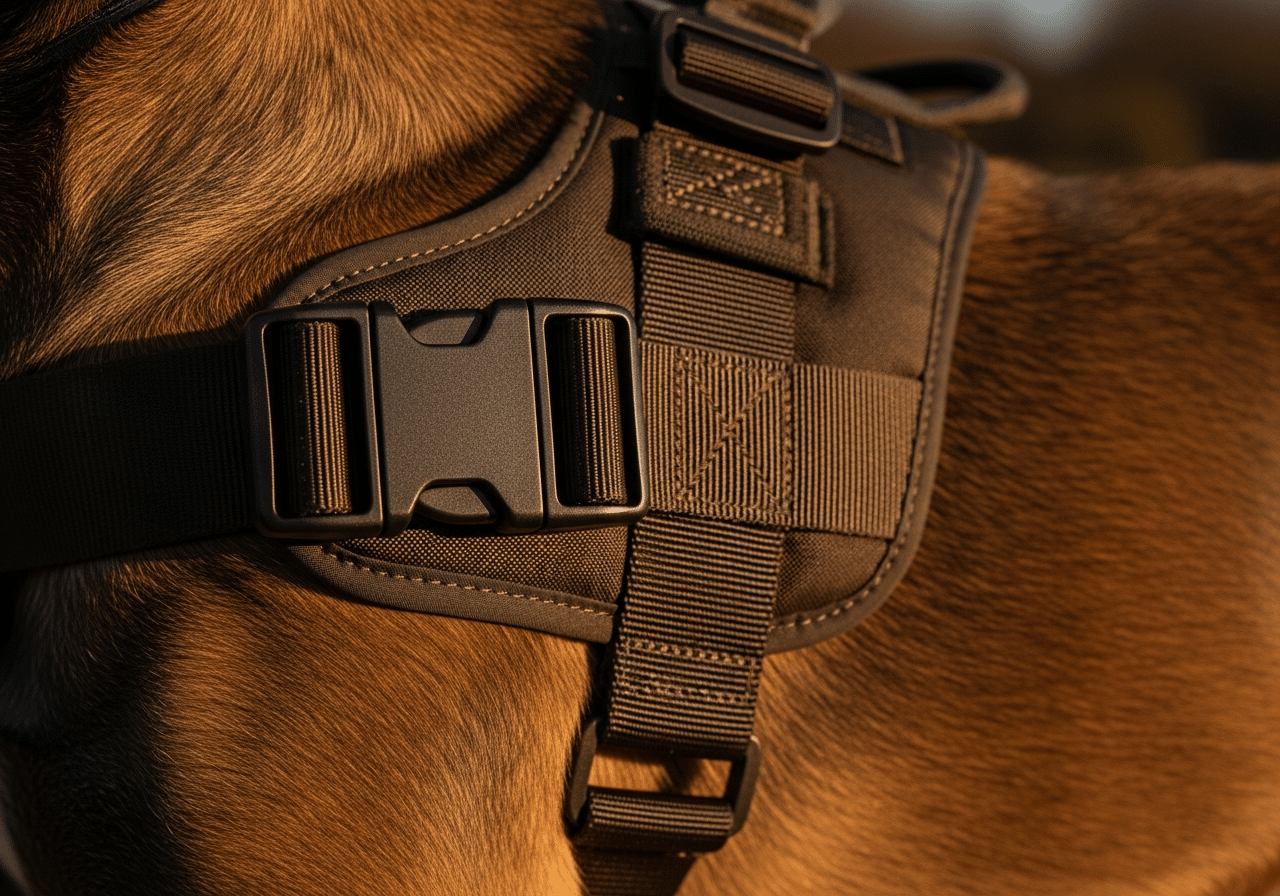
A car-seat-foam chest plate distributes pressure across the sternum, making this back-clip harness a comfortable pick for strong, broad-chested dogs.
What we like
- Thick chest plate cushions pulling pressure
- Doubles as a car restraint with a seat-belt loop
The catches
- Back-clip only, limited no-pull steering
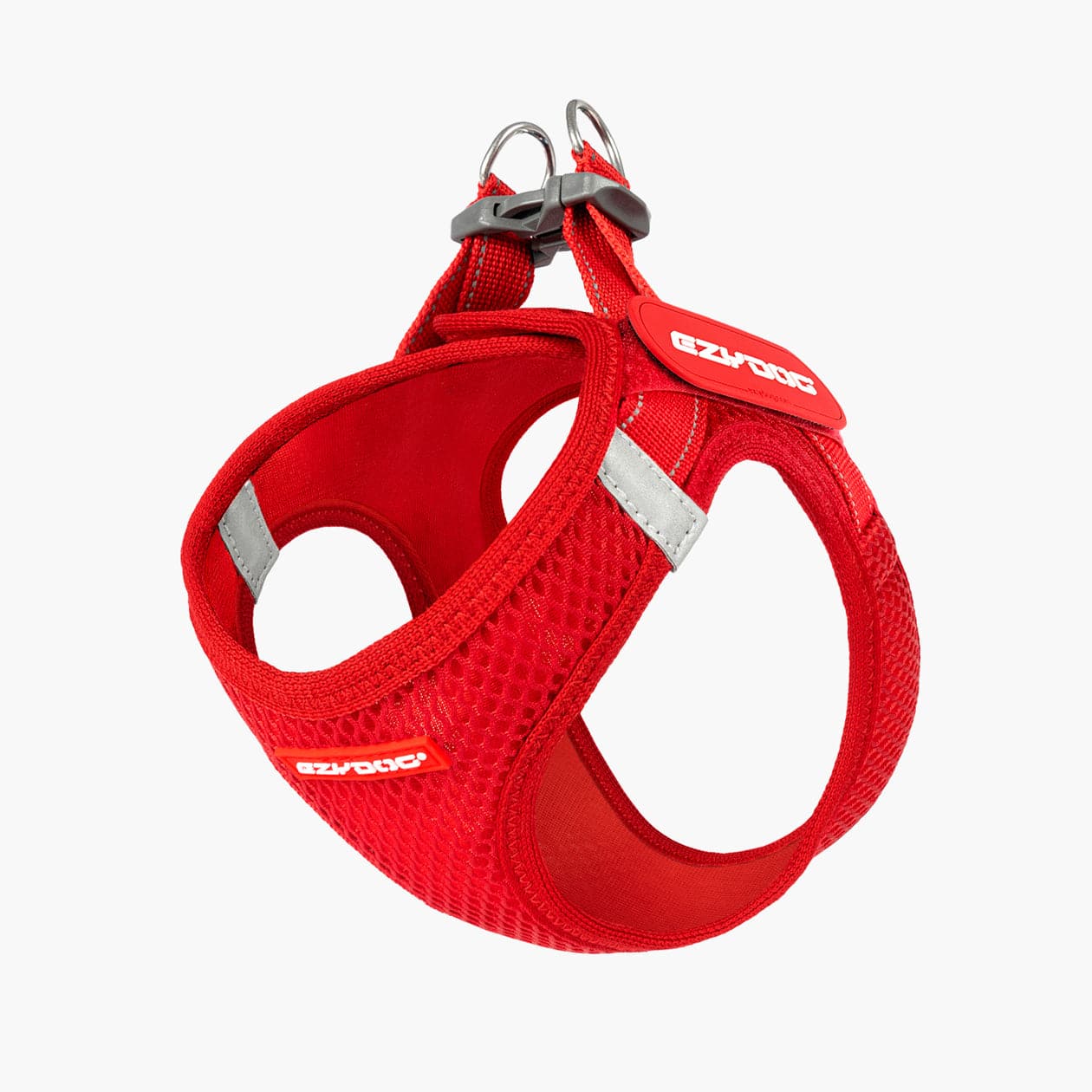
EzyDog FORMFIT Mesh Harness
A soft mesh, step-in harness that wraps the chest in breathable fabric, an easy, lightweight everyday choice for warmer climates.
What we like
- Airy mesh keeps dogs cool on walks
- Soft, low-bulk fit for sensitive dogs
The catches
- Mesh suits walking more than heavy hauling
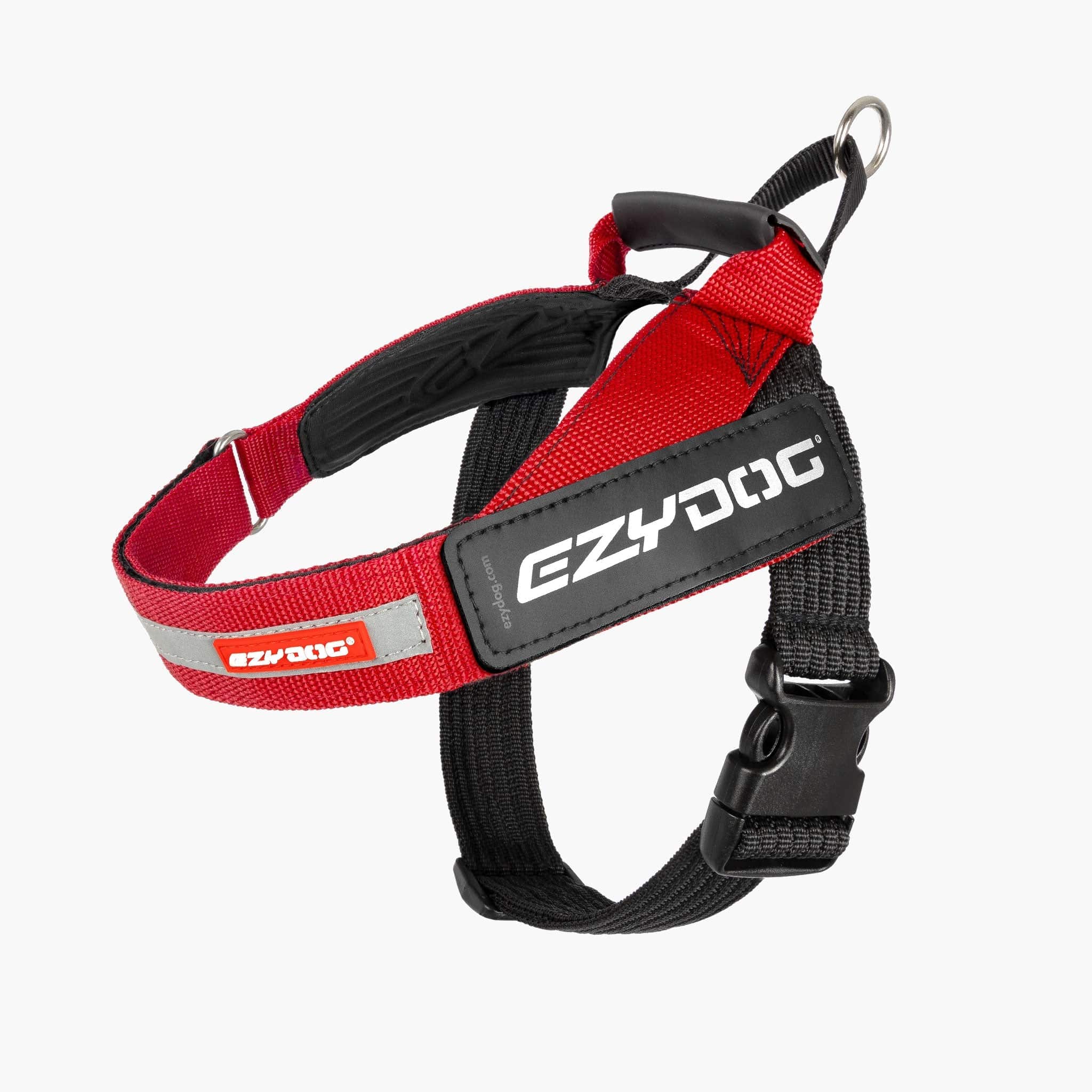
EzyDog Express Harness
A step-in design with a single side-release buckle that goes on in seconds, padded for comfort and built with reflective trim for visibility.
What we like
- On and off in seconds for busy mornings
- Soft padding sits comfortably on the chest
The catches
- Back-clip only design
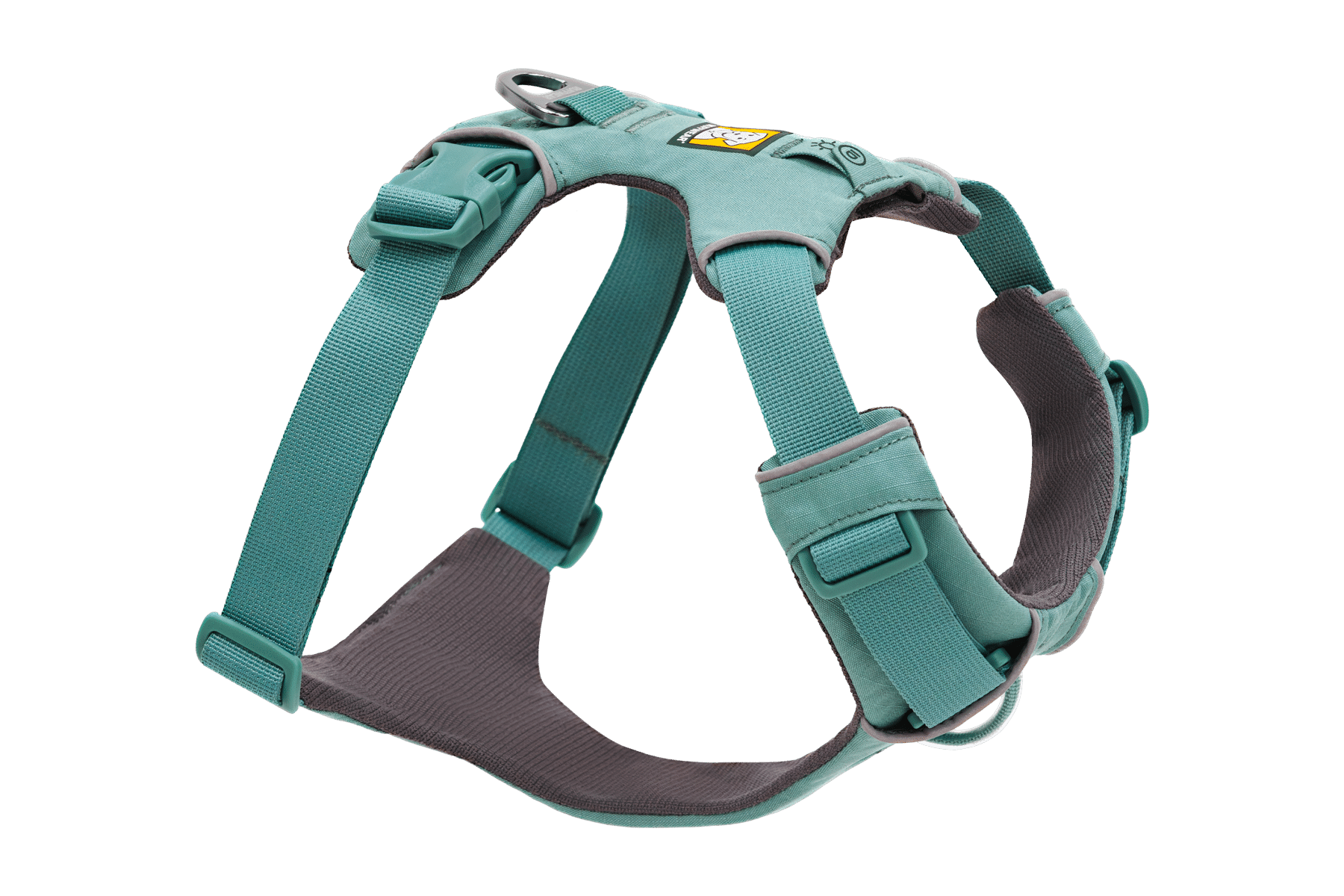
Ruffwear Front Range Harness
The do-everything everyday harness: a padded chest panel, four points of adjustment, and both front and back leash rings for relaxed walks or gentle no-pull steering.
What we like
- Two-clip versatility suits any walk
- Padded yoke spreads pressure on the chest
The catches
- No top control handle on this model
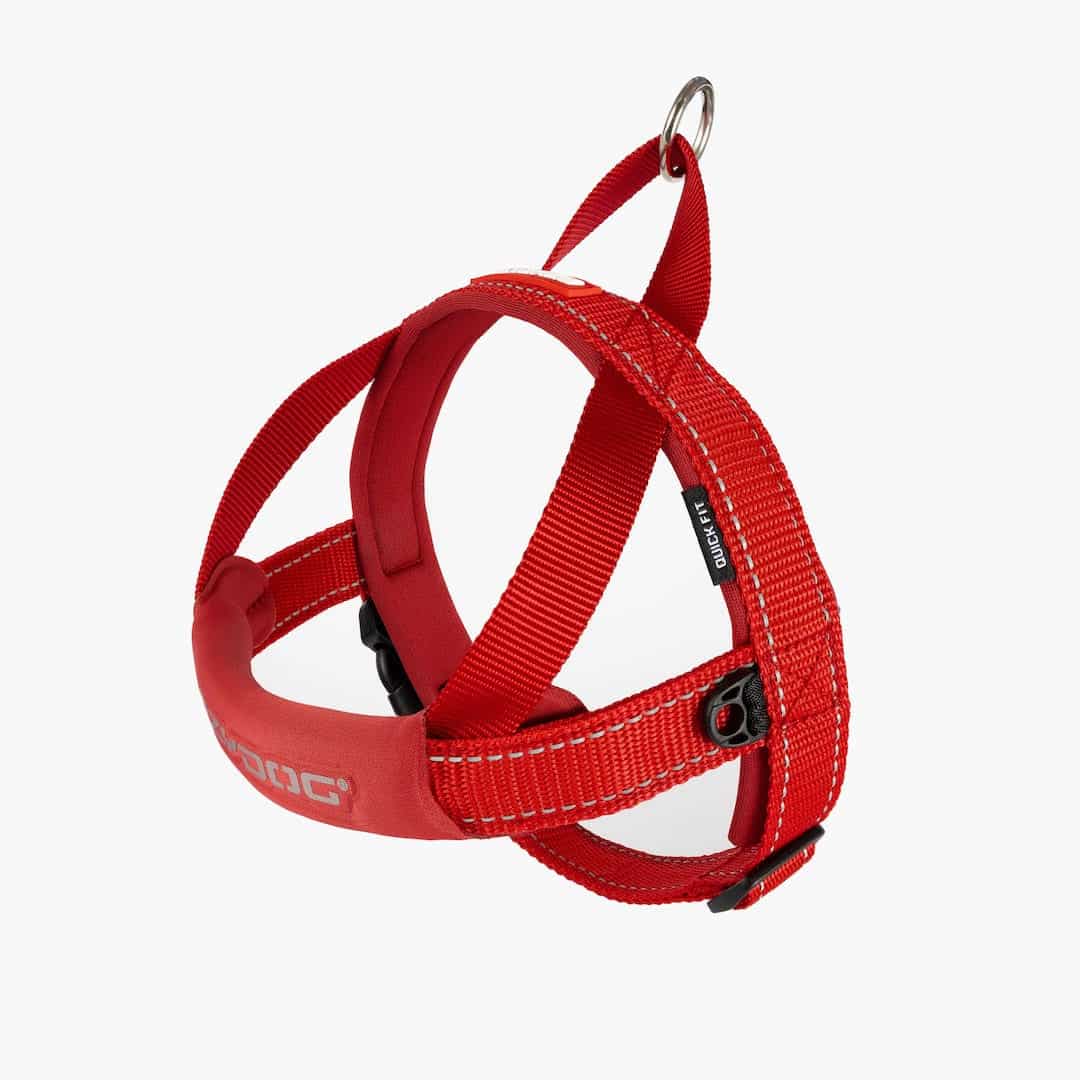
EzyDog Quick Fit Harness
An over-the-head harness with a single quick-clip buckle and a reflective chest panel, simple, affordable, and easy to size on growing dogs.
What we like
- Fast to fit and friendly on the budget
- Reflective panel boosts low-light visibility
The catches
- Less padding than the Chest Plate
Dog Harness FAQs
What size harness does my dog need?
Measure the chest girth just behind the front legs and the neck, match it to the brand's size chart, size up if you're between sizes, then fine-tune to a two-finger fit.
Is a harness better than a collar for my dog?
For most dogs, yes, a harness spreads pressure across the chest instead of the throat, giving more control and protecting the windpipe, especially for pullers and flat-faced breeds.
How do I stop my dog pulling on a harness?
Use the front (chest) leash clip, it turns the dog back toward you when it pulls, discouraging pulling without choking. Pair it with reward-based loose-leash training.
How tight should a dog harness be?
Snug but not restrictive: you should slide two flat fingers under any strap. Too loose and an athletic dog can twist or back out of it.
Can my dog wear a harness all day?
For walks and supervised time it's fine, but take it off for crating and long unsupervised periods to avoid rubbing and let the coat breathe.